20 Colorful Mid Century Modern Living Room Ideas That Will Inspire Your Next Home Makeover
Bold does not have to mean busy. These colorful mid century modern living room ideas show how mustard sofas, cobalt-blue chairs, warm walnut furniture, playful art, and vintage-inspired lighting can make everyday rooms feel fresh and personal. Instead of repainting everything or filling the floor with statement pieces, the most memorable spaces choose a clear color anchor and build around it.
A low coffee table, a sculptural lamp, or a graphic rug can be enough to establish the retro mood. The trick is deciding which element deserves attention and giving the others a supporting role. Below, you will find 20 ways to combine strong colors with usable layouts, from rich emerald wallpaper to softer blush-and-olive combinations. Every look includes specific ideas you can borrow for your own home, whether you are doing a full makeover or simply switching out cushions, artwork, and lighting.
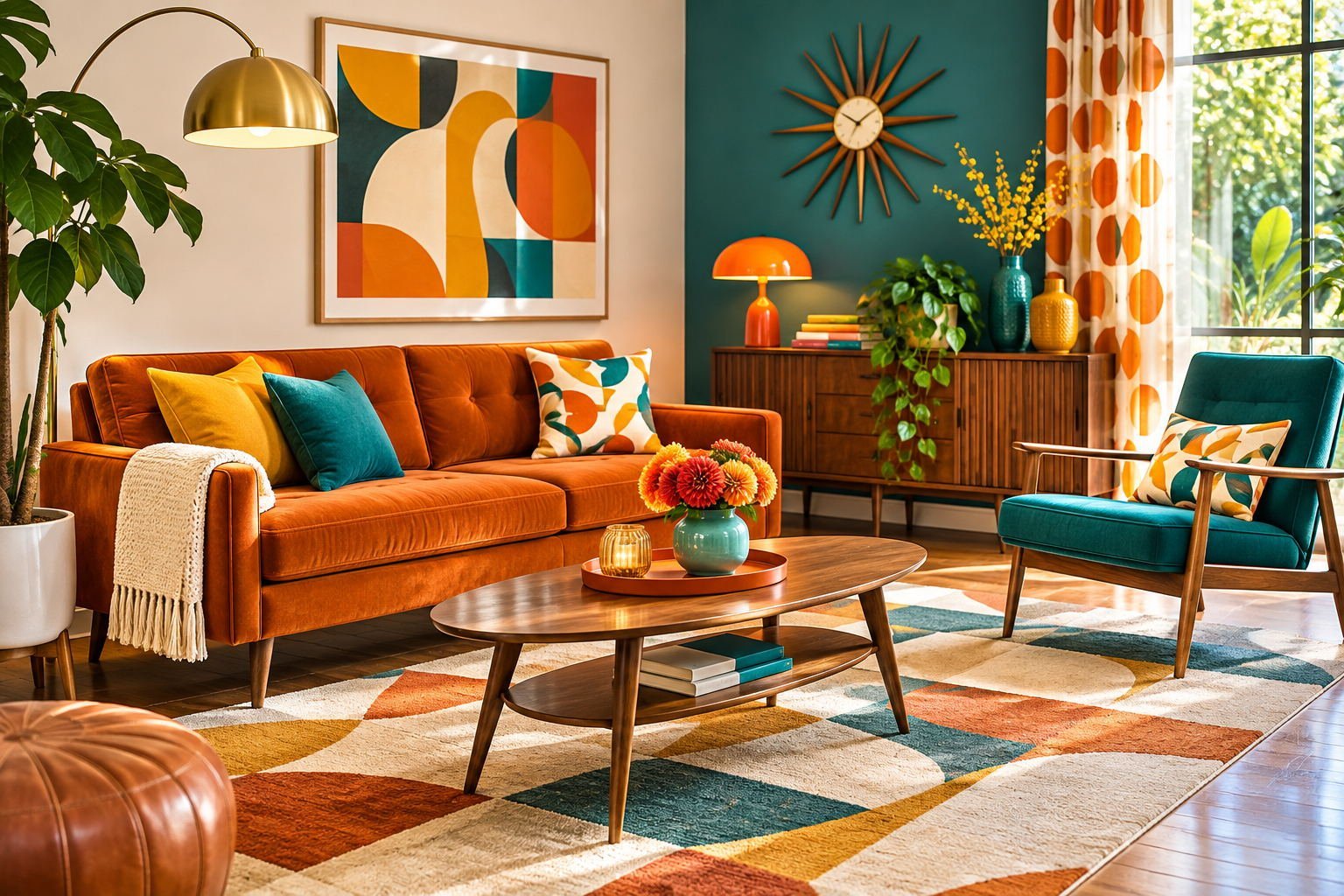
1. Terracotta Feature Wall
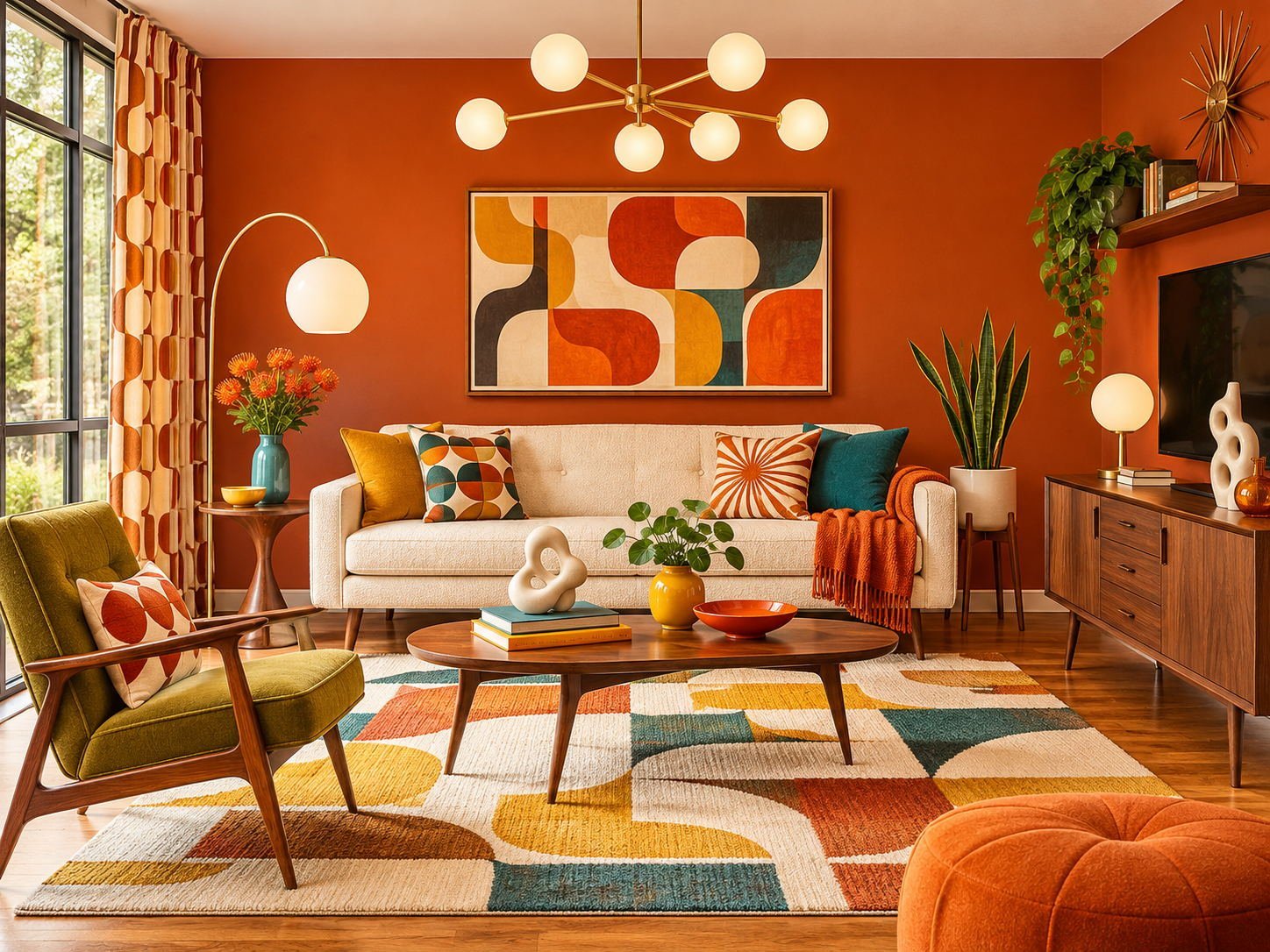
Inspiration: terracotta feature wall with mid-century forms and a practical color story.
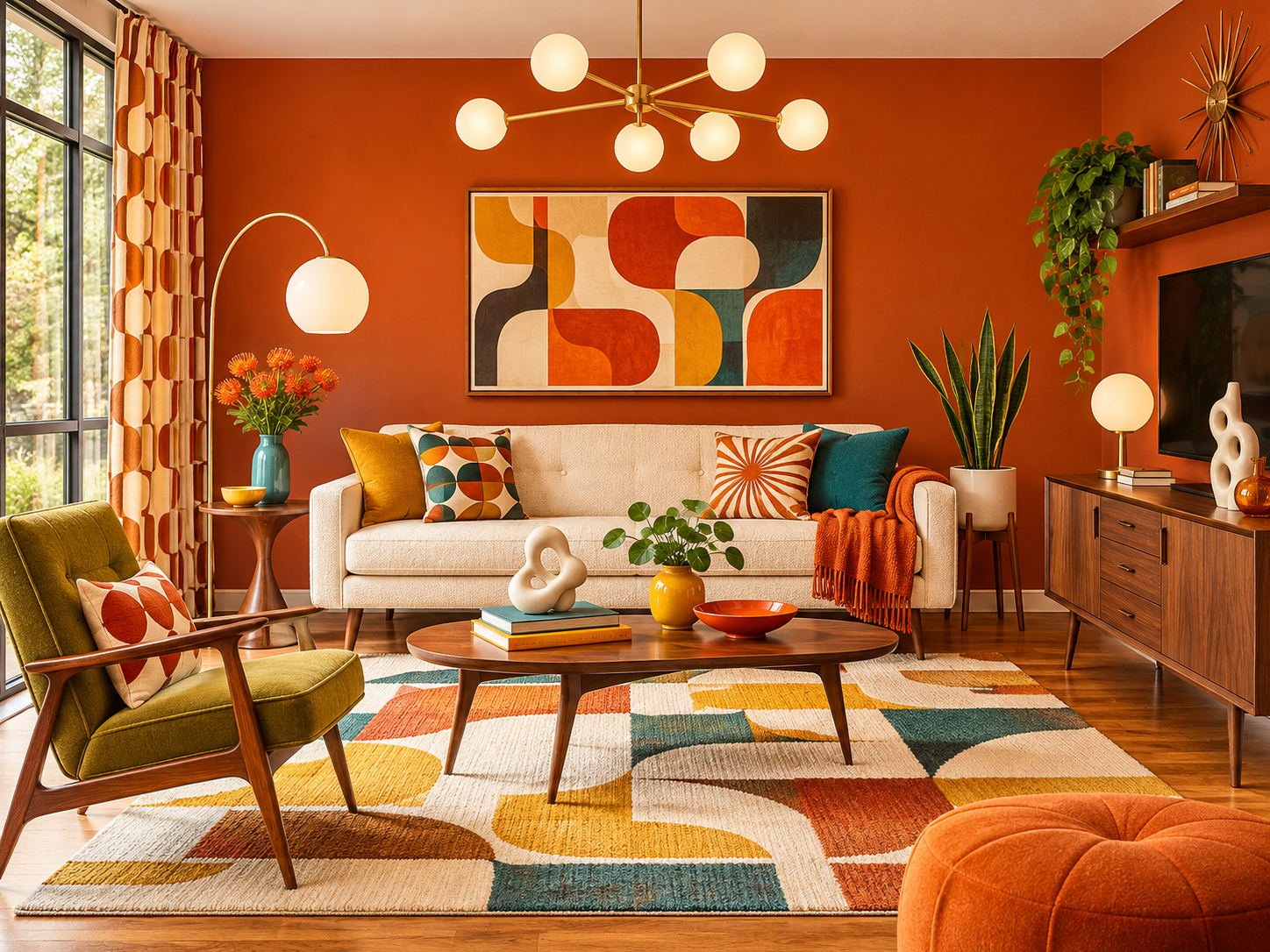
The burnt-orange wall does the heavy lifting in this room. It gives a simple ivory sofa an unmistakable retro backdrop without asking every object to compete for attention. Repeat the wall color in one patterned cushion or a small ceramic vase, then let the walnut console and sculptural globe lighting bring the mid-century character.
Choose a clay or paprika shade with a slightly muted undertone. Sample it in morning and evening light before committing to the whole wall. A patterned curtain can introduce a second color without adding another large painted surface.
2. Rust and Walnut Layers
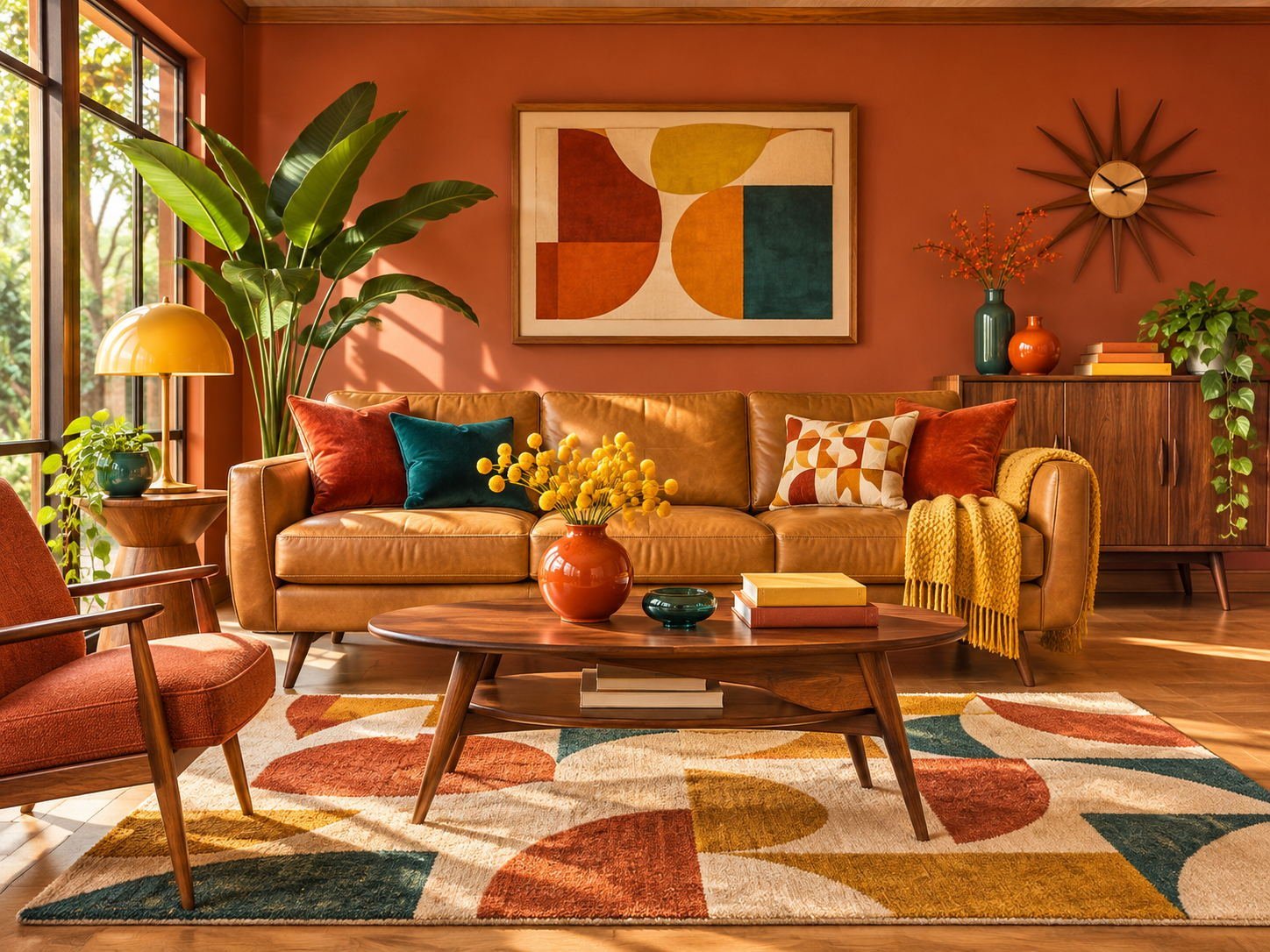
Inspiration: rust and walnut layers with mid-century forms and a practical color story.
Color anchor: Rich rust seating and a warm walnut sideboard make a particularly inviting combination.
Furniture shape: Look for low profiles, exposed legs, and an inviting seat depth.
Pattern: Use one rug or curtain print that repeats the dominant colors.
Finishing touch: Use one saturated rust item as the starting point, then add lighter camel and cream textiles for contrast.
Keep wood tones related rather than identical; walnut and medium oak can sit happily together. In this space, the orange wall, amber lamp, and geometric rug share a family resemblance, while green foliage stops the room from feeling monochromatic. Let a few pieces carry the strongest color and preserve breathing room around the furniture.
3. Mustard Velvet Sofa
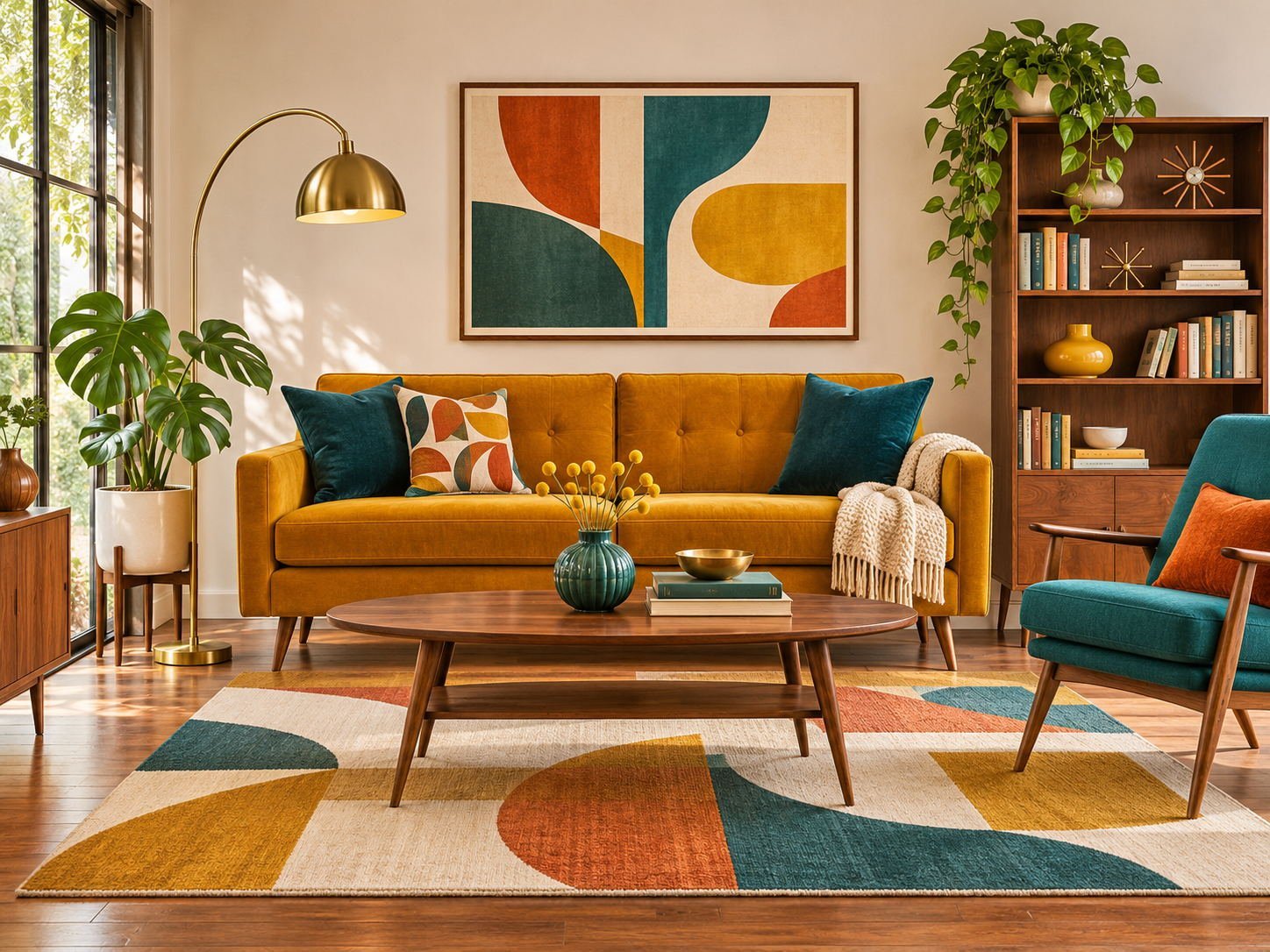
Inspiration: mustard velvet sofa with mid-century forms and a practical color story.
Quick Tip: Try two teal accents and one rust accent instead of matching every cushion to the sofa. Choose a plain wall behind the sofa when the rug and artwork already carry strong geometry.
A mustard sofa delivers cheerful 1960s energy without looking like a costume set. Teal cushions, a graphic abstract painting, and a multicolored rug bring the color forward, while the walnut table keeps the entire arrangement grounded. The key is to repeat mustard in small touches so the sofa feels intentional rather than isolated.
4. Cobalt and Cream Contrast
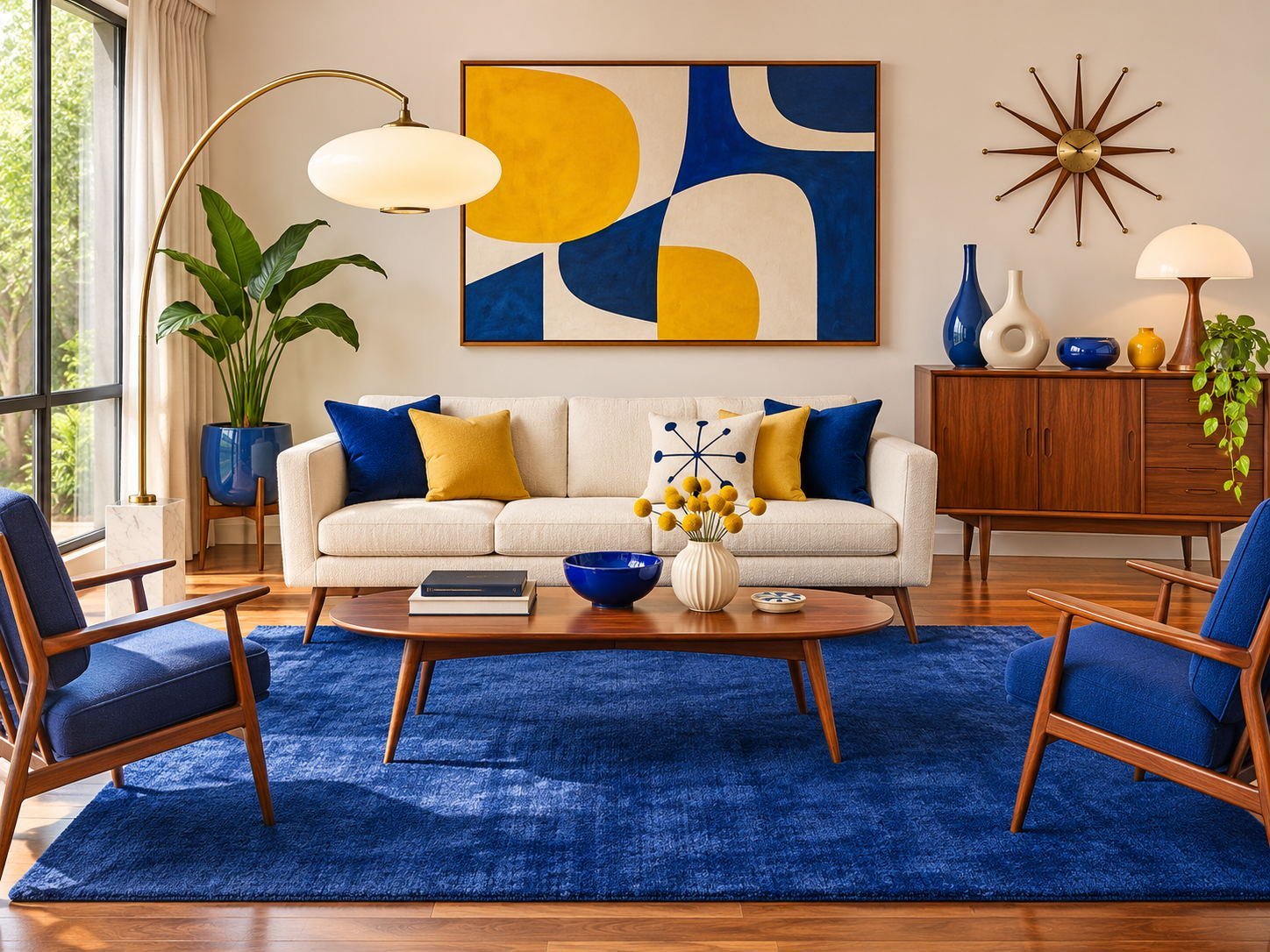
Inspiration: cobalt and cream contrast with mid-century forms and a practical color story.
Before: The seating area may feel safe but disconnected when the strongest color appears only once. A plain rug and scattered accessories offer no clear focal point.
After: Electric blue becomes surprisingly sophisticated beside creamy white upholstery. Here, two blue lounge chairs and an inky blue rug bracket a pale sofa, leaving the room airy despite the saturated color. Yellow touches in the artwork and cushions warm the scheme, and sculptural walnut furniture keeps it firmly within mid-century territory.
Place bold blue on two separate sides of the seating area for a balanced visual rhythm. A light sofa is the quiet middle ground that stops strong blues from dominating.
5. Teal Slat Wall
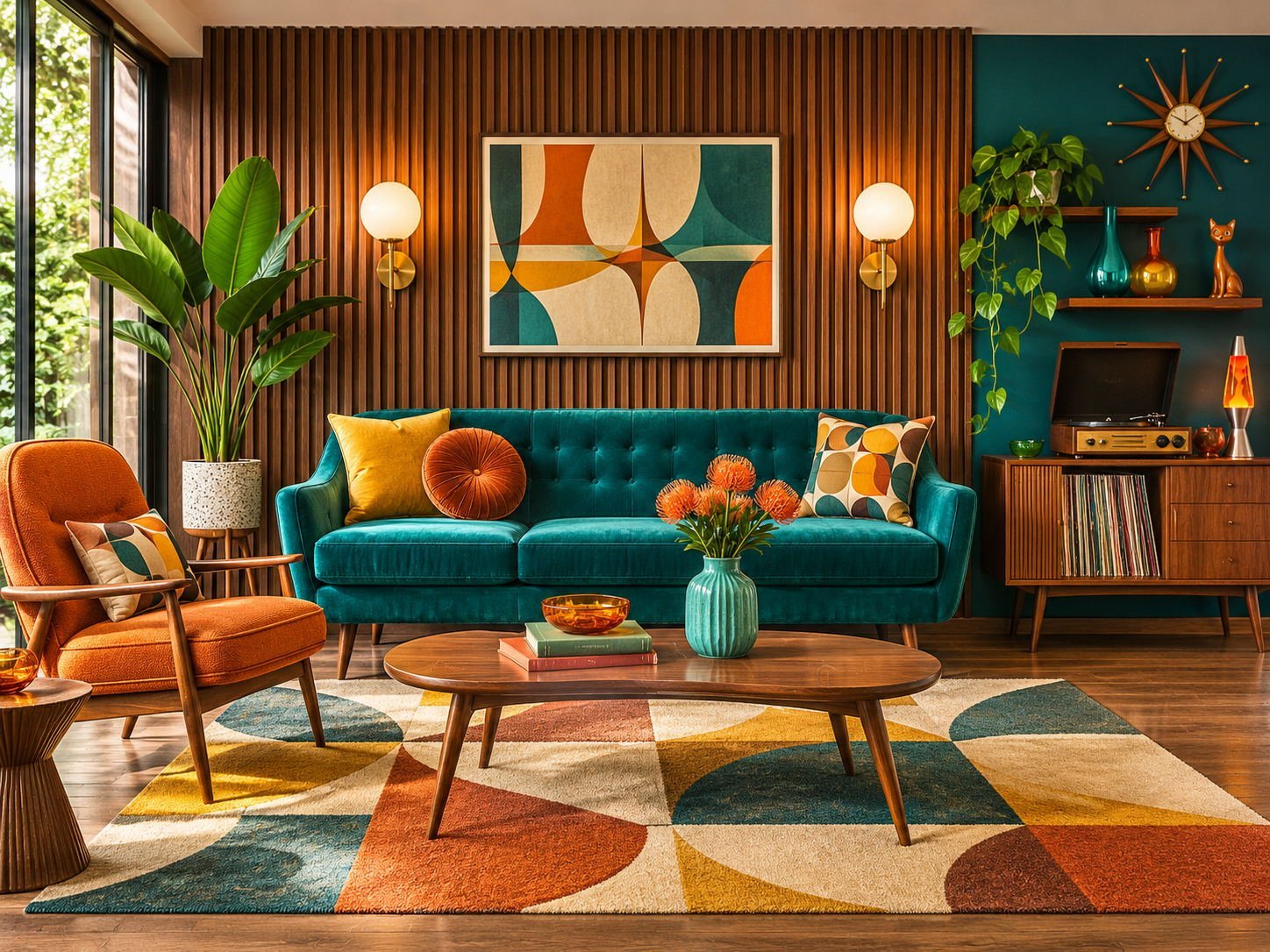
Inspiration: teal slat wall with mid-century forms and a practical color story.
Pick the main feature: Vertical walnut slats add movement even before the furniture goes in.
Choose a low-profile walnut or teak furniture piece to ground the arrangement.
Repeat two accent colors in cushions, art, lighting, or a geometric rug.
Finish thoughtfully: Keep the slat spacing regular and use a matte finish to avoid distracting glare.
Against that textured wall, the deep teal sofa, orange chair, and brass globe sconces make a lively composition with visible depth. It is a useful approach for homes that need a feature wall but do not want more patterned wallpaper. Use an uncluttered coffee table when both wall texture and upholstery are prominent.
6. Aqua and Yellow Pop
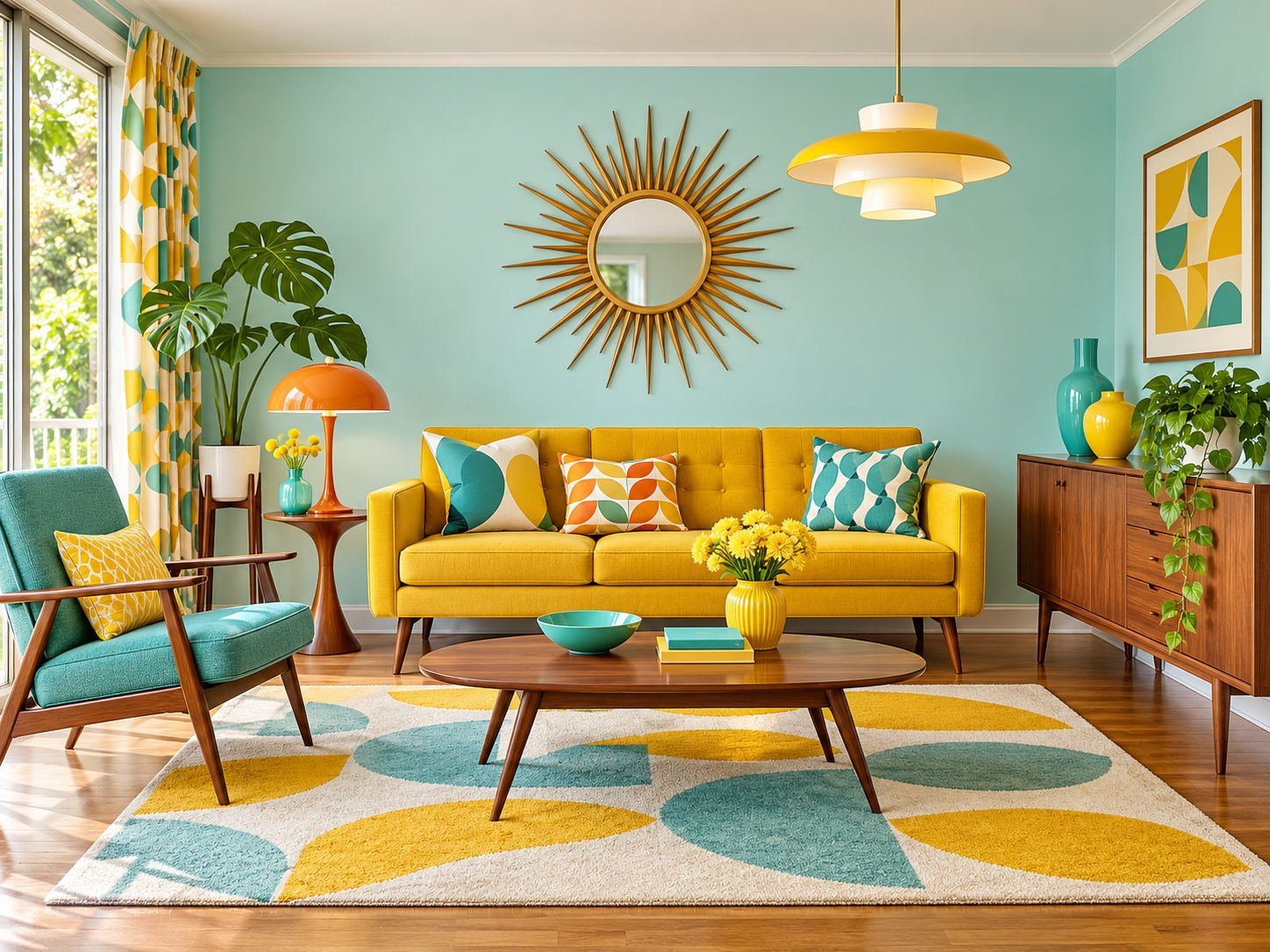
Inspiration: aqua and yellow pop with mid-century forms and a practical color story.
| Element | Bolder choice | Quieter choice |
| Wall | Aqua paint | Warm off-white |
| Seating | Mustard or teal upholstery | Walnut frame with cream cushion |
| Pattern | Large geometric rug | Small printed cushion |
Pale aqua walls give a sunny yellow sofa room to shine. Teal and orange cushions, a starburst mirror, and a playful arc-patterned rug make the scheme feel optimistic rather than overly sweet. Mid-century wooden legs and a low coffee table keep the shapes streamlined. If yellow feels too intense for the sofa, use it on an armchair and pendant instead.
7. Olive Blush Balance
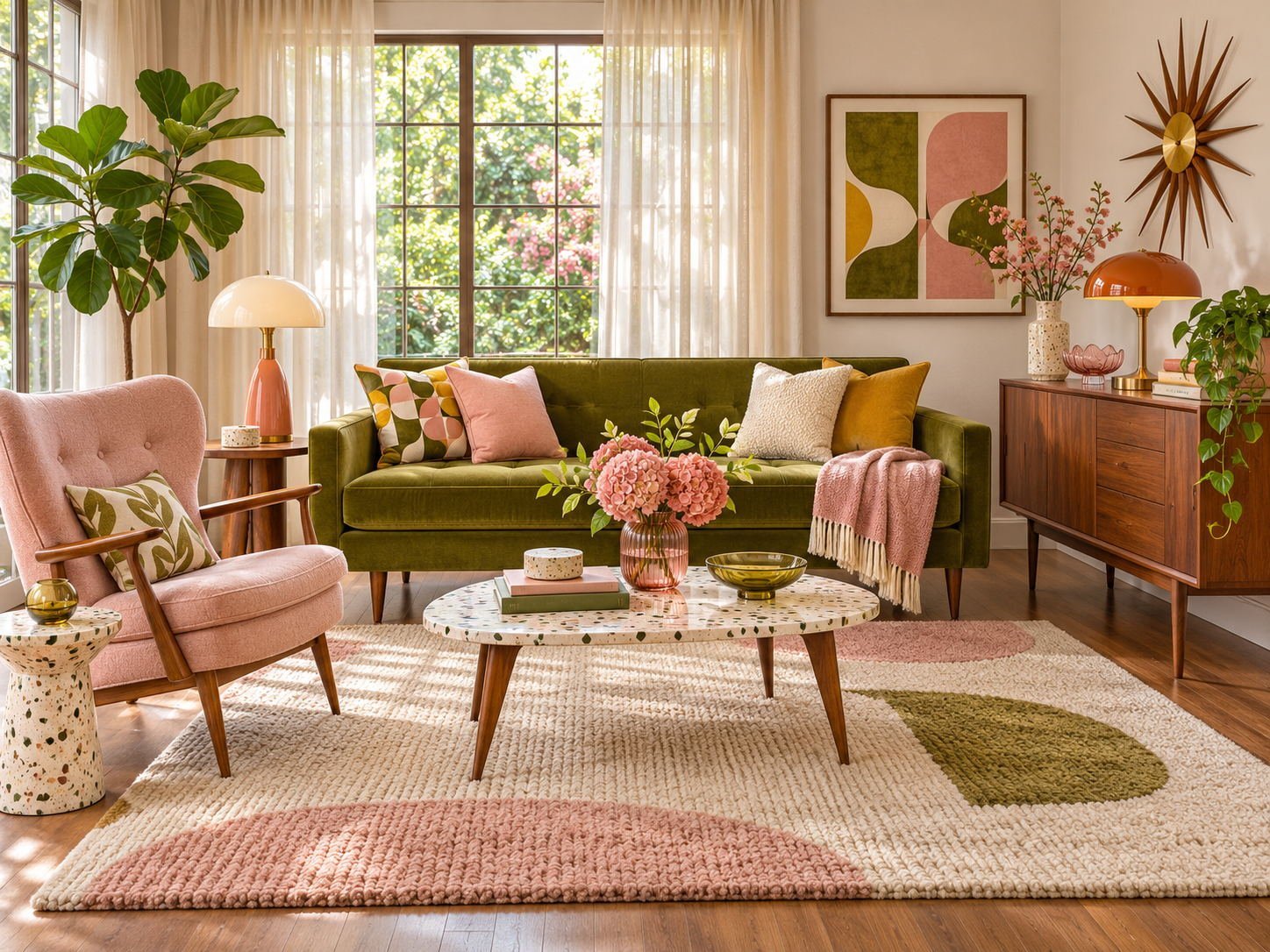
Inspiration: olive blush balance with mid-century forms and a practical color story.
Muted olive upholstery and dusty pink accents prove that a colorful retro living room does not need primary colors. A terrazzo-look coffee table, warm walnut cabinet, and vintage sunburst clock add visual personality without overwhelming the large windows. This palette works especially well where the room already receives generous natural light.
Do: Use olive on the largest piece, blush on a chair or soft furnishing, and cream in the rug.
Do: Repeat the hero shade in two small accents.
Do: Leave clear space around the main seating.
Don’t: Mix five unrelated wood finishes.
Don’t: Block windows with oversized furniture.
Don’t: Cover every surface with tiny retro objects.
Repeat the pink in only two or three locations so the palette looks deliberate.
8. Blush Sofa Warmth
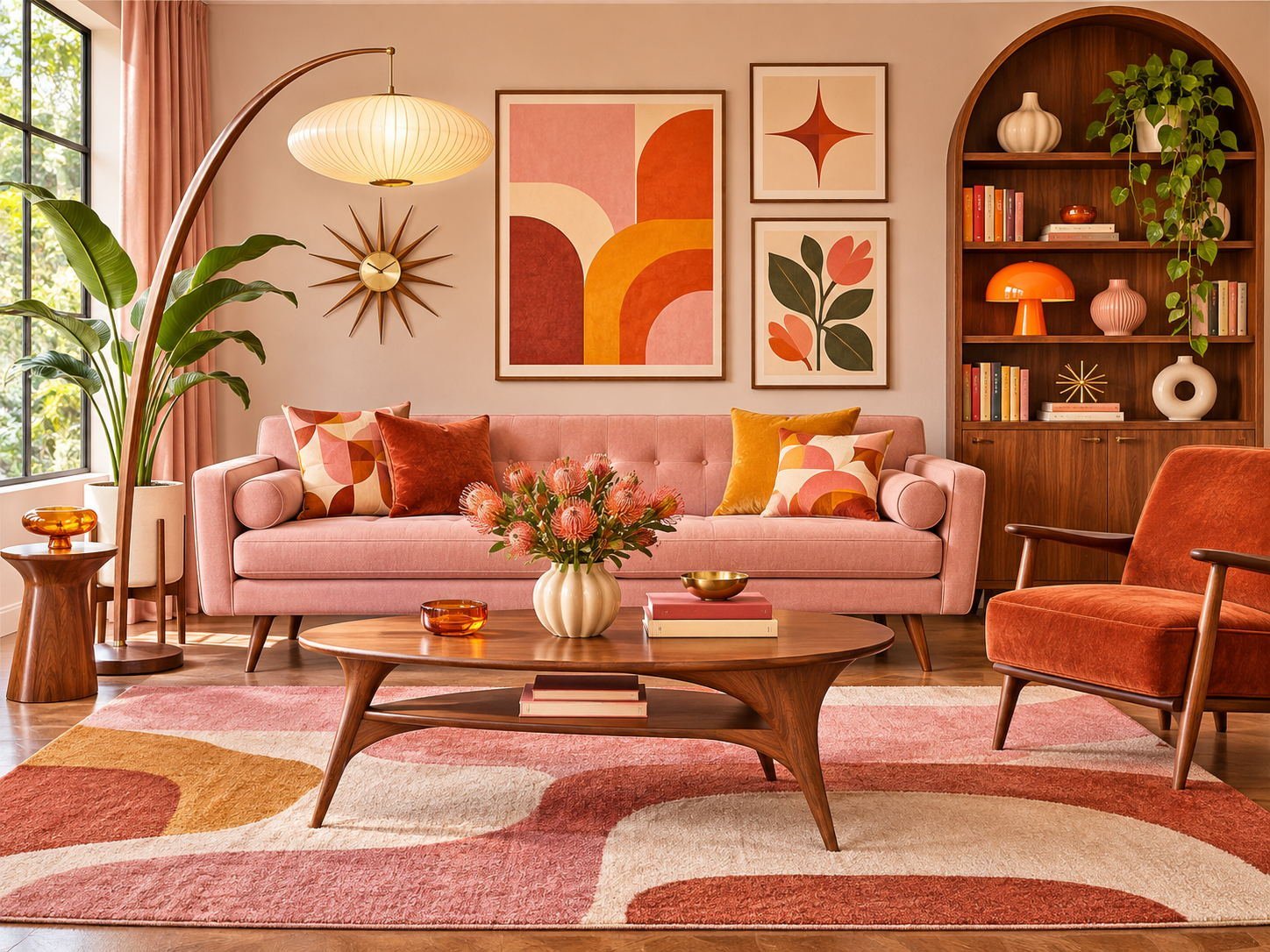
Inspiration: blush sofa warmth with mid-century forms and a practical color story.
Style: Colorful mid-century modern
Color move: One major saturated upholstery piece
Best material: Walnut, oak, velvet, or textured woven fabric
Easy refresh: Swap the rug, cushions, or abstract artwork
A blush sofa and rust-orange chair create a softer, more playful alternative to traditional brown mid-century rooms. The large abstract artwork does important work here: its rounded shapes echo the rug, while the wood coffee table and curved lamp supply era-appropriate silhouettes. Keep the peach and pink tones warm so they complement the walnut rather than compete with it. Add a dark green plant or cushion to sharpen an otherwise gentle color combination.
9. Colorful Gallery Wall
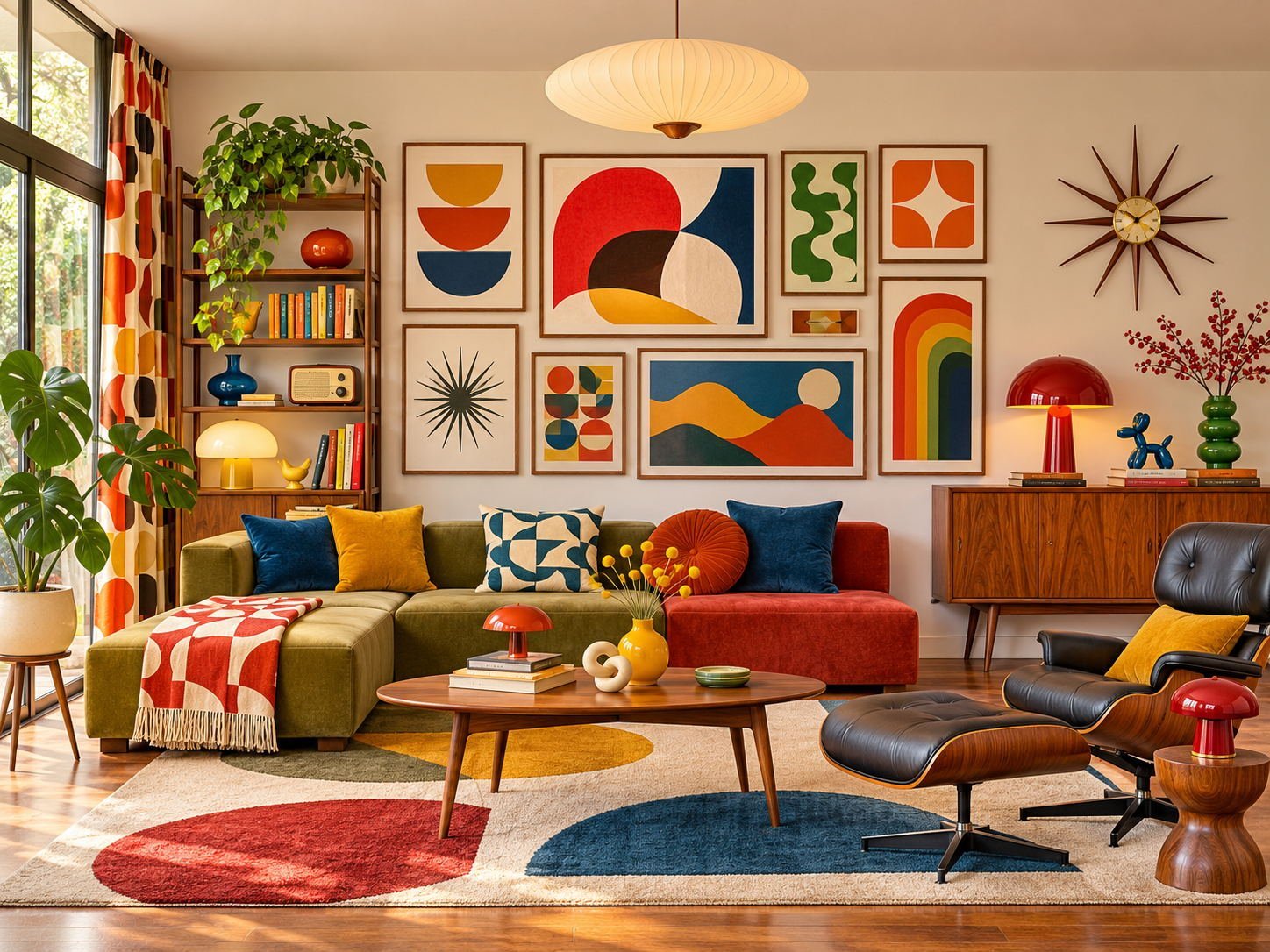
Inspiration: colorful gallery wall with mid-century forms and a practical color story.
One large artwork is not always enough. This gallery wall mixes geometric prints, a sunset motif, and small graphic frames above a low, multicolored sectional. The repeated reds, yellows, and blues tie the collection together, while the nearby cabinet and lounge chair introduce classic vintage forms.
Lay the prints out on the floor before hanging them; vary their dimensions but align a few edges. A gallery wall looks strongest with one or two recurring colors rather than entirely unrelated prints.
10. Emerald Patterned Wallpaper
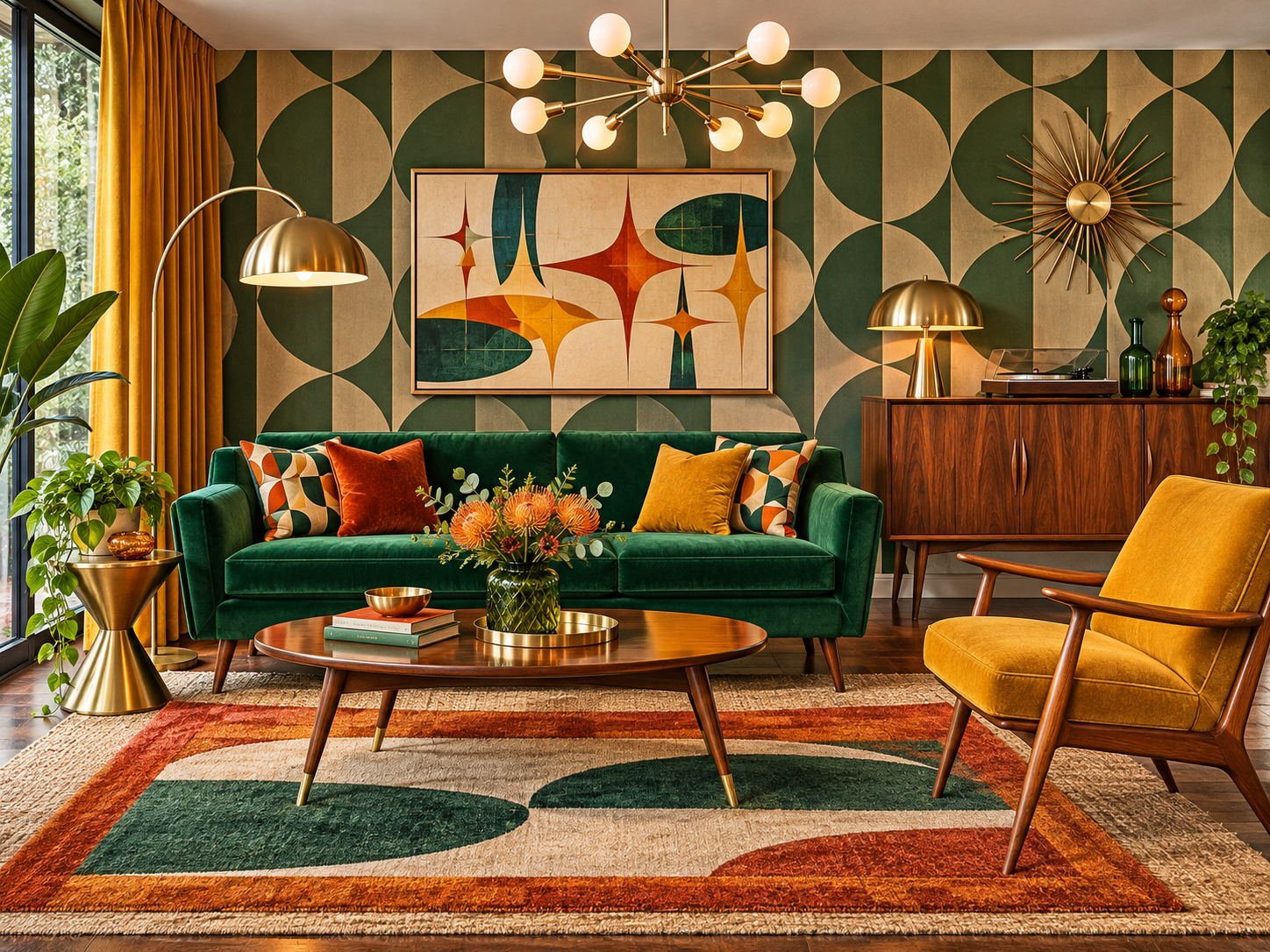
Inspiration: emerald patterned wallpaper with mid-century forms and a practical color story.
Color anchor: Large emerald geometric wallpaper can feel bold without making a room visually chaotic.
Furniture shape: Look for low profiles, exposed legs, and an inviting seat depth.
Pattern: Use one rug or curtain print that repeats the dominant colors.
Finishing touch: Choose a bold print with a calm background color, then avoid adding competing stripes.
If all four walls feel too much, use the pattern behind the main seating only. In this scheme, the green sofa rests against a large-scale repeating motif, while mustard drapes and an orange rug pick out contrasting warm tones. Walnut storage and globe lighting help the pattern feel established and timeless.
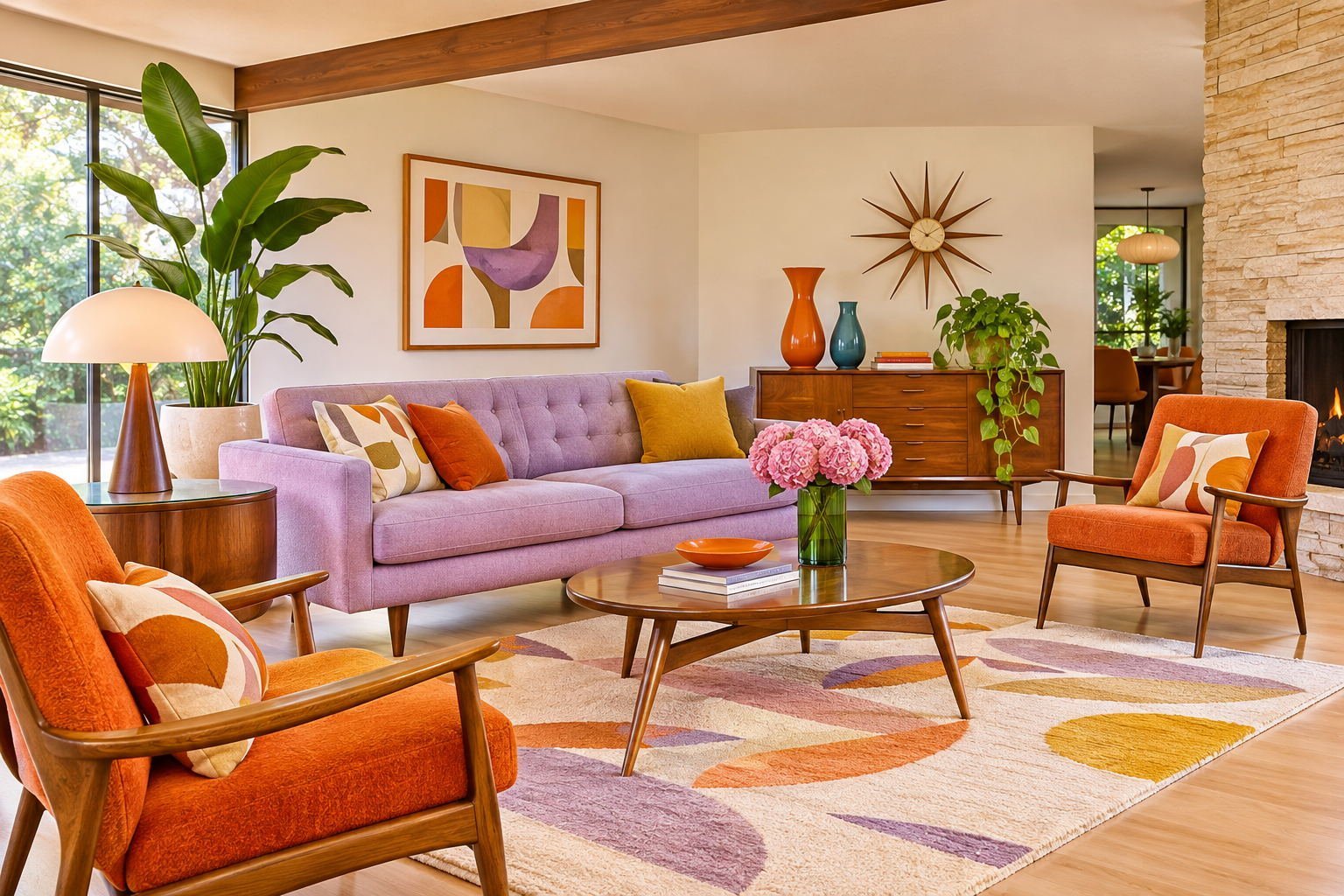
11. Lilac With Tangerine
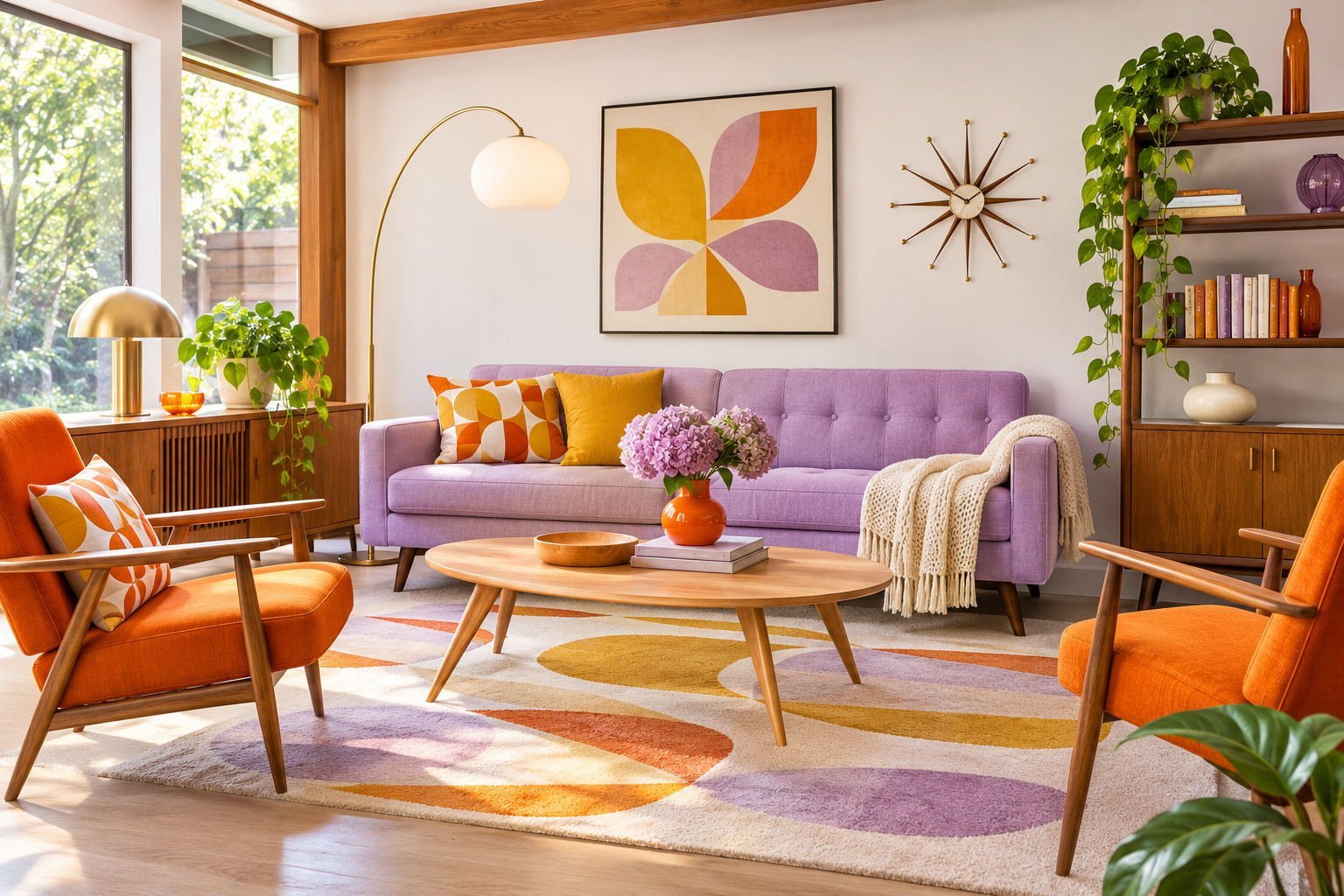
Inspiration: lilac with tangerine with mid-century forms and a practical color story.
Quick Tip: Repeat lavender in one vase or print and orange in a cushion, not everywhere. A neutral rug lets the unusually colorful seating be the focal point.
Lavender upholstery against tangerine lounge chairs makes a surprising combination, but the pale oak table and ivory walls keep it fresh. The abstract art links the two colors, and greenery stops the palette from feeling too sugary. This is a cheerful solution for people who want a departure from familiar mustard and teal pairings.
12. Rounded Retro Silhouettes
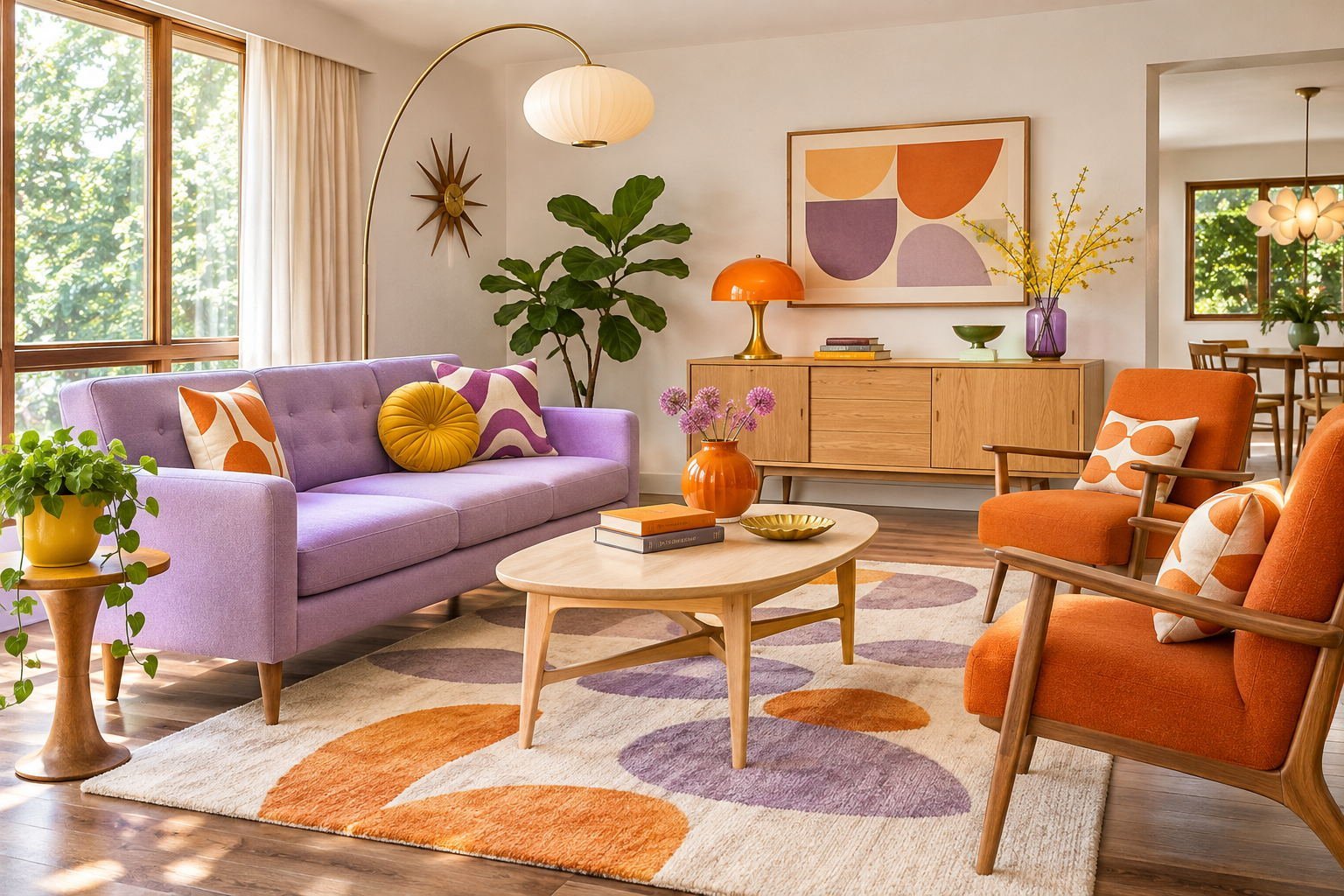
Inspiration: rounded retro silhouettes with mid-century forms and a practical color story.
Before: The seating area may feel safe but disconnected when the strongest color appears only once. A plain rug and scattered accessories offer no clear focal point.
After: The color gets your attention first, but the curved shapes are what make this room memorable. A round globe floor light, oval coffee table, orange accent chair, and lilac sofa avoid the rigid lines often found in contemporary furniture. The result feels lively but still comfortable for everyday use.
Mix at least one rounded piece with a straight-lined sofa to keep the arrangement balanced. Leave a clear walking path around the oval table instead of crowding it with extra stools.
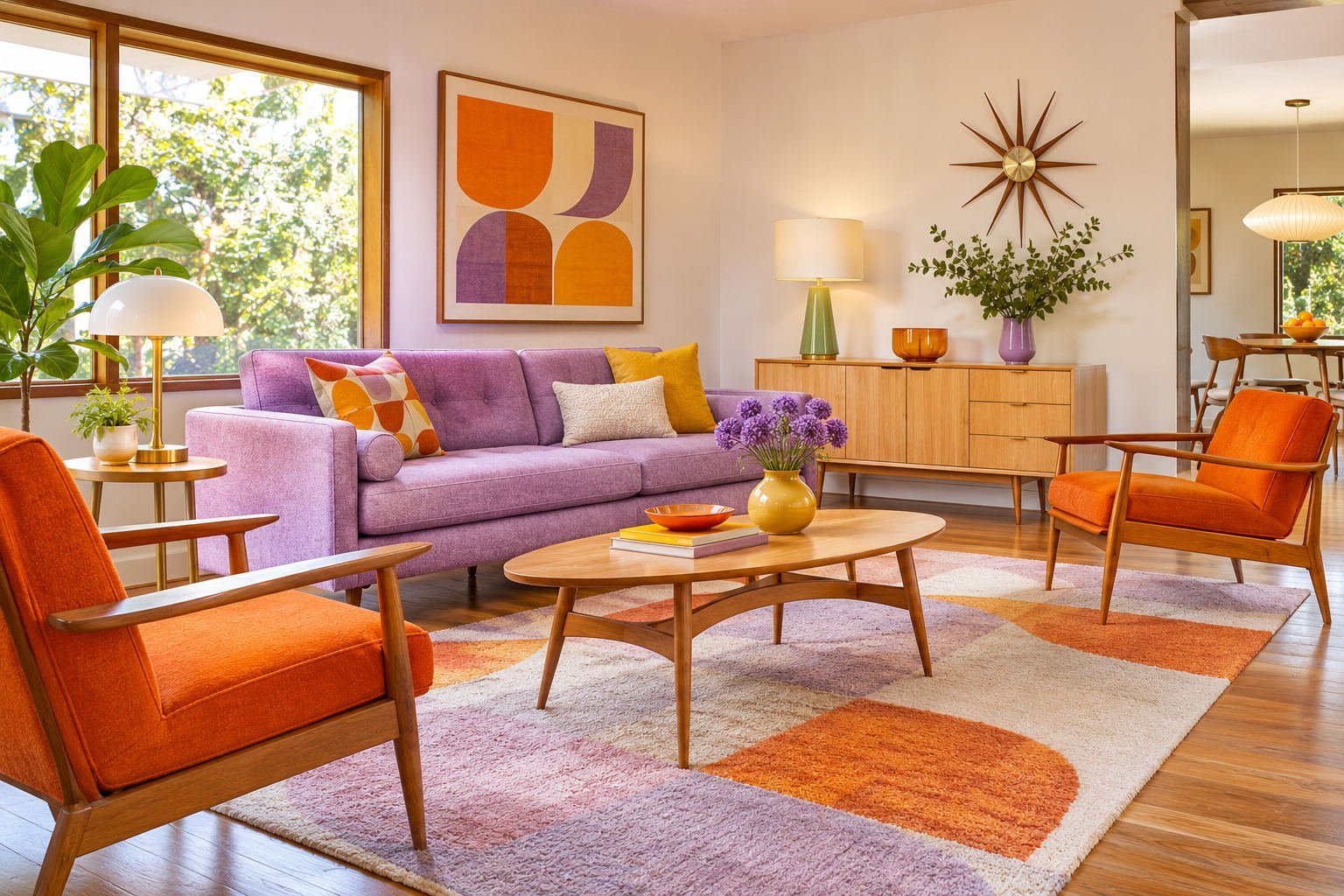
13. Orange Reading Chairs
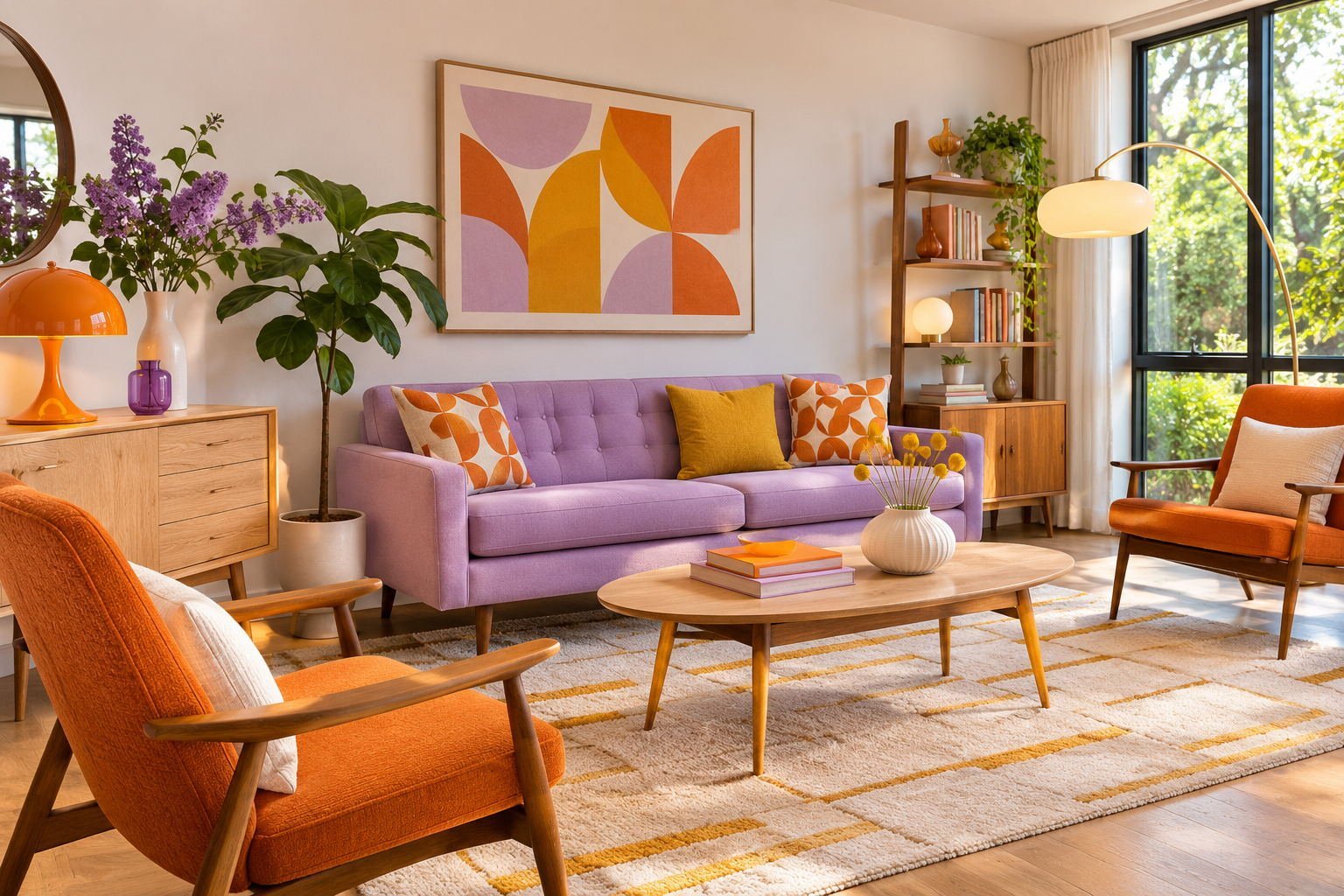
Inspiration: orange reading chairs with mid-century forms and a practical color story.
Pick the main feature: Matching tangerine chairs on opposite sides of a lilac sofa create a sociable conversation layout.
Choose a low-profile walnut or teak furniture piece to ground the arrangement.
Repeat two accent colors in cushions, art, lighting, or a geometric rug.
Finish thoughtfully: Choose lounge chairs with comfortable seat depth and sturdy arms rather than only a photogenic outline.
The chairs have exposed timber arms, an unmistakable mid-century cue, while the pale rug and simple table prevent the bright fabric from taking over. It is a practical way to add color without buying another large sofa. Angle the chairs slightly inward to support conversation while preserving circulation.
14. Oversized Abstract Artwork
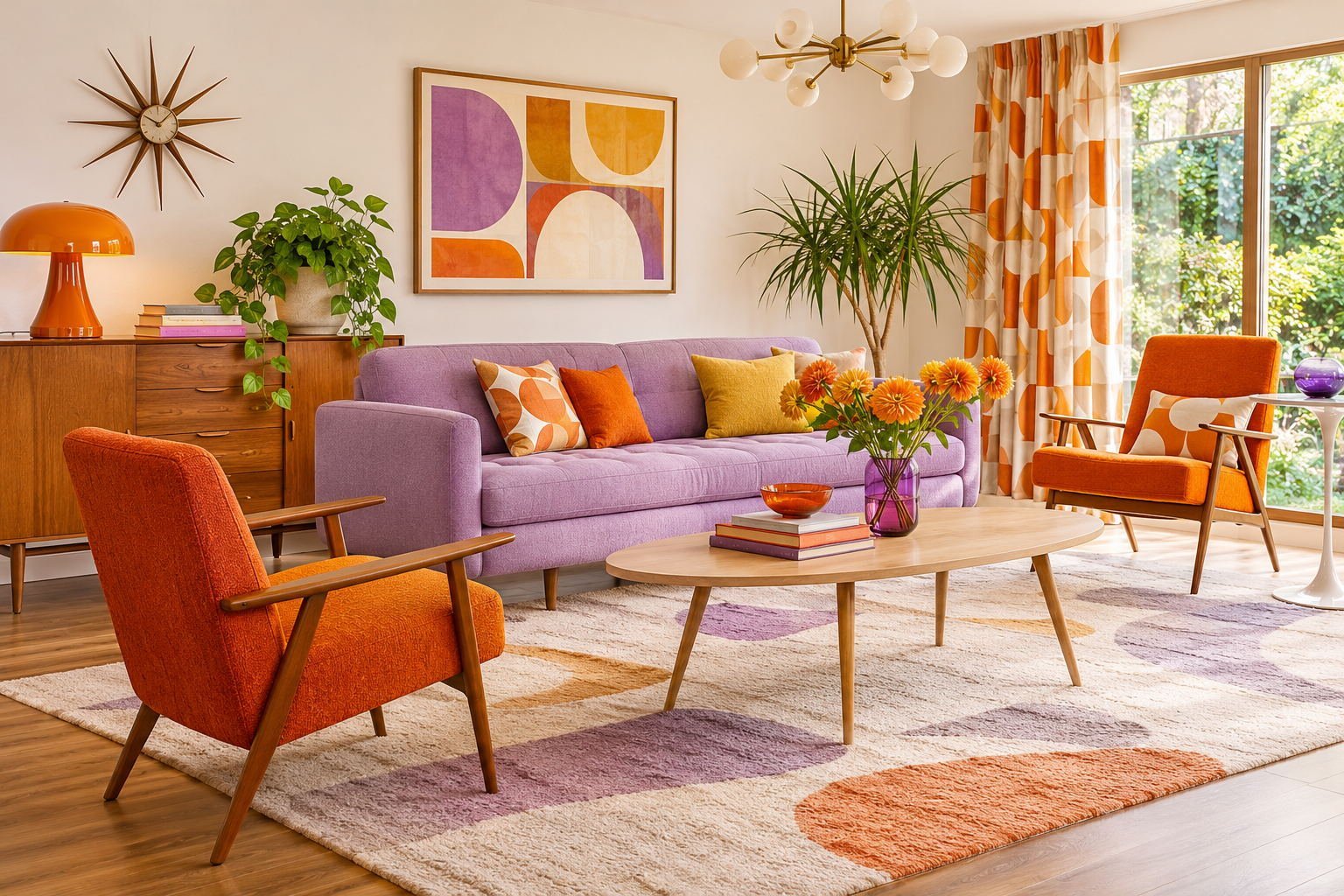
Inspiration: oversized abstract artwork with mid-century forms and a practical color story.
| Element | Bolder choice | Quieter choice |
| Wall | Aqua paint | Warm off-white |
| Seating | Mustard or teal upholstery | Walnut frame with cream cushion |
| Pattern | Large geometric rug | Small printed cushion |
A bold abstract painting can act as the entire color plan for a room. The lavender, orange, and ochre shapes above the sofa reappear in the seating, floral arrangement, and rug. This connection is why the space feels considered despite its playful combinations. Keep the frame slim so the print feels light above an upholstered sofa.
15. Starburst Clock Moment
Inspiration: starburst clock moment with mid-century forms and a practical color story.
The classic starburst clock provides a small but memorable vintage signature above the walnut credenza. Against pale walls and colorful seating, it adds sculptural detail without requiring a full feature wall. The key is to let the clock have enough empty wall around it to read clearly.
Do: Mount it at comfortable eye level rather than excessively high above the cabinet.
Do: Repeat the hero shade in two small accents.
Do: Leave clear space around the main seating.
Don’t: Mix five unrelated wood finishes.
Don’t: Block windows with oversized furniture.
Don’t: Cover every surface with tiny retro objects.
Avoid surrounding a detailed starburst clock with too many equally busy decorations.
16. Patterned Retro Drapery
Inspiration: patterned retro drapery with mid-century forms and a practical color story.
Style: Colorful mid-century modern
Color move: One major saturated upholstery piece
Best material: Walnut, oak, velvet, or textured woven fabric
Easy refresh: Swap the rug, cushions, or abstract artwork
Patterned curtains can make plain white walls look like a thoughtful retro interior almost immediately. In this room, orange-and-cream window panels repeat the chair color while introducing a soft vertical element against otherwise low furniture. Because the windows already provide a strong frame, the curtains help tie the whole corner together. Hang curtains high and wide enough that daylight remains visible when they are open. Choose one patterned textile as the hero, then keep nearby throws and rugs more restrained.
17. Emerald Velvet Statement
Inspiration: emerald velvet statement with mid-century forms and a practical color story.
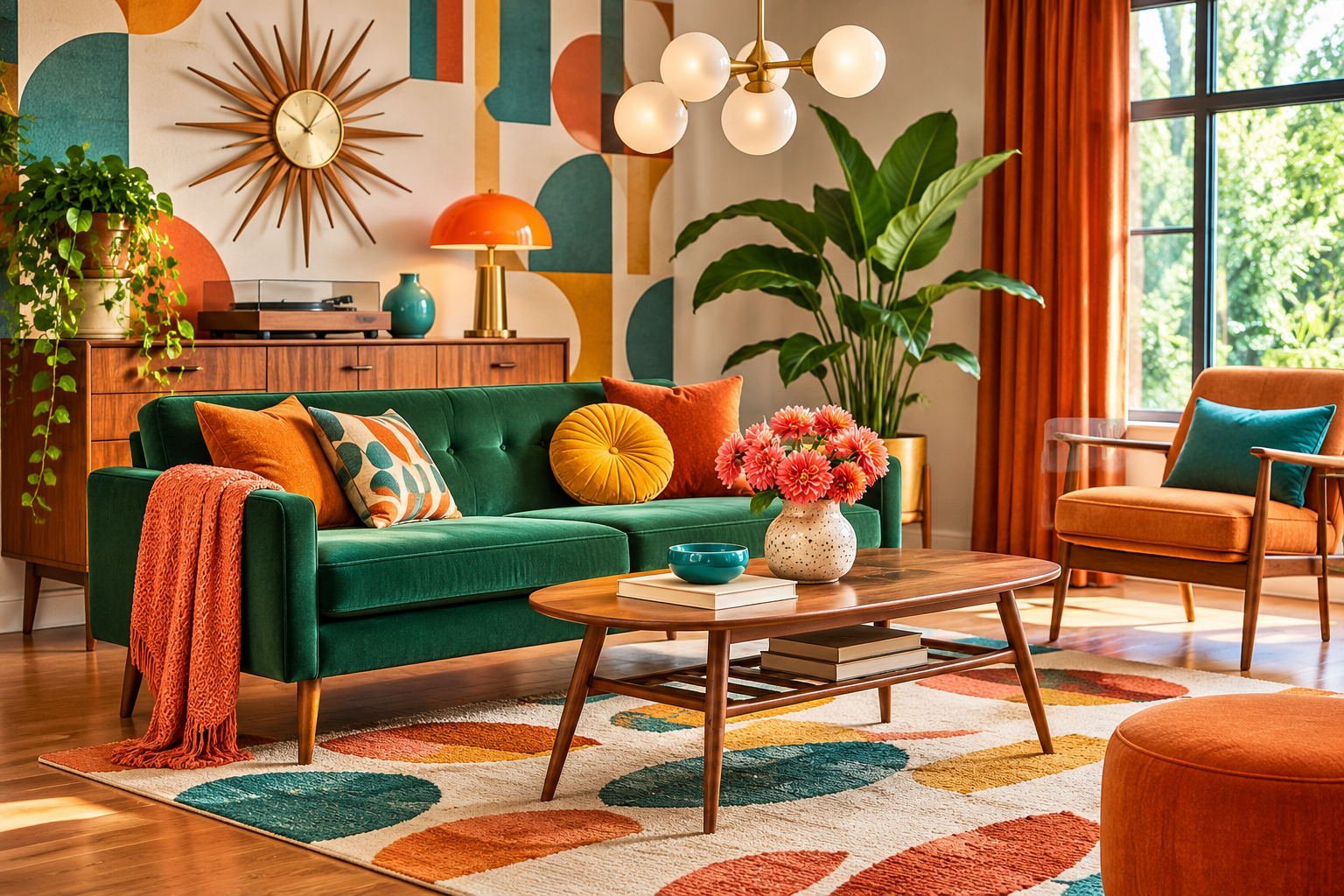
A saturated green velvet sofa is rich enough to anchor a whole seating area. Rust-orange cushions and a lounge chair add warmth, while teal and yellow appear in the geometric wall treatment and area rug. This is an excellent reminder that jewel tones can still feel relaxed when paired with familiar walnut furniture.
Use a warm-white lamp near dark velvet so the texture reads clearly in evening light. Balance the sofa with a light rug to avoid a heavy block of dark color.
18. Turntable Corner Style
Inspiration: turntable corner style with mid-century forms and a practical color story.
Color anchor: A walnut sideboard holding a record player gives a living room a naturally retro focal point.
Furniture shape: Look for low profiles, exposed legs, and an inviting seat depth.
Pattern: Use one rug or curtain print that repeats the dominant colors.
Finishing touch: Choose a cabinet deep enough for the turntable and vibration-stable enough for playback.
Use the wall above the cabinet for one artwork or clock, then let the records add personality. Here, the green sofa, orange armchair, colorful rug, and mushroom lamp make the listening corner part of the overall design, not an unrelated collection of gadgets. Keep records accessible and leave room to operate the turntable lid.
19. Mustard and Blue Seating
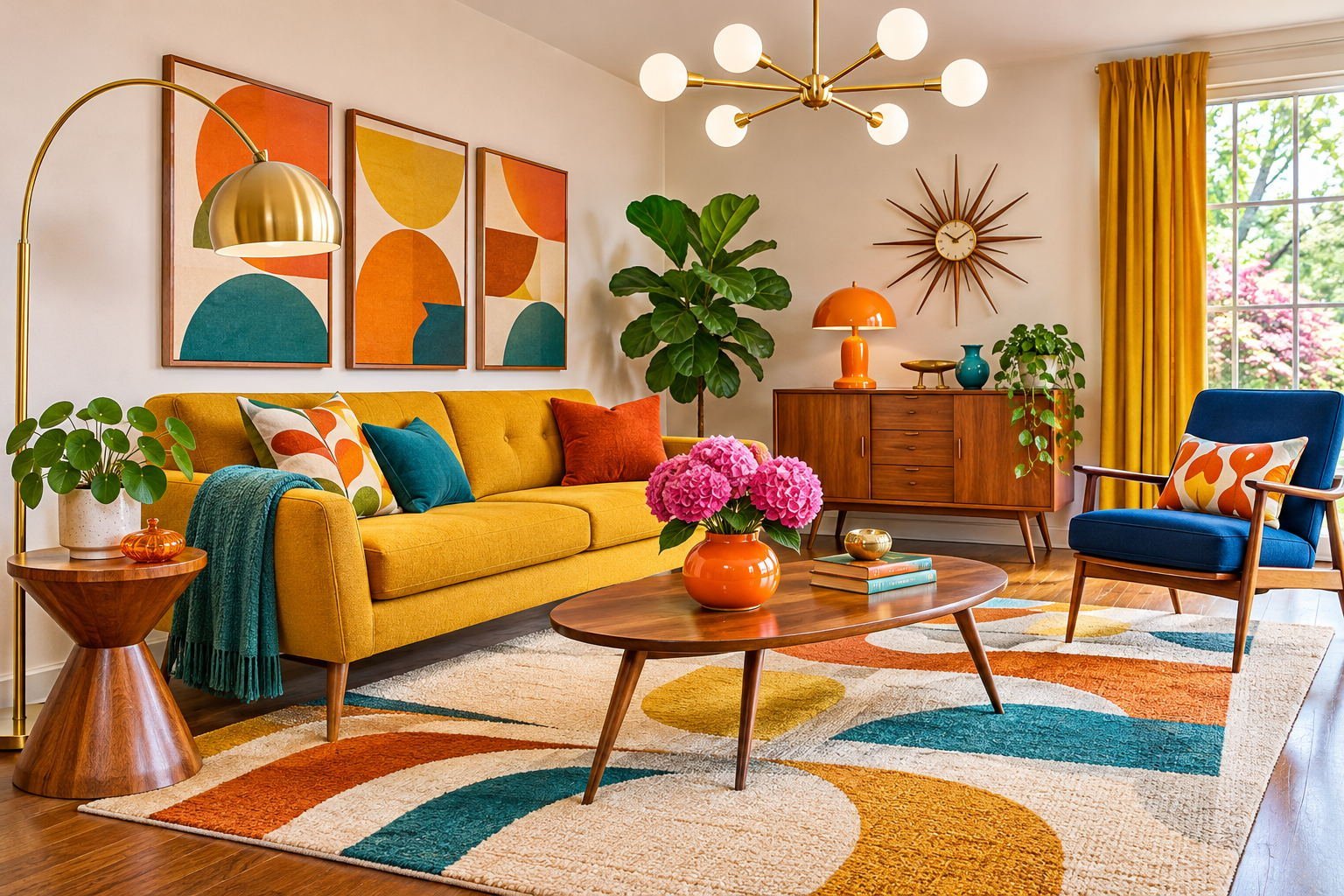
Inspiration: mustard and blue seating with mid-century forms and a practical color story.
Quick Tip: If the sofa is mustard, introduce blue through a single armchair before buying more pieces. Repeat the blue in small ceramics or art rather than painting the whole room.
Mustard yellow and cobalt-blue upholstery create a bolder pairing than conventional neutrals, yet the walnut table and ivory walls make it work. Geometric artwork and the patterned rug repeat orange and teal, so the high-contrast seating feels connected. It is a strong palette for bright rooms with uncomplicated furniture shapes.
20. Navy Sofa Color Mix
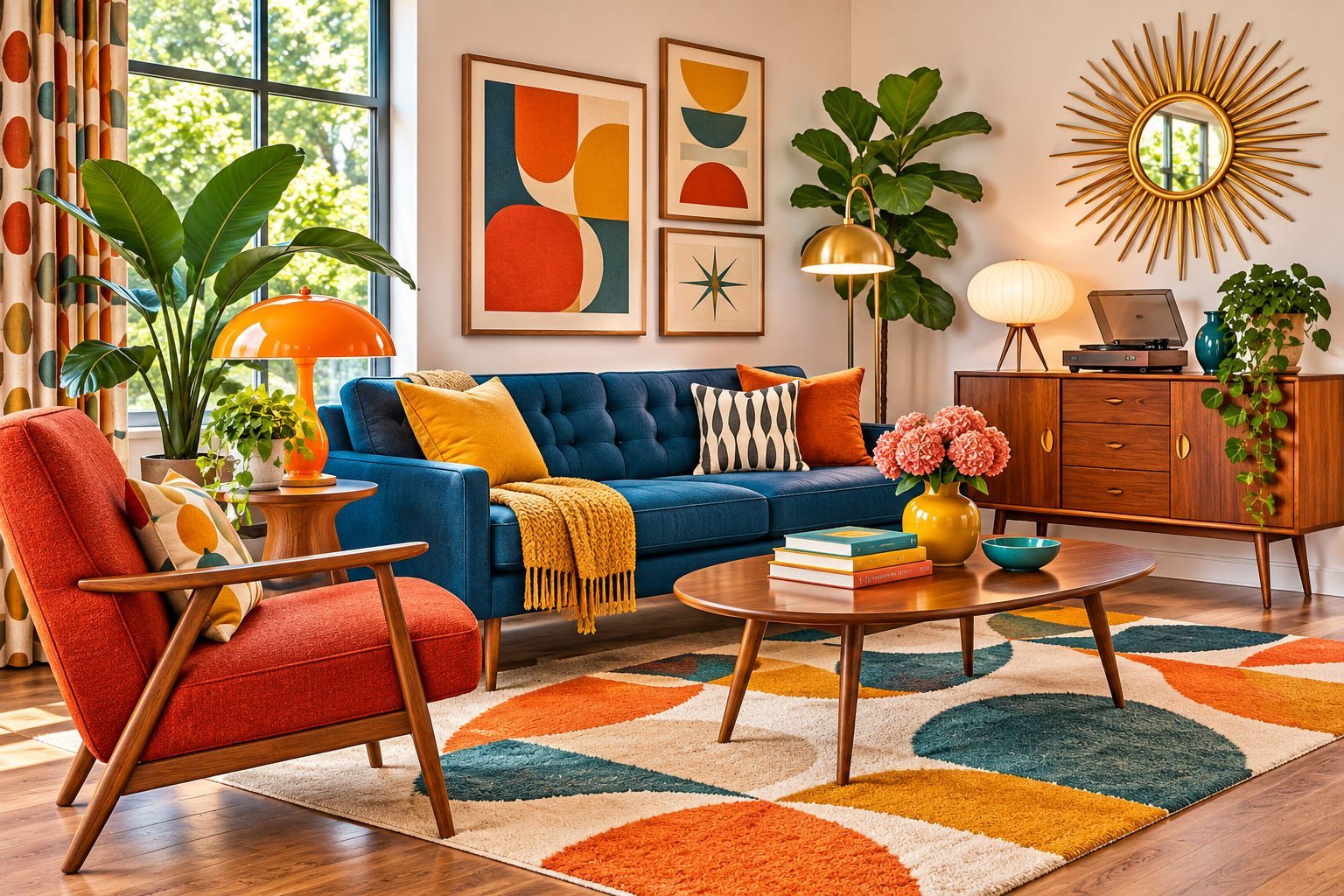
Inspiration: navy sofa color mix with mid-century forms and a practical color story.
Before: The seating area may feel safe but disconnected when the strongest color appears only once. A plain rug and scattered accessories offer no clear focal point.
After: A deep navy sofa can handle much more color than expected. Burnt-orange upholstery, yellow pillows, patterned curtains, and a playful multicolored rug lift the whole room, while the record player and walnut cabinet carry the vintage mood. The sofa provides a stable base that lets accessories change seasonally.
Use one dark anchor, like the navy sofa, and limit the remaining palette to three accent shades. If you later want a calmer room, swap the cushions and rug before replacing major furniture.
Conclusion
The most memorable living rooms do not use every color at once. They balance one confident choice with a few supporting tones, warm wood, and furniture that people actually enjoy sitting in. A mustard sofa can brighten a neutral room, a cobalt chair can add instant contrast, and vintage artwork can make existing furnishings feel new again. The colorful mid century modern living room ideas above offer a starting point, not a rigid rulebook. Choose a palette that suits your daylight and your daily life, try one manageable change, and share the look that inspires you most. Save this article to Pinterest before your next decorating project.