24 Farmhouse Architecture Details With Timeless Appeal
The right architectural details can make a farmhouse feel established, welcoming, and beautifully connected to its surroundings. Farmhouse Architecture Details such as gabled rooflines, timber beams, divided-light windows, stone foundations, and wide porches create character that lasts beyond changing decor trends.
A home can have simple finishes and still feel remarkably distinctive when its proportions and materials work together. These ideas focus on the structural and visual elements that give farmhouse homes their recognizable charm while keeping the overall look refined and practical.
In my experience, the most memorable farmhouse exteriors rarely depend on excessive decoration. Natural wood, stone, thoughtful window placement, strong rooflines, and well-scaled entrances often do more. Whether you’re planning a renovation, building from scratch, or simply collecting inspiration, these details can help you identify the features worth prioritizing.
1. Gabled Rooflines
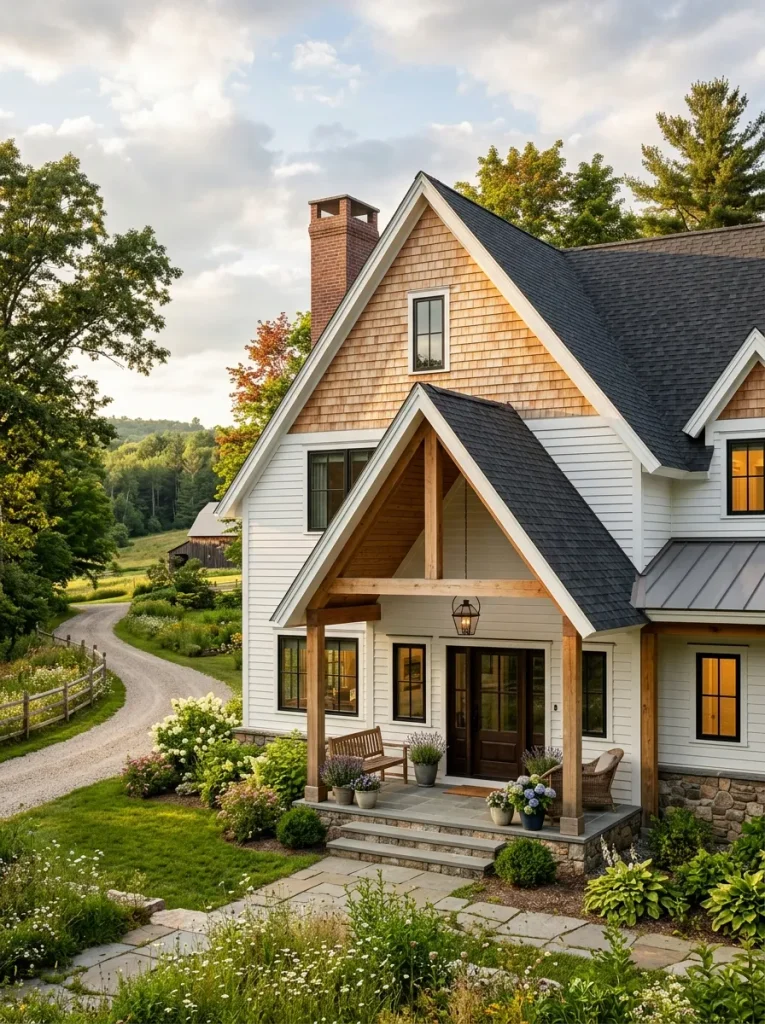
A strong gabled roof gives a farmhouse its recognizable silhouette while directing attention upward. The simple triangular form works especially well with white siding, dark roofing, natural timber, and stone accents. Its proportions can also make a modest home appear taller and more architecturally substantial from the street.
For a timeless result, avoid adding too many competing roof shapes. Keep the main gable visually dominant and repeat its angles through dormers, porch details, or window placement. In my experience, traditional materials look more refined when the roofline remains clean and uncomplicated. Good proportions often create more impact than elaborate ornament.
2. Wraparound Porch
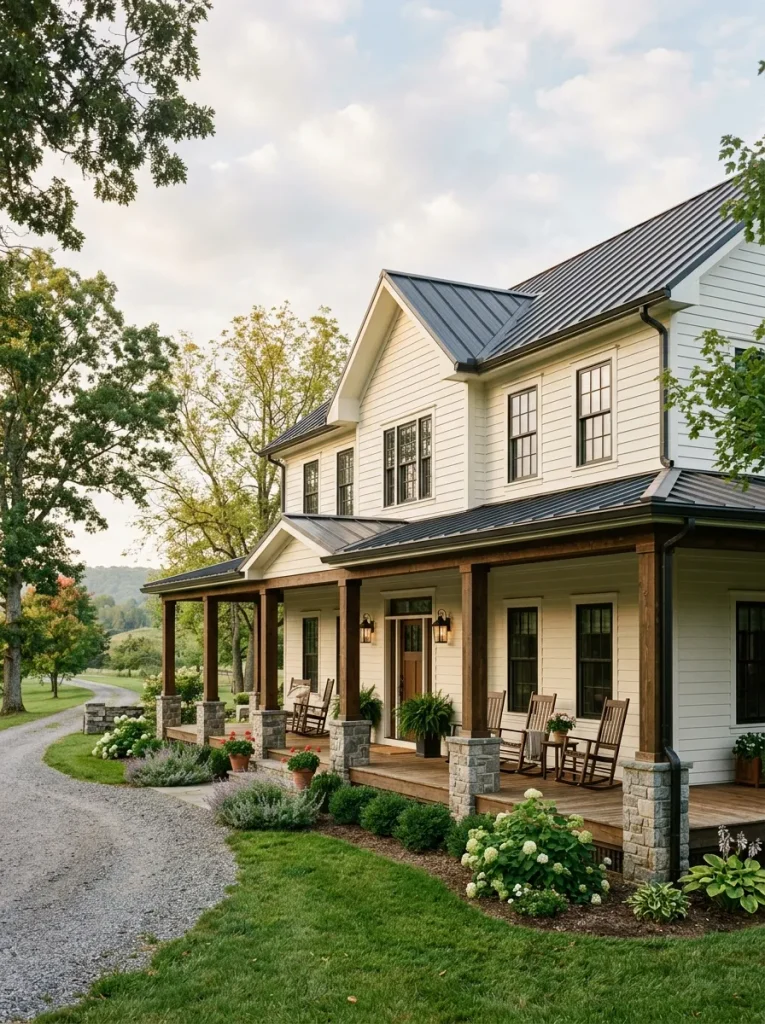
- Extend the porch thoughtfully: Let it connect naturally with the main entry and side elevation rather than appearing like an added platform.
- Use substantial columns: Square timber or painted wood posts provide visual weight and traditional character.
- Choose durable flooring: Weather-resistant timber or composite boards can handle regular outdoor use.
- Add restrained furnishings: A pair of chairs, a simple bench, and understated planters keep the porch functional without overcrowding it.
- Coordinate lighting: Black or aged-brass lanterns reinforce the farmhouse architectural language.
A wraparound porch expands usable outdoor space while giving the home’s exterior a welcoming sense of scale. Keep furniture arranged around clear walking paths, especially near entrances and corners. For an elegant finish, repeat materials from the house, such as timber, stone, and metal, so the porch feels like an intentional part of the architecture.
3. Exposed Timber Beams
Quick Tip:
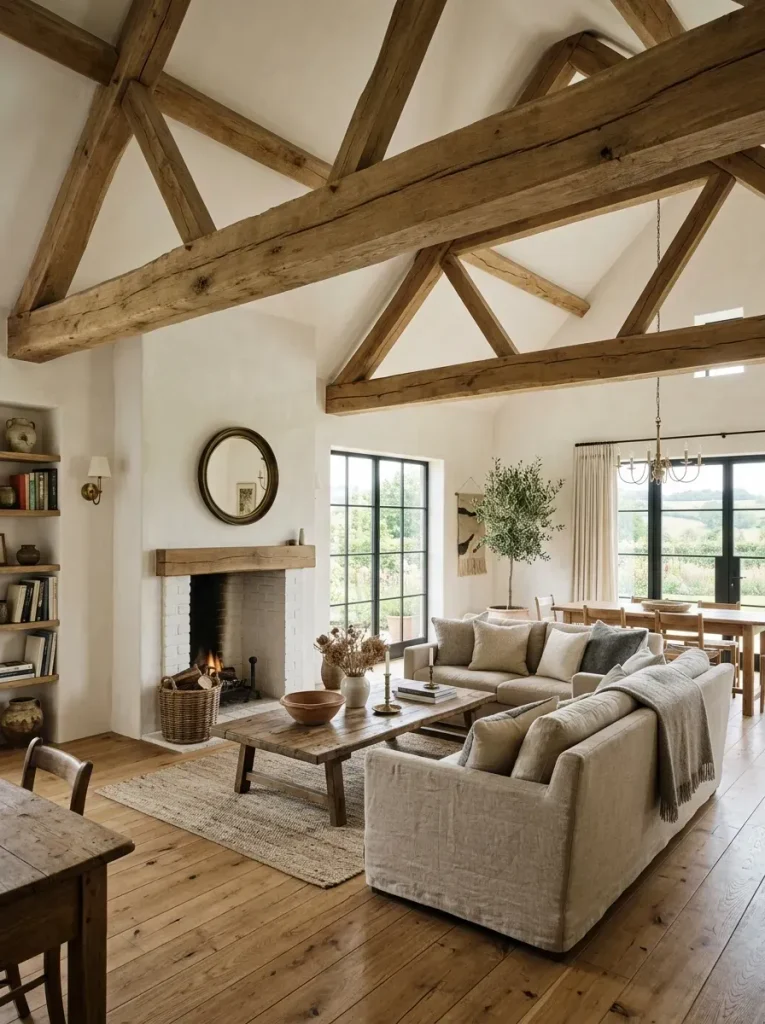
Choose beams with visible grain, knots, and natural variation rather than perfectly uniform timber. If structural beams are not practical, properly proportioned decorative beams can provide a similar visual effect without altering the main structure.
Exposed timber adds warmth and architectural depth to rooms with high or vaulted ceilings. Keep the surrounding finishes relatively quiet so the wood remains prominent. I’ve noticed that oak and reclaimed pine work particularly well with cream plaster, limestone, and natural textiles, creating a layered interior that feels established rather than overly themed.
4. Board-and-Batten Siding
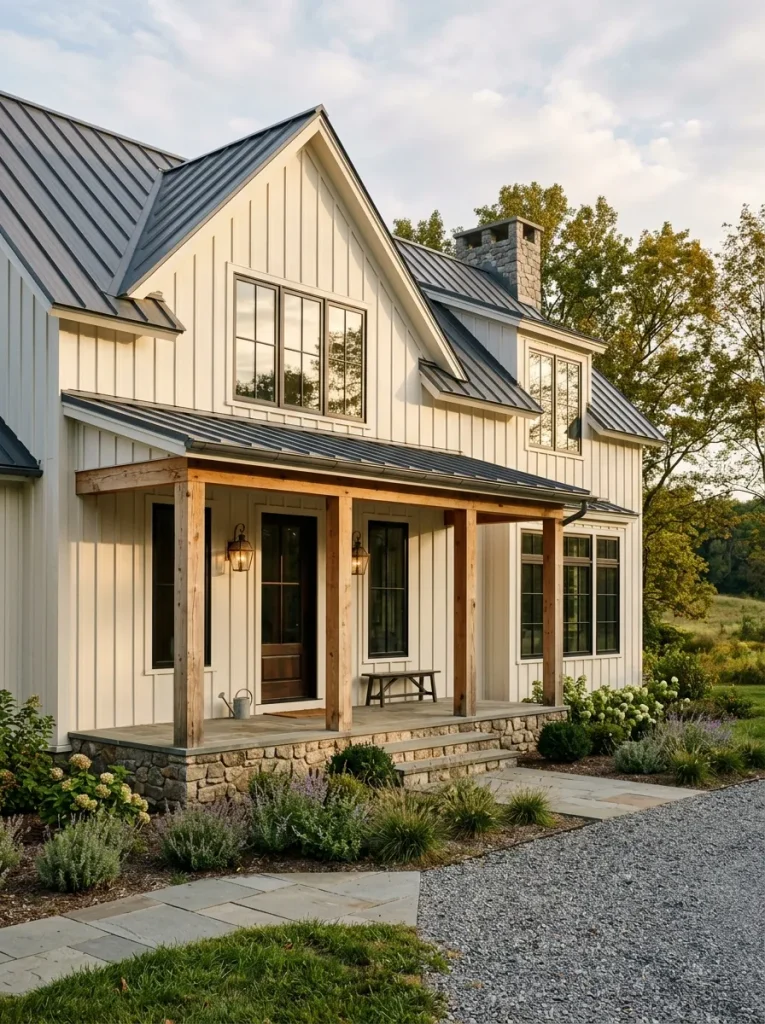
BEFORE
A home’s exterior can feel visually flat when large wall surfaces have no change in texture or vertical rhythm. Plain siding may also make architectural details such as windows and doors feel less defined.
AFTER
Board-and-batten siding introduces narrow vertical battens that create depth and a more structured facade. The vertical lines can also draw the eye upward, especially on taller gables or two-story sections.
For a sophisticated finish, use a warm white, muted taupe, or soft sage rather than an overly bright color. Pair the siding with darker window frames and natural wood for contrast. Keep trim proportions consistent around doors and windows so the facade maintains a balanced, traditional appearance.
5. Divided-Light Windows
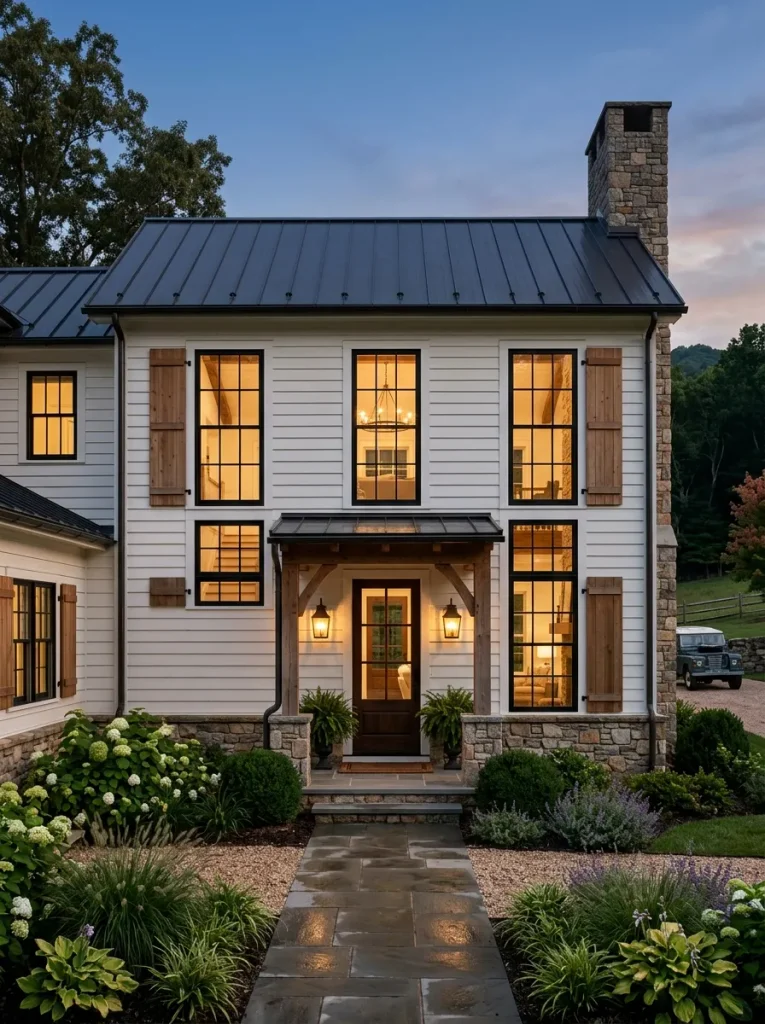
- Choose the grid pattern: Traditional six-over-six or similar divided-light layouts reinforce classic farmhouse character.
- Match window proportions: Taller windows often suit farmhouse facades better than overly wide horizontal designs.
- Coordinate the frames: Black, deep bronze, or natural wood frames create definition against light siding.
- Repeat the pattern: Use consistent window styles across the front elevation for architectural cohesion.
- Prioritize performance: Choose modern glazing and properly sealed frames where energy efficiency and weather protection are important.
Divided-light windows add rhythm and visual detail without relying on excessive decoration. Their repeated panes can make a facade feel more traditional while still working with contemporary construction. I’ve noticed that consistent window spacing often has a bigger impact than decorative shutters or elaborate trim. Let the proportions do most of the architectural work.
6. Stone Foundation Base
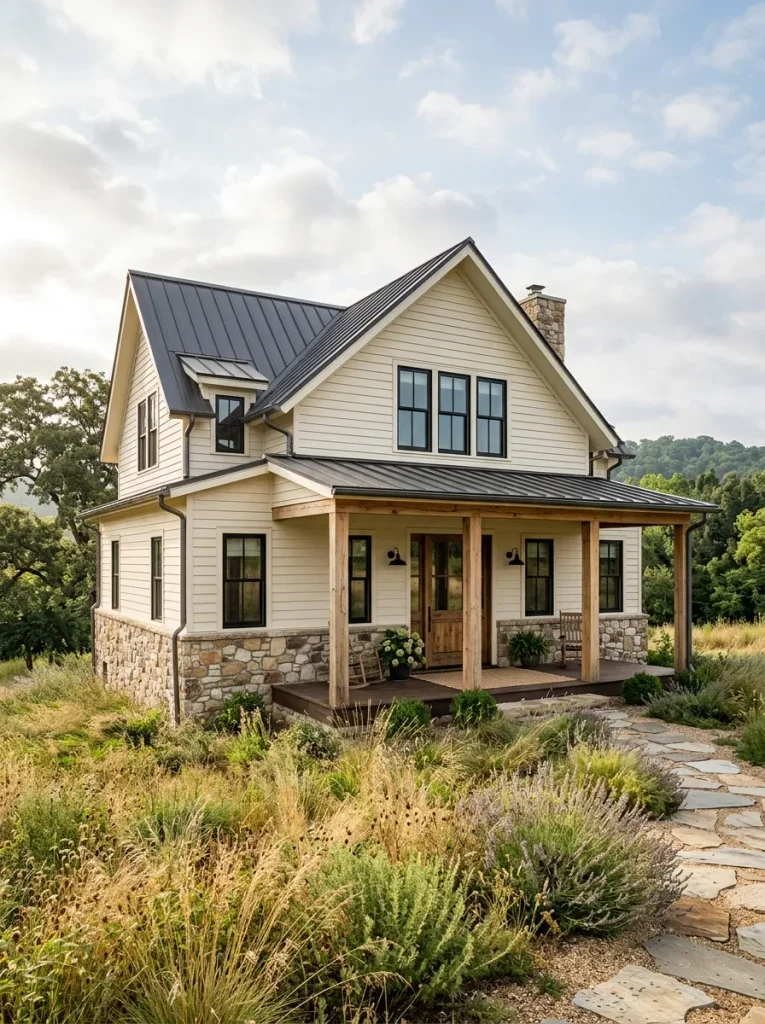
| Feature | Option A: Painted Base | Option B: Stone Base |
|---|---|---|
| Texture | Smooth and uniform | Natural and varied |
| Visual weight | Light and understated | Grounded and substantial |
| Maintenance | Requires periodic repainting | Depends on stone and mortar condition |
| Style | Cleaner modern farmhouse | Traditional countryside character |
A stone foundation visually anchors the farmhouse and creates a strong transition between the building and landscape. Natural variations in color and texture also prevent a large exterior from feeling too uniform. For an upscale appearance, choose stone tones that echo the roof, pathway, or surrounding landscape instead of introducing a completely unrelated color.
7. Dutch Gable Ends
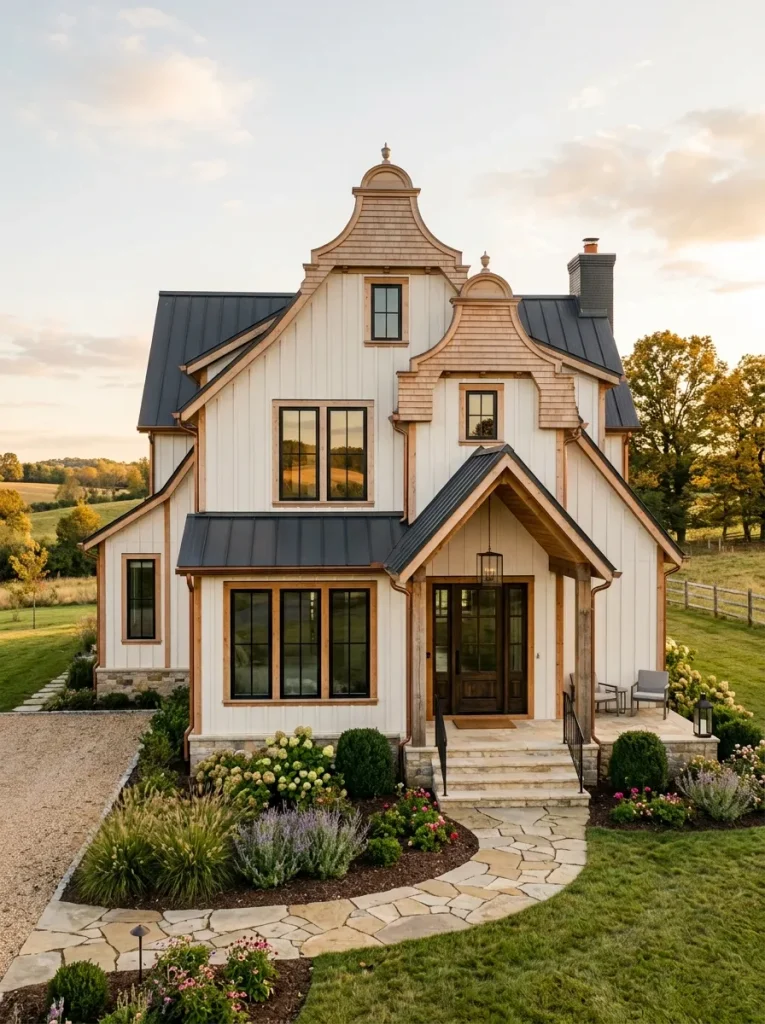
DO
- DO: Keep the gable proportions balanced with the main roof.
- DO: Use simple trim to emphasize the distinctive curved or stepped profile.
- DO: Repeat the roof material across connected sections for visual unity.
- DO: Pair the shape with restrained landscaping so the architecture remains prominent.
DON’T
- DON’T: Add multiple decorative gables that compete for attention.
- DON’T: Use overly ornate trim if the rest of the exterior is simple.
- DON’T: Ignore roof drainage and flashing details around complex intersections.
- DON’T: Mix several unrelated exterior materials within one gable.
Dutch gables add architectural interest while preserving the familiar farmhouse silhouette. Their distinctive profile works especially well on larger homes where a simple roofline might feel too plain. Keep surrounding details restrained so the roof shape remains the defining feature. Proper flashing, drainage, and professional roof construction are essential wherever multiple roof planes meet.
8. Deep Eave Overhangs
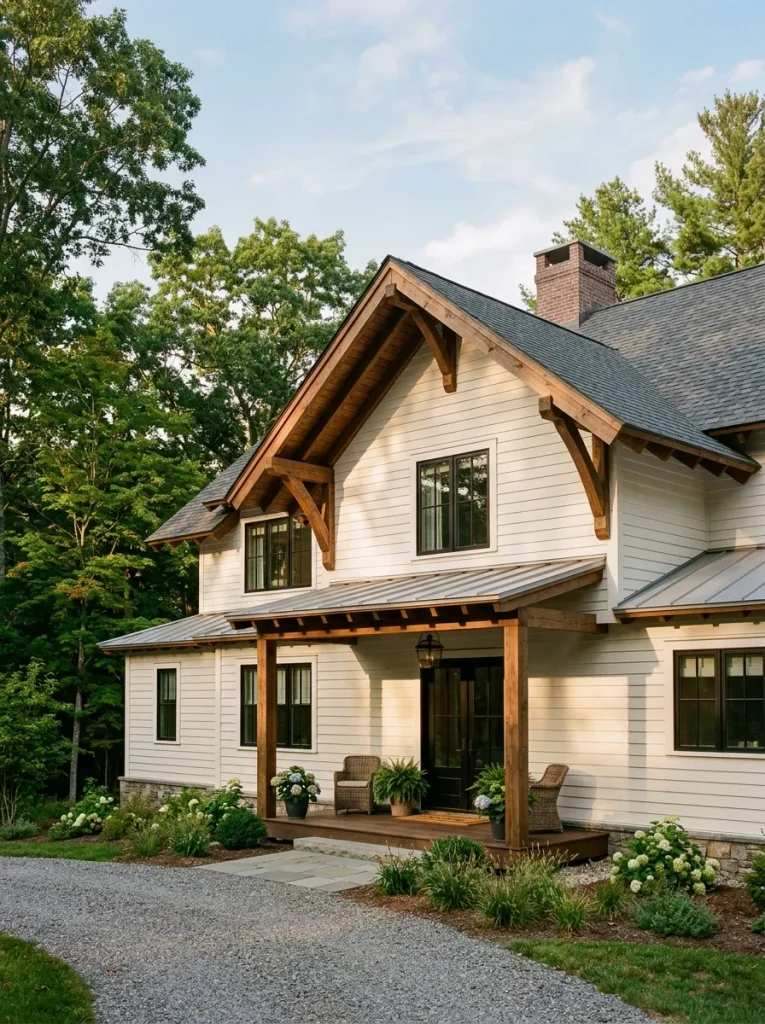
Cost: Moderate to high depending on structural changes.
Time: Several days or longer for major roof alterations.
Skill Level: Professional for structural modifications.
Best For: New construction, major renovations, and traditionally styled farmhouses.
Result: Stronger architectural definition with practical shade and weather protection.
Deep eaves give a farmhouse exterior a substantial, established appearance while serving a practical purpose. They can help shade upper walls and openings from direct sunlight and precipitation, depending on climate and orientation. For new construction, coordinate the overhang with gutters, fascia, ventilation, and roof drainage so the detail performs as well as it looks.
9. Natural Wood Shutters
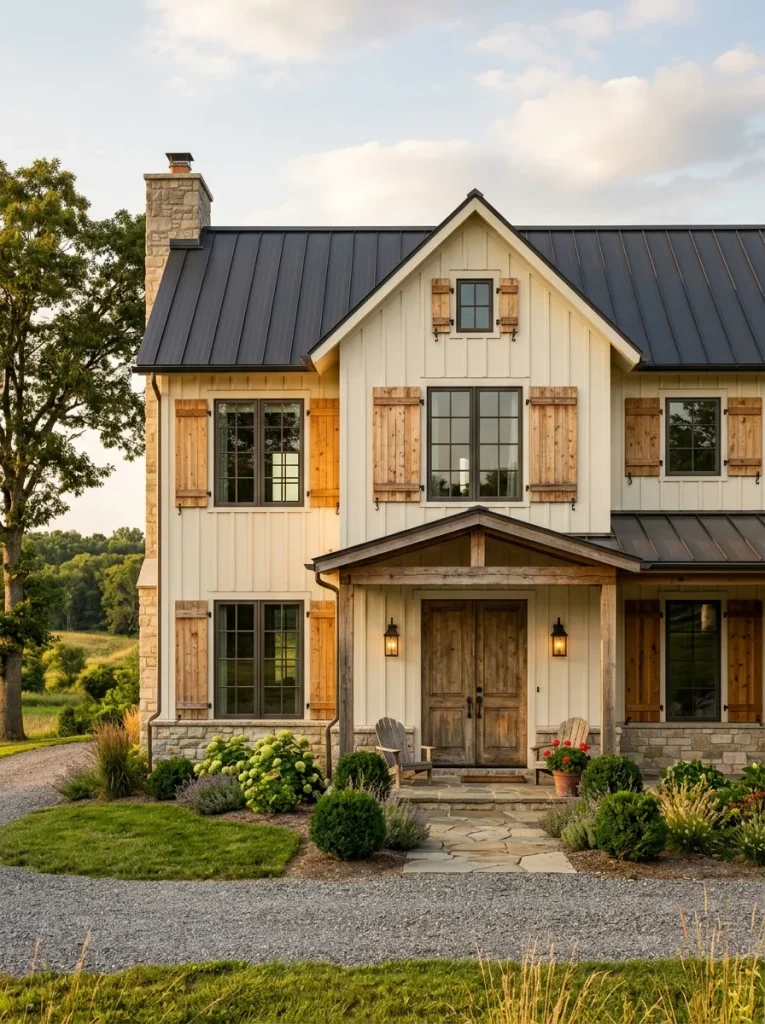
Shutters can give farmhouse windows a stronger sense of proportion while introducing natural warmth to a pale exterior. Choose properly scaled shutters that visually relate to the window opening rather than narrow decorative pieces that feel undersized.
Natural cedar, oak, or painted timber can work beautifully depending on the rest of the facade. I’ve noticed that shutters look most convincing when their color connects with another architectural element, such as the front door, porch posts, or exposed beams. Use durable exterior finishes and appropriate hardware so the detail remains practical as well as decorative.
10. Standing Seam Roof
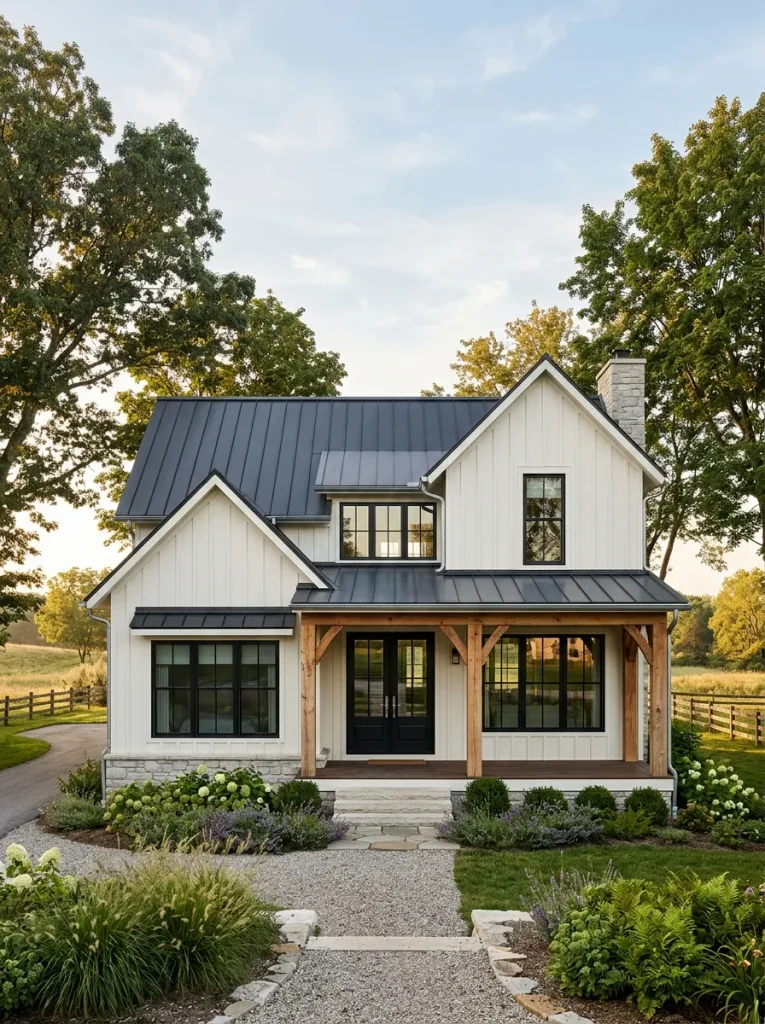
- Choose a restrained color: Charcoal, matte black, muted bronze, or dark gray complements traditional farmhouse materials.
- Keep the roof lines simple: Clean planes allow the metal finish to feel intentional rather than industrial.
- Coordinate exterior metals: Match gutters, lanterns, and other visible hardware to the roof tone where practical.
- Use contrasting natural materials: Pair metal with timber, stone, or warm siding to soften its appearance.
- Plan drainage carefully: Coordinate gutters, downspouts, valleys, and roof edges before installation.
A standing seam roof brings a crisp architectural element to a farmhouse while retaining a traditional connection to rural metal roofing. Its long vertical seams can emphasize the roof’s geometry and complement strong gables. For a refined exterior, balance the dark roof with warm siding, natural wood, and stone rather than introducing several additional finishes.
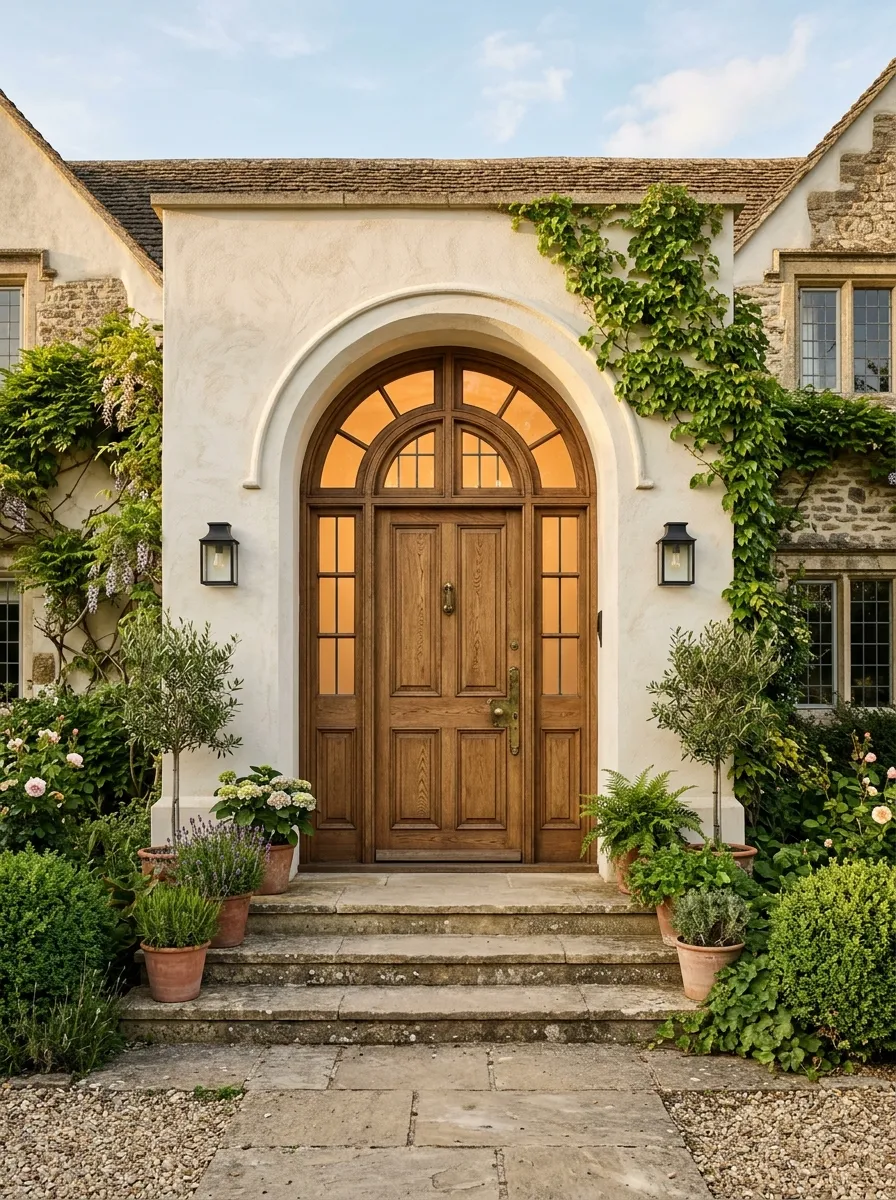
11. Arched Entry Door
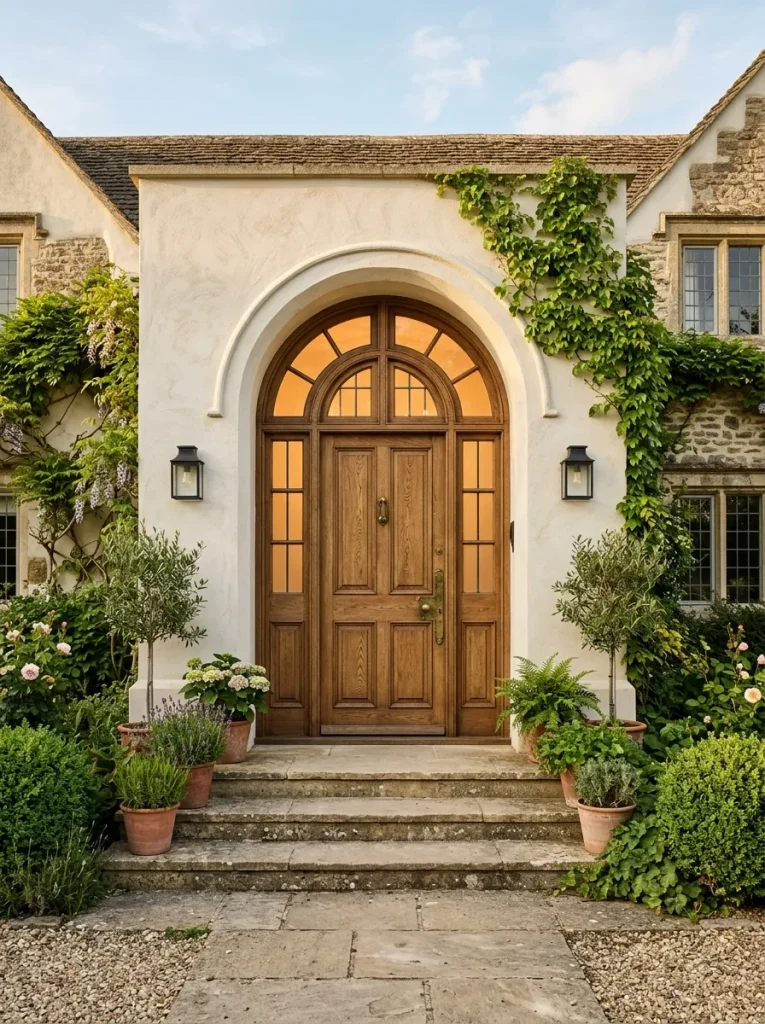
Quick Tip:
Let the arch be the main feature by keeping the surrounding trim relatively simple. A substantial wood door with visible grain adds warmth, while aged brass hardware provides a refined finishing detail without making the entry feel ornate.
An arched entry can soften the strong horizontal and vertical lines found throughout farmhouse architecture. Use a generous door height and enough surrounding wall space so the curve does not feel cramped. For an especially cohesive facade, repeat subtle arch shapes in nearby windows, porch openings, or interior transitions.
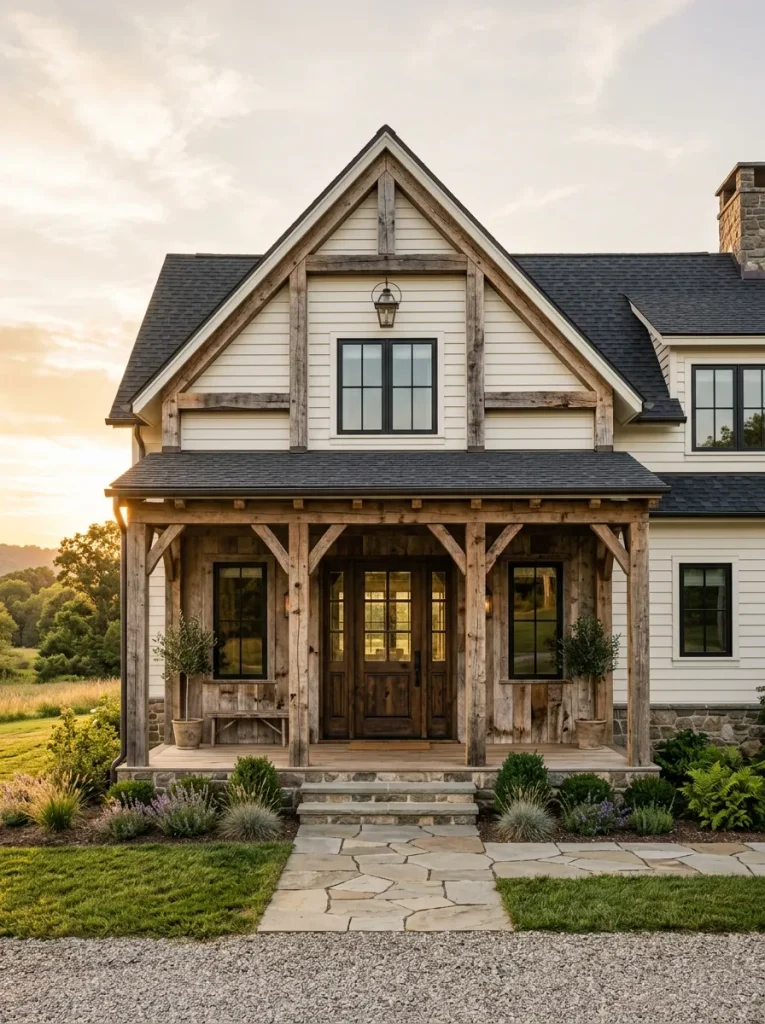
12. Reclaimed Timber Accents
BEFORE
A newly built farmhouse can sometimes look too uniform when every exterior surface has the same fresh finish. Smooth siding, trim, and doors may lack the variation associated with older rural buildings.
AFTER
Reclaimed timber introduces natural grain, weathering, and subtle color variation. Used selectively around the porch, gable, or entry, it creates contrast without covering the entire facade.
Choose timber with a consistent general tone while allowing natural imperfections to remain visible. Avoid excessive reclaimed wood, which can make the exterior feel visually busy. I’ve seen this approach work particularly well when the timber is balanced with clean siding, simple windows, and a restrained roofline.
13. Clerestory Windows
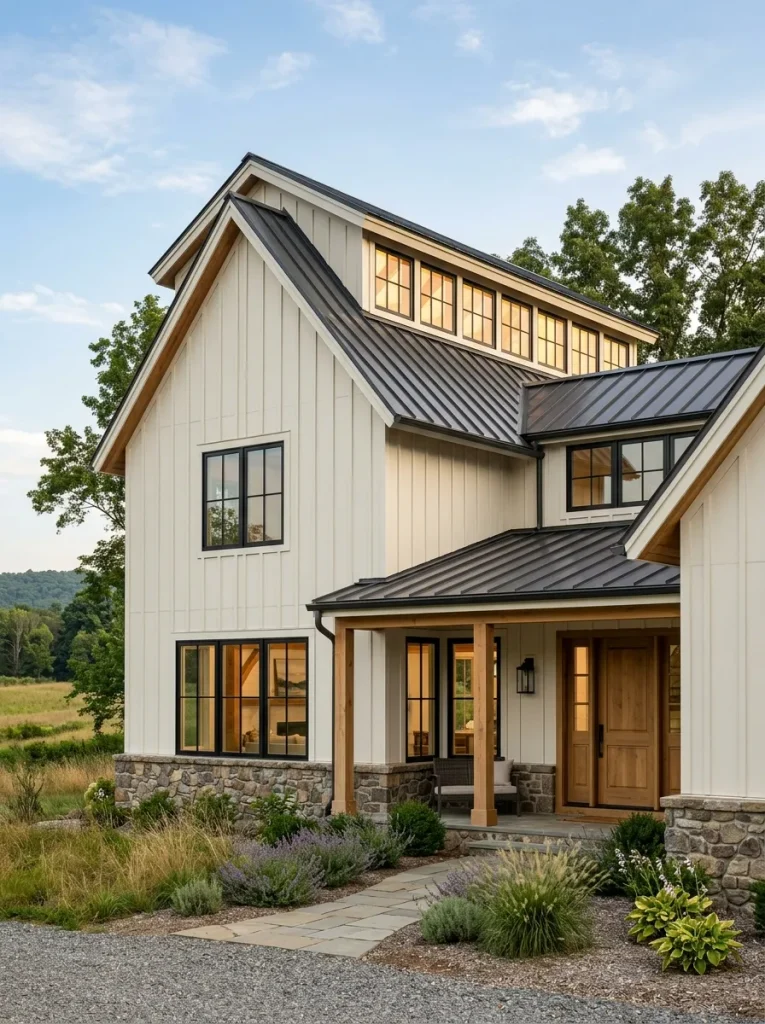
- Place them high: Position narrow windows beneath the roofline or above standard windows to bring daylight deeper into the room.
- Keep the rhythm consistent: Use evenly spaced openings for a clean architectural appearance.
- Coordinate the frames: Match clerestory frames with the home’s main windows for a unified exterior.
- Consider privacy: High-level glazing can provide natural light while limiting direct views into living areas.
- Plan shading: Consider roof orientation, glazing performance, and exterior shading where strong sun exposure is expected.
Clerestory windows can make farmhouse interiors feel brighter while adding an understated architectural detail to the exterior. They are especially useful in rooms with tall ceilings where standard windows leave unused wall space above. For a refined appearance, keep their proportions simple and align them carefully with the structure below.
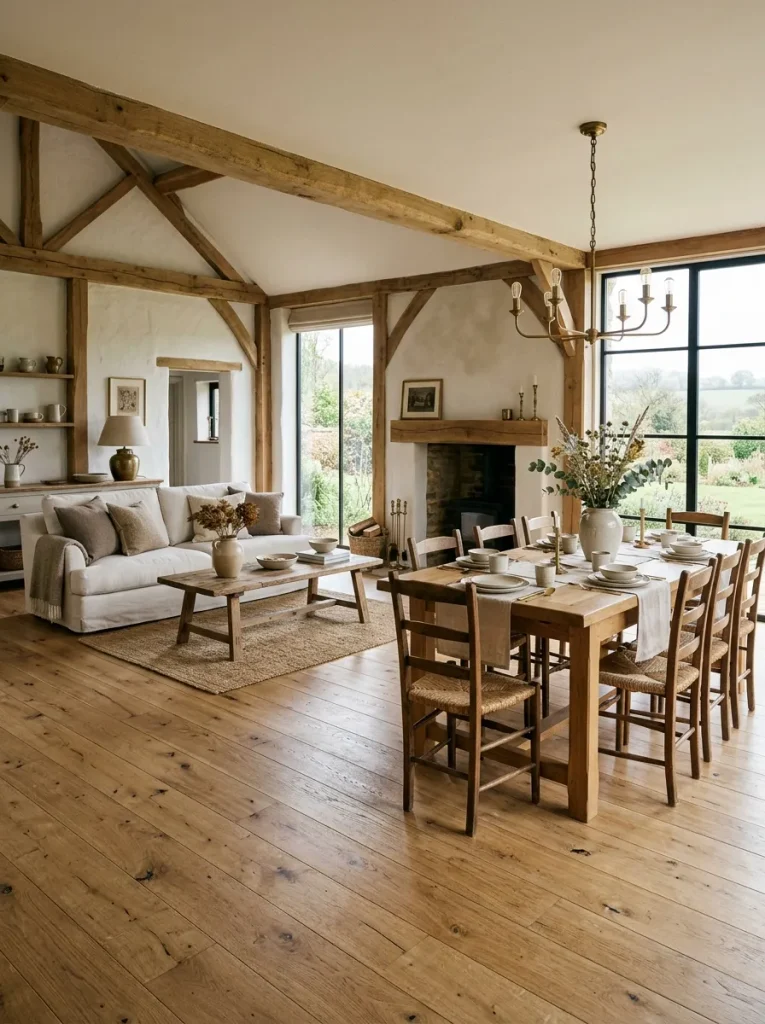
14. Wide Plank Flooring
| Flooring Approach | Option A: Narrow Planks | Option B: Wide Planks |
|---|---|---|
| Visual effect | More repetitive pattern | Calm, spacious appearance |
| Character | Traditional and detailed | Strong natural material presence |
| Best pairing | Smaller rooms and ornate details | Open layouts and simple furnishings |
| Maintenance | More seams to maintain | Fewer visible seams |
Wide plank flooring gives a farmhouse interior a grounded, architectural quality because the natural timber becomes a major visual element. Choose boards with visible grain and restrained variation rather than overly uniform finishes. I’ve noticed that wide boards pair especially well with simple furniture because they provide texture without creating a busy pattern underfoot.
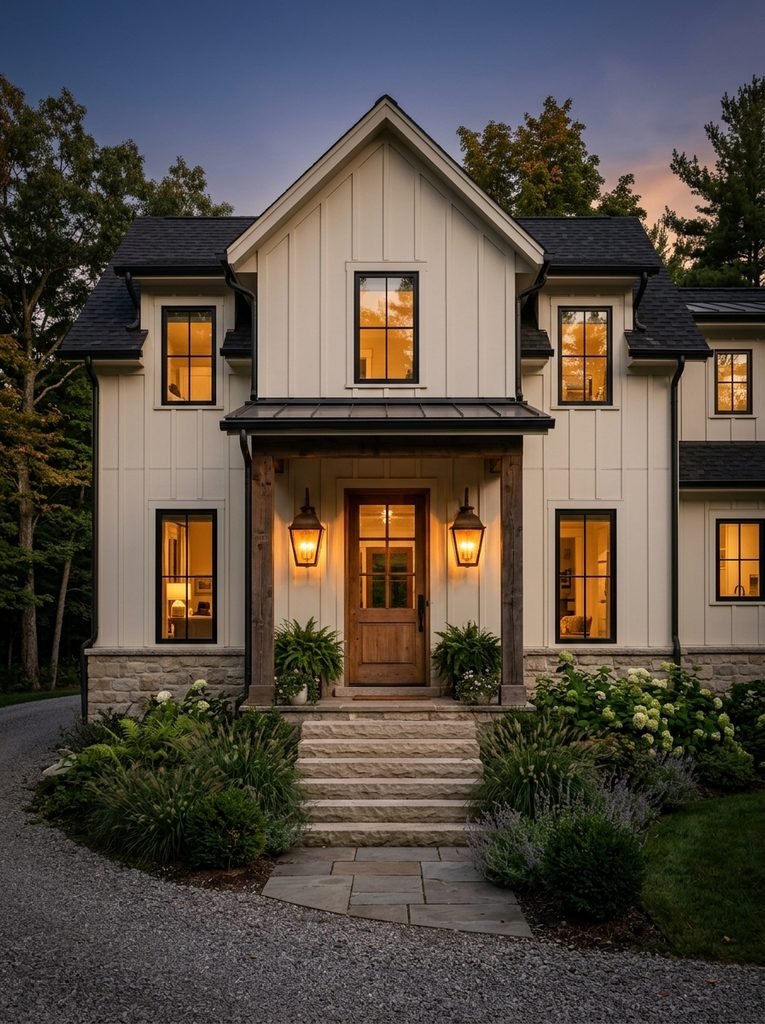
15. Lantern Exterior Lighting
DO
- DO: Position lanterns at a height that relates comfortably to the door and surrounding architecture.
- DO: Choose aged brass, bronze, or matte black finishes that complement existing exterior hardware.
- DO: Use warm-white bulbs to create a welcoming evening glow.
- DO: Select appropriately rated fixtures for outdoor exposure.
DON’T
- DON’T: Choose fixtures that are too small for a large farmhouse entrance.
- DON’T: Mix several unrelated metal finishes around one doorway.
- DON’T: Use overly cool lighting that makes warm wood and stone appear harsh.
- DON’T: Block door hardware or walking paths with oversized fixtures.
Exterior lanterns provide both practical illumination and architectural definition after sunset. Larger fixtures can reinforce the scale of a substantial farmhouse entry, while warm light brings out the character of timber and masonry. For the most cohesive result, repeat the chosen metal finish on nearby hardware and keep the fixture style consistent across the facade.
Timeless farmhouse style comes from thoughtful proportions, natural materials, and architectural details that feel purposeful rather than excessive. From deep roof overhangs and stone foundations to timber accents, classic windows, wide porches, and welcoming entryways, each feature can add depth and character to a home.
Start with one or two details that suit your property’s architecture, then build the design around them. I’ve noticed that even a small architectural change can influence the entire feel of a home. Save this post on Pinterest for your planning board, try the ideas that fit your vision, and share it with someone who loves timeless farmhouse design.