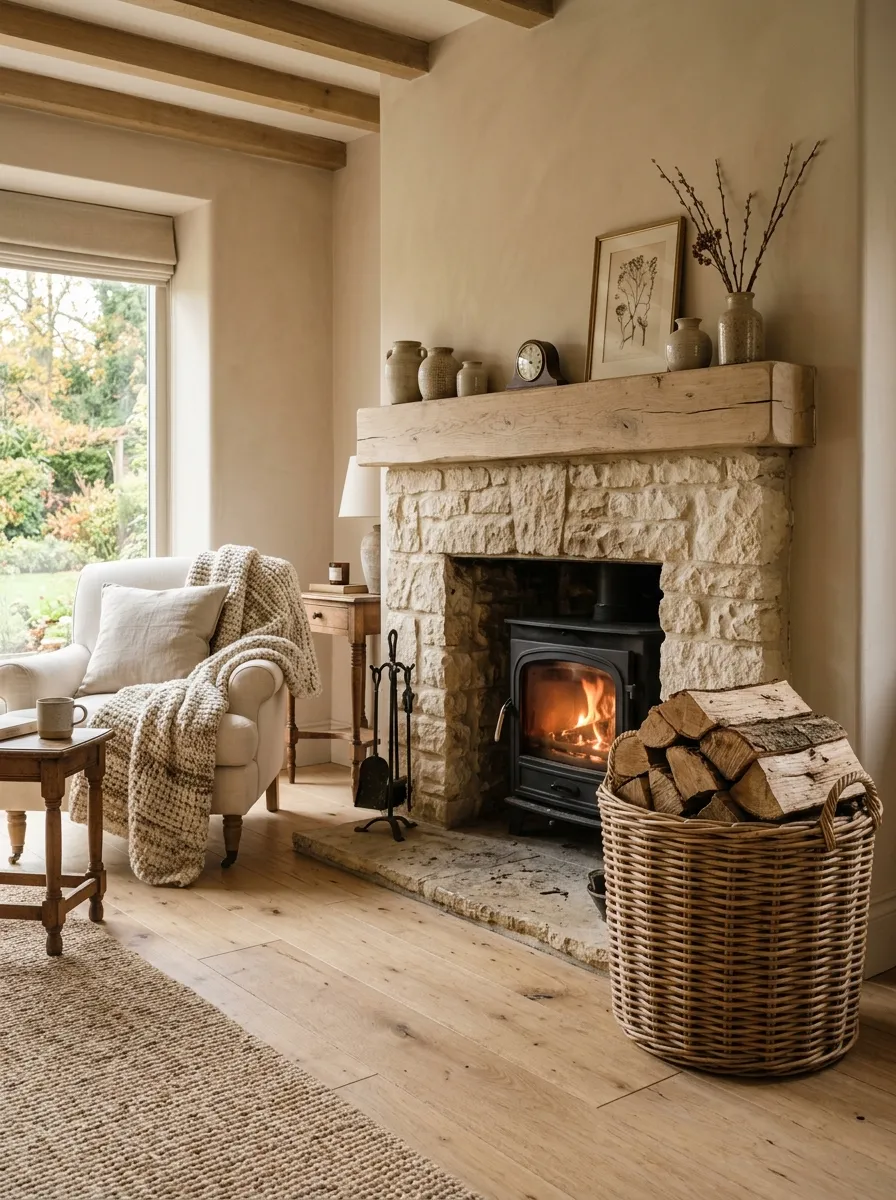
22 Farmhouse Fireplace Ideas for an Inviting Glow Today
A beautiful fireplace can make an entire room feel warmer, more welcoming, and thoughtfully finished. The right Farmhouse Fireplace Ideas can turn an ordinary hearth into a refined focal point without making the room feel overly rustic.
From whitewashed brick and natural stone to reclaimed wood, soft plaster, and layered neutral decor, these ideas offer plenty of ways to create a farmhouse look that feels elegant and lived-in. They also work across different room sizes and budgets, so you can choose details that suit your home rather than copying one exact style.
In my experience, the most inviting fireplaces balance texture with simplicity. A few natural materials, carefully chosen accessories, and the right proportions can make a surprisingly noticeable difference. As you explore these ideas, look for the details that fit your existing architecture, furniture, and personal style.
1. Whitewashed Brick Fireplace
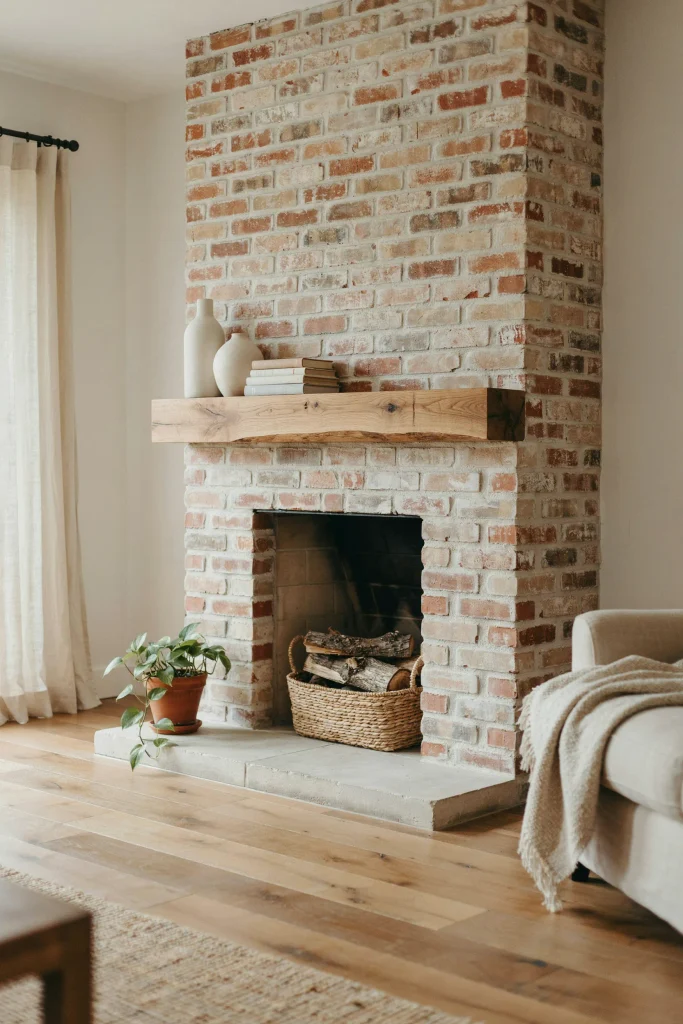
Whitewashed brick brings that relaxed farmhouse character into your living room without making the fireplace feel heavy. The soft white finish brightens the wall while allowing the original brick texture to show through. Pair it with a natural wood mantel and understated accessories for a look that feels both rustic and sophisticated.
For a polished finish, keep the surrounding colors warm and restrained. Cream upholstery, beige cushions, and oak furniture complement the brick beautifully. I’ve noticed that leaving some natural variation in the whitewash often creates more depth than a perfectly uniform finish. The result feels welcoming, timeless, and easy to style through every season.
2. Reclaimed Wood Mantel
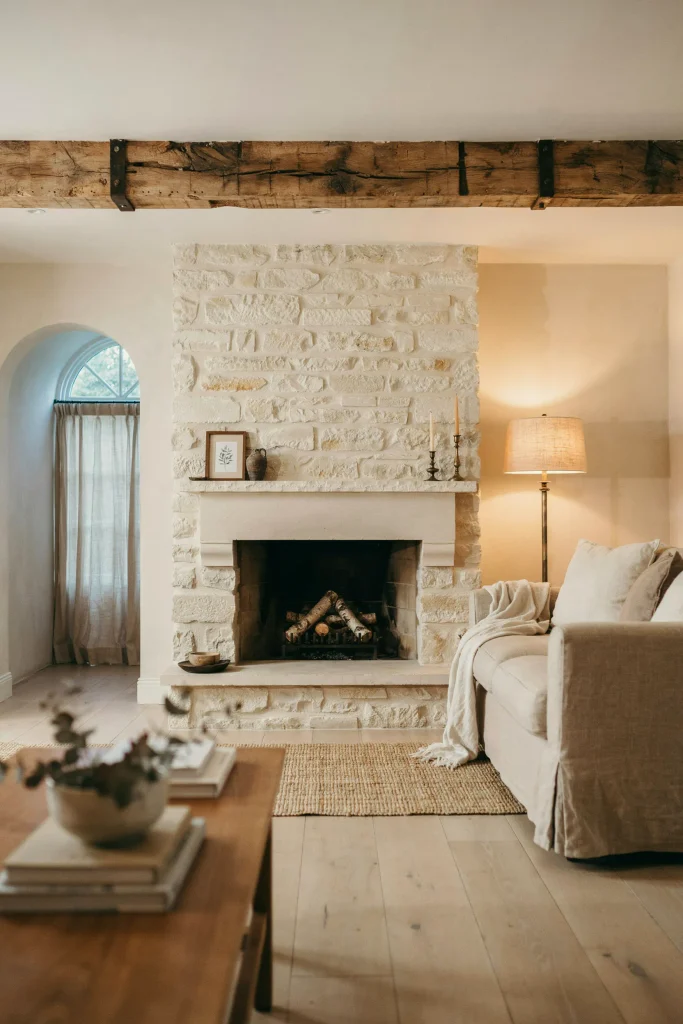
A reclaimed wood mantel can give a plain fireplace the character of an old country home. Its weathered grain, natural knots, and rich brown tones add warmth against white brick, limestone, or a softly painted surround. Even a simple fireplace becomes
the focal point when a substantial timber beam sits above it.
- Choose aged timber: Look for reclaimed oak, pine, or chestnut with visible grain.
- Keep the finish natural: Matte oil or a clear finish preserves the wood’s character.
- Balance the proportions: Match the mantel’s visual weight to the fireplace width.
- Style sparingly: Add a ceramic vase, a framed landscape, or a pair of brass candlesticks.
For an exquisite farmhouse look, let the wood do most of the decorating. A few carefully chosen accessories keep the mantel from feeling crowded and allow its natural texture to stand out. Before installation, make sure the beam and mounting system are suitable for the fireplace’s heat clearances and construction.
3. Stone Fireplace Surround
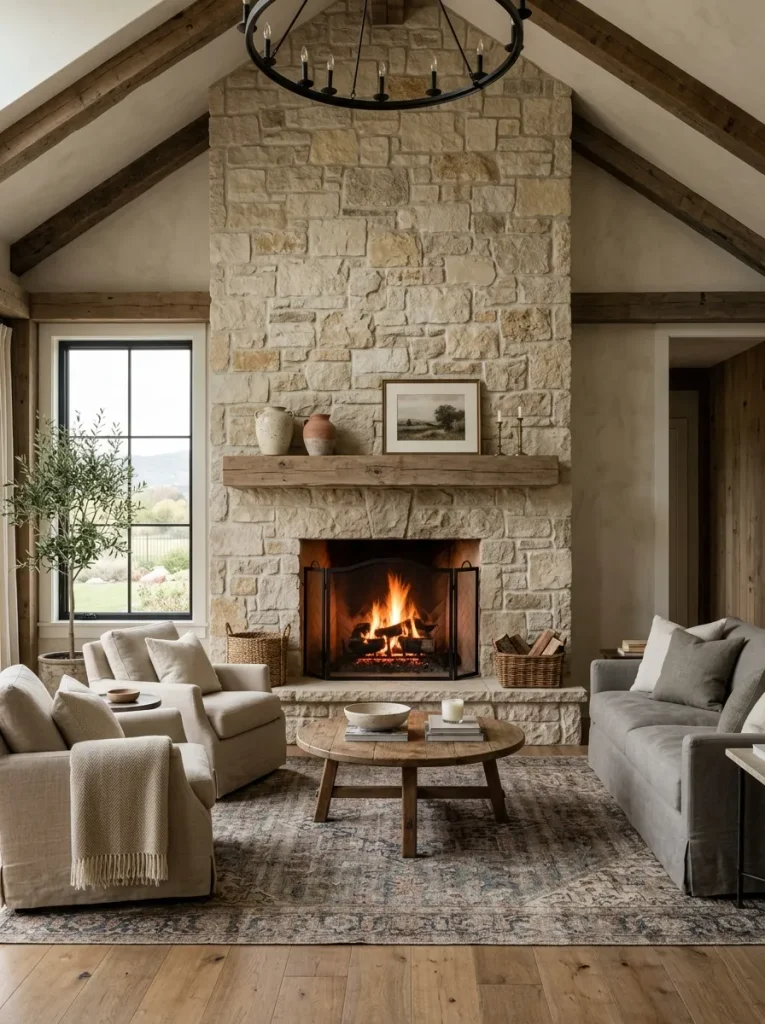
Natural stone brings an architectural presence that feels both grounded and refined. Whether you choose limestone, fieldstone, or a textured stone veneer, the varied shapes and earthy colors give your fireplace a distinctive farmhouse character. A full-height surround draws the eye upward, making the room feel more substantial without relying on elaborate decoration.
For a cohesive finish, repeat the stone’s undertones in your flooring, upholstery, or decorative ceramics. Cream limestone pairs beautifully with pale oak, while darker fieldstone creates contrast against warm white walls. Keep nearby accessories simple so the natural texture remains the main attraction. If you’re planning a renovation, confirm that the selected materials and installation method are appropriate for your fireplace type.
4. Vintage Brick Fireplace
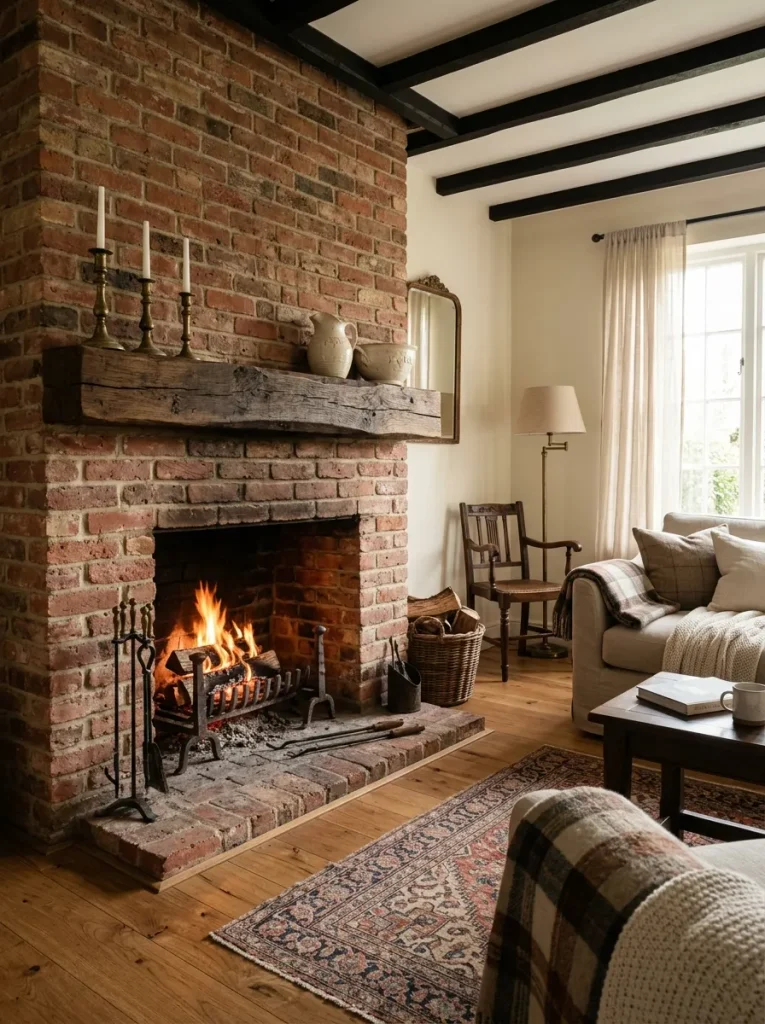
BEFORE
A fireplace with plain painted walls and minimal architectural detail can feel disconnected from the rest of a farmhouse living room. Smooth surfaces often lack the warmth and texture that make rustic interiors feel inviting.
AFTER
Exposed vintage brick introduces rich terracotta, rust, and earthy brown tones. The natural variation creates an attractive focal point, especially when paired with a reclaimed timber mantel and neutral furnishings.
Keep the surrounding decor understated so the brick remains the star. If your original fireplace is covered with plaster, investigate the condition of the underlying masonry before removing anything. Existing brick can sometimes be cleaned and restored rather than replaced, saving materials while preserving authentic character.
5. Built-In Fireplace Shelves
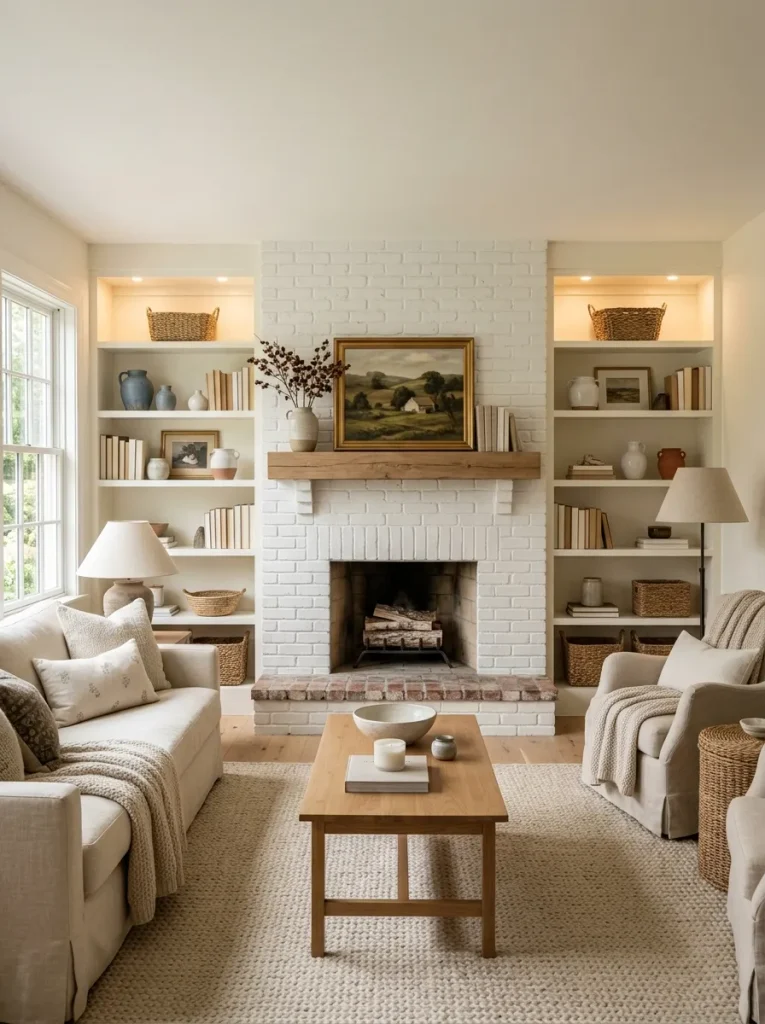
- Plan the layout: Measure the fireplace wall and decide how much shelf space you need on each side.
- Choose warm finishes: Cream cabinetry, natural oak shelves, and subtle antique brass hardware create a cohesive farmhouse palette.
- Mix decorative objects: Combine books, pottery, framed artwork, and a few woven baskets for varied shapes and textures.
- Leave breathing room: Keep some shelves partially empty to prevent the entire wall from feeling crowded.
- Check safety clearances: Follow the fireplace manufacturer’s requirements for combustible shelving and surrounding materials.
Built-in shelves make a fireplace wall feel intentional while providing useful storage for books and everyday items. For a high-end appearance, repeat a few colors across the shelves rather than decorating every section differently. If your room is compact, lighter cabinetry and open shelving can help the arrangement feel less bulky.
6. Black Fireplace Contrast
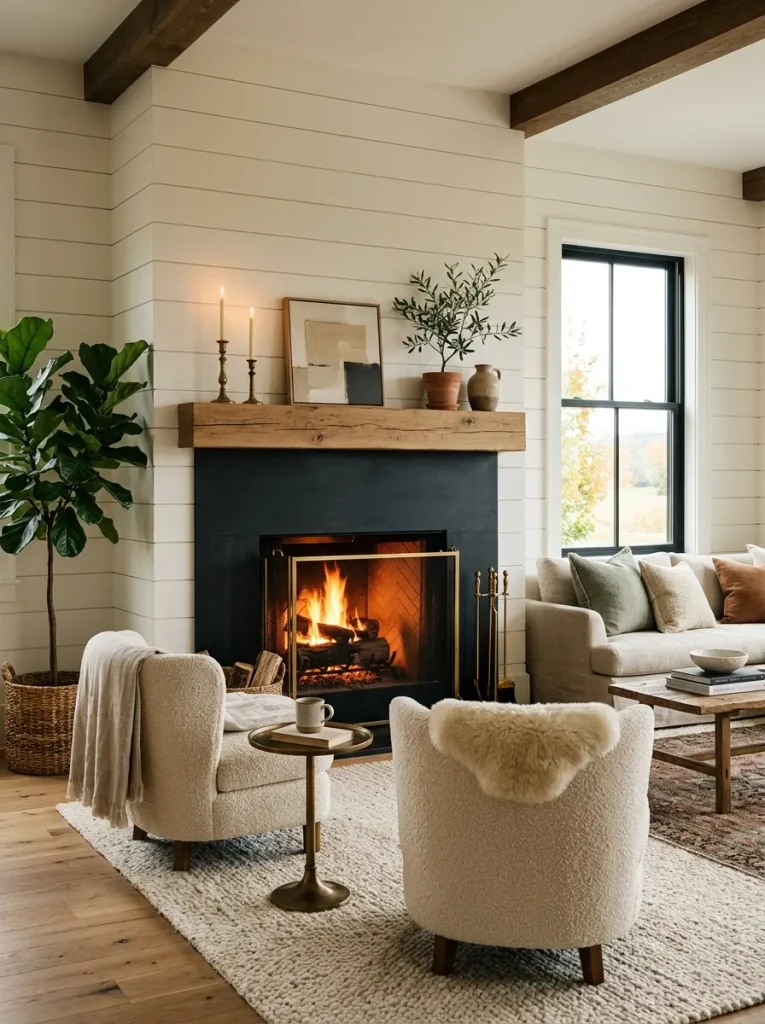
| Design Element | Option A: All White | Option B: Black Contrast |
|---|---|---|
| Overall effect | Airy and understated | Bold and architectural |
| Wall pairing | White brick or cream plaster | Warm white shiplap or pale stone |
| Mantel finish | Pale oak or white wood | Natural oak or reclaimed timber |
| Best accessories | Ivory pottery and linen | Brass accents and neutral ceramics |
A black fireplace surround creates definition in a light farmhouse living room without sacrificing warmth. The dark finish outlines the firebox and gives the mantel a stronger visual presence. Choose matte black for a softer, more sophisticated effect, then balance it with oak, cream upholstery, and tactile fabrics. Before painting an existing surround, confirm that the coating is rated for its location and expected temperatures.
7. Shiplap Fireplace Wall
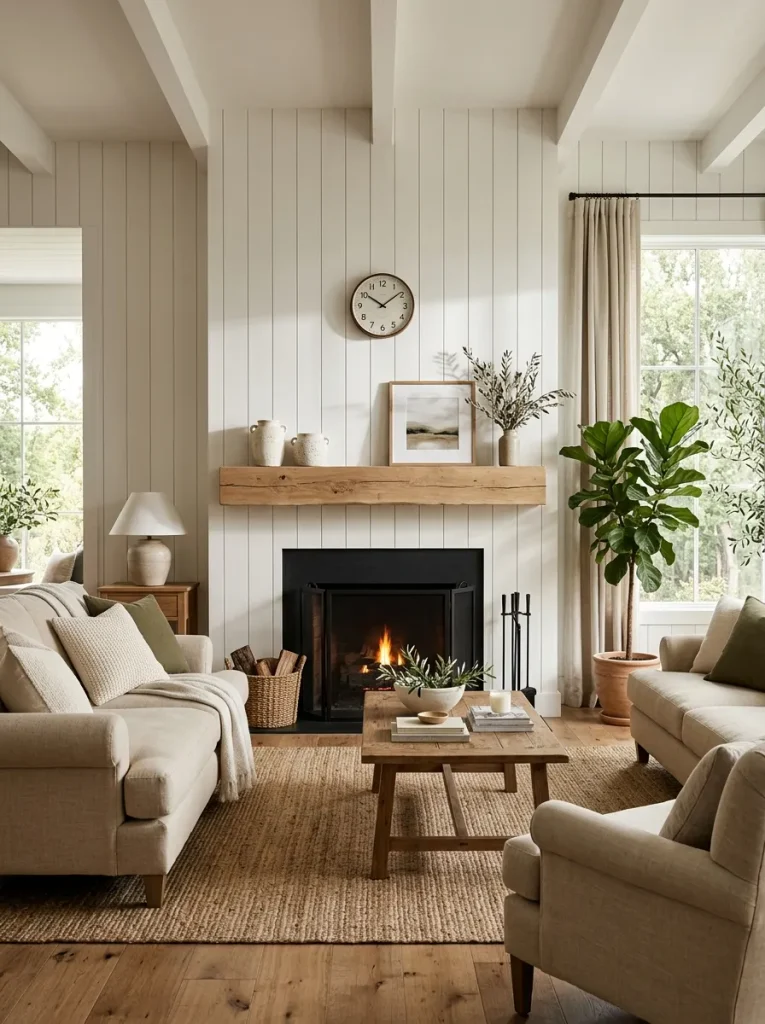
- DO: Choose warm white or soft ivory shiplap to keep the room bright.
- DO: Extend the boards toward the ceiling for a taller, more architectural appearance.
- DO: Pair the white wall with a natural oak mantel for warmth.
- DON’T: Mix too many competing wall patterns around the fireplace.
- DON’T: Use combustible shiplap inside the firebox or too close to hot surfaces.
- DON’T: Ignore the manufacturer’s clearance requirements when installing wood near a working fireplace.
Shiplap adds subtle dimension without competing with your furniture or accessories. Horizontal boards create a relaxed, traditional farmhouse feel, while vertical boards draw the eye upward. For an exquisite finish, keep the board spacing consistent and choose a low-sheen paint. Always confirm that the wall assembly and materials are suitable for your fireplace type.
8. Antique Mirror Mantel
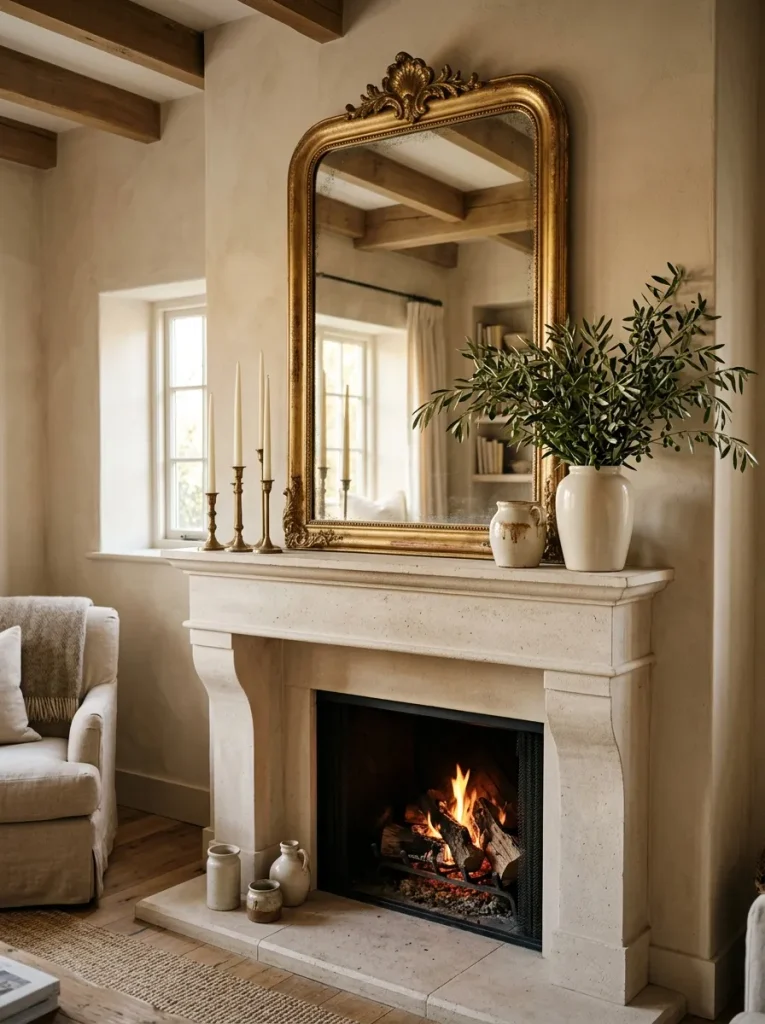
Cost: Moderate, depending on the mirror and accessories.
Time: Around 30 to 60 minutes for styling.
Skill Level: Beginner, provided the mirror can be secured safely.
Best For: Traditional farmhouse rooms, neutral living spaces, and fireplaces with simple surrounds.
An antique mirror adds depth and reflects natural light, helping a farmhouse living room feel brighter and more spacious. Choose a generously sized piece with a muted gold, weathered wood, or aged silver frame. Position it centrally above the mantel, then add just two or three decorative objects to preserve a calm, balanced arrangement.
For a polished look, make sure the mirror’s frame complements nearby hardware and lighting finishes. A securely mounted mirror is especially important above a working fireplace, where heat and vibration may affect mounting materials. Check the fireplace manufacturer’s clearance guidance before deciding on the final position.
9. Layered Neutral Mantel
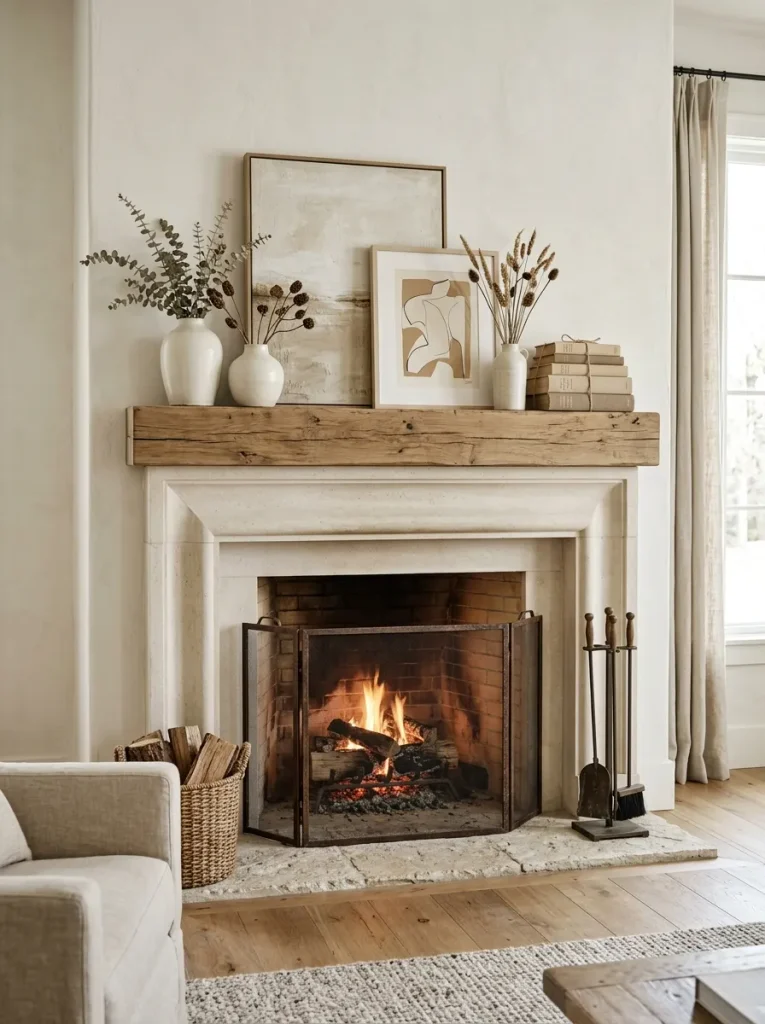
A layered mantel feels thoughtfully styled when every object has a clear purpose. Start with a larger piece of artwork or a framed landscape, then introduce smaller accessories at different heights. The variation creates depth without requiring expensive decor or a perfectly symmetrical arrangement.
- Place the tallest object slightly off-center.
- Lean a framed print against the wall, securing it if necessary.
- Group ceramic vessels in different heights but similar colors.
- Add books or a small wooden object to create a lower layer.
- Leave visible space between groups so the mantel does not feel crowded.
For farmhouse fireplace ideas that feel sophisticated rather than cluttered, stick to three or four complementary materials, such as wood, ceramic, linen, and aged metal. Step back after styling and remove anything that distracts from the fireplace itself. Keep all decorations clear of flames and hot surfaces.
10. Arched Fireplace Opening
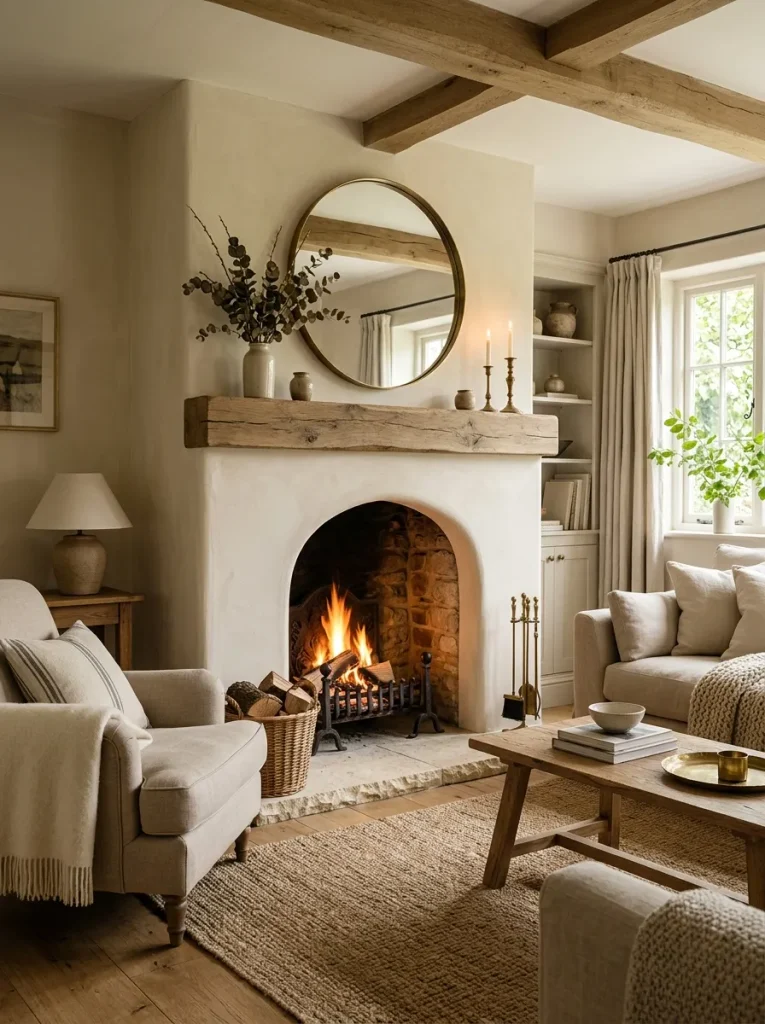
An arched opening softens the strong geometry of a fireplace and gives the room a more architectural character. The curved shape works especially well with plaster, limestone, or softly painted masonry, creating a refined focal point without excessive ornament.
For a high-end farmhouse finish, repeat the arch shape subtly elsewhere, such as in a nearby doorway, mirror, or decorative cabinet. I’ve noticed that keeping the mantel simple helps the curved opening remain visually important. Use warm neutrals around it so the shape feels integrated rather than added as an isolated feature.
11. Woven Basket Hearth
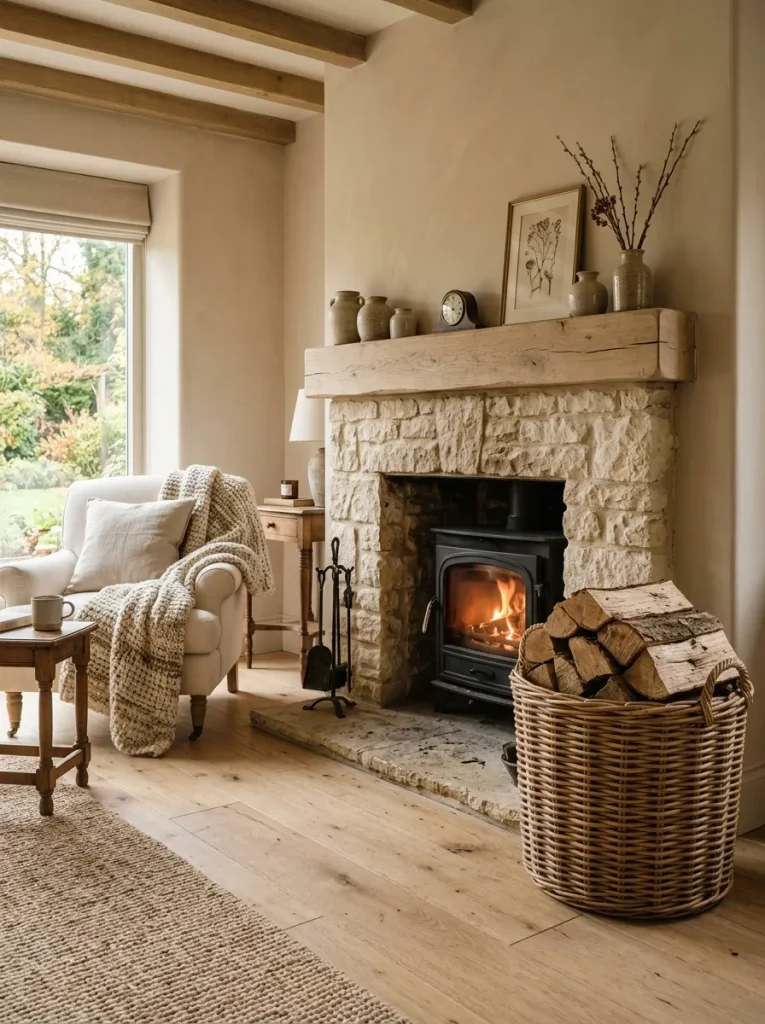
- Choose substantial baskets: A large seagrass, rattan, or woven jute basket looks intentional beside a generous hearth.
- Keep firewood organized: Stack dry logs neatly so the basket adds texture without appearing messy.
- Add soft contrast: Place a folded neutral throw nearby for warmth and visual layering.
- Maintain safe spacing: Keep baskets and other combustible materials away from the firebox according to fireplace requirements.
A woven basket brings natural texture to an otherwise hard fireplace area. It also gives firewood a dedicated home, keeping loose logs from collecting around the hearth. Choose a basket with a structured shape rather than an overly floppy design for a more polished appearance. The combination of woven fibers, timber, and stone creates classic farmhouse warmth.
12. Limestone Hearth Bench
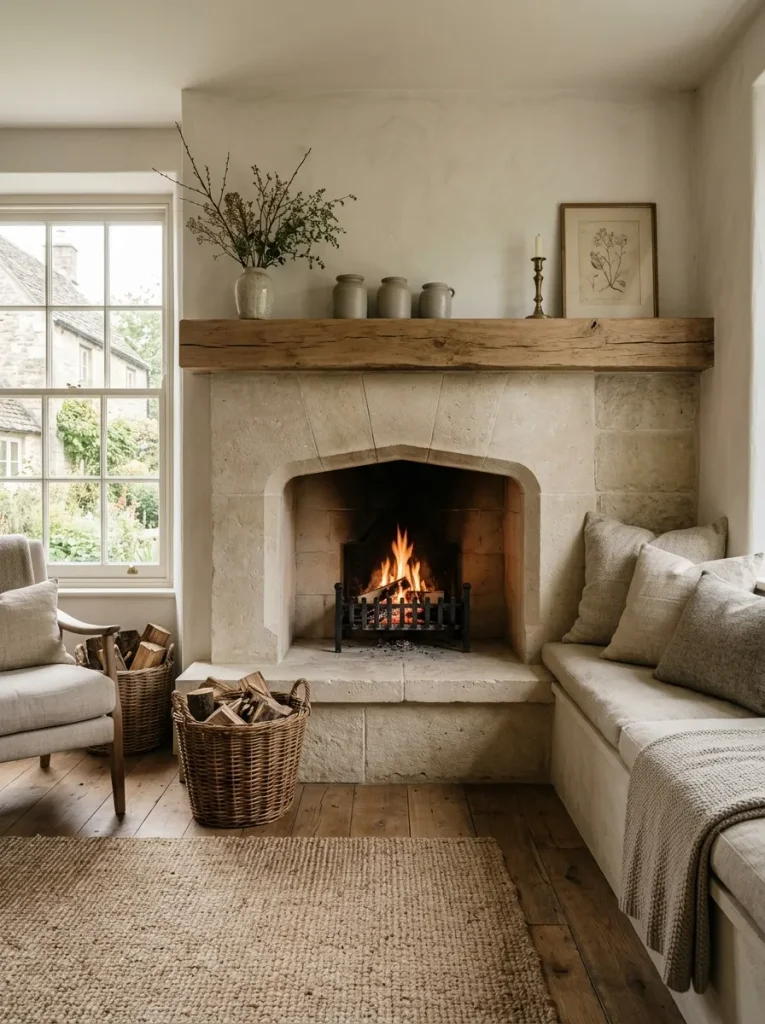
BEFORE
A narrow fireplace hearth may provide little visual weight and can leave the lower portion of the wall feeling unfinished. The surrounding furniture may also appear disconnected from the fireplace.
AFTER
A wider limestone hearth creates a substantial foundation and gives the fireplace greater architectural presence. Extending the stone into a shallow bench can also provide practical seating or a spot for cushions and throws.
Choose honed or lightly textured limestone for a sophisticated finish that works with warm whites, beige, and natural timber. Keep the bench depth practical for the room’s circulation. If the fireplace is operational, verify heat resistance, structural requirements, and required clearances before extending the hearth or adding seating.
13. Farmhouse Tile Surround
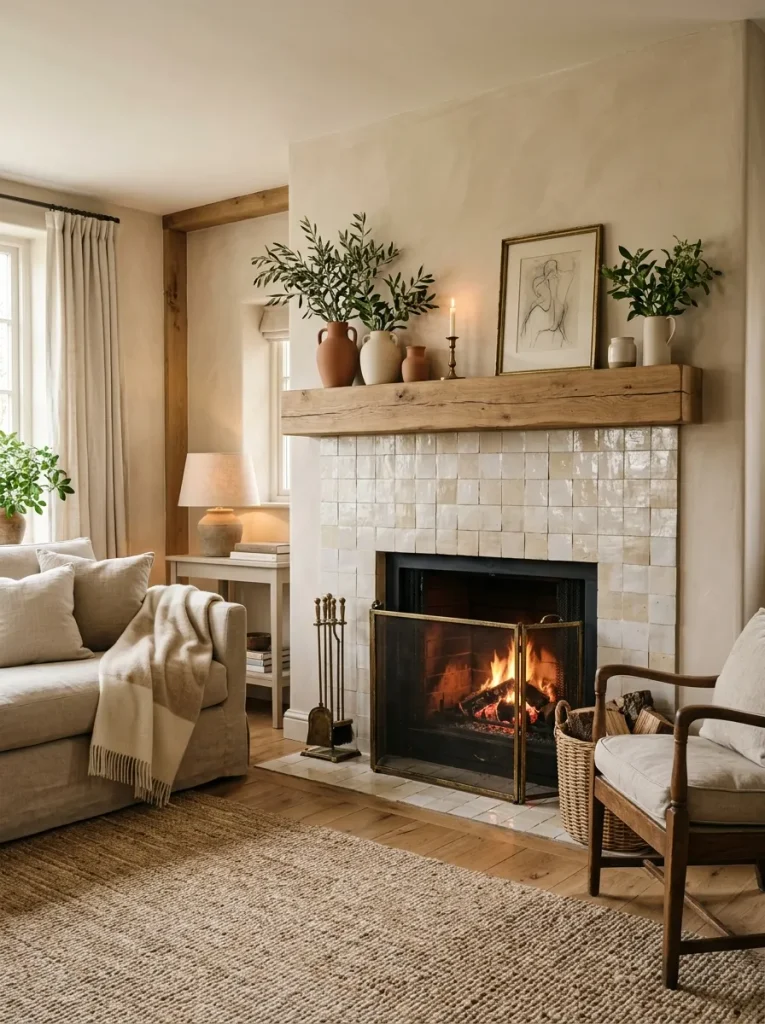
- Select the tile: Choose handmade-look ceramic, terracotta, or zellige-style tiles in cream, ivory, taupe, or soft beige.
- Keep the pattern restrained: A simple stacked, vertical, or classic rectangular layout works well for an elegant farmhouse room.
- Coordinate the grout: Use a grout color close to the tile to maintain a calm, continuous surface.
- Finish with natural wood: A chunky oak mantel adds warmth and prevents the tiled surround from feeling too polished.
A tiled surround offers an opportunity to introduce subtle texture without overwhelming the room. Slight color variation in handmade-style tiles gives the fireplace an artisanal quality, while neutral shades keep the overall look sophisticated. For a timeless result, pair the tiles with natural materials such as oak, linen, stone, and woven fibers rather than adding too many decorative finishes.
14. Rustic Wood Storage
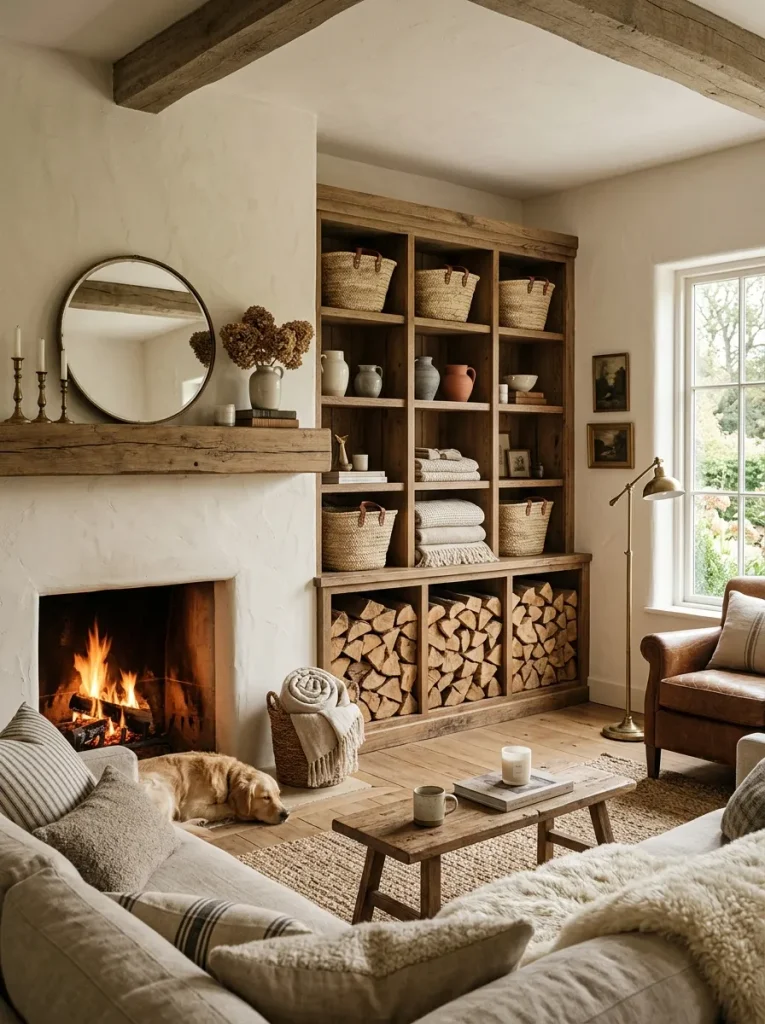
Cost: Moderate to high depending on custom carpentry.
Time: Several hours for simple shelving, longer for built-ins.
Skill Level: Beginner for freestanding storage, advanced for custom installation.
Best For: Larger fireplace walls needing practical storage.
Result: A cleaner hearth with useful, attractive organization.
Firewood storage can become part of the fireplace design rather than something that needs to be hidden. Open oak cubbies add warmth while keeping logs accessible and visually organized. Use baskets for smaller items such as kindling, fire starters, or fireplace tools. Keep stored wood sufficiently separated from the firebox and follow local fireplace safety requirements.
15. Soft Plaster Surround
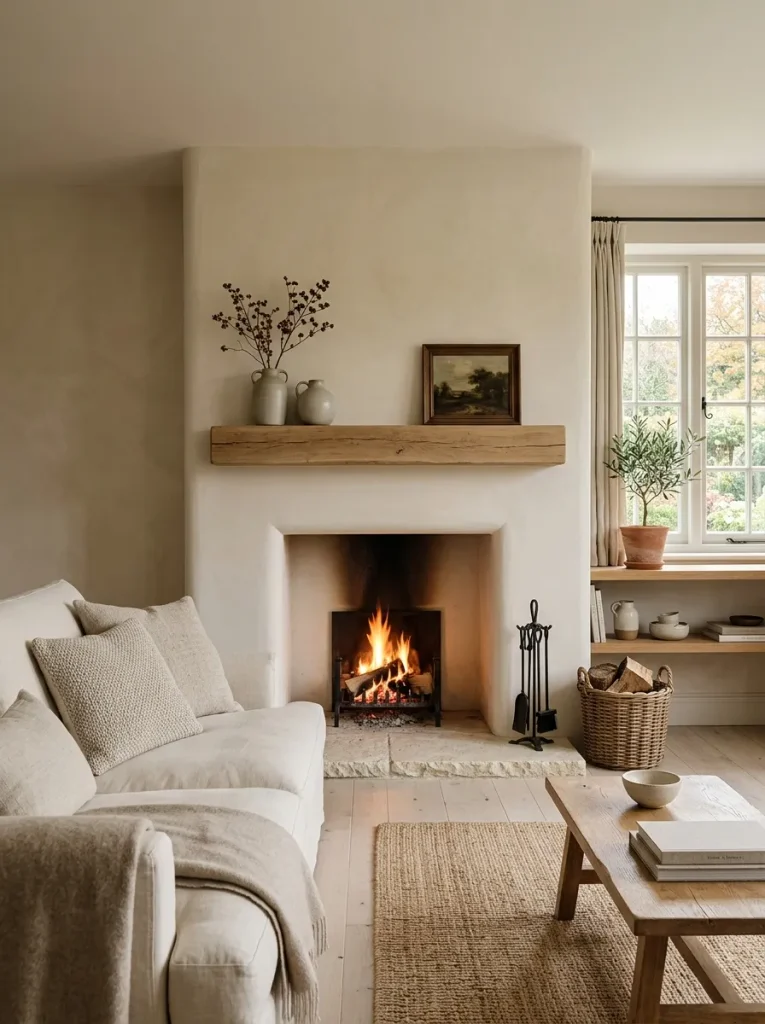
A soft plaster finish gives the fireplace a quiet architectural presence that feels especially sophisticated in neutral interiors. Unlike heavily patterned materials, plaster creates interest through subtle texture, gentle imperfections, and changing light across the surface.
Use warm white, creamy beige, or pale greige rather than stark white for a softer result. A natural wood mantel adds contrast and prevents the fireplace from feeling too monochromatic. In my experience, the most successful plaster surrounds are kept relatively uncluttered, allowing the finish itself to provide the visual interest. Always select a heat-appropriate material and follow the fireplace manufacturer’s clearance requirements.
A farmhouse fireplace can be much more than a source of warmth. With the right materials, proportions, textures, and styling, it can become the architectural centerpiece that brings the entire room together. These Farmhouse Fireplace Ideas offer inspiration ranging from reclaimed wood and exposed brick to elegant stone, plaster, tile, and practical storage.
Start with one idea that fits your home and build from there. I’ve seen how small changes, such as replacing a mantel or simplifying the surrounding decor, can completely shift the way a space feels. Save this post on Pinterest, try your favorite idea, and share it with someone planning a fireplace refresh.