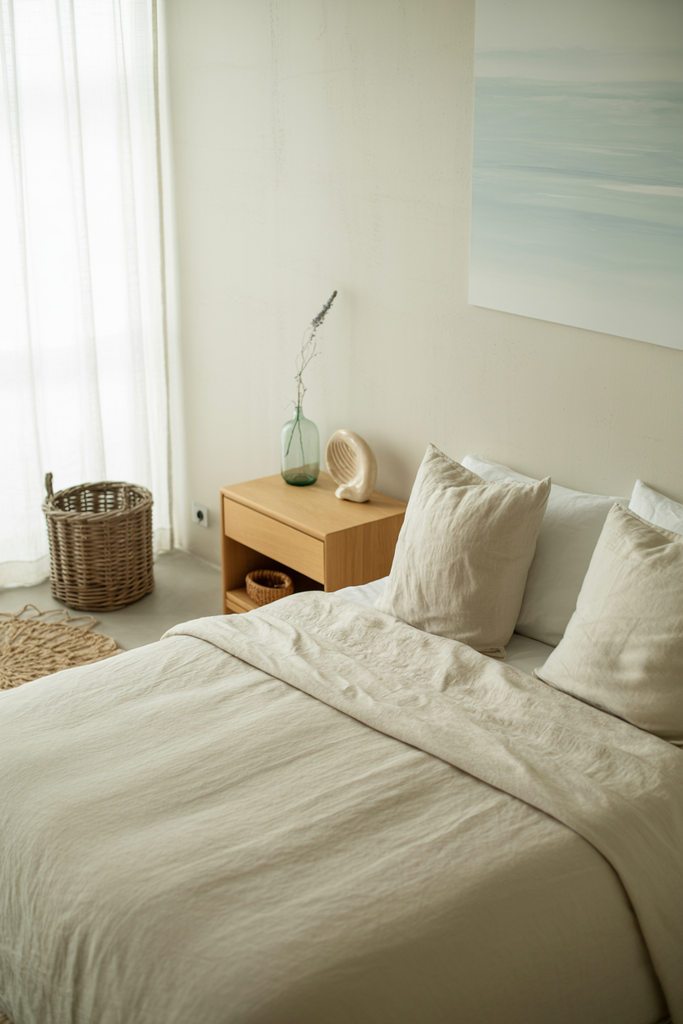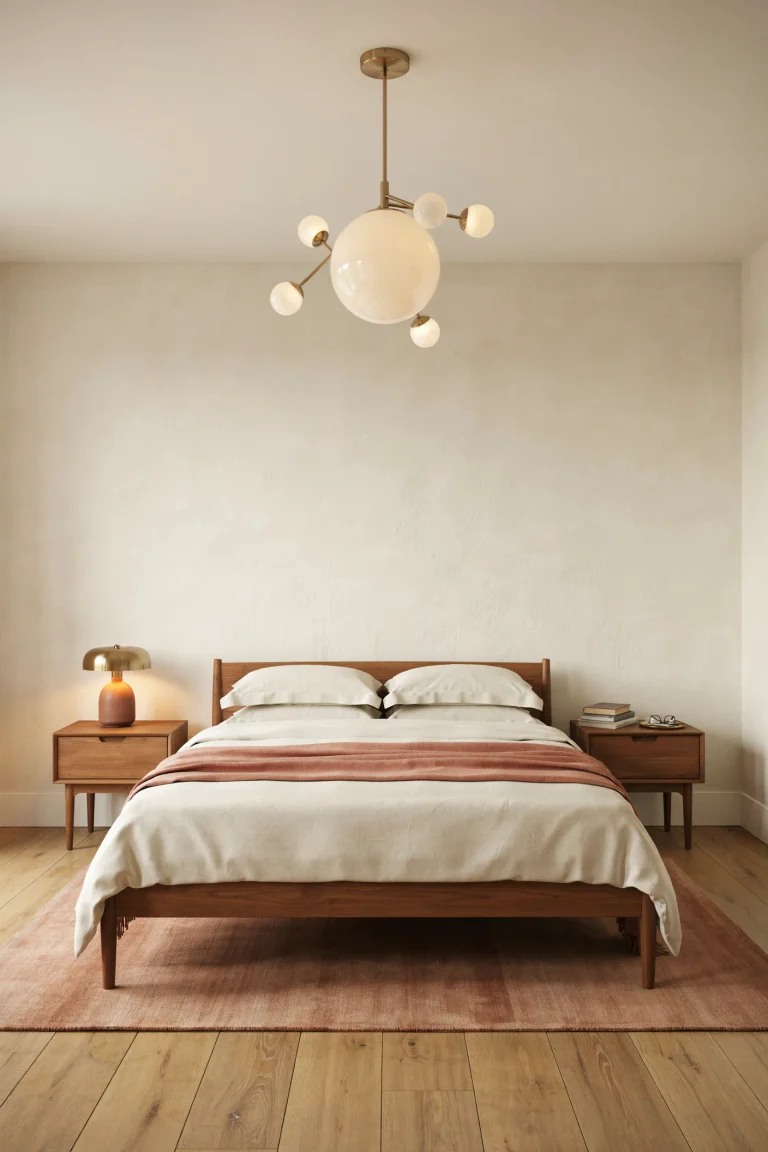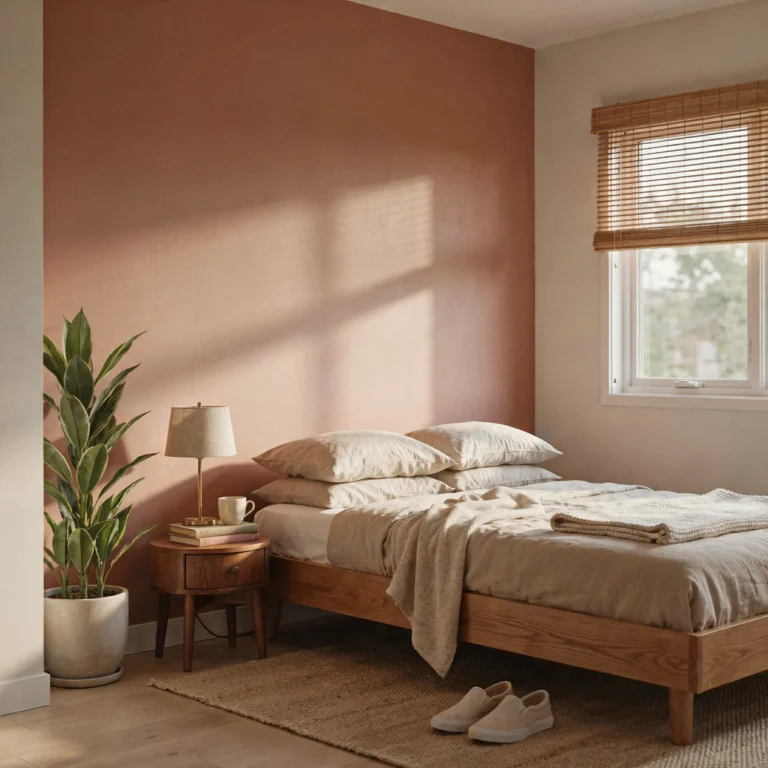
24 Coastal Bedroom ideas to create a serene seaside retreat at home.
A calm bedroom can make the whole home feel more restful. You do not need a beach house or a complete renovation to create that feeling.
A Coastal Bedroom brings together soft ocean-inspired colors, natural textures, relaxed fabrics, and simple decorative details to create a fresh seaside atmosphere at home. This guide shares 24 practical ideas for making that look work in real bedrooms, whether your space is large, compact, modern, or simply ready for a refresh.
You will find easy ways to use blue and white bedding, rattan, linen, woven textures, light wood, subtle beach accents, and natural rugs. In my experience, the biggest difference often comes from small changes rather than replacing every piece of furniture. Use these ideas as inspiration, then choose the details that suit your room, budget, and everyday routine.
Soft Blue Layers
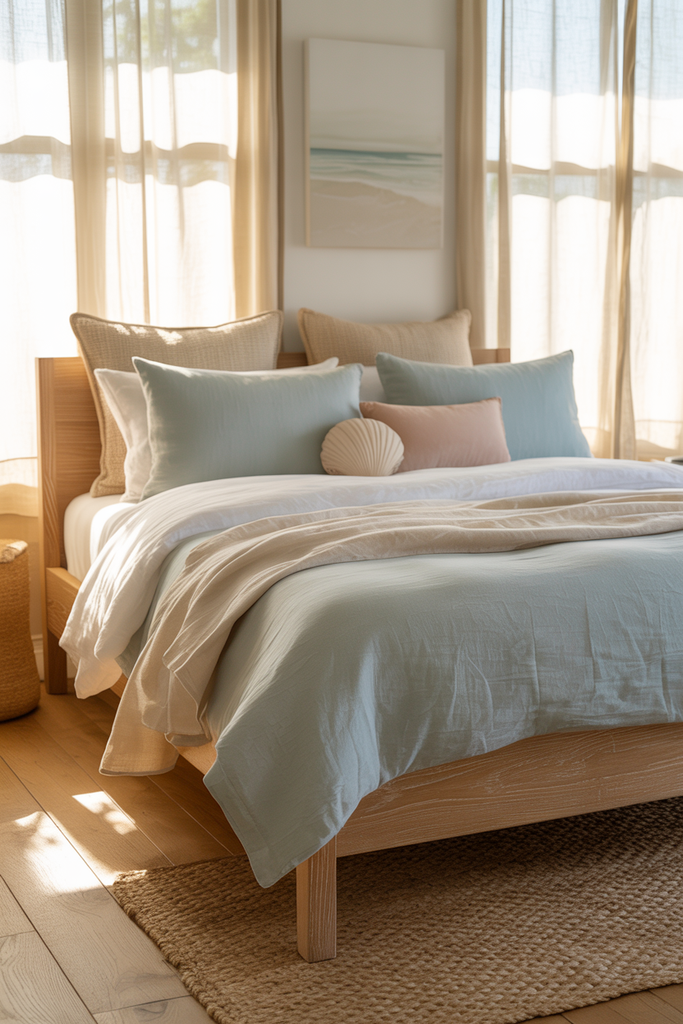
Soft blue layers instantly create the relaxed character associated with a Coastal Bedroom without making the room feel themed. Start with white sheets, then add a pale blue duvet and two or three pillows in slightly different blue tones. Linen and cotton keep the bedding breathable and visually light.
I’ve noticed that mixing blue shades works better than matching everything exactly. Add one textured throw at the foot of the bed and keep larger furniture neutral. The result feels calm and collected while still having enough variation to keep the room visually interesting.
Woven Natural Textures
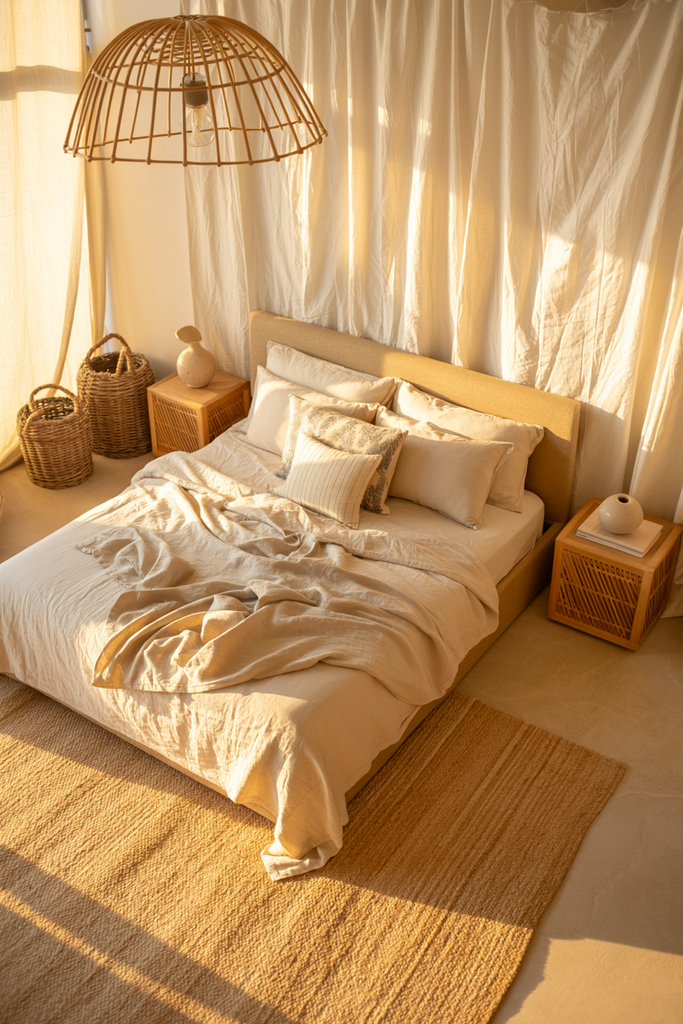
Choose a jute or sisal rug to ground the room with natural texture.
- Add rattan baskets for blankets, books, or everyday clutter.
- Select cane or woven furniture for visible craftsmanship.
- Layer linen, cotton, and boucle fabrics instead of relying on one texture.
- Keep the palette anchored with ivory, sand, beige, and muted blue.
Natural materials give a coastal space warmth without adding visual heaviness. Start with one large woven element, such as a rug or headboard, then repeat smaller textures around the room. This approach prevents the decor from feeling overly coordinated. For smaller bedrooms, baskets and woven lampshades add texture without taking up much floor space.
Ocean-Inspired Artwork
Quick Tip:
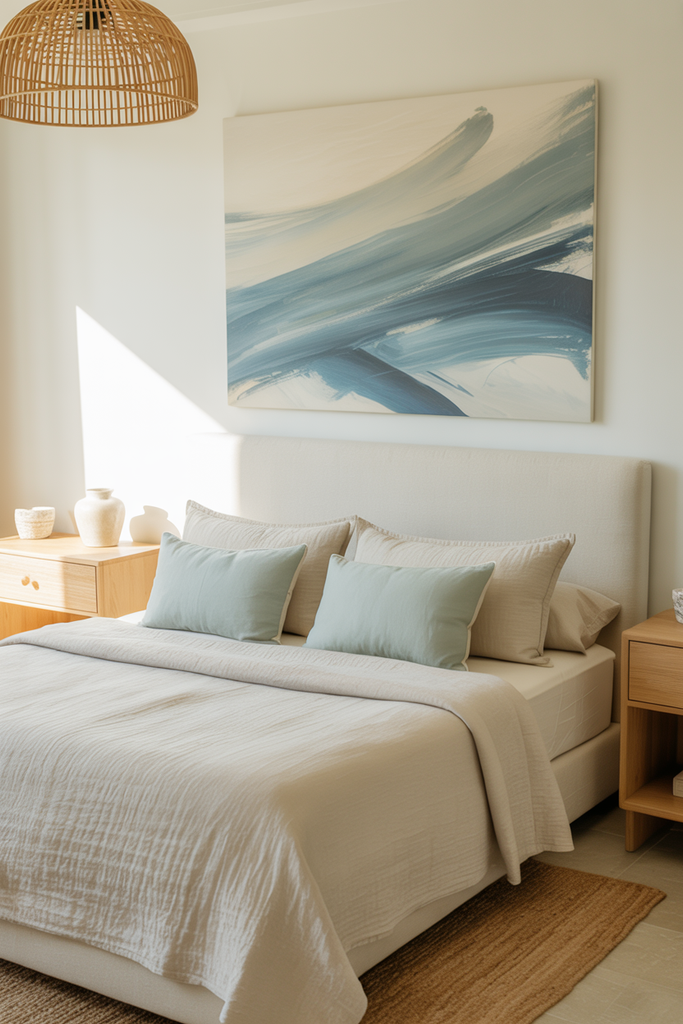
Choose artwork with two or three colors already present in your bedroom. A large abstract wave print, soft seascape, or watercolor coastline can become the visual anchor without making the room feel overly nautical.
I’ve seen oversized artwork work especially well above a bed because it fills the wall without requiring several small frames. Keep the surrounding decor restrained, then repeat one color from the artwork in a cushion or throw. This creates a connected look while leaving plenty of visual breathing room.
Rattan Headboard
BEFORE:
A plain upholstered or metal bed can leave the room feeling flat, especially when the walls and bedding are mostly neutral. The space may have coastal colors but lack the natural texture that gives the style its character.
AFTER:
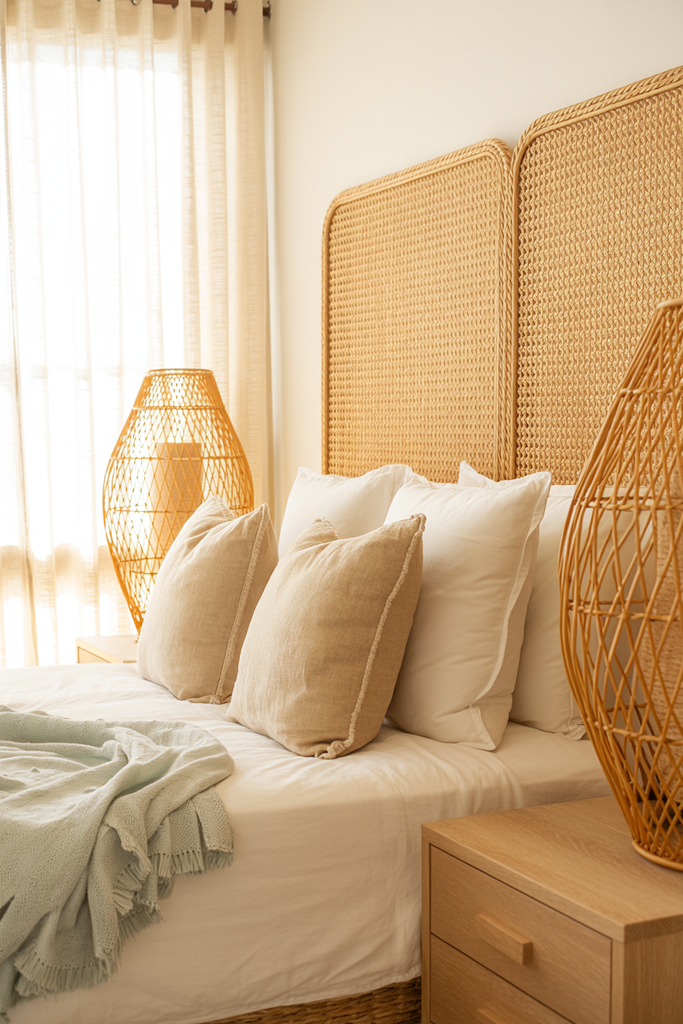
A rattan headboard adds warmth, dimension, and a handcrafted focal point. Pair it with white bedding and muted blue accents so the woven texture stays noticeable without overwhelming the room.
A rattan headboard works especially well with simple furniture because it provides enough visual detail on its own. For a rental, choose a freestanding style that does not require wall mounting. Keep nearby accessories understated, and let the headboard establish the room’s natural coastal foundation.
Linen Bedding
- Start with breathable white or ivory linen sheets for a light foundation.
- Add a washed-blue duvet or quilt for subtle coastal color.
- Layer two textured pillows in beige, cream, or muted aqua.
- Finish with a lightweight throw folded loosely across the lower bed.
Linen gives coastal bedding the relaxed texture that crisp, perfectly matched sets often lack. Choose slightly rumpled fabrics rather than heavily pressed layers. I’ve noticed that keeping the bed loosely styled makes the entire room feel more natural. For warmer climates, lightweight linen also helps maintain a comfortable sleeping environment.
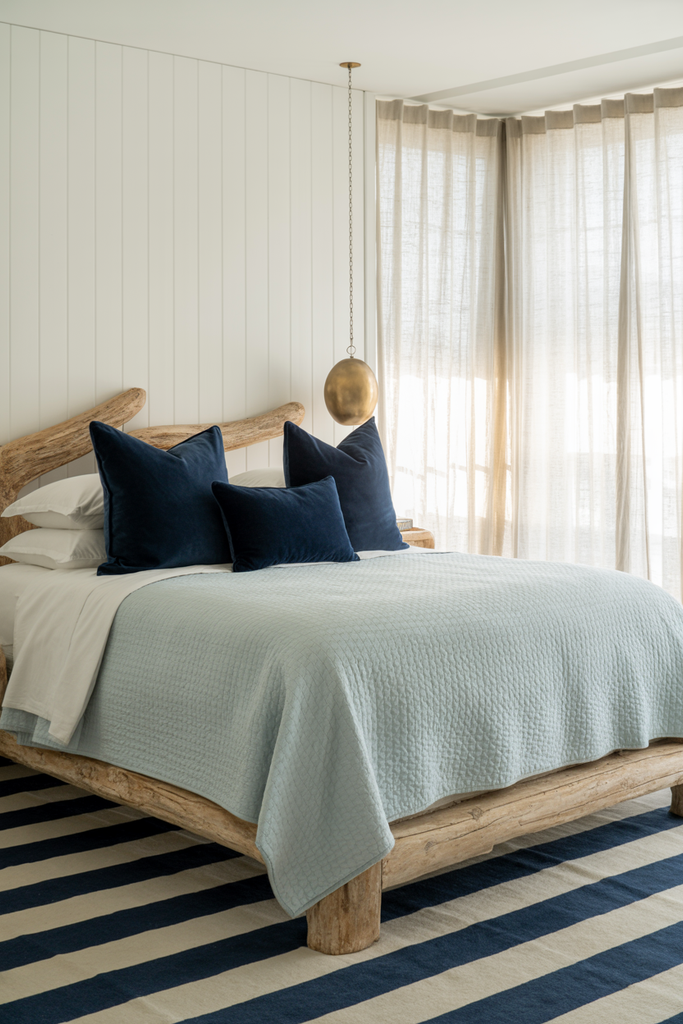
Blue and White Balance
| Feature | Option A: Mostly White | Option B: Balanced Blue |
| Wall color | Warm white | Soft white |
| Bedding | White with beige | White with pale blue |
| Accent color | Minimal blue | Navy and aqua |
| Best result | Airy and subtle | Defined and layered |
Blue and white work best when neither color dominates every surface. Keep walls and larger furniture light, then introduce blue through bedding, curtains, artwork, or cushions. Navy provides stronger contrast, while pale blue keeps the room softer. Use one deeper accent sparingly to give the palette enough visual structure.
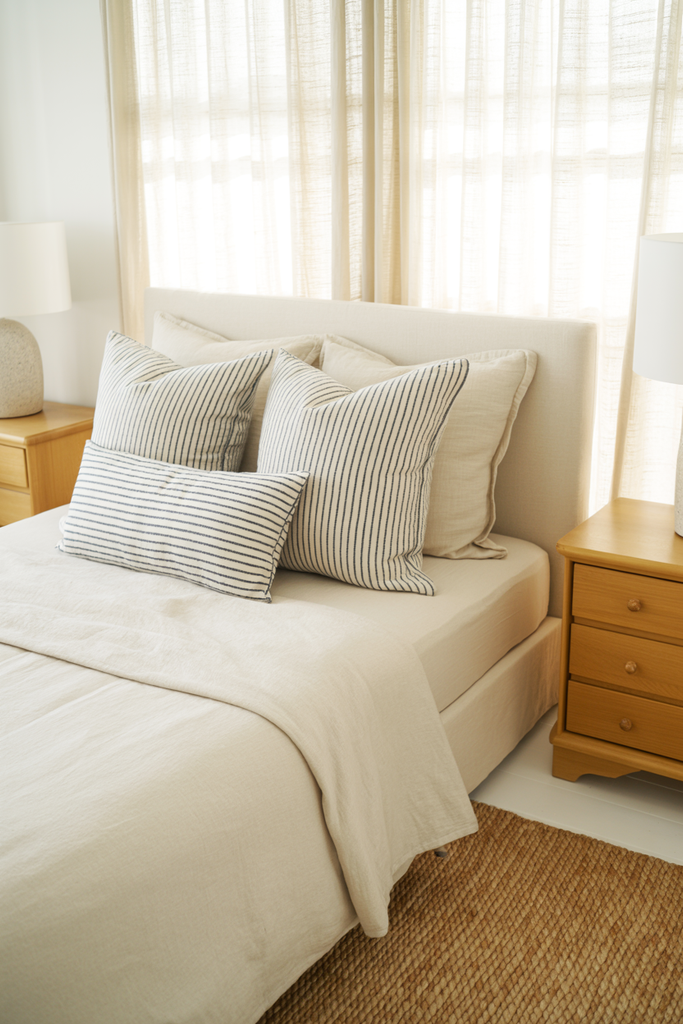
Nautical Stripe Accents
DO:
- Use stripes on pillows, throws, or a small bench.
- Choose navy, muted blue, or soft gray stripes.
- Mix narrow and wider stripe patterns for dimension.
- Keep surrounding furniture simple and neutral.
DON’T:
- Cover every textile with stripes.
- Mix several unrelated stripe colors.
- Add excessive anchor or rope decorations.
- Use harsh black-and-white stripes in a soft palette.
Stripes bring subtle coastal character without turning the bedroom into a themed space. A single striped lumbar pillow can be enough to introduce the pattern. For a stronger effect, repeat the same stripe family on a bench or throw while keeping the rest of the textiles mostly solid.
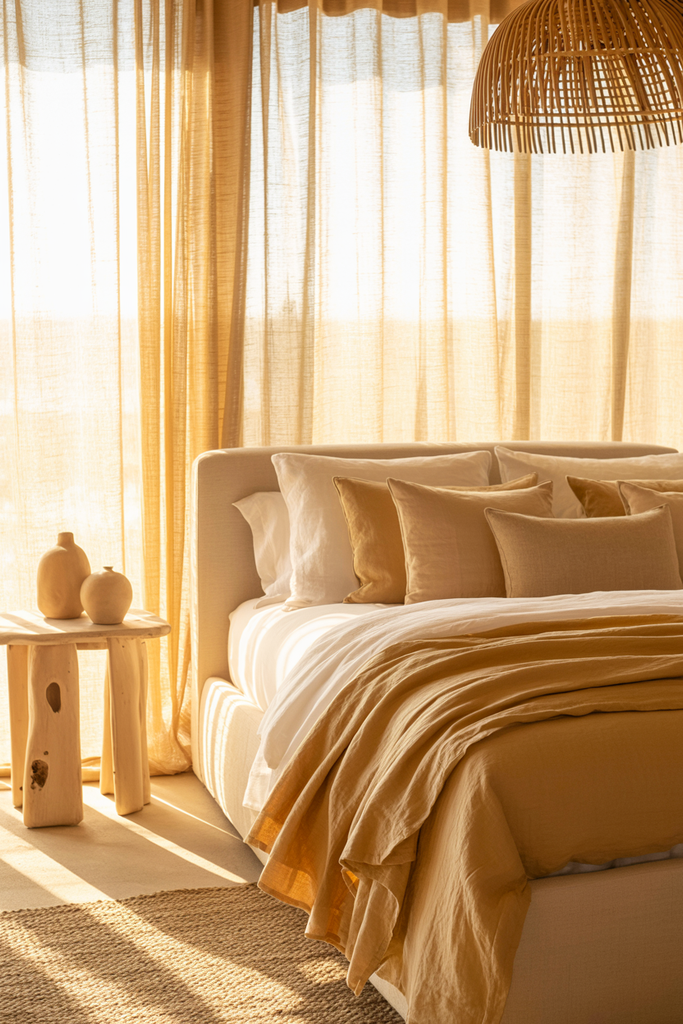
Sandy Neutral Palette
Cost: Low to moderate | Time: One afternoon | Skill Level: Beginner
Best For: Warm, calming bedrooms | Works In: Small or large rooms
Warm neutrals create a softer alternative to the familiar blue-and-white coastal palette. Start with ivory walls and cream bedding, then layer sand, taupe, and light beige through rugs, cushions, curtains, and baskets. Natural wood keeps the palette from feeling washed out, especially in rooms with limited daylight.
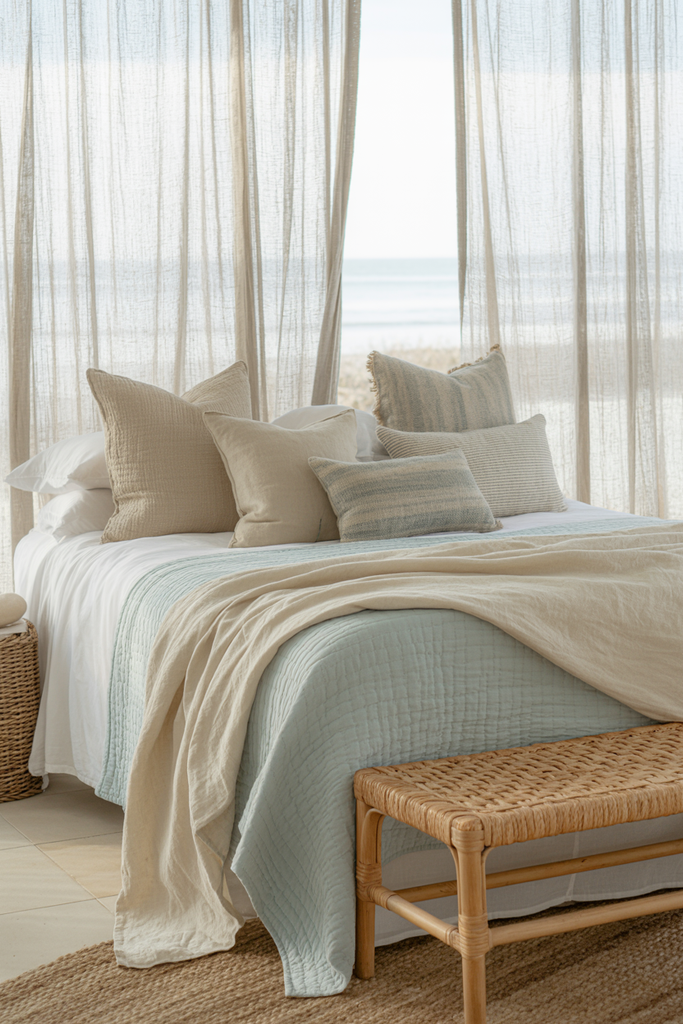
Layered Coastal Textiles
Texture makes a neutral bedroom feel finished rather than empty. Mix smooth cotton sheets with a linen duvet, knitted throw, woven cushions, and a low-pile rug. Keep the colors within a narrow coastal palette so the different materials provide the visual interest instead of competing patterns.
In my experience, three or four distinct textures are usually enough. Start at the bed and work outward, adding texture to the rug, curtains, and one or two accessories. This layered approach gives the room depth while preserving the uncluttered quality that makes coastal interiors feel restful.
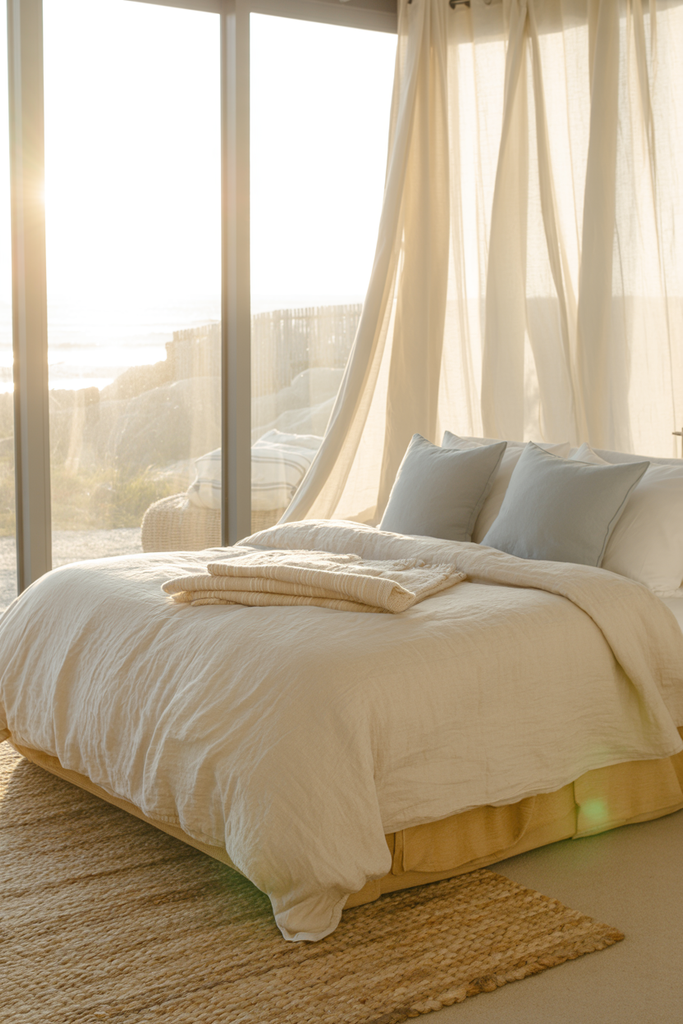
Sheer Window Curtains
- Hang curtains close to the ceiling to create a taller visual line.
- Choose white, ivory, or very pale beige fabric.
- Let panels reach the floor rather than stopping at the window sill.
- Pair sheers with simple blackout shades for better sleep.
Sheer curtains soften strong daylight while keeping a bedroom bright and open. Linen-look fabrics add useful texture without blocking the coastal color palette. For bedrooms facing intense afternoon sun, combine sheers with hidden roller shades. This gives you daytime brightness and practical light control without sacrificing the airy appearance.
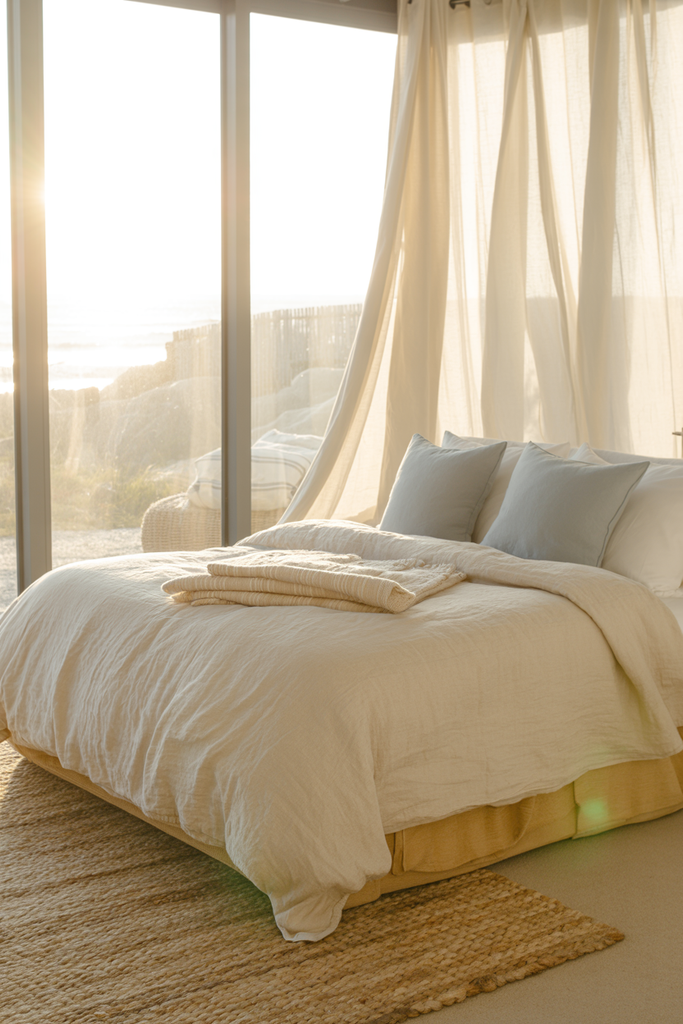
Light Wood Furniture
- Select pale oak, ash, pine, or similarly light-toned wood.
- Keep the largest furniture pieces within the same warm wood family.
- Add one woven accessory to reinforce the natural material mix.
- Balance the wood with white or ivory textiles.
Light wood prevents a seaside-inspired room from feeling cold or overly stark. Natural grain also adds character without requiring bold decoration. If your existing furniture is darker, introduce lighter wood through a nightstand, bench, stool, or framed mirror rather than replacing everything at once. Small changes can shift the entire visual balance.
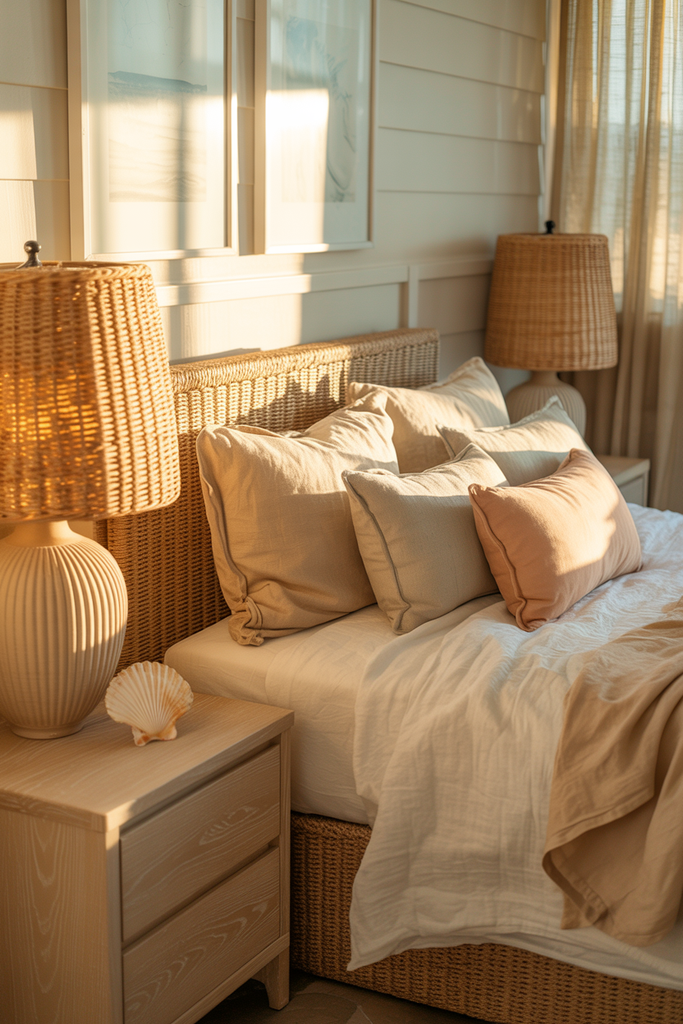
Relaxed Coastal Layers
| Element | Simple Approach | Layered Approach |
| Bedding | White duvet | White, blue, and linen layers |
| Pillows | Two matching pairs | Mixed shapes and textures |
| Rug | Flat neutral rug | Woven textured rug |
| Accessories | Few pieces | Carefully spaced natural accents |
Layering works because it adds depth without demanding strong colors or busy patterns. Begin with a neutral foundation, then introduce pale blue, sandy beige, and natural fibers one layer at a time. Leave some surfaces intentionally open. The goal is a comfortable room with visible texture, not a collection of decorations competing for attention.
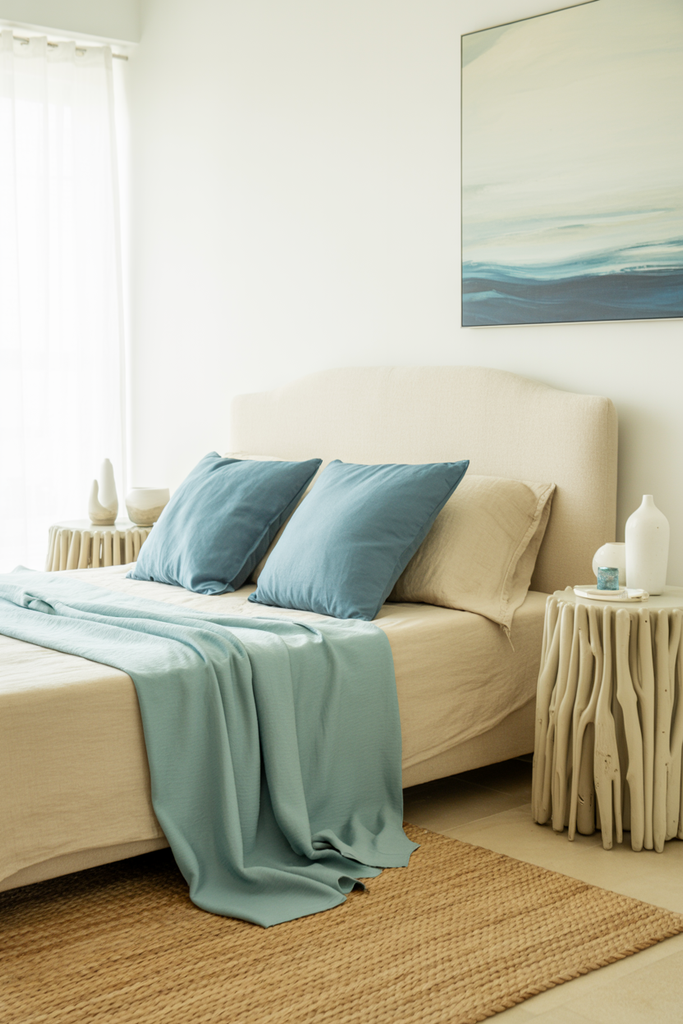
Shell-Toned Accessories
- Start with a cream or ivory base across bedding and larger textiles.
- Add small accessories in oyster, pearl, sand, or warm beige.
- Group two or three ceramic pieces on a nightstand or dresser.
- Repeat one shell-inspired shade in a cushion or throw.
Shell tones introduce seaside character without relying on obvious beach souvenirs. Matte ceramics, mother-of-pearl details, and softly shaped accessories feel more refined than collecting many themed objects. Keep these accents limited to a few areas so they remain noticeable. A small ceramic bowl or textured vase can provide enough coastal detail.
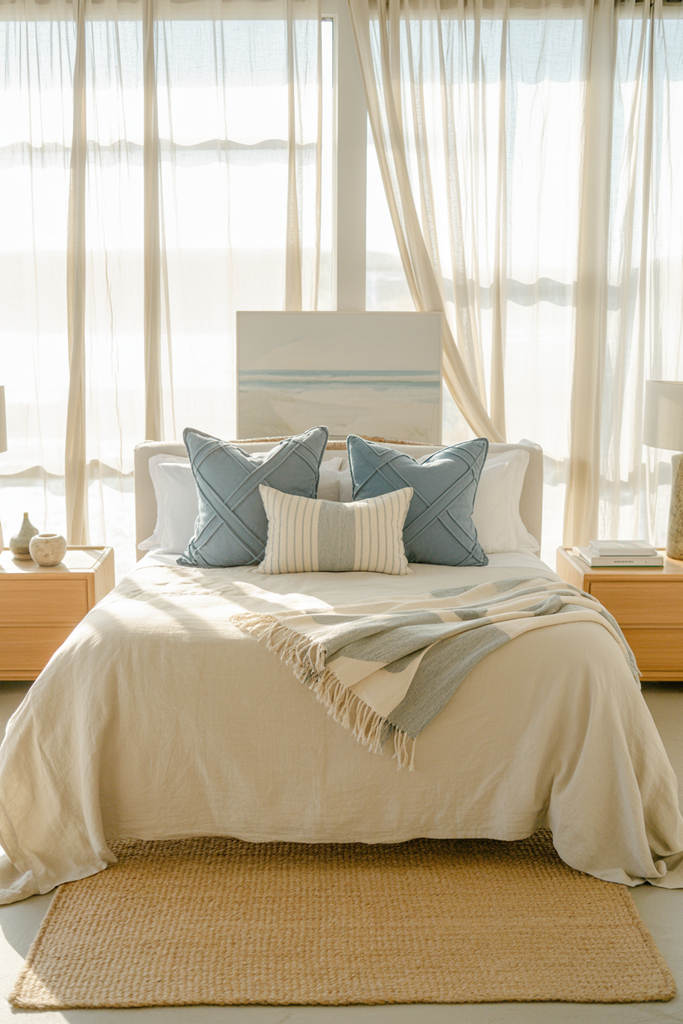
Driftwood Details
| Placement | Subtle Choice | Stronger Choice |
| Wall | Small driftwood frame | Large driftwood mirror |
| Nightstand | Wood tray | Sculptural branch decor |
| Bed | Natural wood bench | Weathered wood headboard |
| Styling | One accent | Several coordinated pieces |
Weathered wood brings organic texture and a slightly weathered character to a coastal room. Look for natural grain, pale brown tones, and irregular edges rather than heavily stained finishes. One substantial piece usually has more impact than several small decorations. A driftwood mirror is especially useful because it combines texture with everyday function.
Ocean Blue Accents
DO:
- Choose one main blue accent shade.
- Repeat it across two or three visible areas.
- Combine blue with warm white or sandy beige.
- Use darker blue sparingly for contrast.
DON’T:
- Mix too many unrelated blue shades.
- Cover every surface with ocean motifs.
- Pair intense blue with equally strong patterns.
- Forget to balance cool colors with warm materials.
Ocean blue gives a light bedroom a recognizable seaside connection while keeping the overall design fresh. Use it on pillows, a throw, artwork, or a small accent chair rather than large furniture pieces. I’ve found that repeating one blue shade in several places makes the room feel coordinated without looking overly decorated.
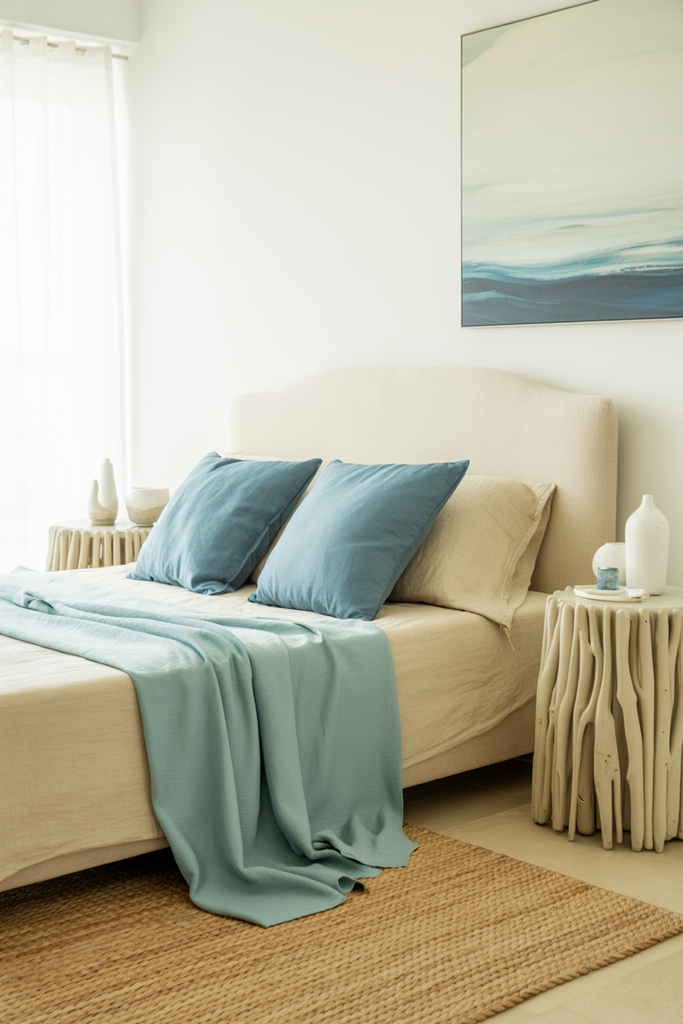
Beach Grass Decor
Cost: Low | Time: 30 minutes | Skill Level: Beginner
Best For: Empty corners and dressers | Works In: Neutral bedrooms
Dried beach grass adds height and movement without introducing another strong color. Place a tall arrangement beside a dresser, in an empty corner, or near a window. Choose natural tan or soft beige stems and a simple ceramic vase. Keep the arrangement slightly loose so it feels organic rather than overly formal.
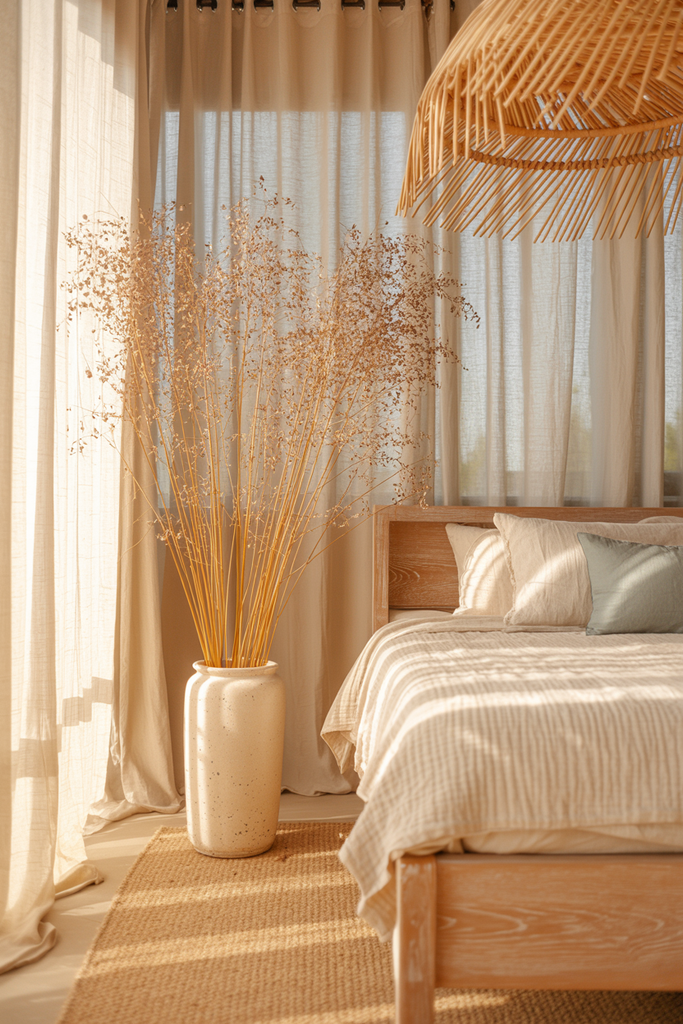
Whitewashed Wood Walls
Whitewashed wood creates instant architectural texture while keeping the room visually bright. For a softer finish, choose boards with visible grain instead of completely opaque white panels. Place the treatment behind the bed to establish a focal wall, then keep surrounding furniture simple so the natural texture remains the main feature.
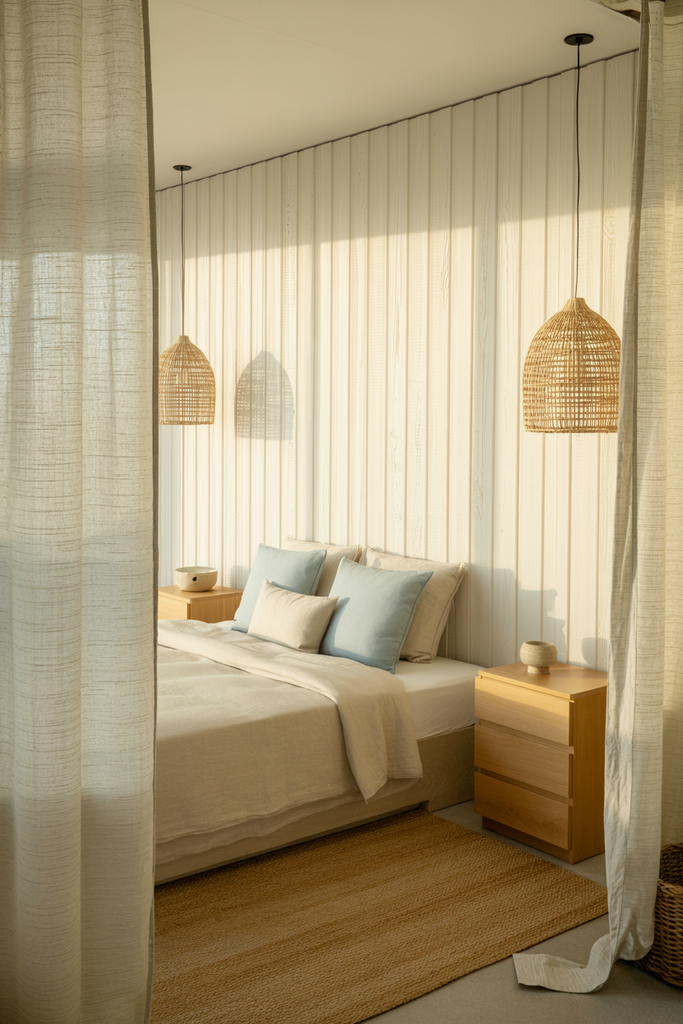
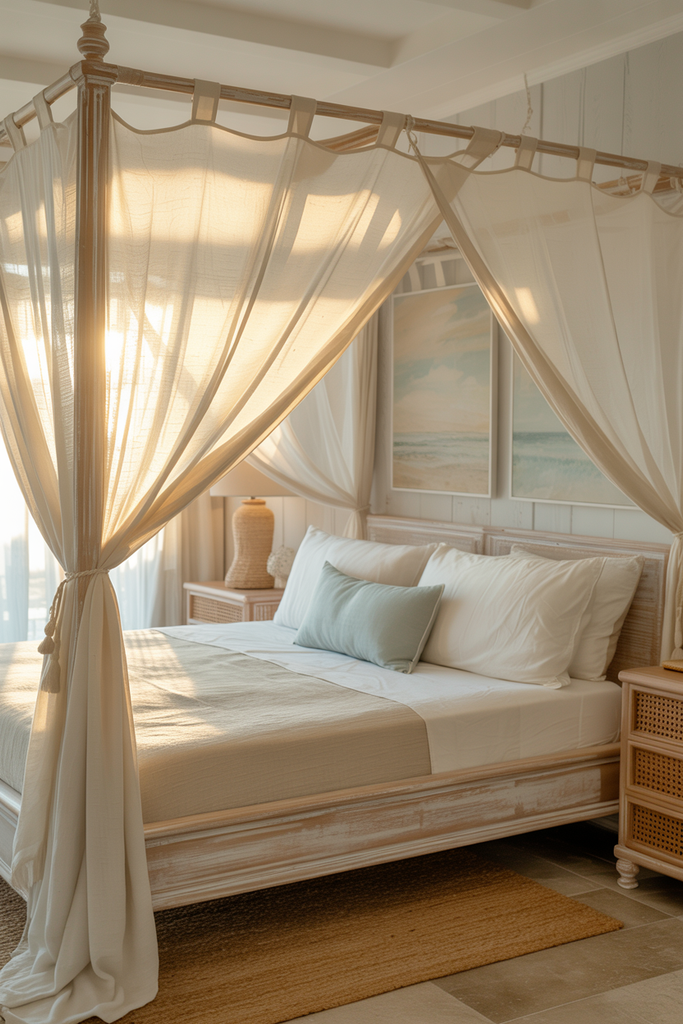
Coastal Canopy Bed
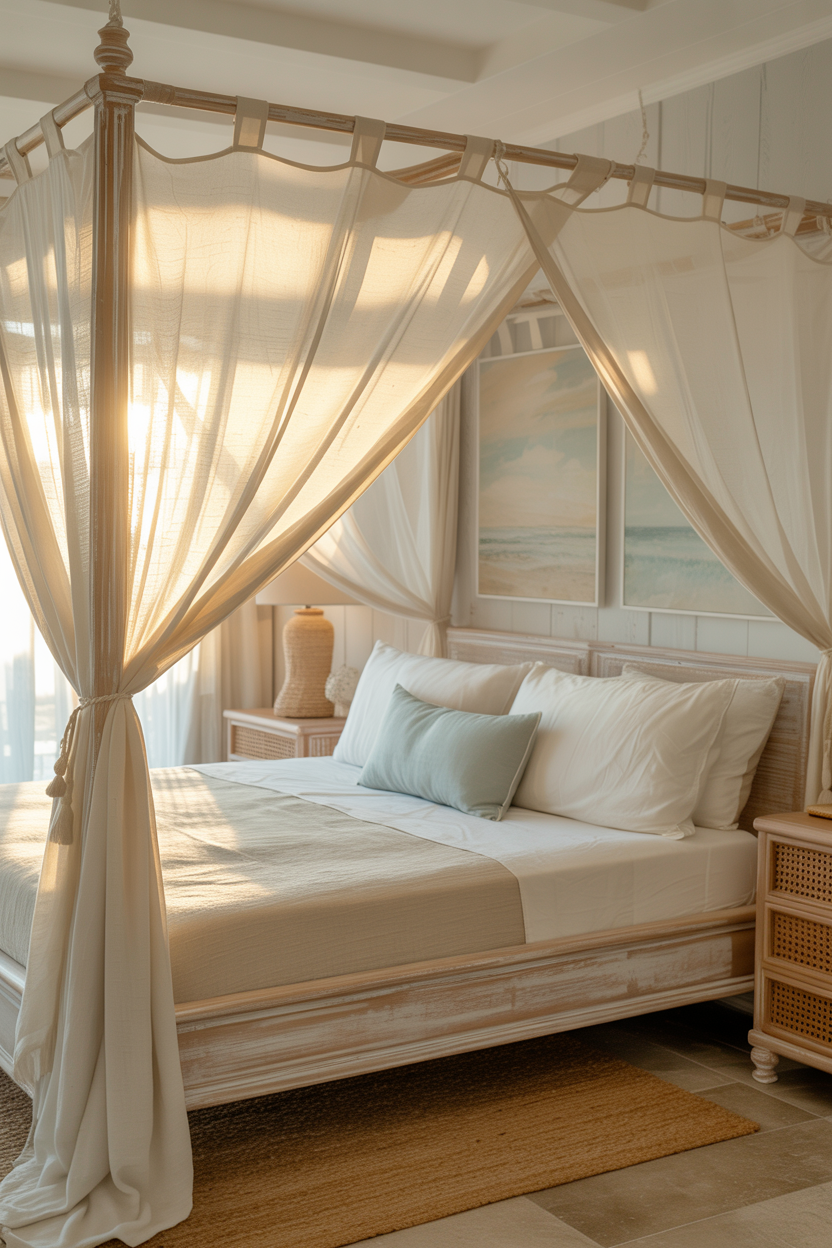
A canopy bed can make a coastal room feel more distinctive without adding heavy decoration. Use a light wood frame and loosely draped white or ivory fabric for an airy effect. Avoid thick curtains around all four sides, especially in smaller rooms, because they can visually reduce the available space.
The key is keeping the structure visually light. Pair the canopy with simple bedding, woven accents, and one or two ocean-inspired details. In larger bedrooms, leave generous space around the frame so its proportions remain clear. In compact rooms, a slim canopy profile keeps the design open.
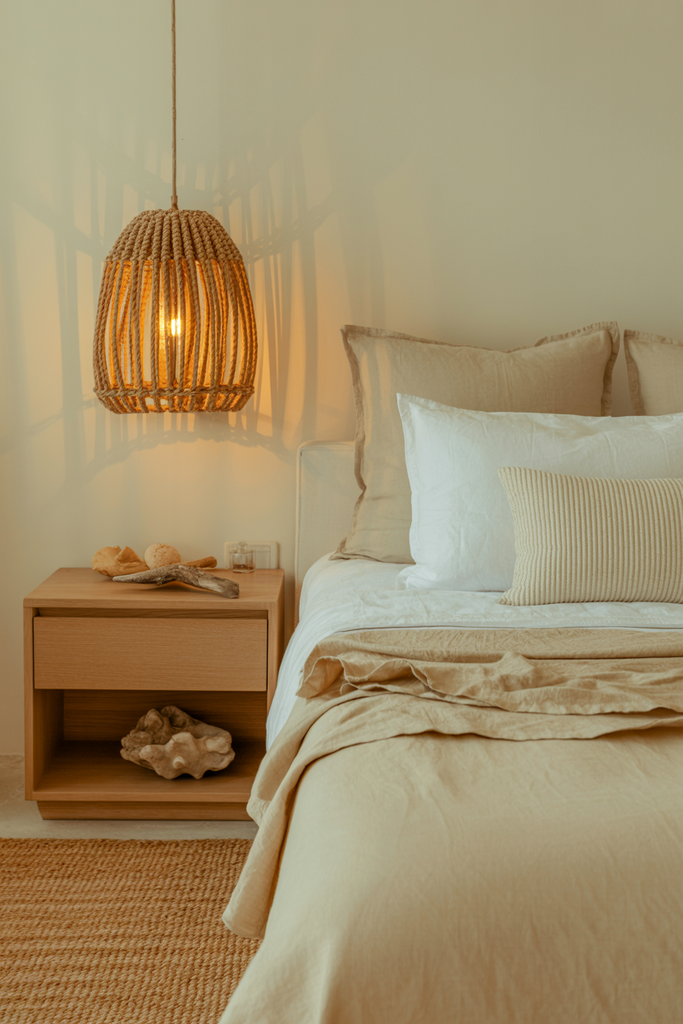
Rope Pendant Lighting
Cost: Moderate | Time: 1 to 2 hours | Skill Level: Beginner
Best For: Bedside or ceiling lighting | Works In: Coastal and natural interiors
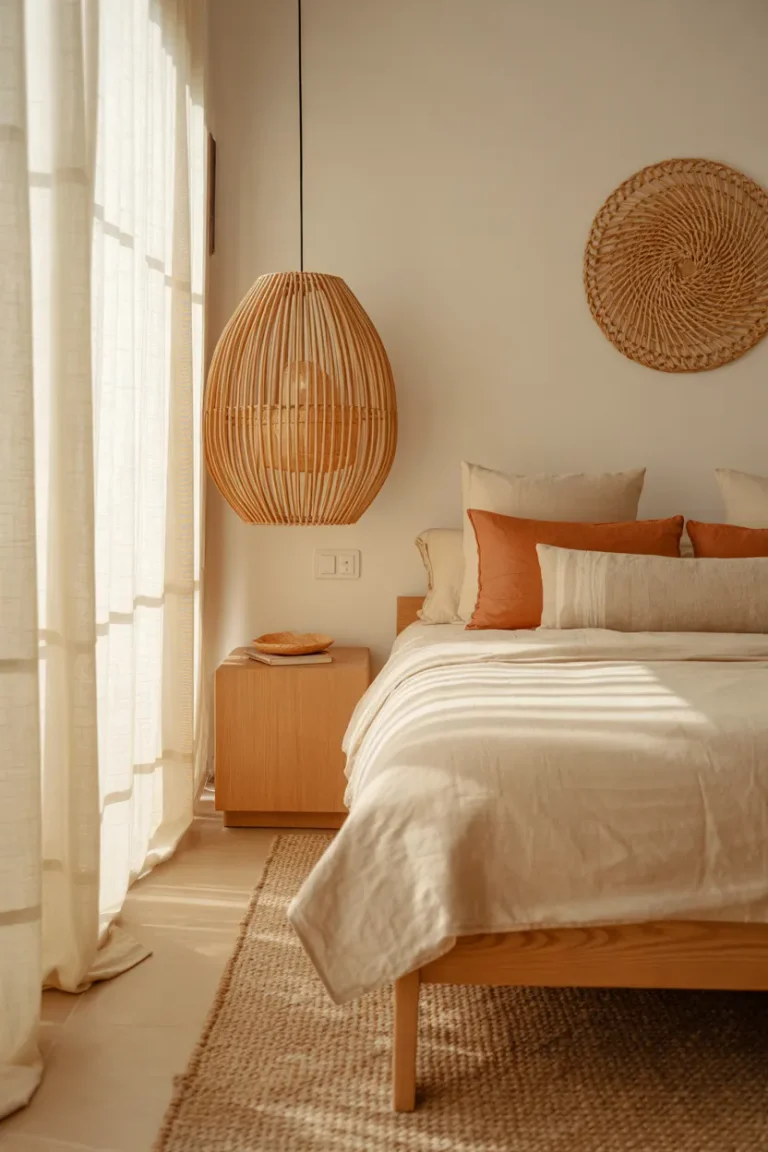
Rope lighting introduces texture overhead while keeping the room visually light. Choose a pendant with natural beige or oatmeal-colored fibers, then balance it with smooth white walls and linen bedding. For bedside use, select a compact woven fixture that provides enough reading light without overwhelming a small nightstand.
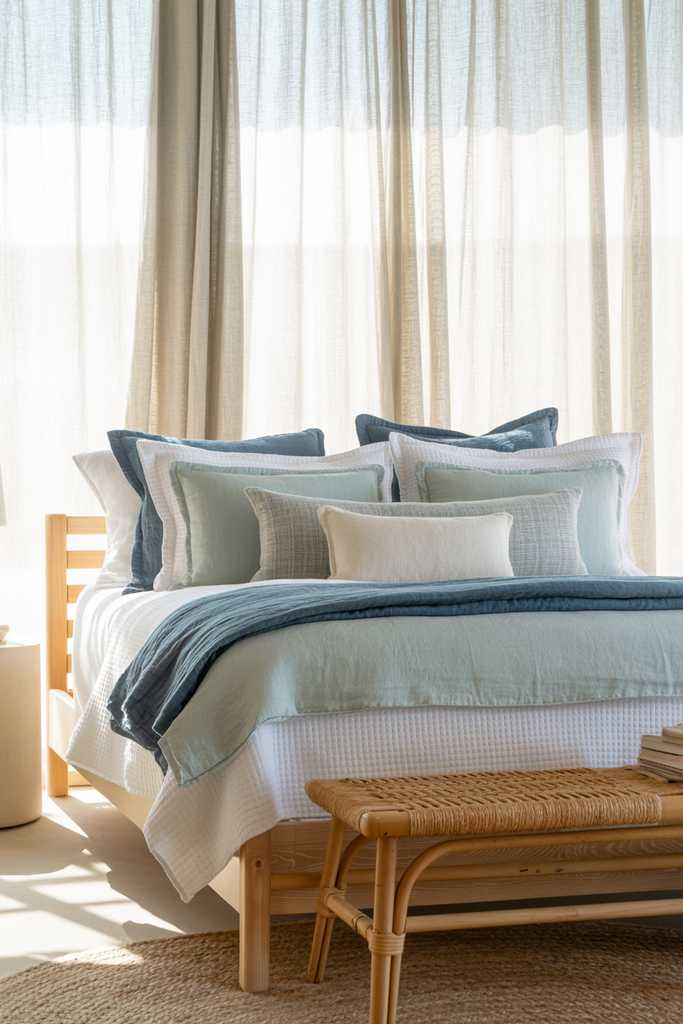
Layered Blue Bedding
A carefully layered bed gives the room depth without adding clutter. Begin with crisp white sheets, then place a pale blue quilt beneath a deeper blue throw. Add pillows in varied shapes and fabrics, keeping the strongest blue toward the back or foot of the bed for balanced contrast.
Avoid matching every blue accessory exactly. Slightly different tones create a more natural, collected appearance. I’ve noticed that adding one striped or lightly patterned pillow can also break up solid bedding without making the arrangement feel busy. Finish with a textured throw for warmth and visual softness.
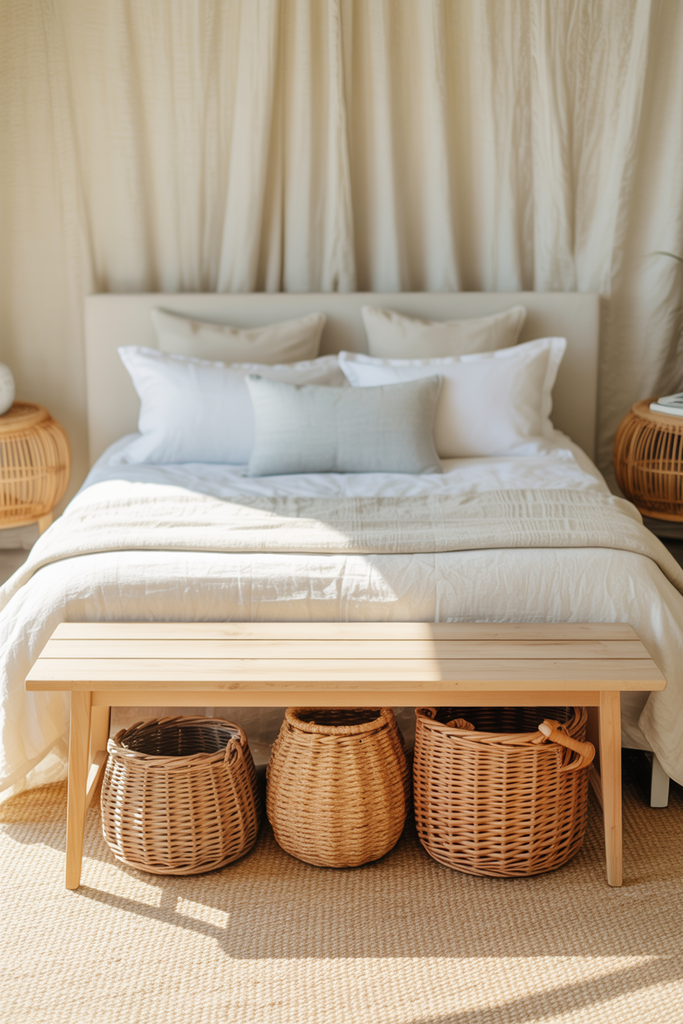
Woven Storage Baskets
- Place a large basket beside the bed for extra blankets.
- Use shallow woven baskets on open shelving for smaller items.
- Choose natural seagrass, rattan, or water hyacinth textures.
- Match basket tones with other wood and fiber elements.
- Leave some baskets open for easy everyday access.
Woven baskets solve everyday storage needs while reinforcing the natural materials found in coastal interiors. They work particularly well for bedrooms that quickly collect throws, books, or clothing. Use larger baskets on the floor and smaller ones on shelves. Keeping storage visible but organized helps maintain the room’s relaxed, uncluttered appearance.
Subtle Coastal Patterns
Cost: Low to moderate | Time: One afternoon | Skill Level: Beginner
Best For: Neutral bedrooms | Result: More visual depth
Subtle patterns keep a seaside-inspired room from looking flat while preserving its calm character. Choose stripes, small geometric motifs, or understated wave-inspired prints in muted blue, beige, and white. Introduce patterns through pillows, throws, or a small rug rather than covering every textile.
Natural Fiber Rugs
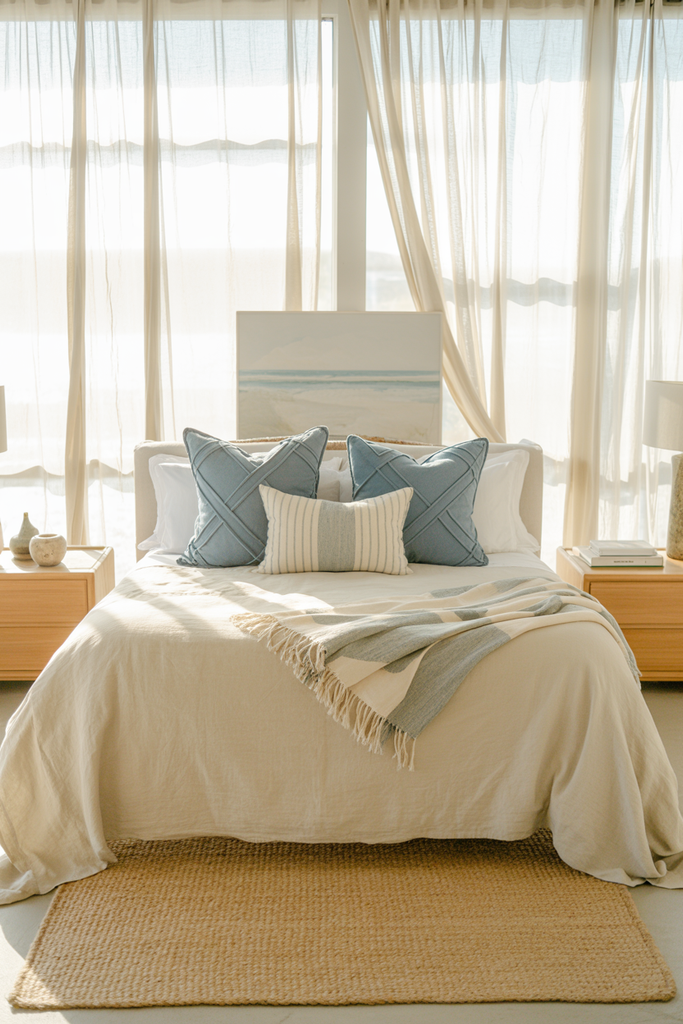
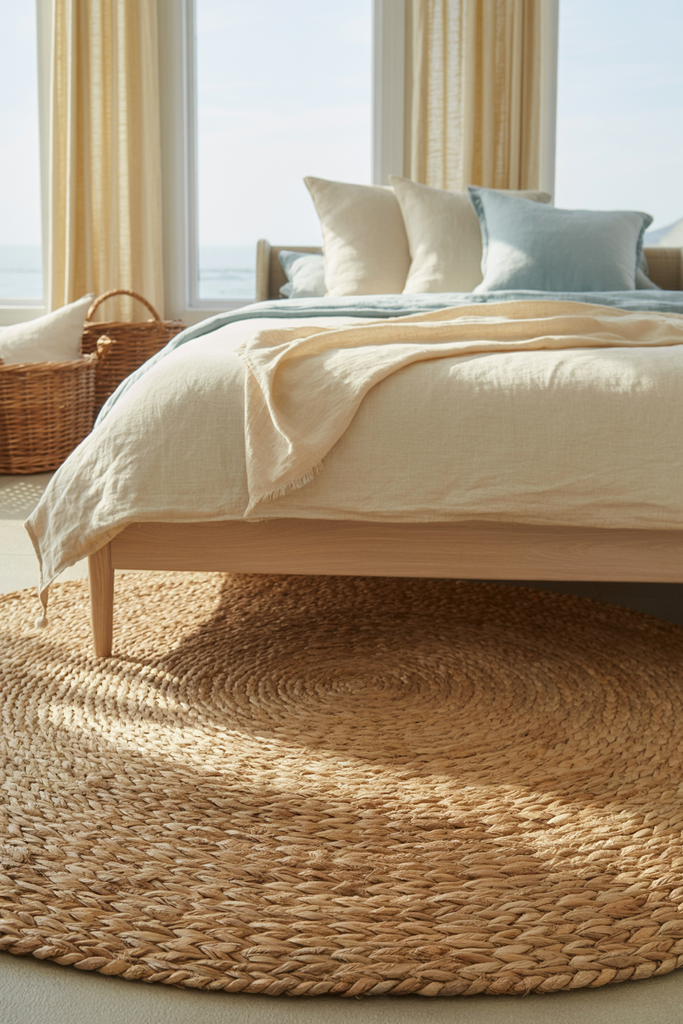
The right rug can visually connect every natural element in the room. Jute, sisal, and seagrass rugs add warmth beneath pale furniture while giving the floor a tactile foundation. Choose a size large enough for the bed and nightstands to sit comfortably on or partially over the rug.
Minimal Beach Accents
- Choose two or three beach-inspired objects rather than filling every surface.
- Favor ceramic, wood, glass, and natural fibers.
- Display shells in a small bowl instead of scattering them around the room.
- Keep decorative colors within your existing bedroom palette.
A restrained approach often makes coastal decor feel more sophisticated. A ceramic shell, small piece of coral-inspired art, or glass vase can suggest the seaside without making the bedroom look like a souvenir shop. Keep functional surfaces clear, especially nightstands, and place decorative accents where they can be appreciated without creating clutter.