Period Bedroom Ideas for a Timeless, Elegant Style
A beautiful period bedroom does not need to feel dated or overly formal. The right details can make it feel refined, warm, and wonderfully timeless.
These Period Bedroom Ideas bring together antique furniture, elegant architectural details, traditional textiles, classic lighting, and thoughtful styling to create a bedroom with genuine character. Whether you live in an older property or simply love the look of heritage interiors, you can borrow these design elements without recreating an entire historical room.
The key is balance. Rich wood can feel lighter beside ivory linen, ornate furniture works beautifully with simple bedding, and traditional patterns become more sophisticated when paired with restrained colors. In my experience, small details such as aged brass lighting, decorative molding, or a vintage rug can change the atmosphere dramatically without requiring a complete renovation. The ideas ahead will help you create a polished bedroom that feels collected, comfortable, and personal.
1. Ornate Antique Bed Frames
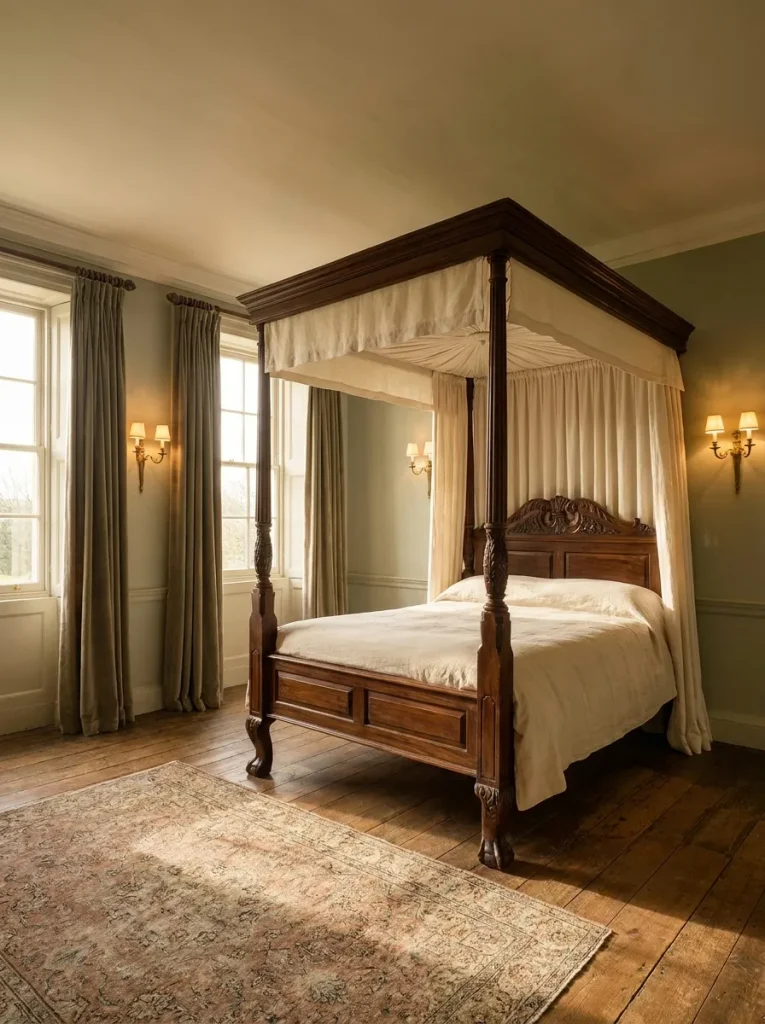
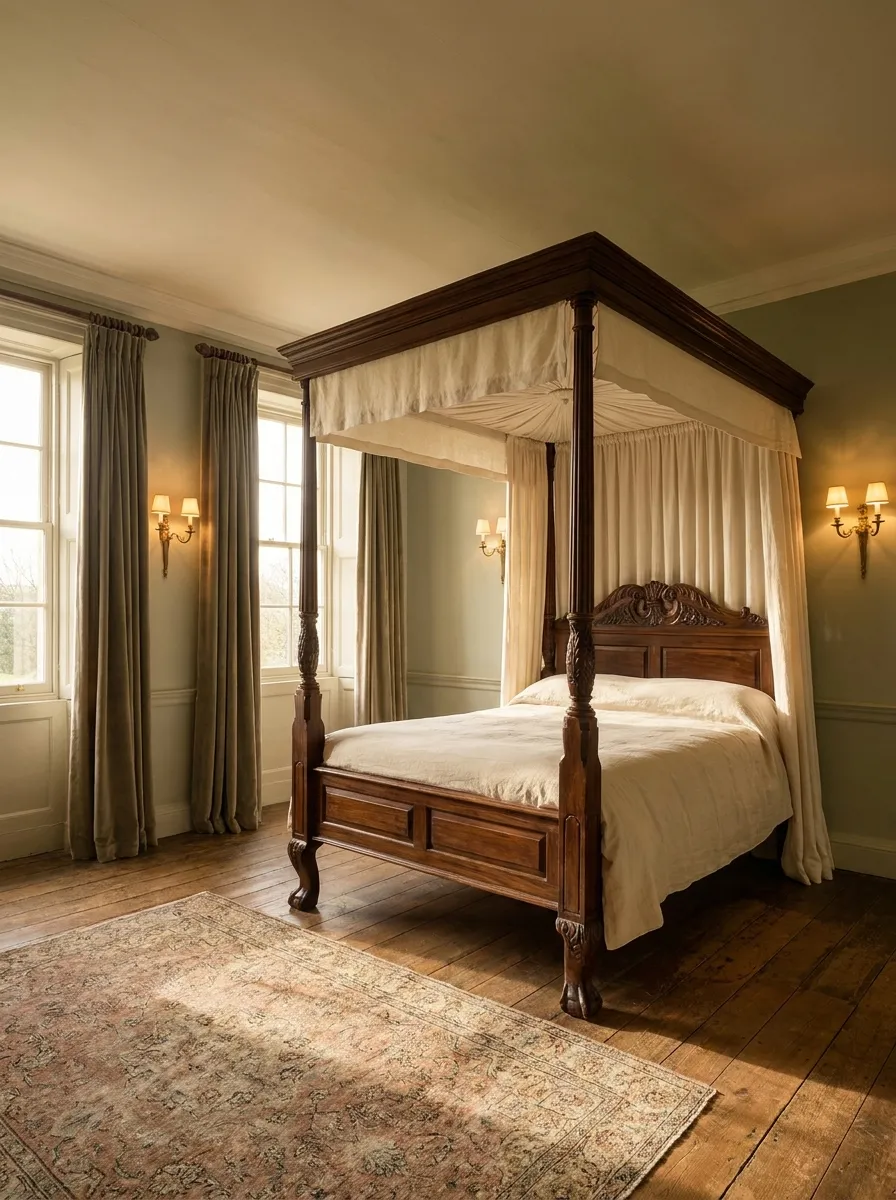
An intricately carved bed frame can give your bedroom the character of a historic country house or an elegant Victorian residence. Choose dark walnut, mahogany, or painted antique wood with decorative posts and a beautifully shaped headboard. Let the bed become the main focal point rather than competing with several oversized furniture pieces.
Balance the rich wood with crisp ivory sheets, soft linen pillows, and a muted quilt. In my experience, this contrast keeps traditional furniture from feeling heavy or old-fashioned. If an authentic antique exceeds your budget, look for a well-made reproduction with carved details and solid proportions. The result feels timeless without sacrificing everyday comfort.
2. Elegant Wall Paneling
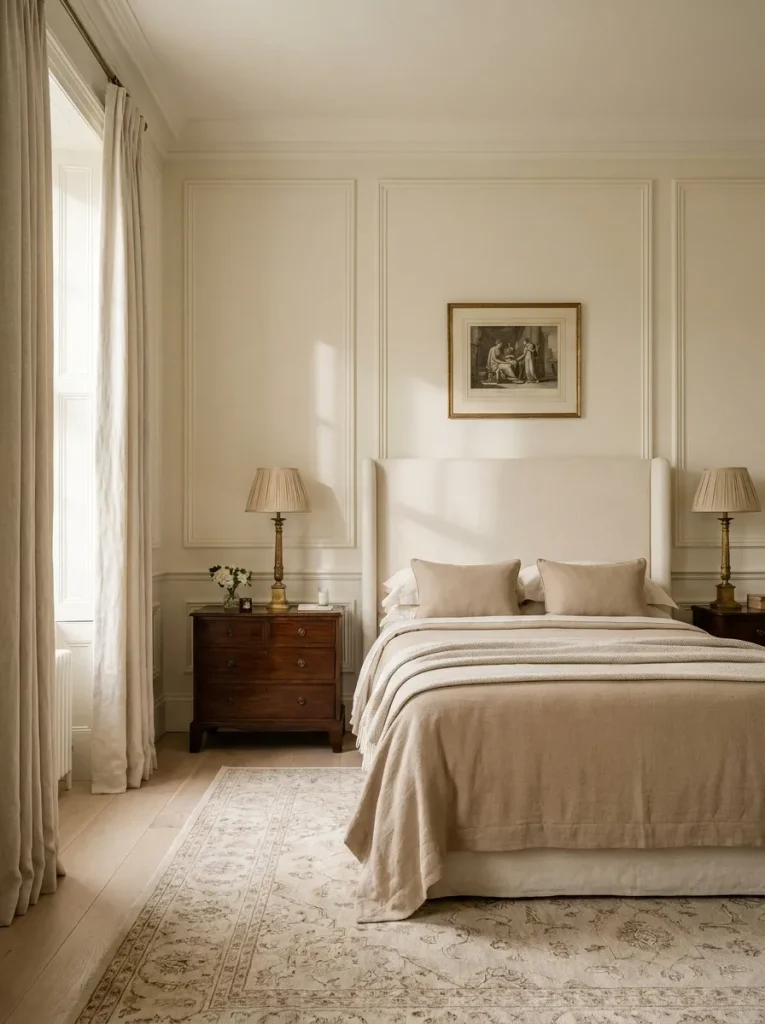
Bare walls can make even beautiful period furniture feel disconnected. Decorative wall paneling brings structure to the room and creates the architectural depth often found in Georgian, Victorian, and Edwardian interiors. Consider raised rectangular panels painted in warm ivory, dusty blue, soft sage, or muted taupe for a sophisticated finish.
- Choose the right height: Extend paneling to approximately one-third or two-thirds of the wall, depending on the room’s proportions.
- Match the architecture: Pair delicate molding with understated furniture and more elaborate profiles with grander interiors.
- Use cohesive colors: Paint the panels and surrounding walls in the same shade for a subtle, expensive-looking effect.
- Highlight the bed: Center the headboard within a large panel to create a natural focal point.
- Check wall condition: Measure carefully and plan around sockets, switches, and existing trim before installation.
Thoughtful paneling adds character without requiring a complete renovation. For a smaller bedroom, narrow molding profiles and lighter paint can preserve an airy feeling. Renters can achieve a similar look with removable molding strips or carefully positioned framed artwork.
3. Vintage Floral Wallpaper
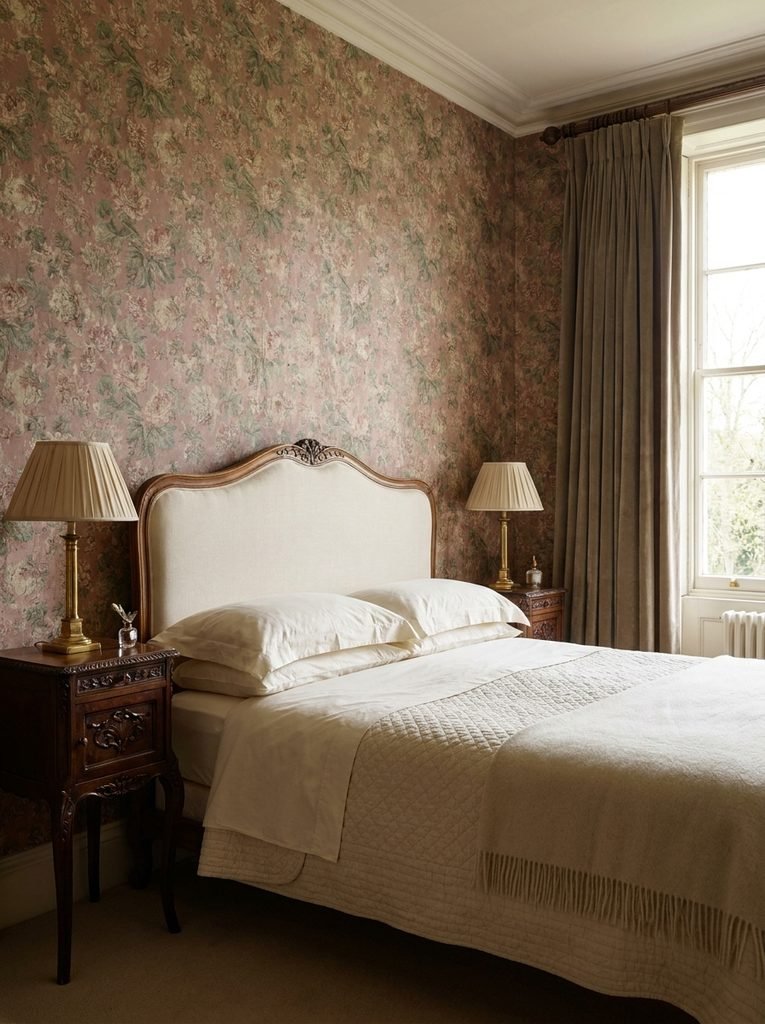
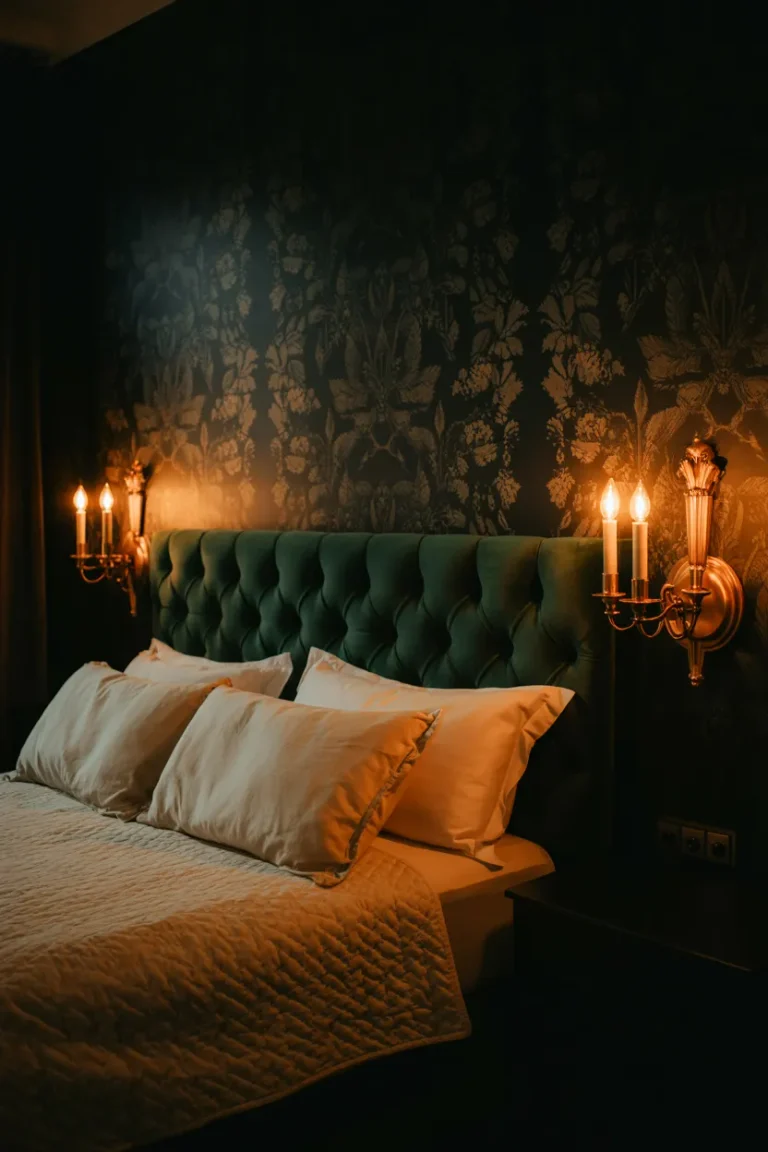
Floral wallpaper introduces the softness and intricate detail that make traditional bedrooms feel distinctive. Look for small-scale roses, trailing botanical vines, or faded garden-inspired prints in muted colors rather than overly bright patterns. These designs complement antique furniture while creating a graceful backdrop for an upholstered headboard or carved wooden bed.
Quick Tip:
Choose wallpaper with a background color that matches your bedding or curtains. Before committing to a full room, order a sample and view it in both daylight and evening lighting. Some floral patterns appear much darker once the lamps are switched on.
A single feature wall behind the bed is a practical starting point, especially if your bedroom already contains patterned curtains or an ornate rug. For a more traditional finish, cover all four walls and keep larger furnishings relatively simple. The key is to repeat one or two colors from the wallpaper elsewhere in the room so the entire space feels connected.
4. Layered Period Textiles
BEFORE
A bedroom with plain bedding and a single thin blanket can feel unfinished, even when the furniture has beautiful period details. Without varied textures, the room may lack the warmth and depth associated with traditional English and European interiors.
AFTER
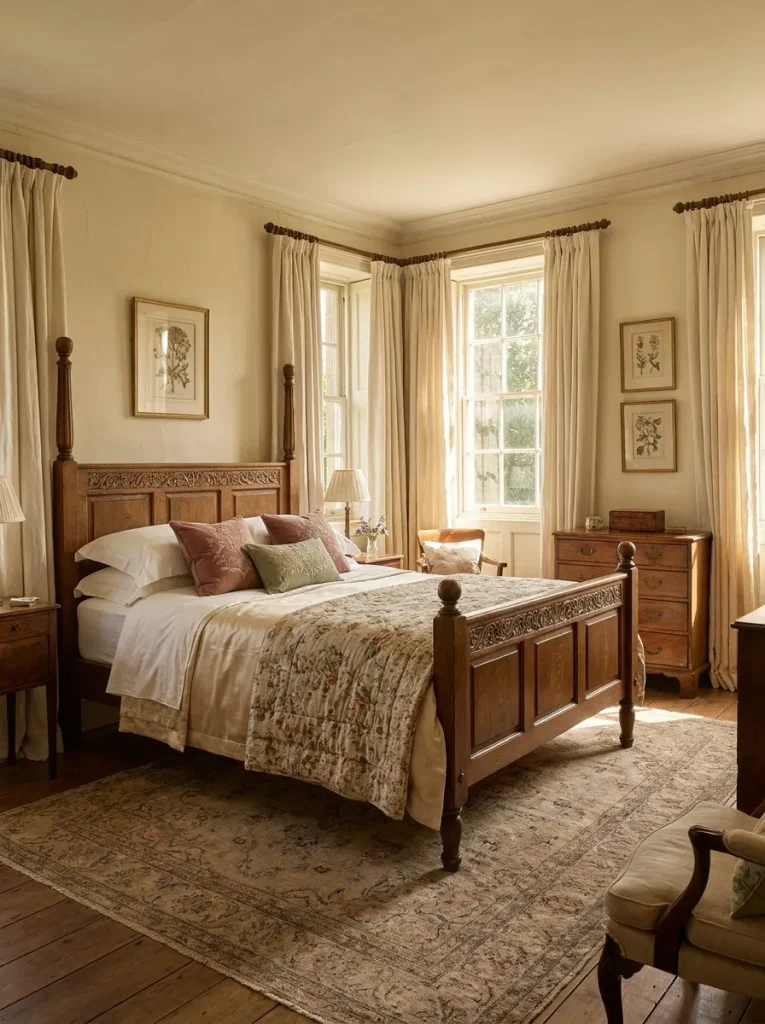
Layered textiles introduce softness, contrast, and visual richness. A quilted bedspread, embroidered cushions, and flowing curtains make the space feel more considered without requiring expensive furniture.
Start with breathable cotton sheets, add a textured coverlet, and finish with two or three decorative cushions. I’ve noticed that mixing subtle patterns with solid fabrics creates a more refined result than covering every surface in competing prints. Choose colors that complement your wallpaper and woodwork, and leave enough clear bedding visible to keep the arrangement elegant rather than crowded.
5. Antique Brass Lighting
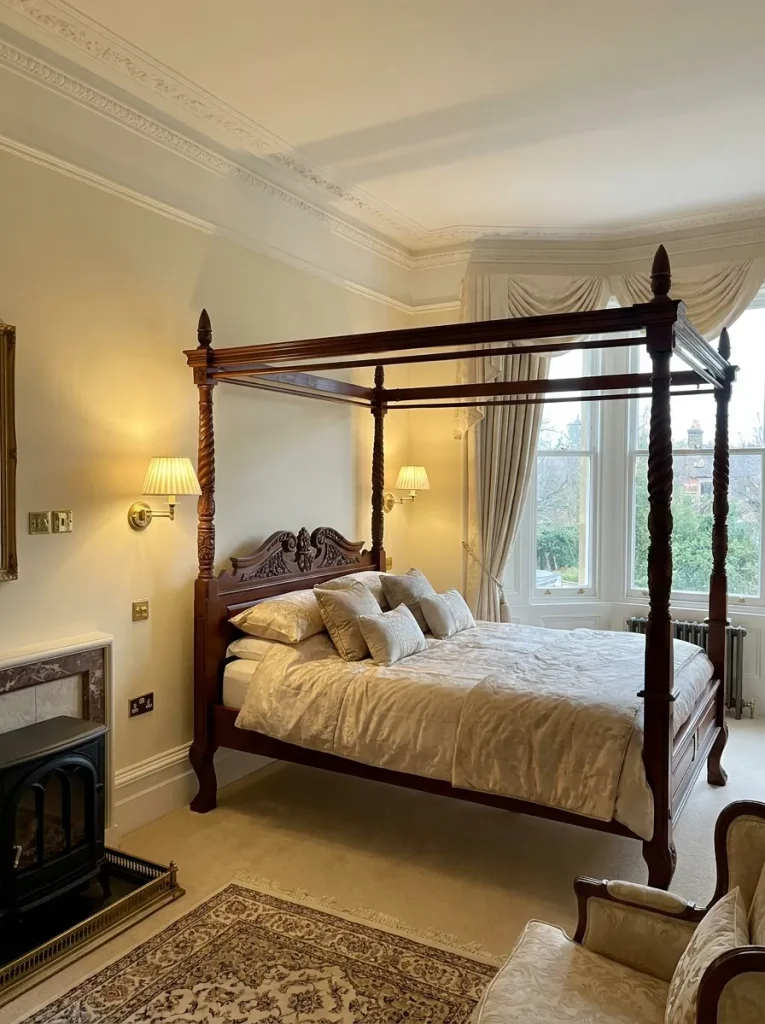
- Choose a finish: Look for aged brass, antique bronze, or softly burnished gold that complements your bed frame and cabinet handles.
- Position bedside lights: Install matching wall sconces on either side of the headboard, allowing comfortable reading space.
- Select warm bulbs: A warm white bulb around 2700K creates a relaxed evening atmosphere.
- Add a central fixture: Consider a traditional chandelier or pendant with fabric shades and restrained decorative detailing.
Traditional lighting does more than brighten a room. It highlights architectural features, brings out the grain of antique furniture, and creates a gentle glow after sunset. For a balanced period interior, coordinate metal finishes without insisting that every piece match exactly. Have hardwired fixtures installed by a qualified electrician, especially in older homes.
6. Classic Drapery Styles
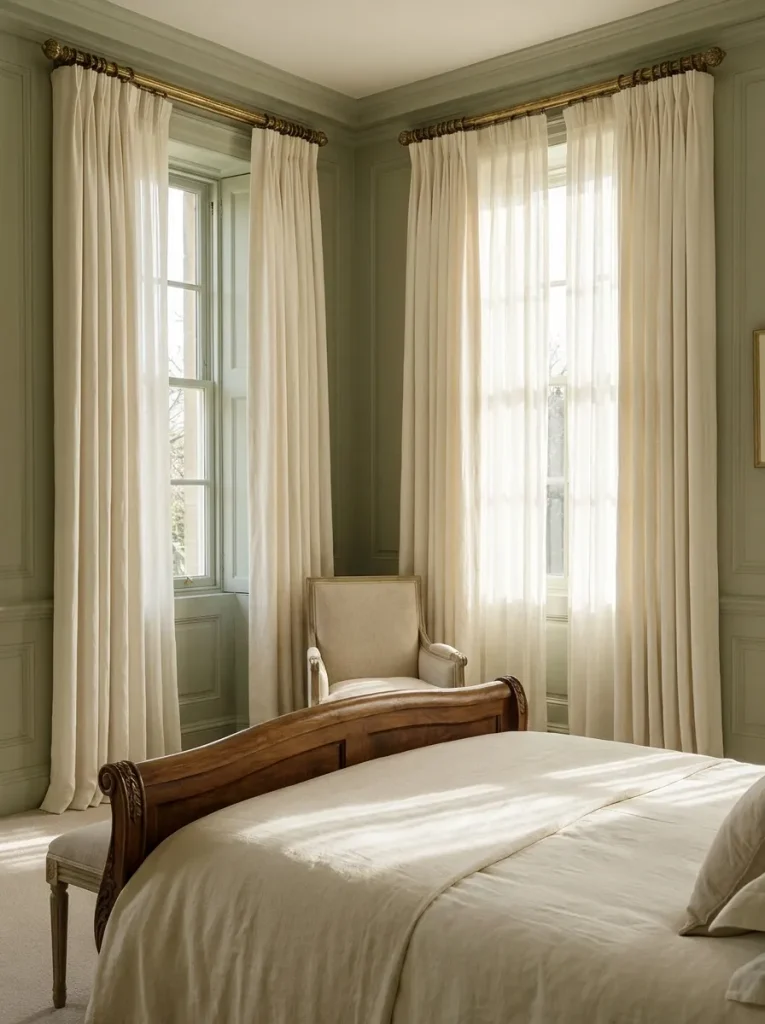
| Feature | Option A: Simple Curtains | Option B: Traditional Drapery |
|---|---|---|
| Fabric | Lightweight cotton or linen | Velvet, lined linen, or jacquard |
| Header | Plain rod pocket or eyelets | Pinch pleats or tailored pleats |
| Hardware | Minimal metal rod | Decorative brass or wooden pole |
| Overall effect | Casual and understated | Formal and architectural |
| Best suited to | Small, relaxed bedrooms | Tall windows and period interiors |
Beautiful drapery can make ordinary windows feel like a defining architectural feature. Hang the curtain pole slightly above the window frame and extend it beyond both sides so the fabric frames the glass without blocking too much daylight. Choose full-length panels that just skim the floor, and use discreet lining when extra privacy or insulation is needed.
For a refined heritage look, pair sheer inner curtains with heavier outer panels in complementary shades. Velvet suits grand rooms, while linen works well in relaxed country homes. Measure carefully before ordering, since poorly fitted curtains can make even expensive fabrics appear awkward.
7. Ornate Ceiling Details
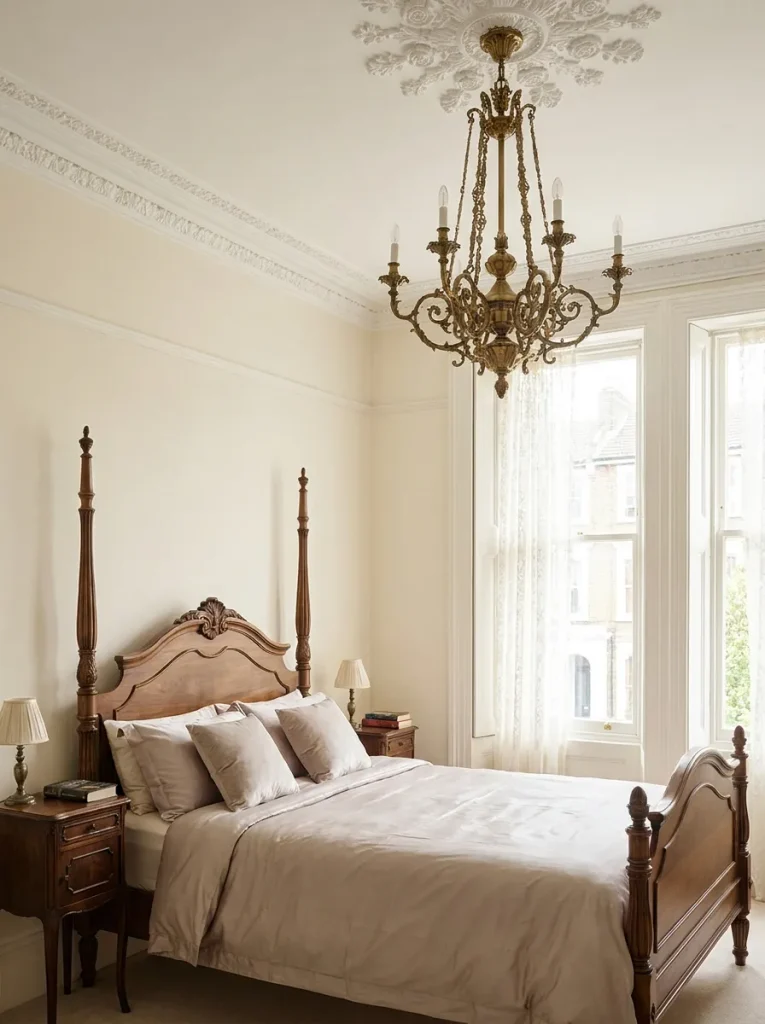
DO
- Install decorative crown molding to create a graceful transition between walls and ceiling.
- Choose a plaster or lightweight ceiling rose that suits the room’s proportions.
- Paint ceiling details in warm white for subtle definition against cream walls.
- Pair ornate ceiling features with a traditional chandelier for a cohesive period aesthetic.
DON’T
- Choose oversized ceiling ornaments for a small bedroom with low ceilings.
- Combine too many competing decorative patterns overhead.
- Ignore existing cracks or signs of water damage before installation.
- Assume original plasterwork is safe to disturb without checking for hazardous materials in older properties.
Architectural ceiling details draw the eye upward and give a bedroom the character of a historic home. Even modest molding can make a noticeable difference when it follows the room’s natural proportions. If you are restoring an older property, preserve original plasterwork wherever possible. In newer homes, lightweight decorative replicas can provide a similar appearance with less structural work.
8. Traditional Wooden Furniture
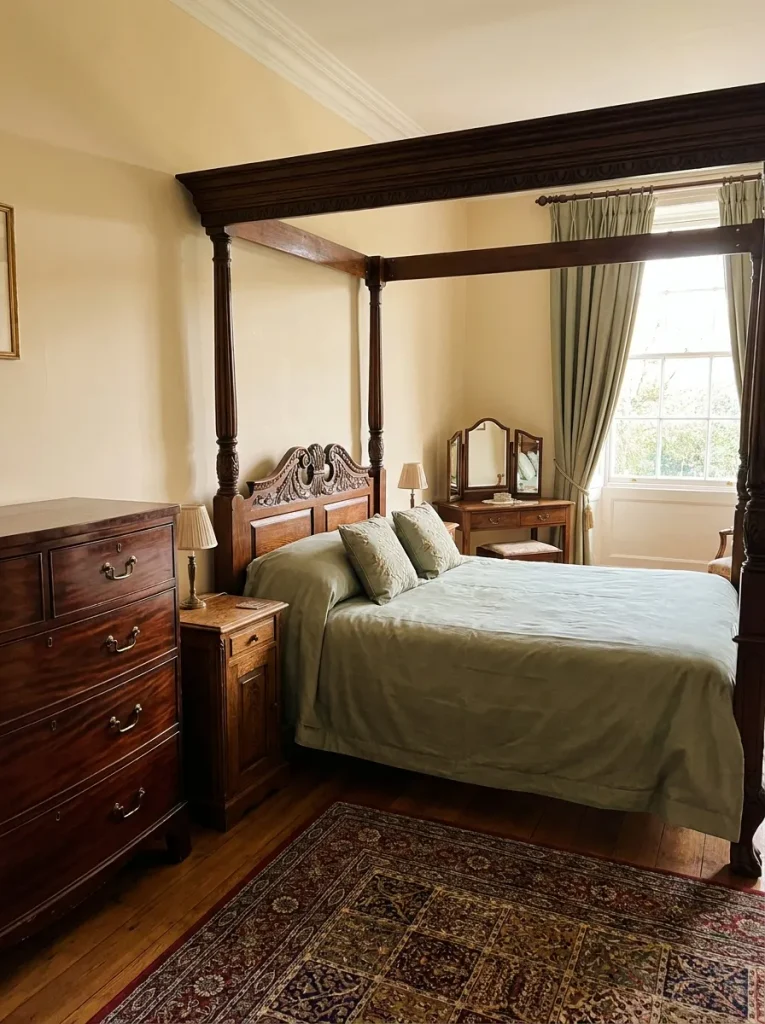
Cost: Moderate to high, depending on age and condition
Time: One afternoon for furniture rearrangement
Skill Level: Beginner for styling, intermediate for restoration
Best For: Victorian, Georgian, Edwardian, and traditional country interiors
Result: Warmth, craftsmanship, and a sense of heritage
Beautiful wooden furniture gives a traditional bedroom a feeling of permanence that trend-driven pieces often lack. Look for solid wood, dovetail drawer joints, shaped legs, and original brass hardware when shopping for vintage pieces. A matching bedroom suite can look formal, but combining two or three complementary wood finishes often creates a more collected appearance.
For a practical arrangement, place a substantial chest opposite the bed, keep a smaller bedside table within easy reach, and leave clear walking space around larger pieces. Before buying an antique, check drawers, joints, woodworm damage, and stability. A scratched surface may be easy to improve, but structural repairs can add considerably to the cost.
9. Upholstered Heritage Headboards
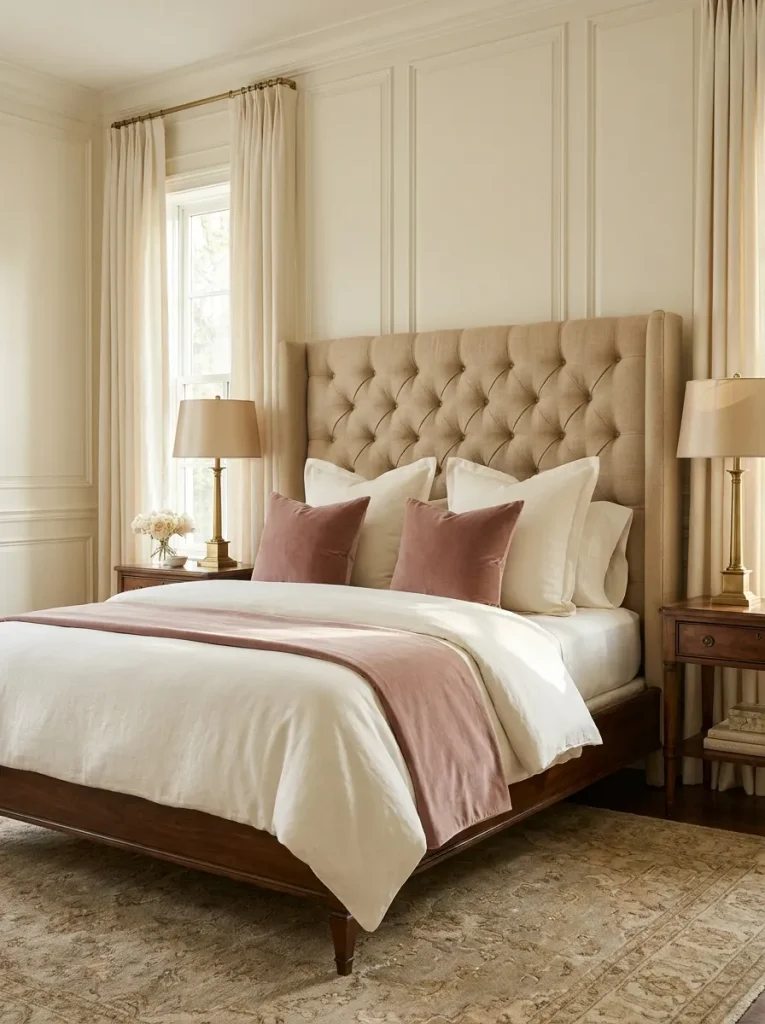
A well-proportioned upholstered headboard softens the strong lines of antique wood furniture and makes the bed feel inviting. Choose linen, cotton velvet, or a textured neutral fabric in shades such as oatmeal, champagne, muted olive, or dusty blue. Button tufting, gently curved tops, and restrained nailhead trim can reinforce a traditional aesthetic without making the room feel overly formal.
For the most cohesive look, relate the headboard color to your curtains, wallpaper, or rug rather than matching every fabric exactly. A tall design works especially well beneath high ceilings, while a lower, gently curved headboard can suit a smaller room. If you enjoy reading in bed, prioritize supportive padding and a fabric that is easy to maintain.
10. Marble Fireplace Surround
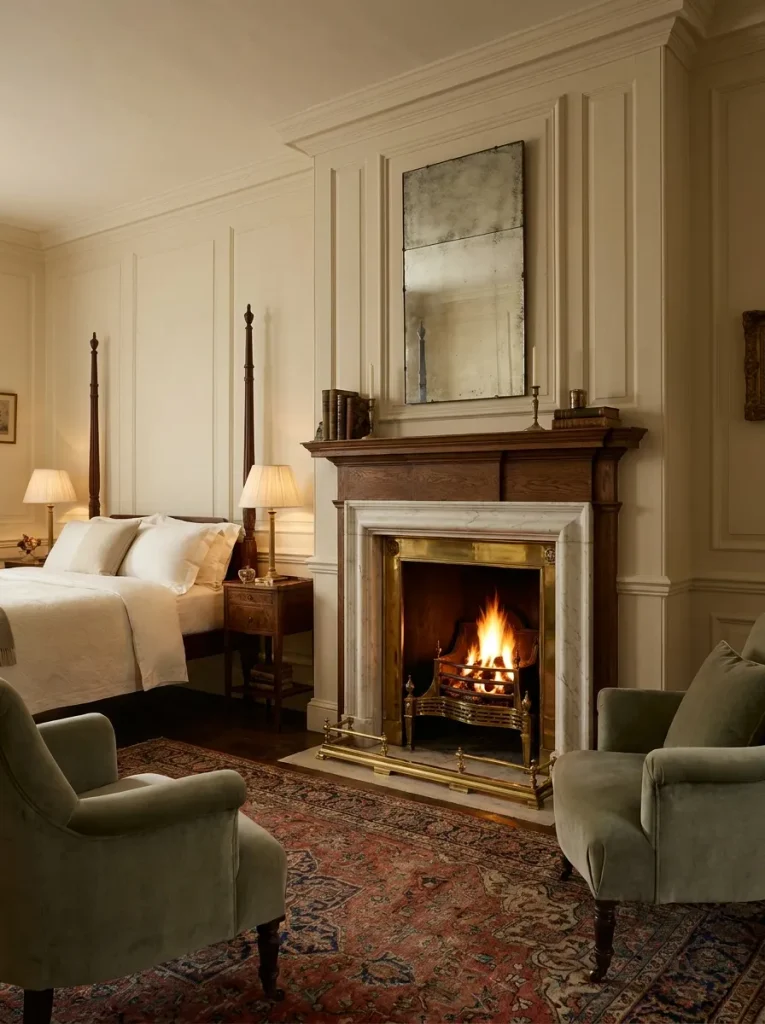
- Keep the surround visible: Avoid placing tall furniture directly beside the fireplace so its architectural detailing remains prominent.
- Layer the mantel: Use an antique mirror, small brass candlesticks, and one restrained decorative object.
- Choose complementary materials: Pair cool marble with warm wood, aged brass, linen, or wool.
- Respect proportions: Select a surround that feels appropriate to the wall rather than oversized for dramatic effect.
- Check safety first: Have an existing fireplace professionally inspected before using it.
A fireplace can anchor the entire bedroom and provide a natural focal point for traditional furniture. If the original surround is already present, let its shape guide the rest of the room’s styling. For homes without a working fireplace, a reclaimed surround can still provide architectural character, provided it is installed securely and used only as a decorative feature.
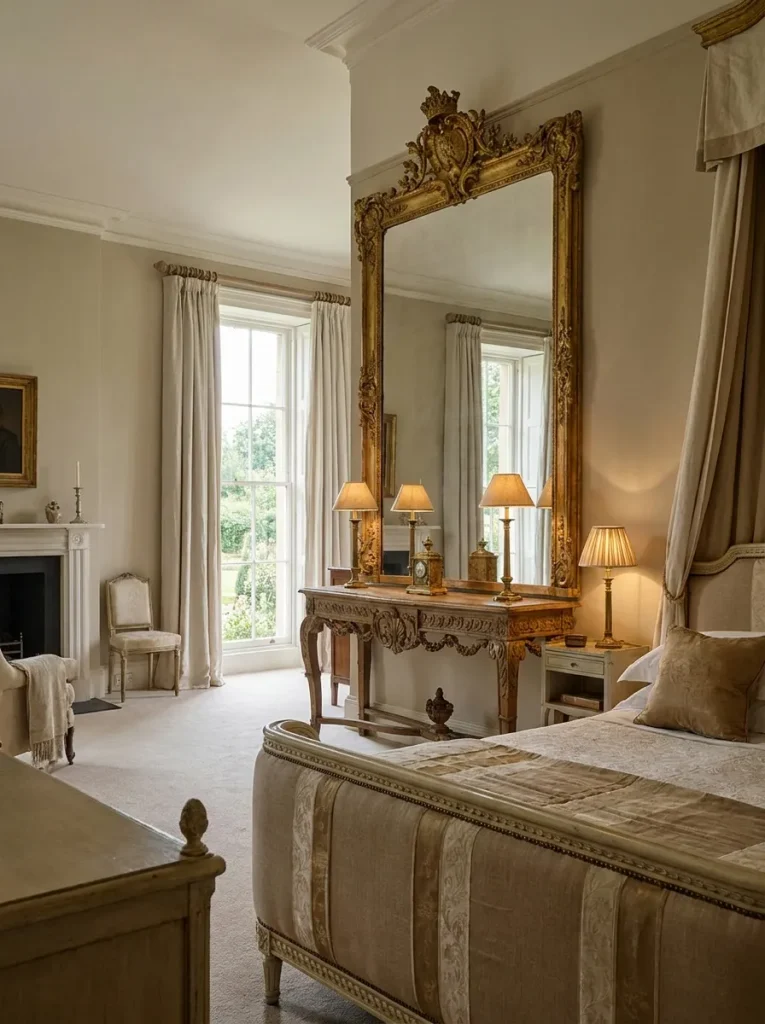
11. Gilded Antique Mirrors
Quick Tip:
Place the mirror where it can reflect natural daylight or an attractive architectural feature. Avoid positioning it directly opposite clutter, open wardrobes, or a visually busy wall, since the reflection becomes part of the room’s decoration.
A gilded mirror adds height, light, and decorative detail without taking up valuable floor space. Choose an antique frame with visible patina if you want authentic character, or select a reproduction with convincing carved details. I’ve noticed that slightly oversized mirrors often work particularly well above a fireplace or dresser because they give the arrangement stronger visual weight.
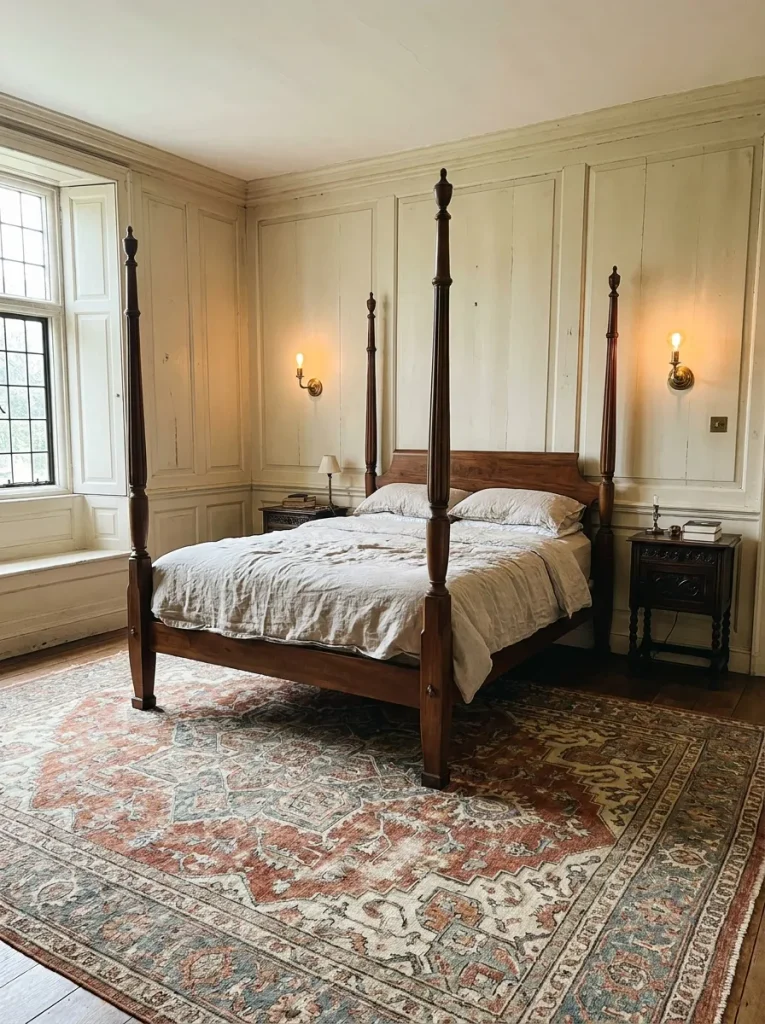
12. Refined Persian Rugs
BEFORE
A period-inspired bedroom can feel disconnected when the furniture sits directly on a bare floor. Hard surfaces may also make the room seem colder and reduce the visual connection between separate pieces.
AFTER
A Persian-style rug brings the furniture together while introducing color, pattern, and softness. A faded design in rust, cream, muted blue, or sage can complement antique wood without overwhelming it.
Choose a rug large enough for the front legs of the bed and nearby furniture to sit comfortably on its surface. If the bedroom is spacious, extending the rug beyond the bedside tables creates a more generous arrangement. In smaller rooms, a runner on each side of the bed can provide warmth while keeping the floor visually open. A rug pad also helps prevent slipping and protects delicate flooring.
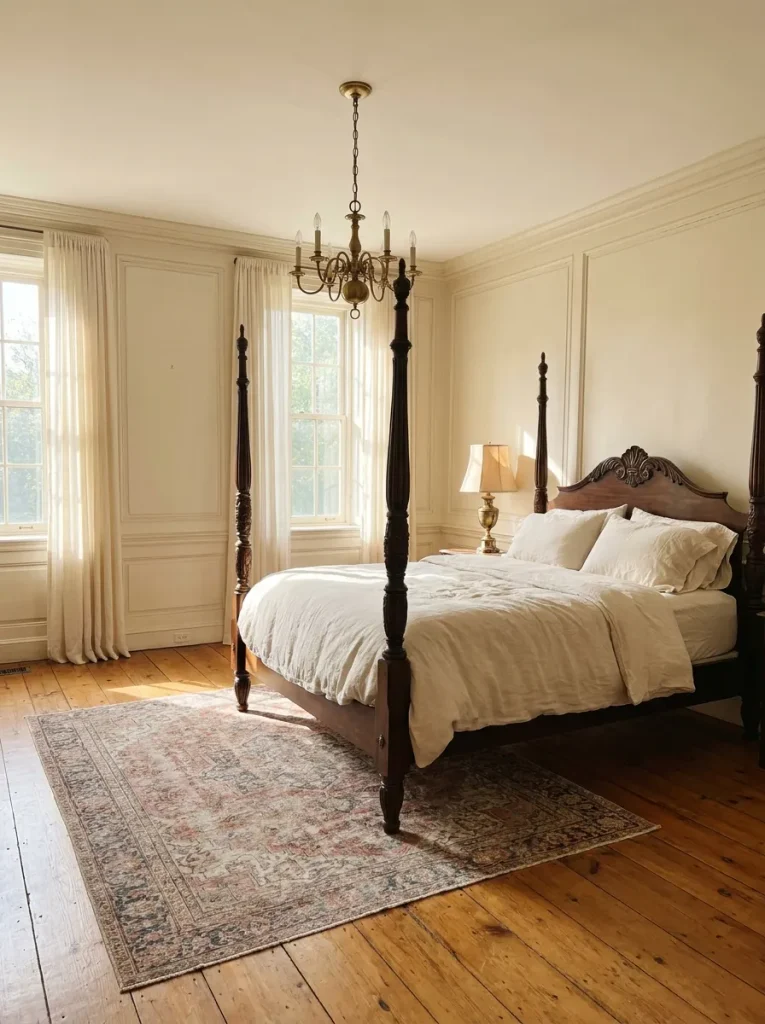
13. Classic Wood Flooring
- Assess the existing floor: Check for loose boards, squeaks, gaps, moisture damage, or uneven areas before refinishing.
- Choose a restrained finish: Select matte or satin oil finishes that preserve natural wood character rather than creating a glossy modern appearance.
- Coordinate the tones: Match the floor’s undertones with your wooden furniture while allowing some variation for a collected look.
- Add a substantial rug: Position a traditional rug beneath the bed to soften the boards and define the sleeping area.
- Protect high-traffic areas: Use felt pads beneath furniture legs and avoid dragging heavy antique pieces across the finished surface.
Original timber flooring can become one of the strongest architectural features in a traditional bedroom. Its natural grain provides a warm foundation for painted walls, antique furniture, and layered textiles. If replacing damaged boards, reclaimed timber can offer authentic character, but new oak with an aged finish can also create a convincing heritage appearance.
14. Decorative Picture Rails
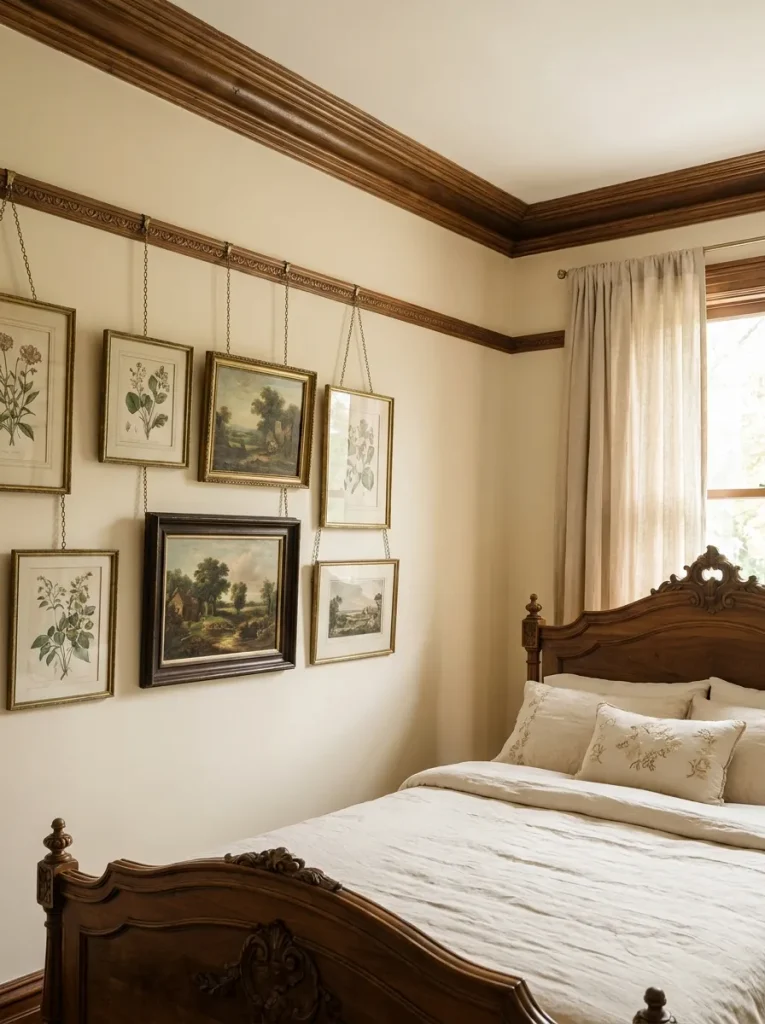
| Feature | Option A: Minimal Rail | Option B: Ornate Rail |
|---|---|---|
| Profile | Slim and understated | Wider with decorative molding |
| Best setting | Smaller bedrooms | Large period rooms |
| Styling | Few framed pieces | Gallery-style artwork |
| Finish | Painted to match walls | Contrasting or wood-toned |
| Visual effect | Subtle architectural detail | Strong traditional character |
A picture rail provides an elegant way to display artwork without covering the walls with holes or heavy frames. Position it according to the room’s existing proportions, often below the crown molding, then hang artwork with traditional picture hooks and cords. This approach also creates a natural horizontal line that reinforces the architecture.
For a sophisticated bedroom, combine botanical prints, antique landscapes, architectural sketches, or small portrait-style artwork. Keep the frames related through color or material rather than making every frame identical. If the room has original picture rails, preserve them whenever possible because their proportions often contribute significantly to the property’s period character.
15. Symmetrical Bedside Styling
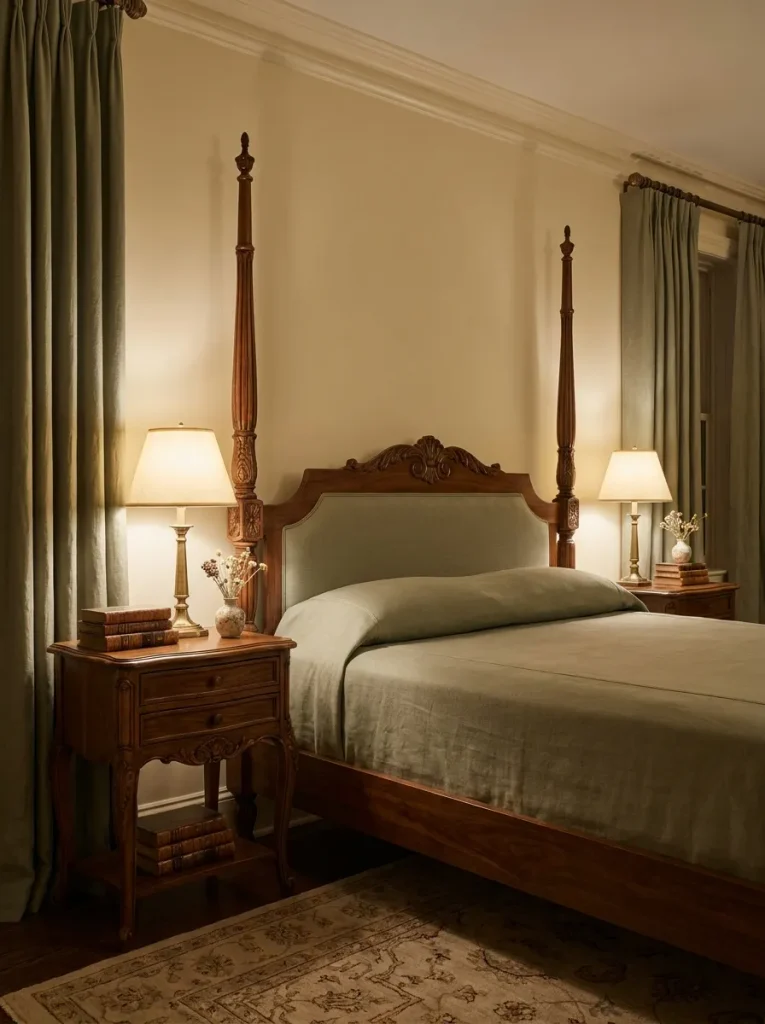
DO
- Place matching or closely related bedside tables on both sides of the bed.
- Use lamps with similar proportions to create visual balance.
- Keep everyday essentials within easy reach.
- Repeat one metal finish, such as aged brass, across small accessories.
DON’T
- Fill both tables with decorative objects that create visual clutter.
- Use oversized lamps that dominate the headboard.
- Force identical accessories if the room already has a collected vintage character.
- Block drawers or cabinet doors with decorative pieces.
Symmetry gives a traditional bedroom an orderly foundation while allowing individual antique pieces to add personality. Start with matching lamps and similar bedside heights, then introduce small differences through books, flowers, or decorative objects. This approach keeps the arrangement polished without making the room feel like a showroom. Leave some empty surface area so the furniture remains useful.
CONCLUSION
Creating a timeless bedroom is about choosing details that have lasting character rather than following short-lived trends. From antique wood furniture and elegant paneling to Persian rugs, heritage textiles, and classic lighting, these Period Bedroom Ideas offer plenty of ways to bring warmth and sophistication into your home.
Start with one feature that genuinely suits your space, then build around it gradually. I’ve seen how small changes like better lighting, layered textiles, or a beautiful vintage mirror can completely shift the way a bedroom feels. Save this post on Pinterest for your next decorating project, try the ideas that inspire you most, and share it with someone who loves timeless interiors.