30 Creative Master Bedroom Wall Decor Ideas That Will Elevate Your Space with Stunning Style
Master bedroom wall decor ideas can make the difference between a room that simply holds furniture and one that feels genuinely personal. The wall behind the headboard is often the first thing you notice, yet it is also where decorating decisions can become confusing. Should you hang one large canvas, build a gallery, add decorative molding, or change the entire surface? The best answer depends on your room proportions, the light, and the mood you want at the end of the day. I have found that a limited palette and one clear focal point usually feel more peaceful than a wall covered in unrelated pieces. These 30 looks explore practical options, from easy framed prints to richly textured architectural details, with ideas for making each treatment feel balanced, comfortable, and worth keeping.
1. Layered Botanical Shelves
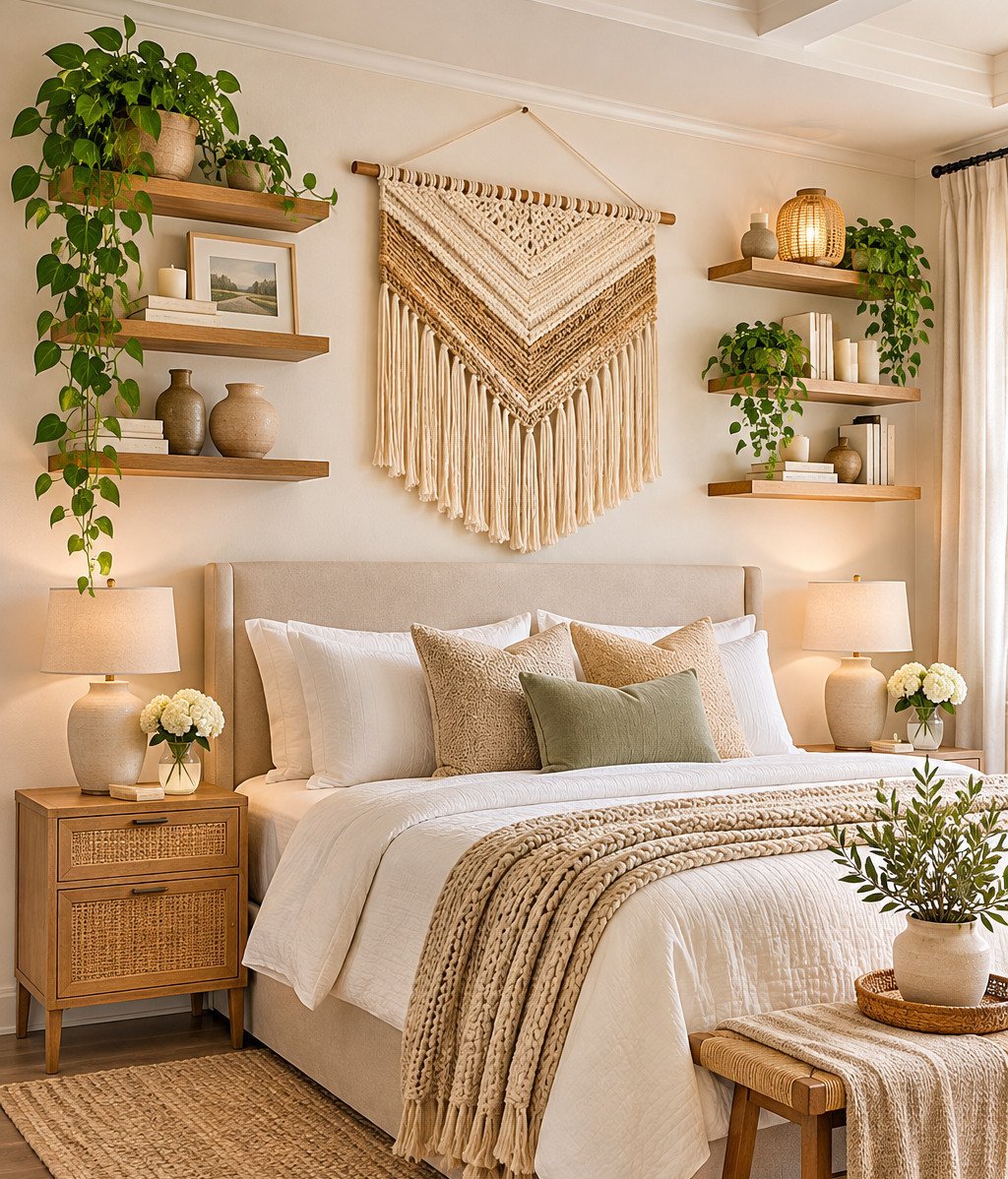
Use solid floating shelves to give small framed art, trailing greenery, and ceramics breathing room above a low headboard. The detail works best when its scale follows the bed and stays visually centered. A clear gap above the headboard gives the design room to breathe.
Repeat two wood tones at most, and leave empty shelf space so the display looks intentional. Stand at the doorway to judge the composition, because a wall treatment that looks balanced close up can feel crowded from across the room. Repeat just one accent color in the bedding or accessories.
2. Round Mirror Centerpiece
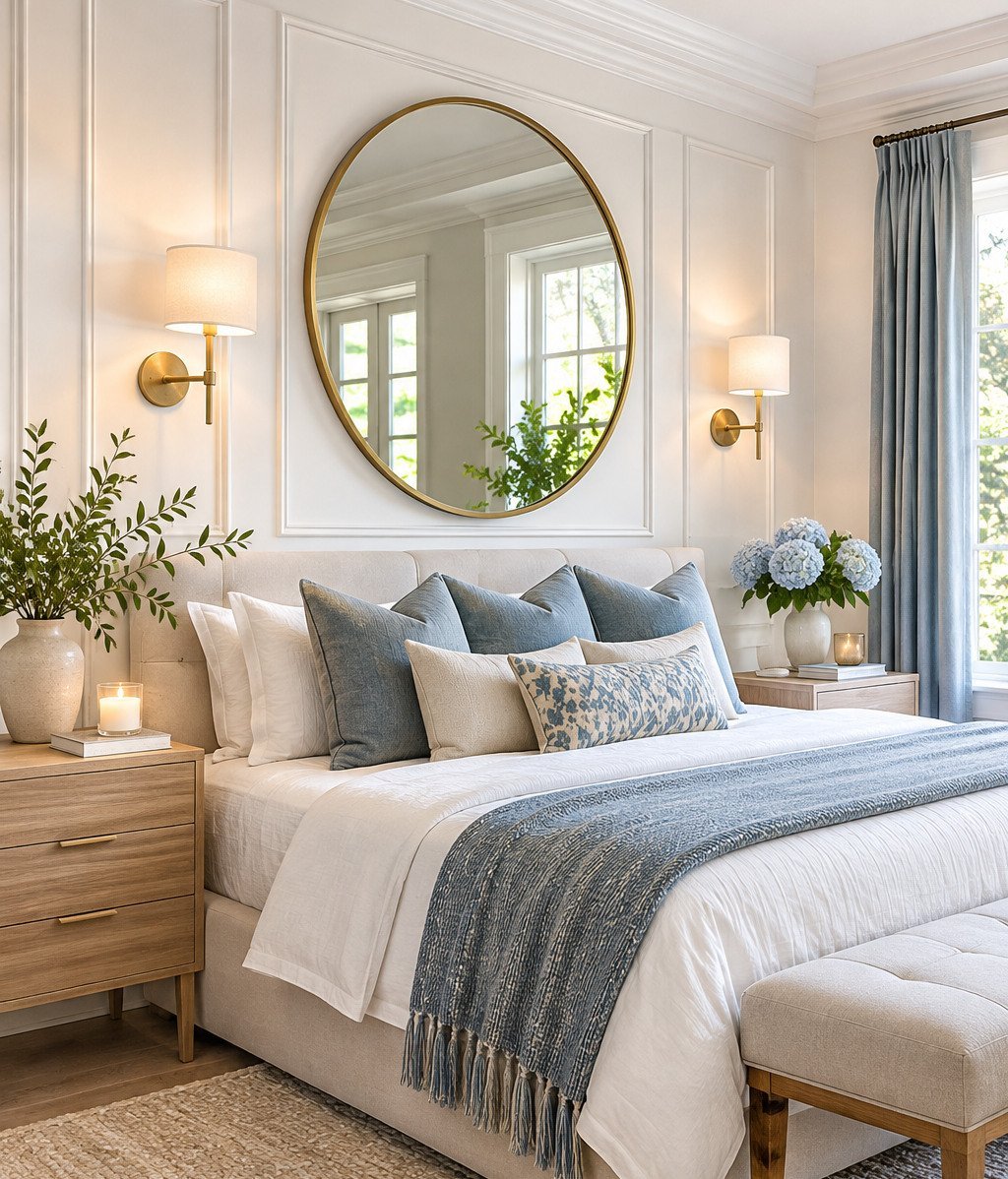
Center a large round mirror above the bed for a soft counterpoint to square nightstands and panel molding.
Secure the mirror properly to structural supports and check that it clears the headboard.
Measure the bed and divide the usable wall width before choosing the decor size.
Test paper templates on the wall to see the arrangement in daylight.
The goal is a bedroom that feels restful from the door and comfortable from the bed. Small adjustments in spacing, height, and color often matter more than adding another decorative object.
3. Collected Nature Gallery
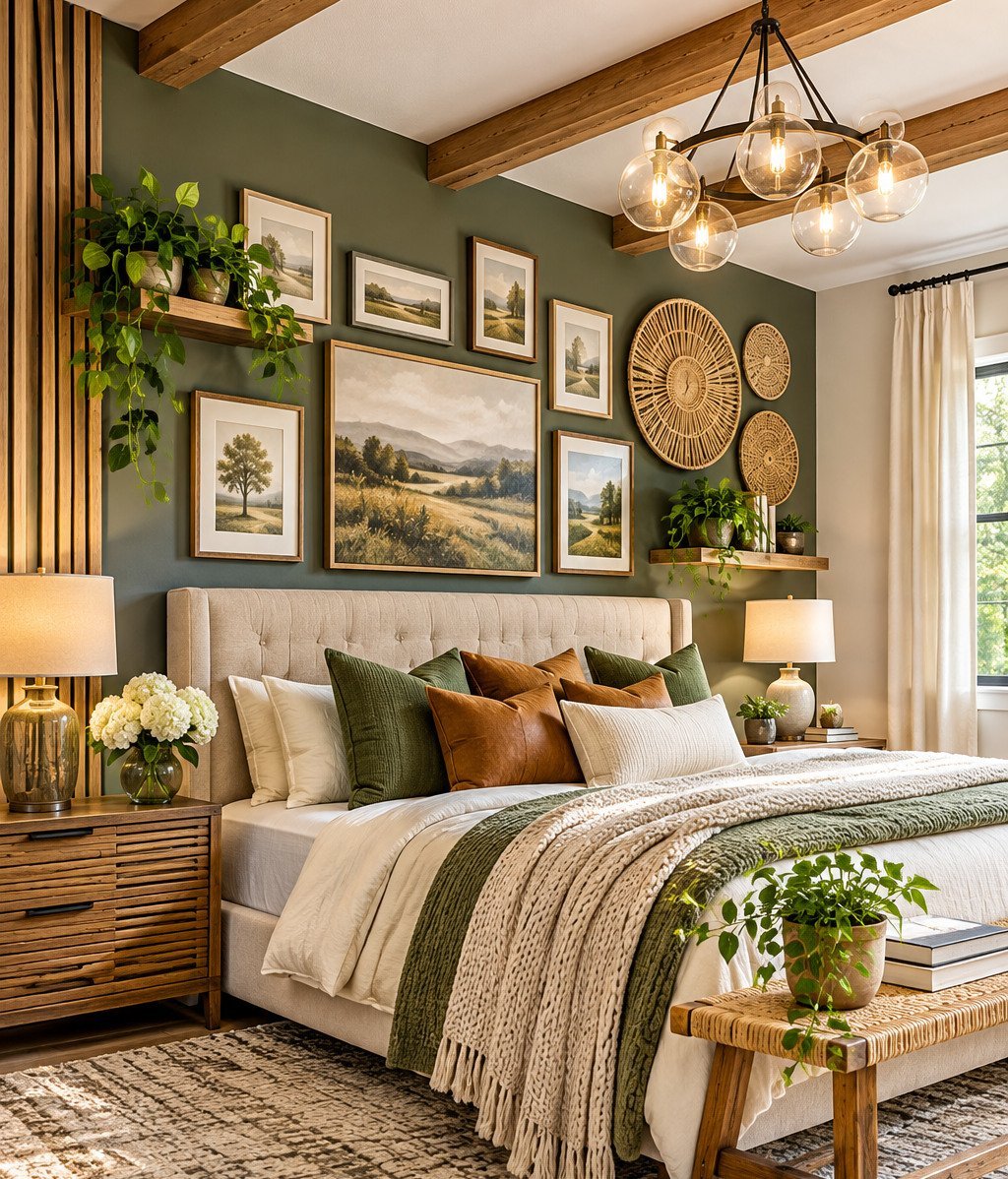
Quick Tip: Lay the frames on the floor first and test spacing before making holes. Use removable paper outlines to check the size before committing to placement.
Mix landscapes, botanical prints, and a few smaller vertical frames into one calm color story. Give the arrangement enough negative space around the edges, and repeat one of its colors in a throw or cushion so the decor feels connected to the room.
4. Cottage Floral Wallpaper
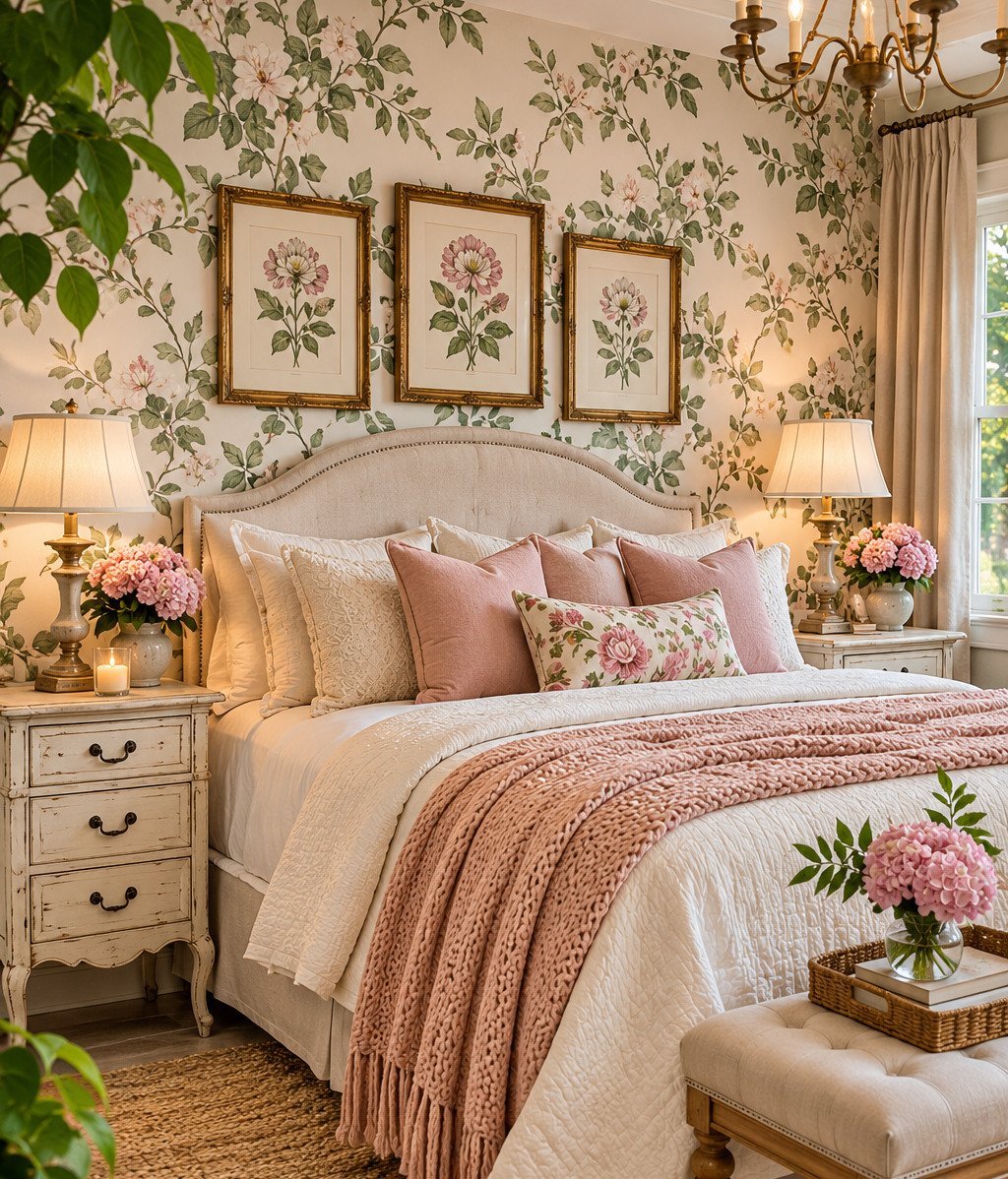
Before: The wall reads as an unrelated mix of colors or small pieces with no focal point.
After: One coordinated treatment ties the headboard, bedside lighting, and soft furnishings together.
Choose small-scale floral wallpaper and pale blush bedding for a cottage bedroom that feels soft without becoming fussy. Keep art frames simple so the floral pattern remains the focus. A restrained color palette makes even an elaborate backdrop feel soothing rather than busy.
5. Moody Gallery Wall
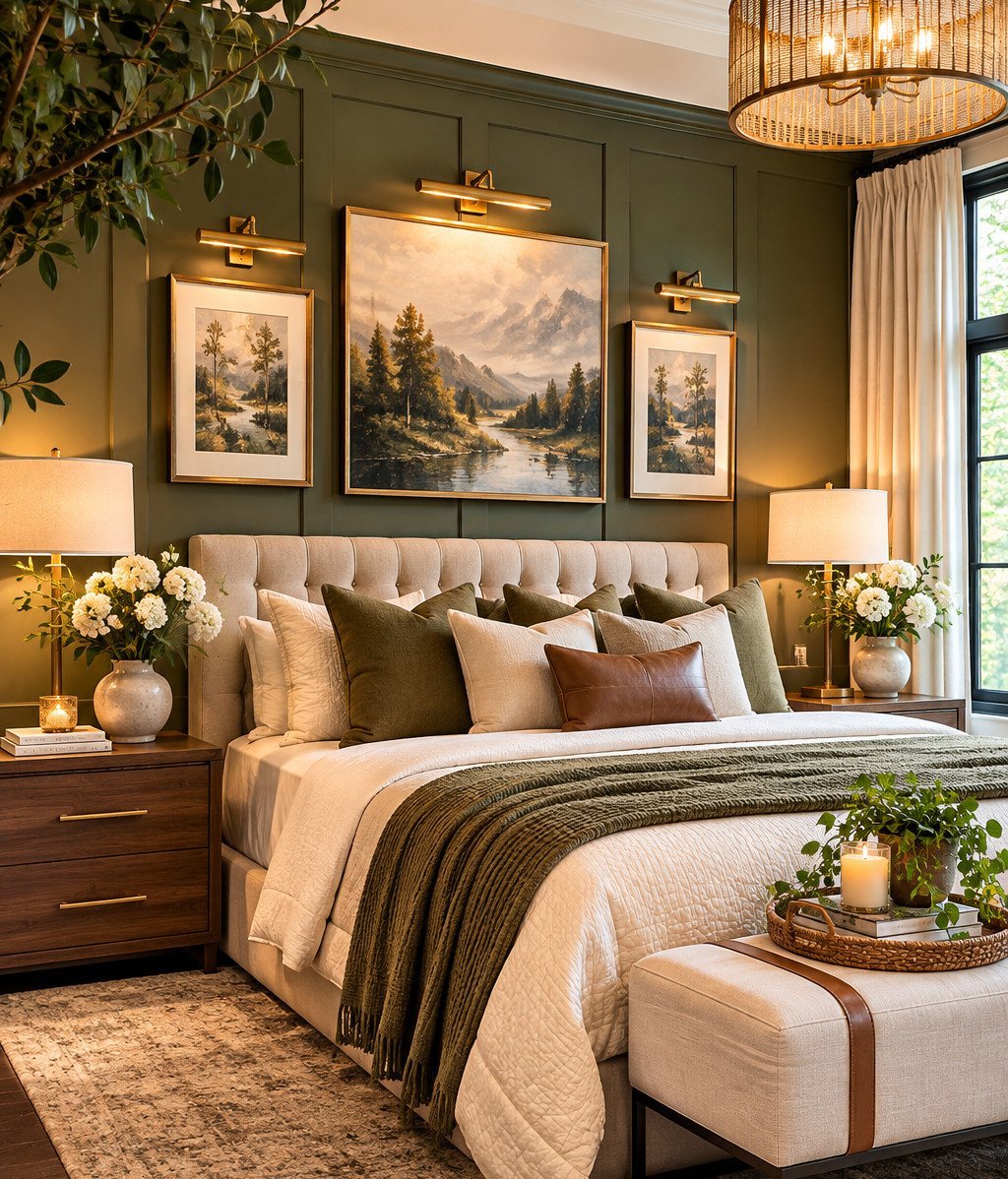
Measure the visible wall above and around your headboard.
Choose the central decorative element and mark its height with painter tape.
Arrange supporting pieces at consistent gaps, keeping lamps and switches clear.
Secure each item with the correct wall anchors and check the final composition.
Place a mixed-size landscape gallery against a deep olive or charcoal wall for a dramatic yet relaxing finish. Use consistent mat colors to unify different frame shapes.
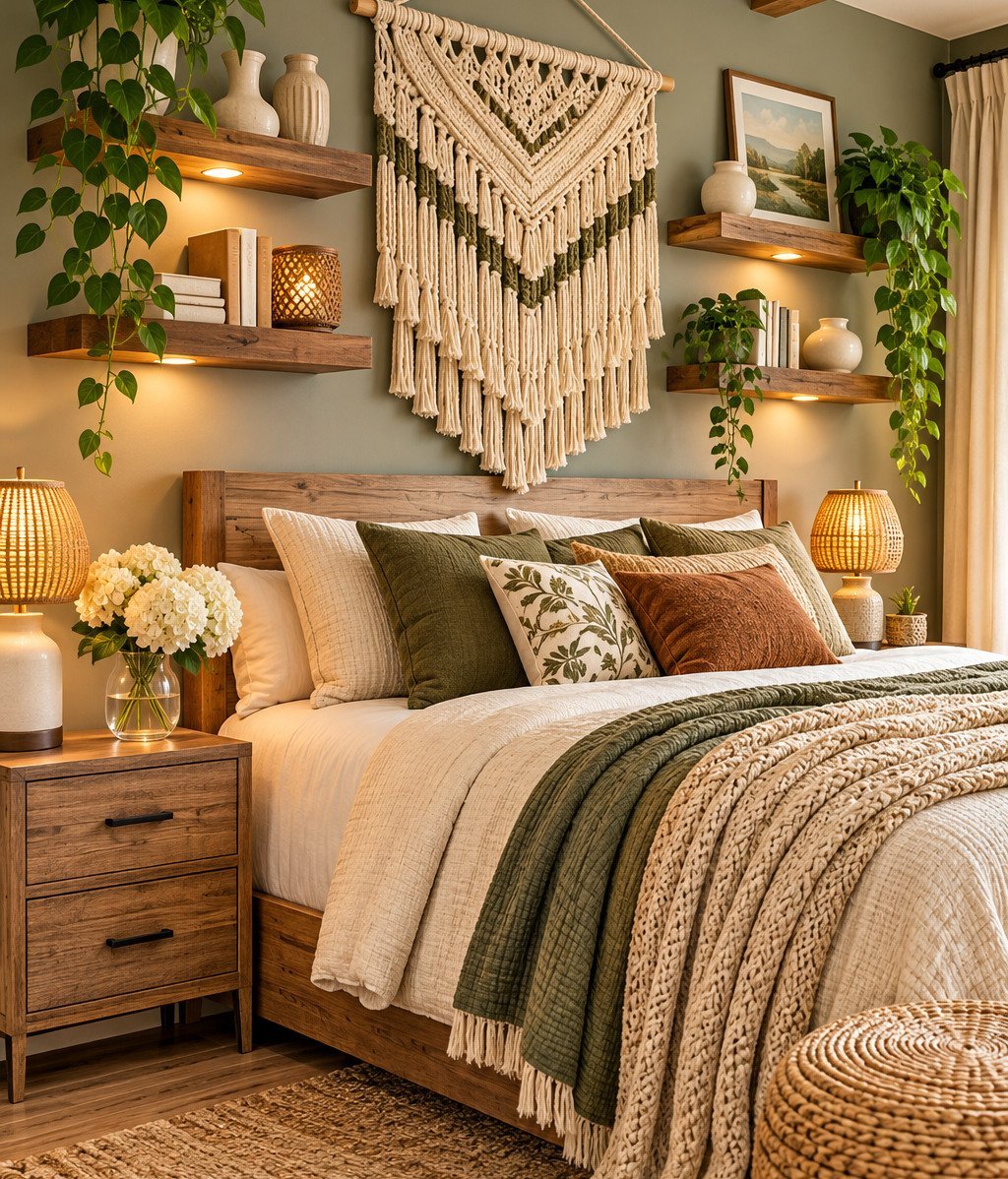
6. Macrame and Shelves
| Option A | Option B |
| A single oversized centerpiece for a clean look | A coordinated grouping for more texture |
| Matching frames and quiet matting | Mixed shapes joined by one color theme |
| Simple placement and easier dusting | More flexible display with added planning |
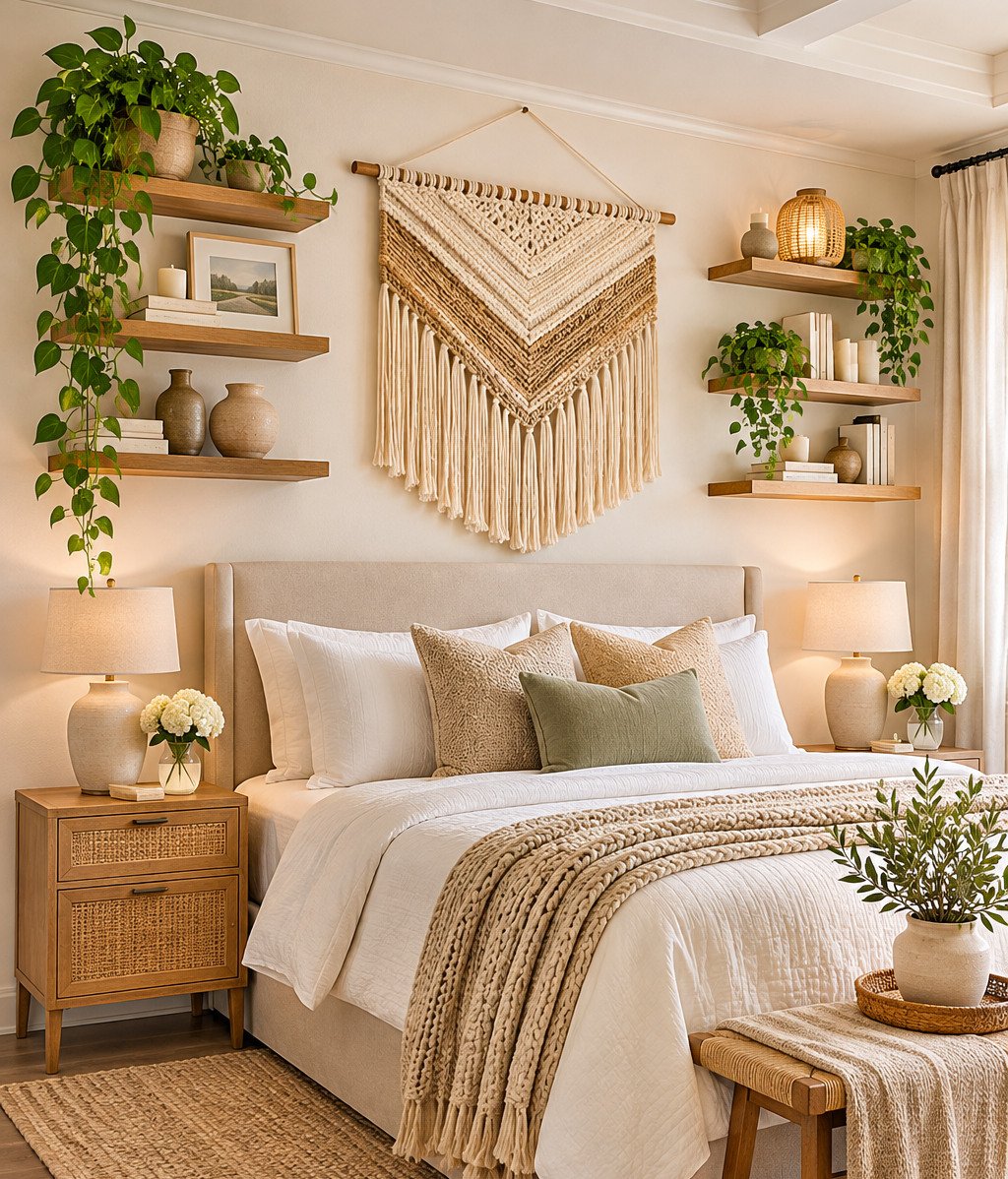
A macrame textile becomes a warm focal point when small lit shelves sit on either side. Keep plants off the bed area and avoid heavy overhead objects.
7. Rustic Landscape Collection
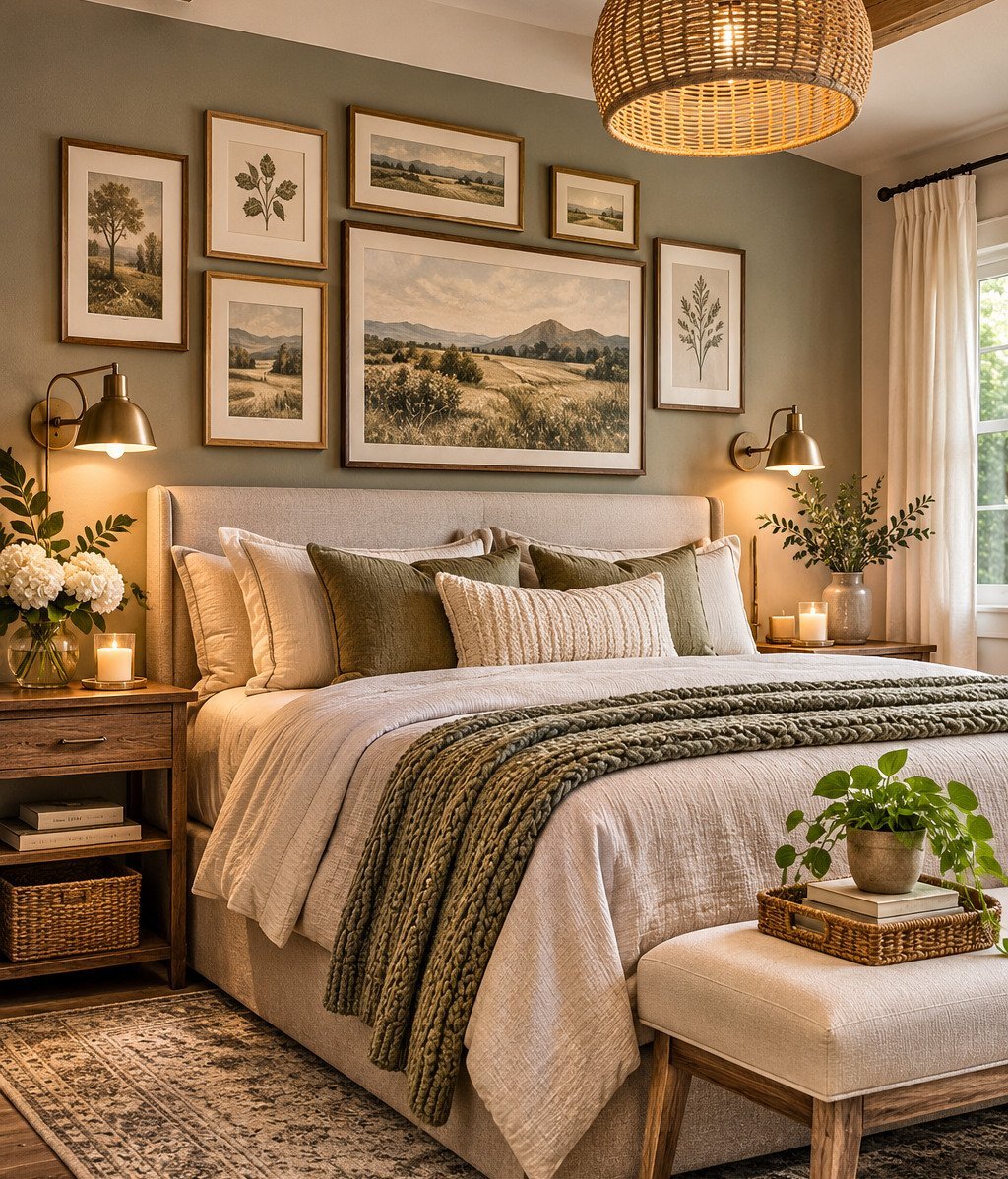
Do
Measure from the headboard, not only from the ceiling.
Repeat one finish or tone across the display.
Use suitable fixings for every decorative piece.
Don’t
Crowd the bedside lights with artwork.
Hang heavy objects over a bed without professional-grade anchoring.
Mix too many unrelated focal points on one wall.
Group vintage-looking landscape prints in varied sizes to lend history to a newly decorated room. An oversized central print helps the arrangement feel grounded.
8. Woven Basket Cluster
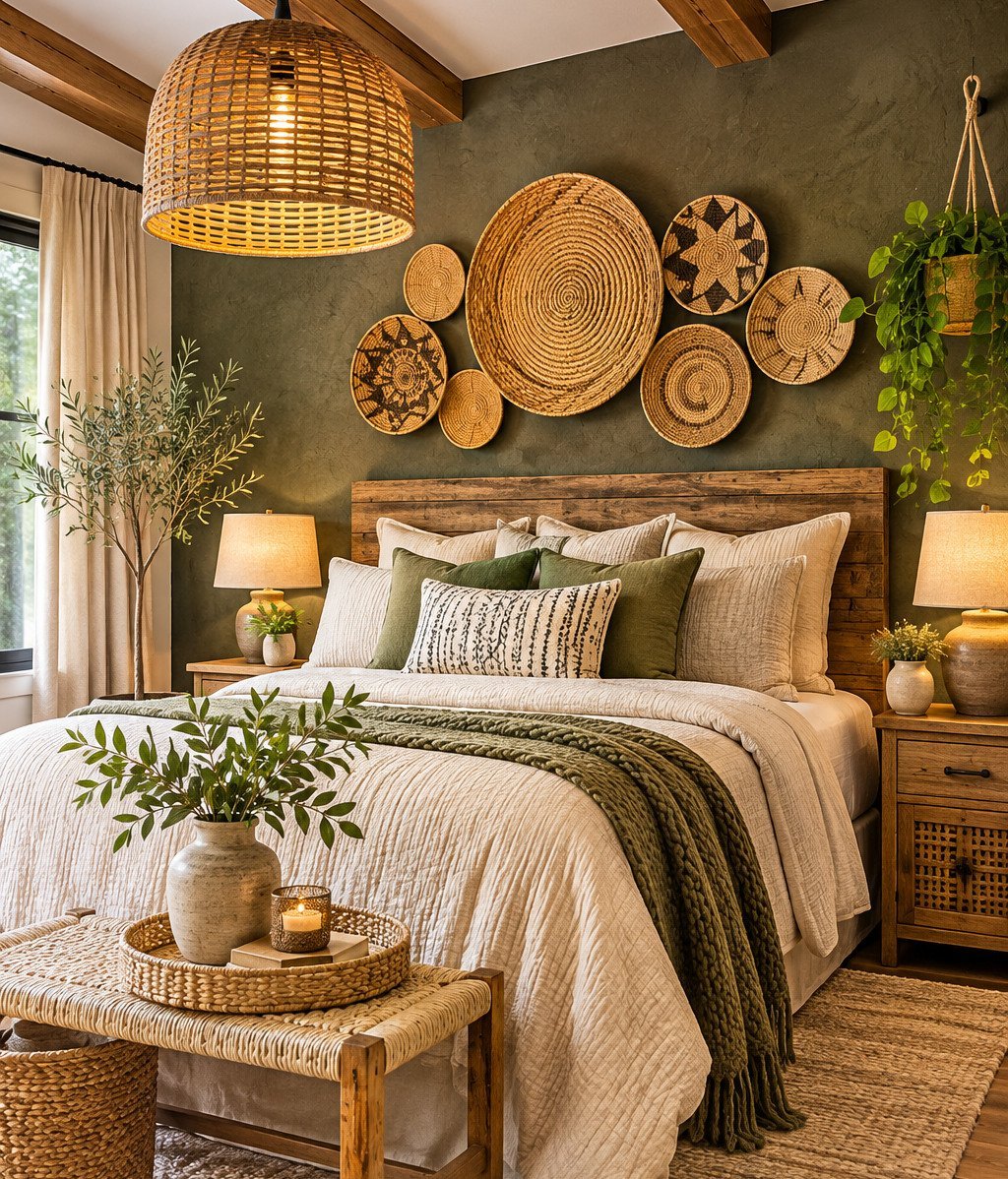
Best for: Bedrooms where the wall behind the bed needs a stronger focal point
Visual effect: Depth, balance, and a more intentional atmosphere
Planning level: Simple for framed decor; more involved for built-in panels
Safety check: Choose correct anchors and avoid hazards above sleepers
Create a wall installation from shallow woven baskets with different diameters and subtle patterns. Choose flat backs and secure each basket independently.
9. Classic Picture Wall
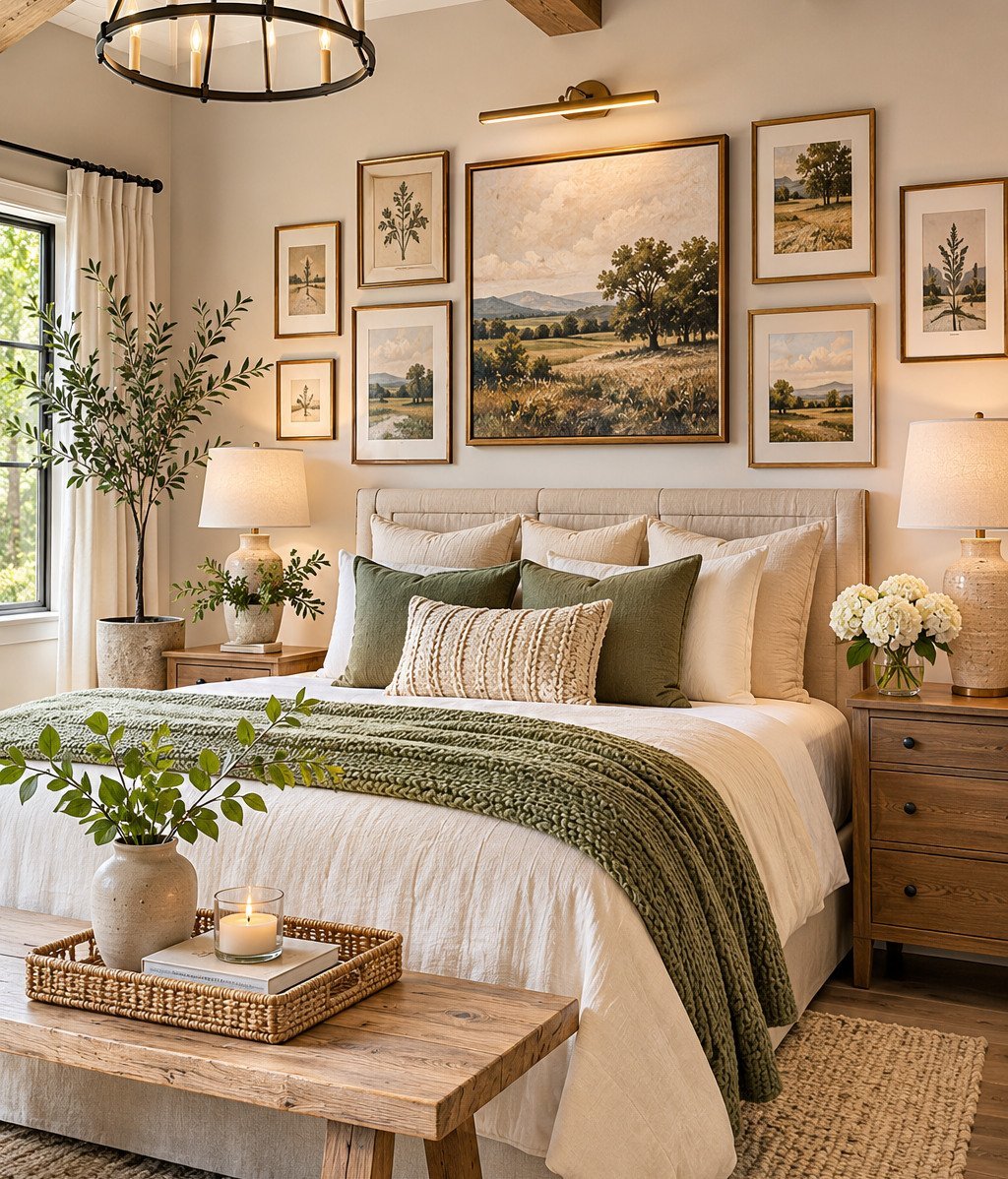
Mix a large framed landscape with two slender botanical pieces for a clear gallery hierarchy. The detail works best when its scale follows the bed and stays visually centered. A clear gap above the headboard gives the design room to breathe.
Make the central frame slightly wider than the headboard midpoint. Stand at the doorway to judge the composition, because a wall treatment that looks balanced close up can feel crowded from across the room. Repeat just one accent color in the bedding or accessories.
10. Natural Fiber Medallions
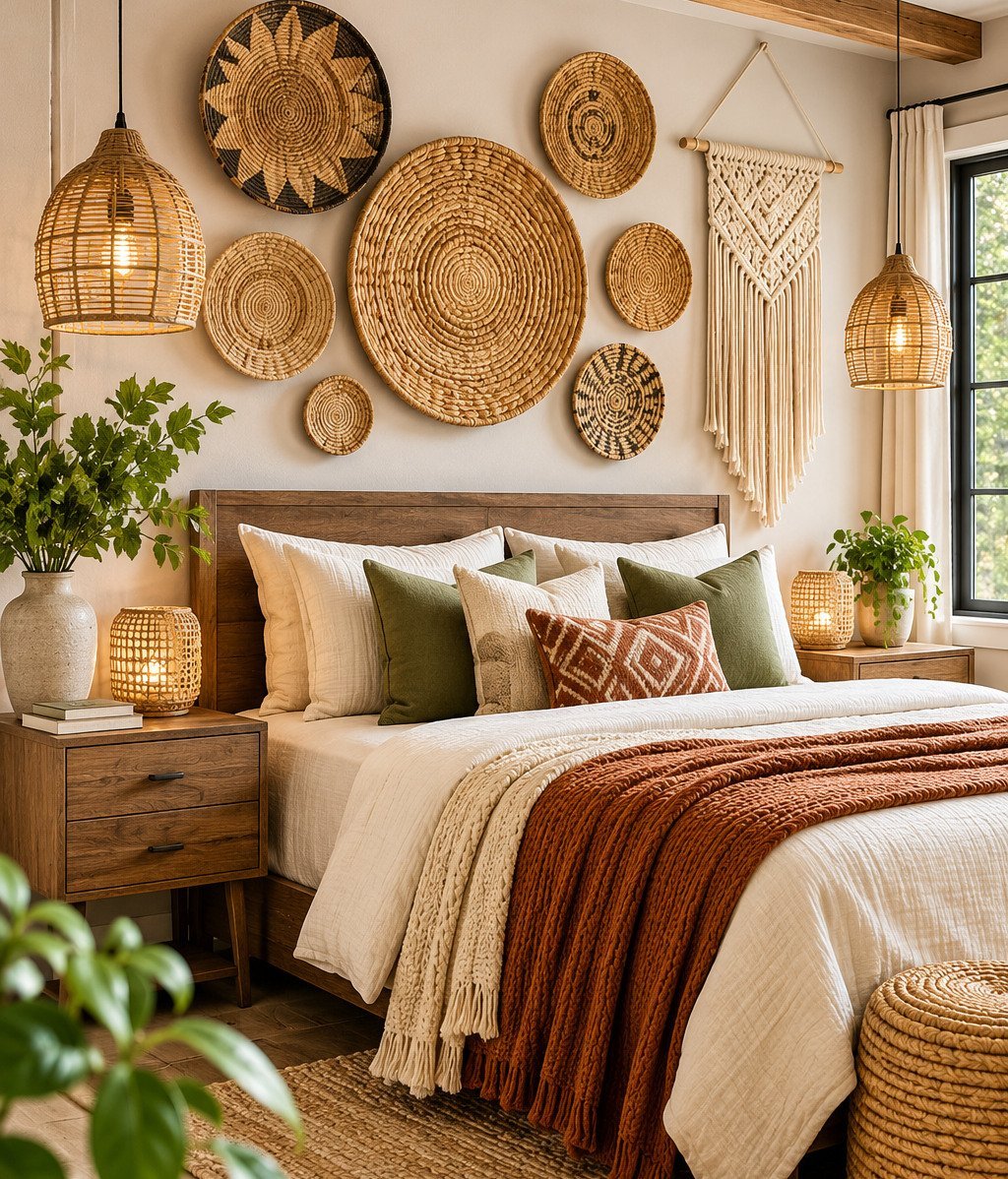
Circular woven medallions break up straight headboard lines and add tactile contrast.
Use a restrained palette of straw, natural cane, and black.
Measure the bed and divide the usable wall width before choosing the decor size.
Test paper templates on the wall to see the arrangement in daylight.
The goal is a bedroom that feels restful from the door and comfortable from the bed. Small adjustments in spacing, height, and color often matter more than adding another decorative object.
11. Botanical Art Mix
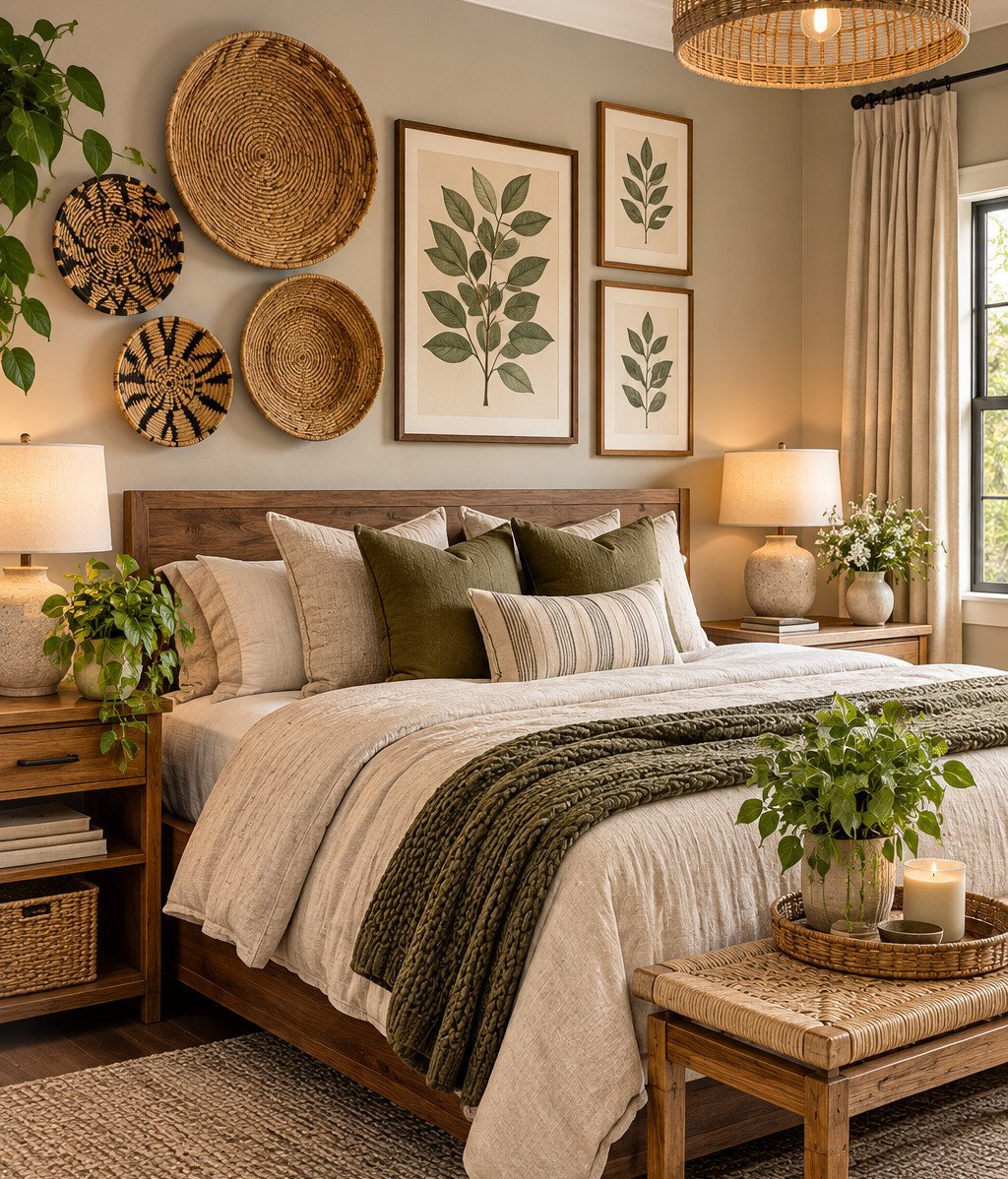
Quick Tip: Try mixed vertical sizes but repeat the same wood frame finish. Use removable paper outlines to check the size before committing to placement.
Botanical illustrations with ivory mats suit a warm bedroom without adding strong color. Give the arrangement enough negative space around the edges, and repeat one of its colors in a throw or cushion so the decor feels connected to the room.
12. Vintage Art Collection
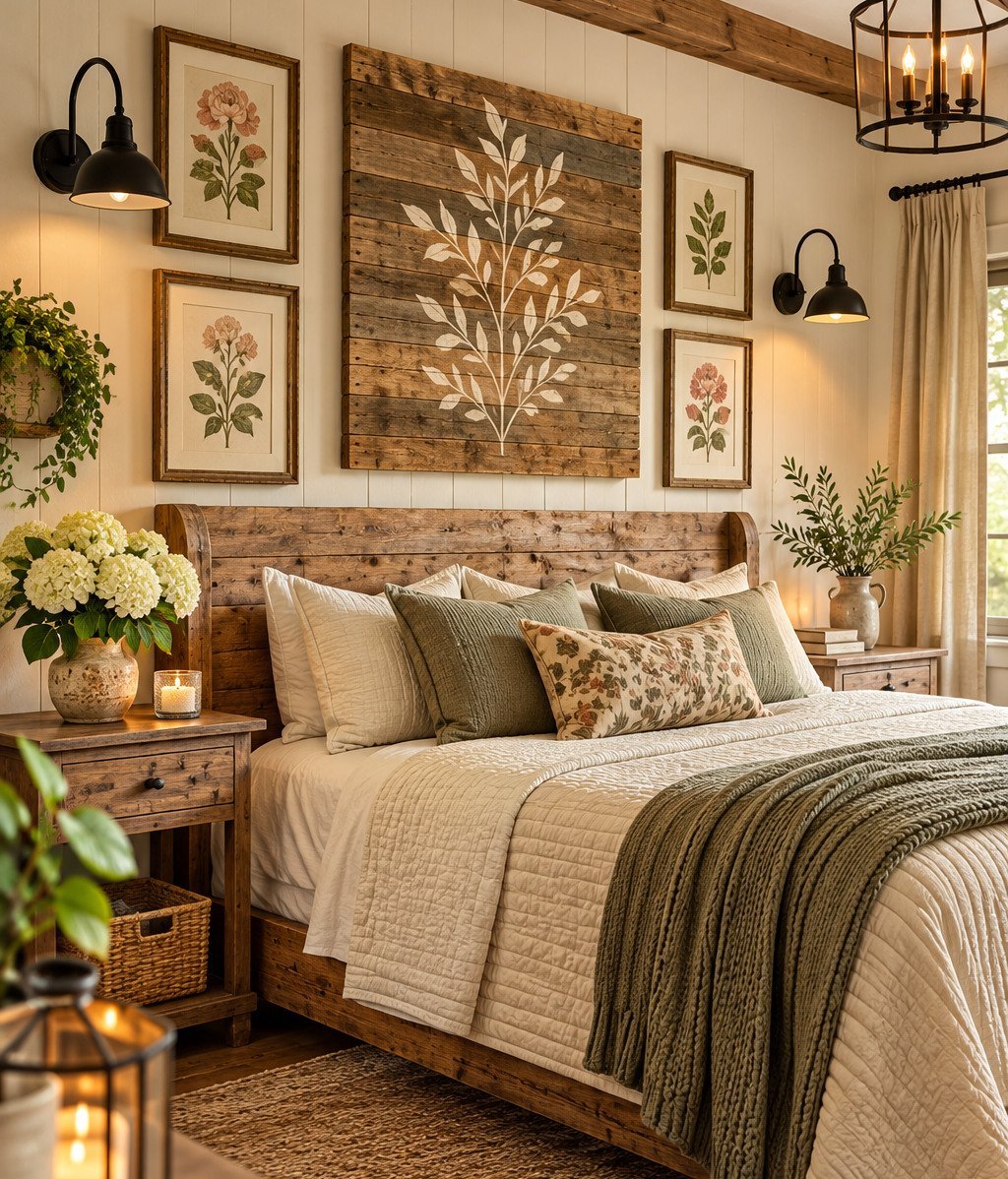
Before: The wall reads as an unrelated mix of colors or small pieces with no focal point.
After: One coordinated treatment ties the headboard, bedside lighting, and soft furnishings together.
Pair antique-inspired artworks with a modern upholstered bed for a room that feels collected. Use a picture light above the largest piece for evening atmosphere. A restrained color palette makes even an elaborate backdrop feel soothing rather than busy.
13. Warm Farmhouse Gallery
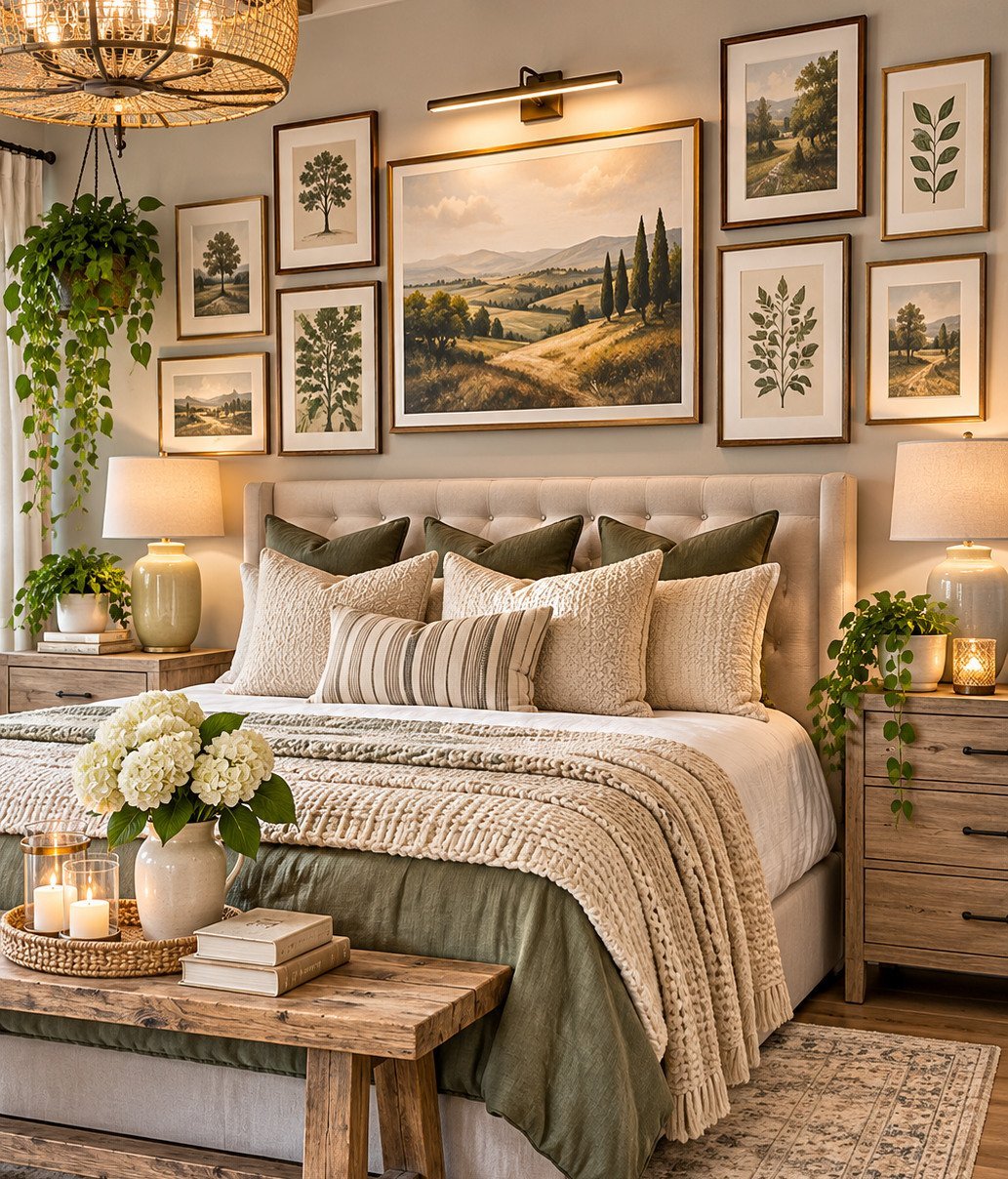
Measure the visible wall above and around your headboard.
Choose the central decorative element and mark its height with painter tape.
Arrange supporting pieces at consistent gaps, keeping lamps and switches clear.
Secure each item with the correct wall anchors and check the final composition.
A farmhouse gallery gains polish when art repeats the warm tones already found in wood beams and flooring. Keep its outer edges aligned roughly to the bed width.
14. Magnolia Art Triptych
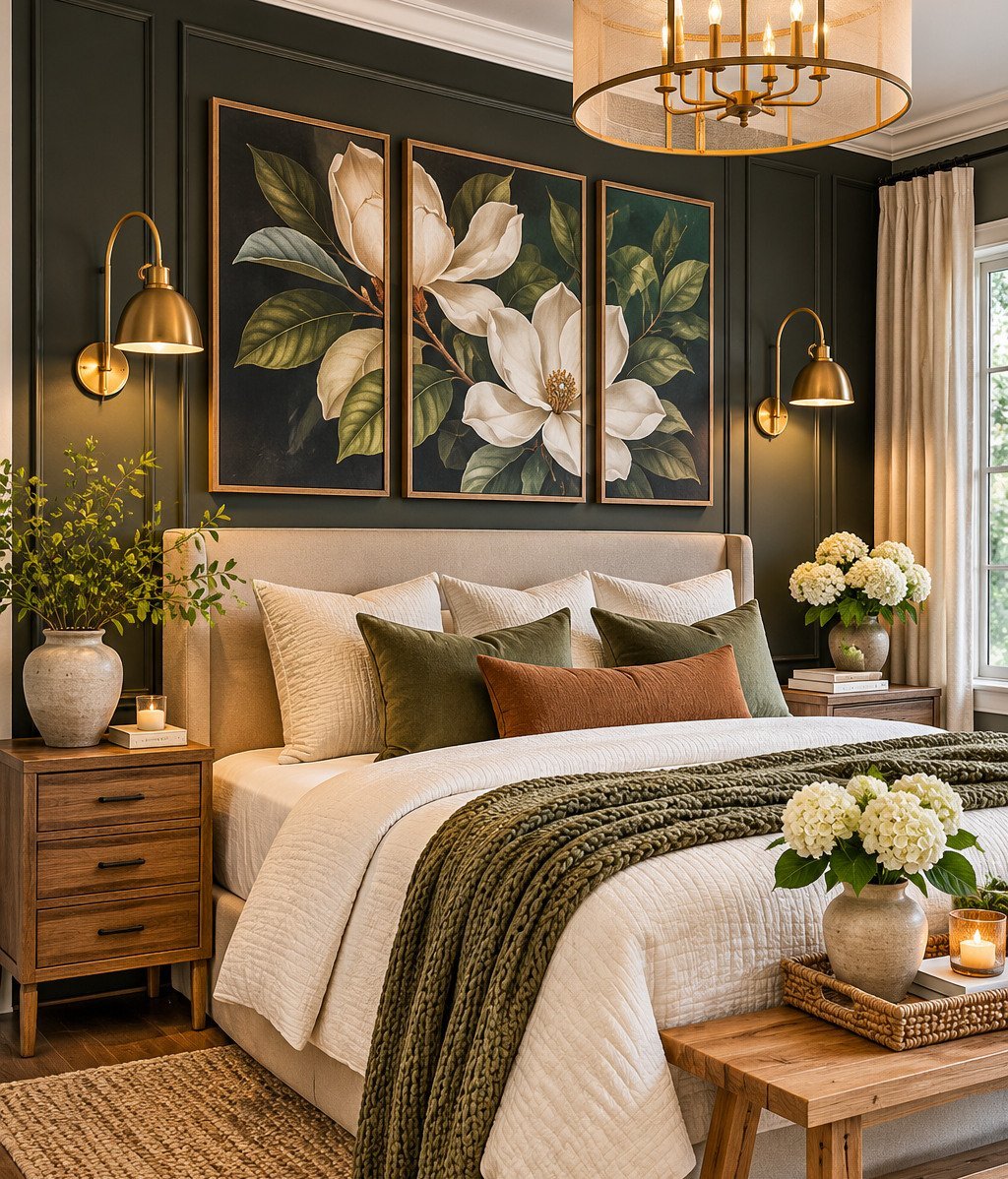
| Option A | Option B |
| A single oversized centerpiece for a clean look | A coordinated grouping for more texture |
| Matching frames and quiet matting | Mixed shapes joined by one color theme |
| Simple placement and easier dusting | More flexible display with added planning |
Three large magnolia artworks create one unified statement with natural movement across the wall. Hang with narrow, even gaps and match the panel heights.
15. Framed Landscape Layers
Do
Measure from the headboard, not only from the ceiling.
Repeat one finish or tone across the display.
Use suitable fixings for every decorative piece.
Don’t
Crowd the bedside lights with artwork.
Hang heavy objects over a bed without professional-grade anchoring.
Mix too many unrelated focal points on one wall.
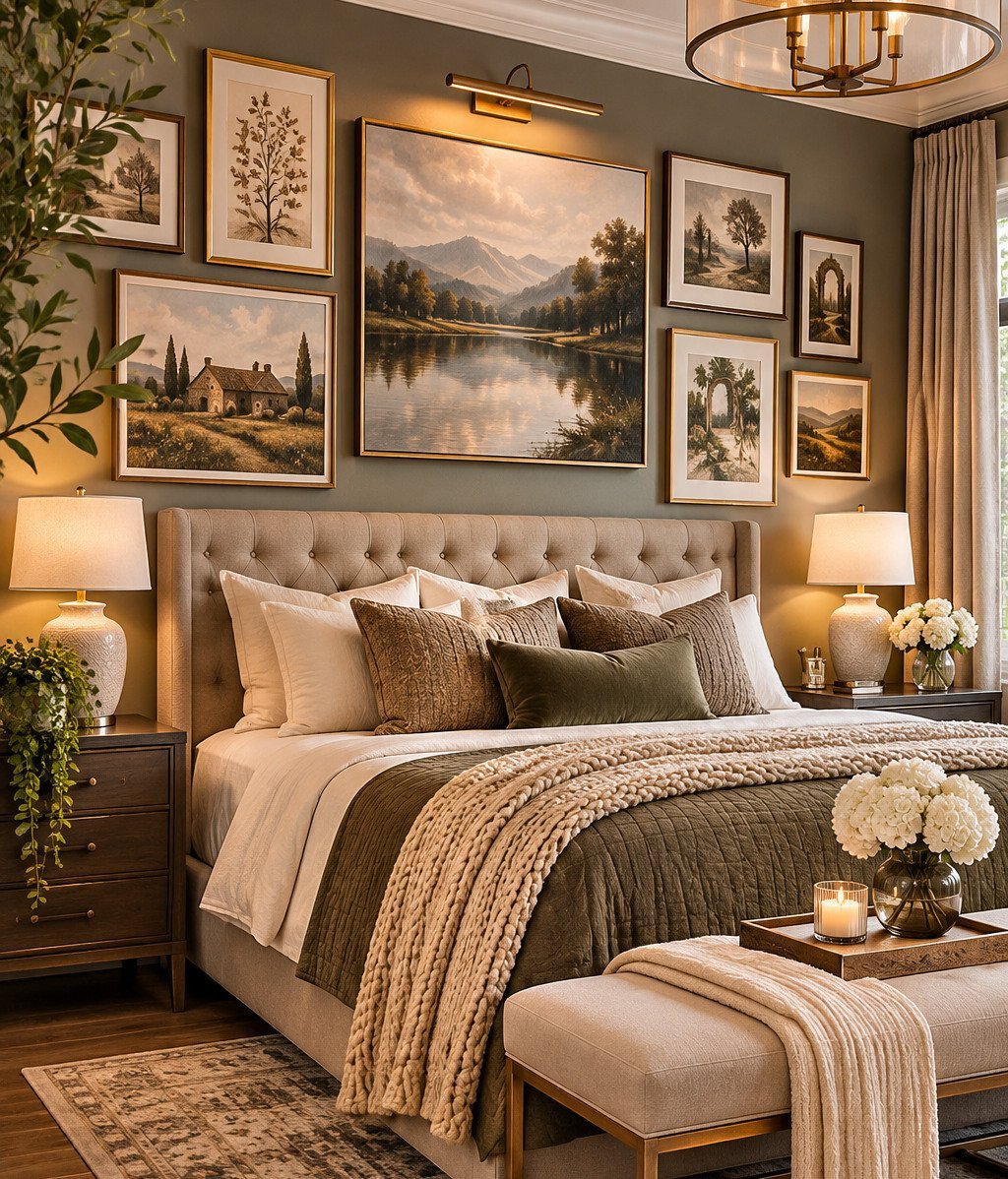
Layer neutral landscape imagery across a deep wall while allowing foliage and sconces to soften the edges. Avoid covering functional bedside lighting with frames.
16. Traditional Art Trio
Best for: Bedrooms where the wall behind the bed needs a stronger focal point
Visual effect: Depth, balance, and a more intentional atmosphere
Planning level: Simple for framed decor; more involved for built-in panels
Safety check: Choose correct anchors and avoid hazards above sleepers
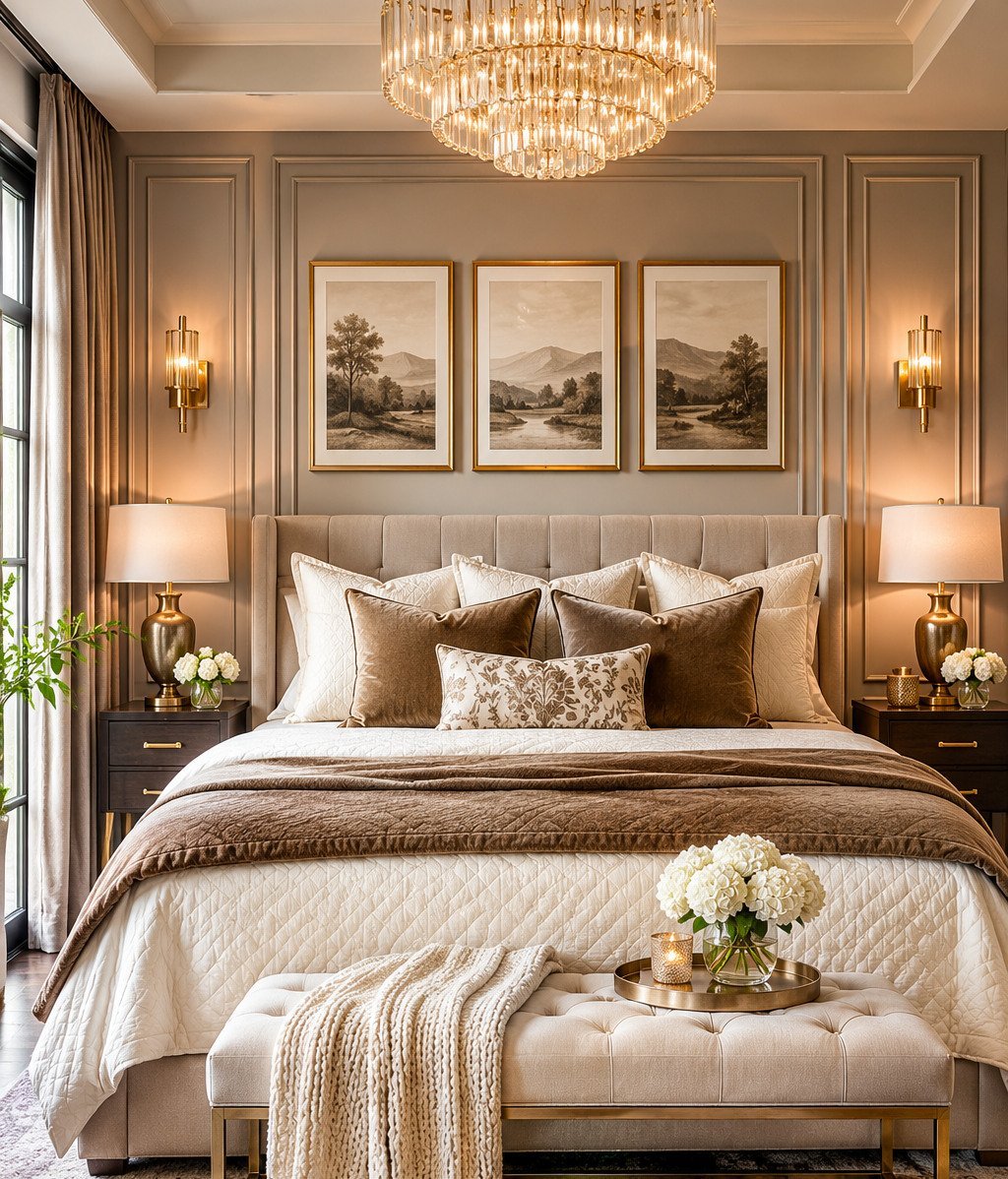
A neatly spaced trio of sepia landscapes brings formal symmetry without requiring costly new furniture. Use identical frames and an even baseline.
17. Sculptural Metal Artwork
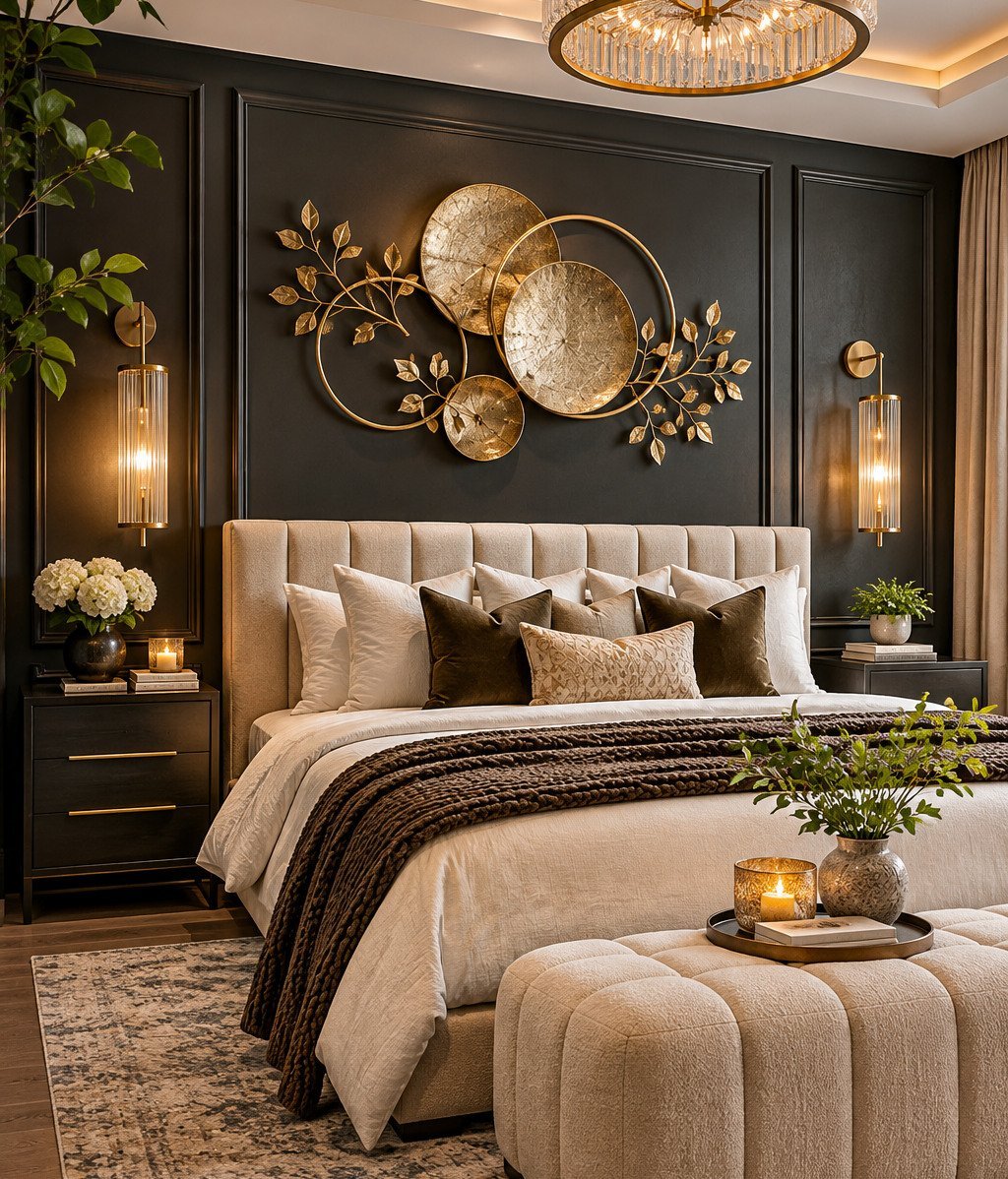
Metallic sculptural wall art creates shadows that shift through the day and adds contrast to fabric upholstery. The detail works best when its scale follows the bed and stays visually centered. A clear gap above the headboard gives the design room to breathe.
Choose a secure, lightweight piece and keep sharp edges well away from the bed. Stand at the doorway to judge the composition, because a wall treatment that looks balanced close up can feel crowded from across the room. Repeat just one accent color in the bedding or accessories.
18. Tall Arched Mirrors
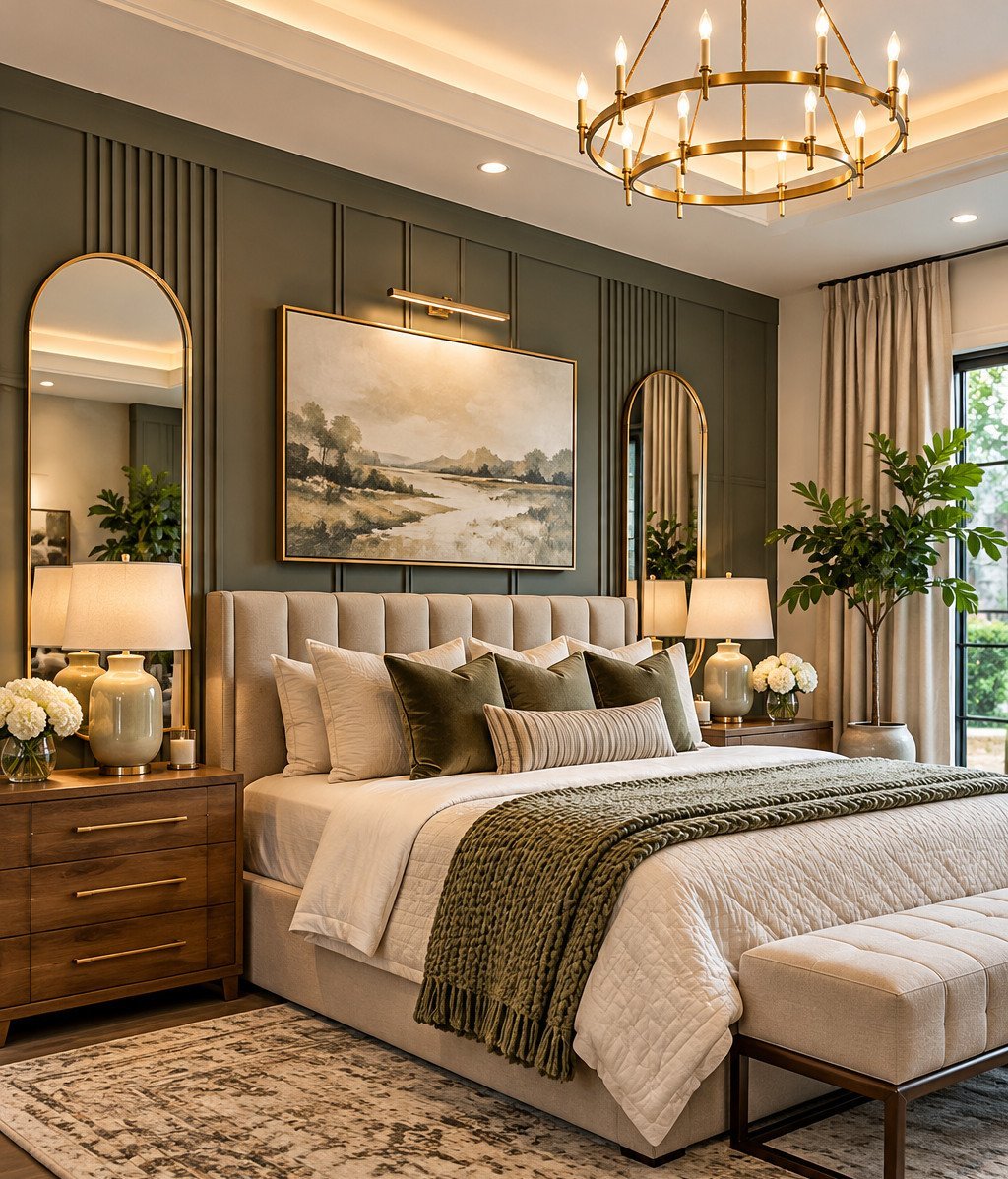
Tall arched mirrors on either side of a central picture make the wall feel architectural.
Check reflection angles so light does not shine into sleeping areas.
Measure the bed and divide the usable wall width before choosing the decor size.
Test paper templates on the wall to see the arrangement in daylight.
The goal is a bedroom that feels restful from the door and comfortable from the bed. Small adjustments in spacing, height, and color often matter more than adding another decorative object.
19. Slatted Wood Feature
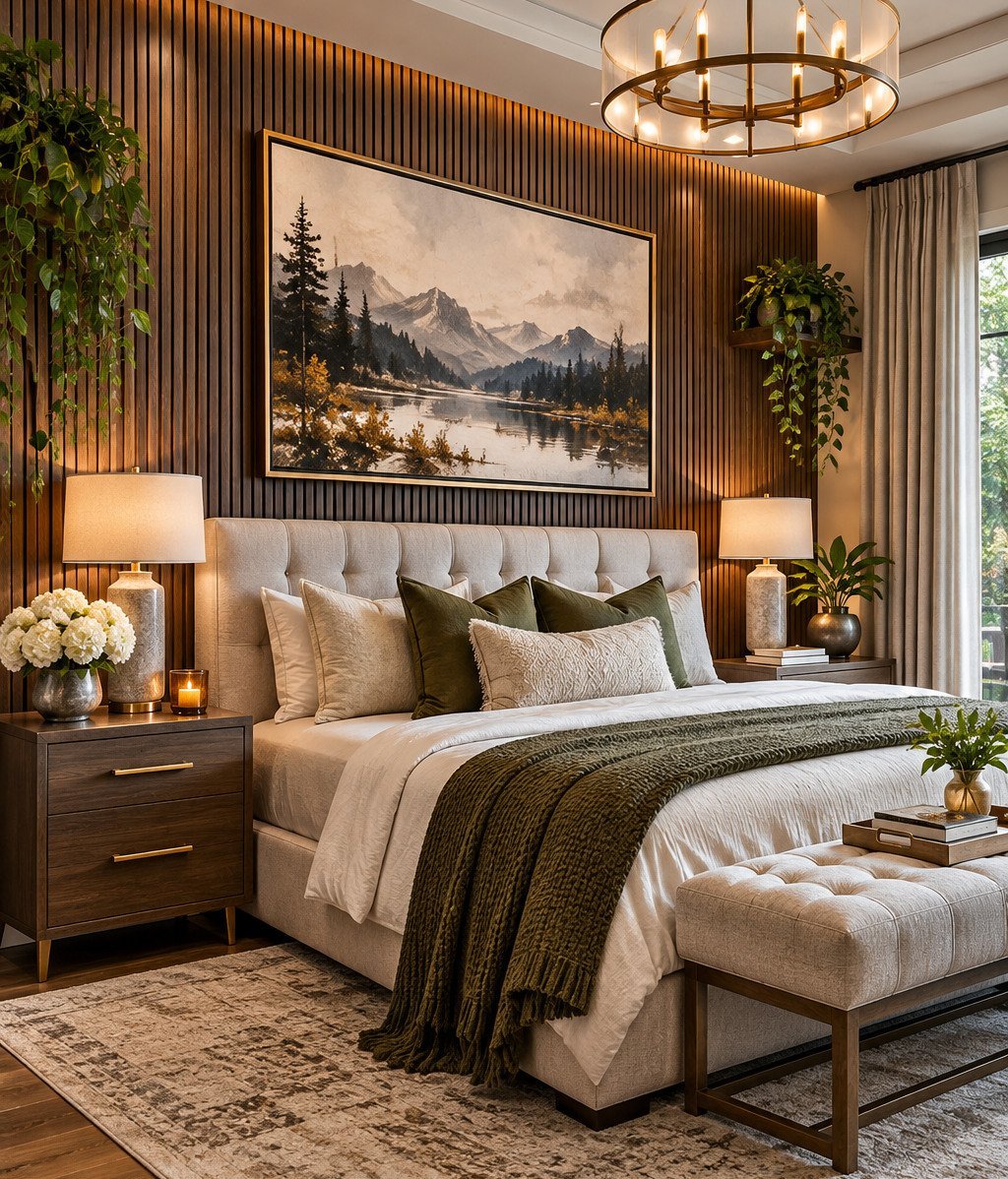
Quick Tip: Plan outlets and wall wiring before installing the slats. Use removable paper outlines to check the size before committing to placement.
Vertical timber slats create a strong visual rhythm behind the bed, especially with discreet uplighting. Give the arrangement enough negative space around the edges, and repeat one of its colors in a throw or cushion so the decor feels connected to the room.
20. Oversized Earthy Canvas
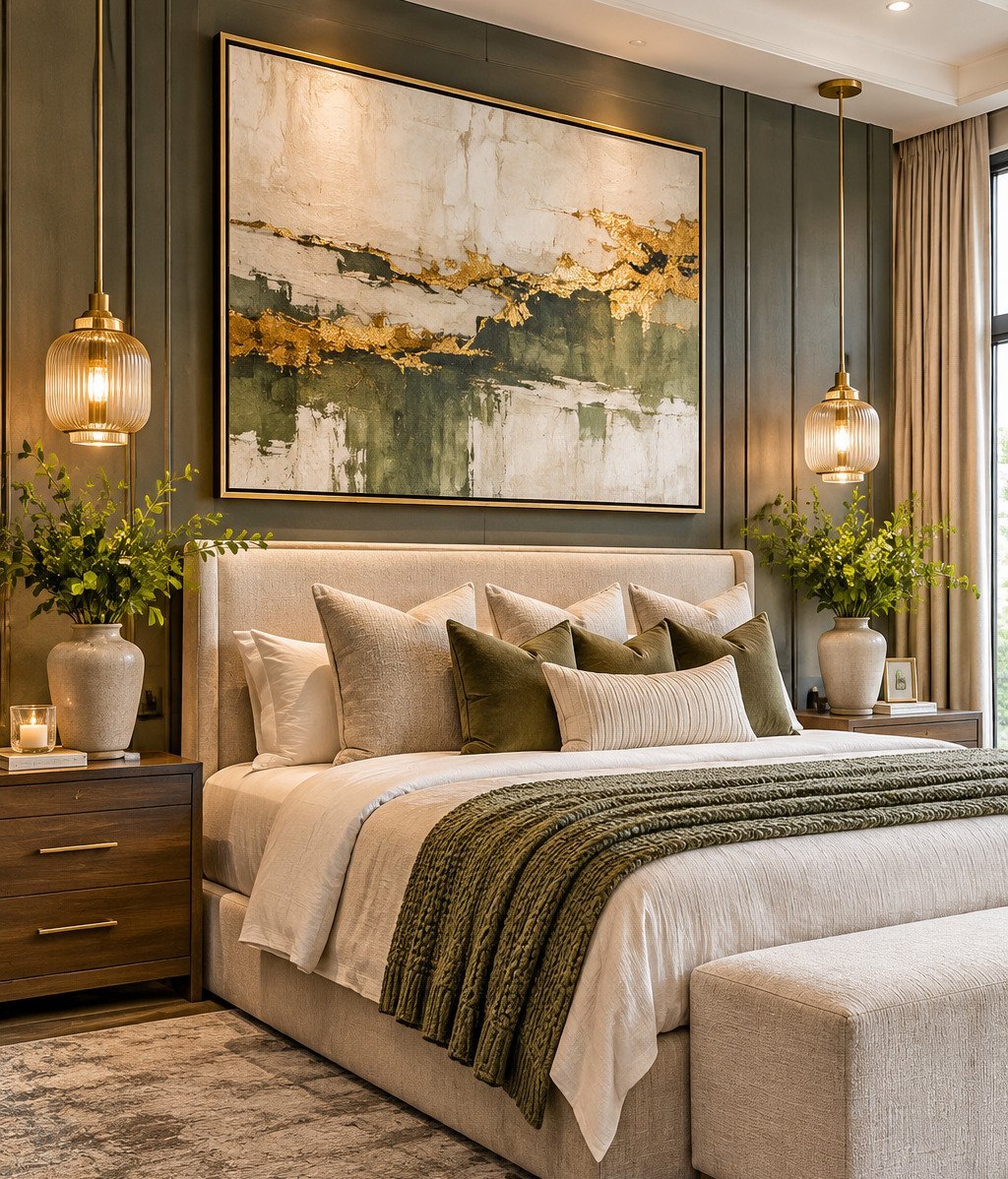
Before: The wall reads as an unrelated mix of colors or small pieces with no focal point.
After: One coordinated treatment ties the headboard, bedside lighting, and soft furnishings together.
One very large muted canvas has more visual impact than several small disconnected frames. The canvas should relate to the headboard width without overwhelming it. A restrained color palette makes even an elaborate backdrop feel soothing rather than busy.
21. Classic Molding and Mirror
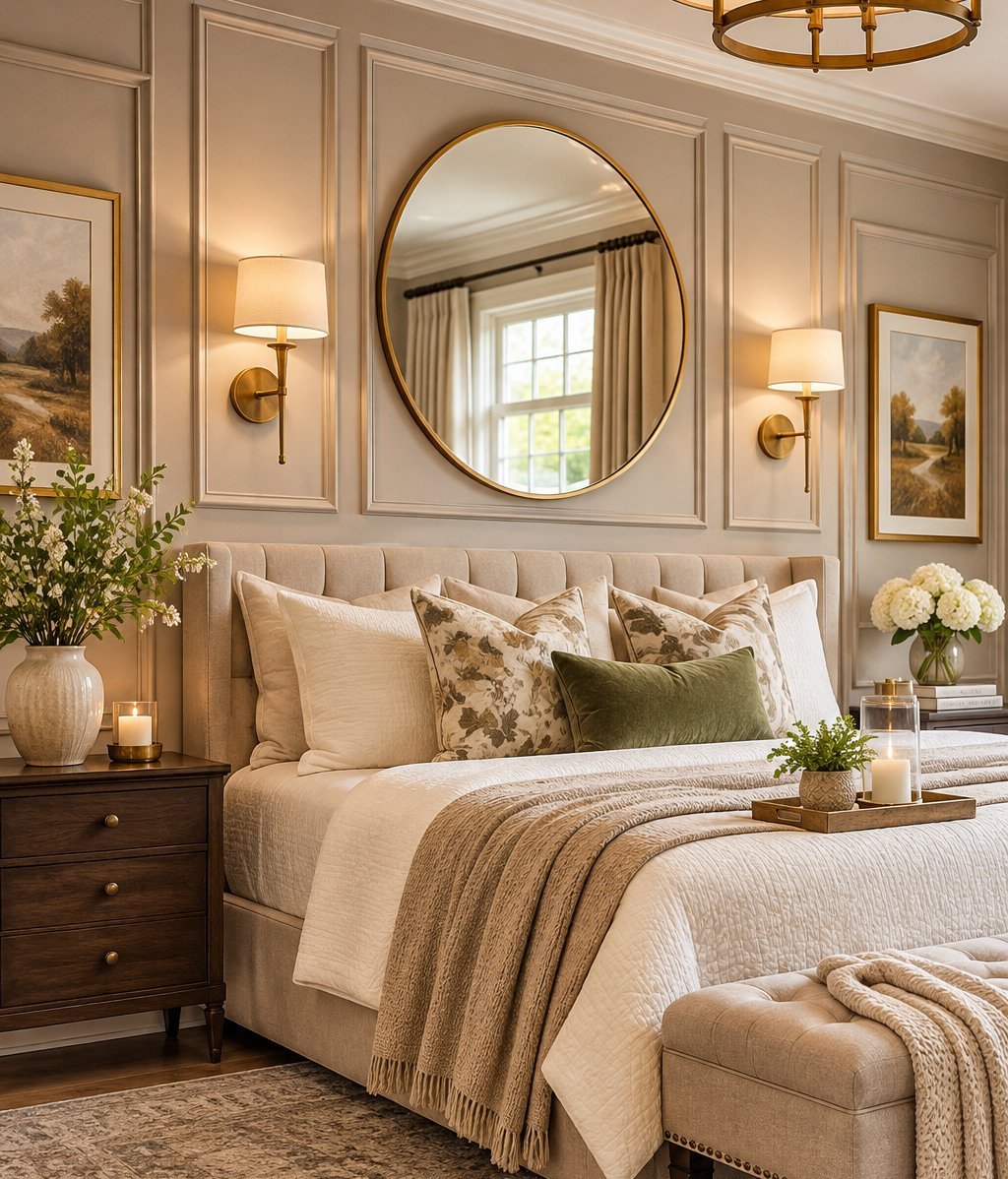
Measure the visible wall above and around your headboard.
Choose the central decorative element and mark its height with painter tape.
Arrange supporting pieces at consistent gaps, keeping lamps and switches clear.
Secure each item with the correct wall anchors and check the final composition.
Traditional applied wall molding frames a central mirror and gives plain painted walls subtle depth. Match the molding paint to the wall for a quieter effect.
22. Nature Inspired Triptych
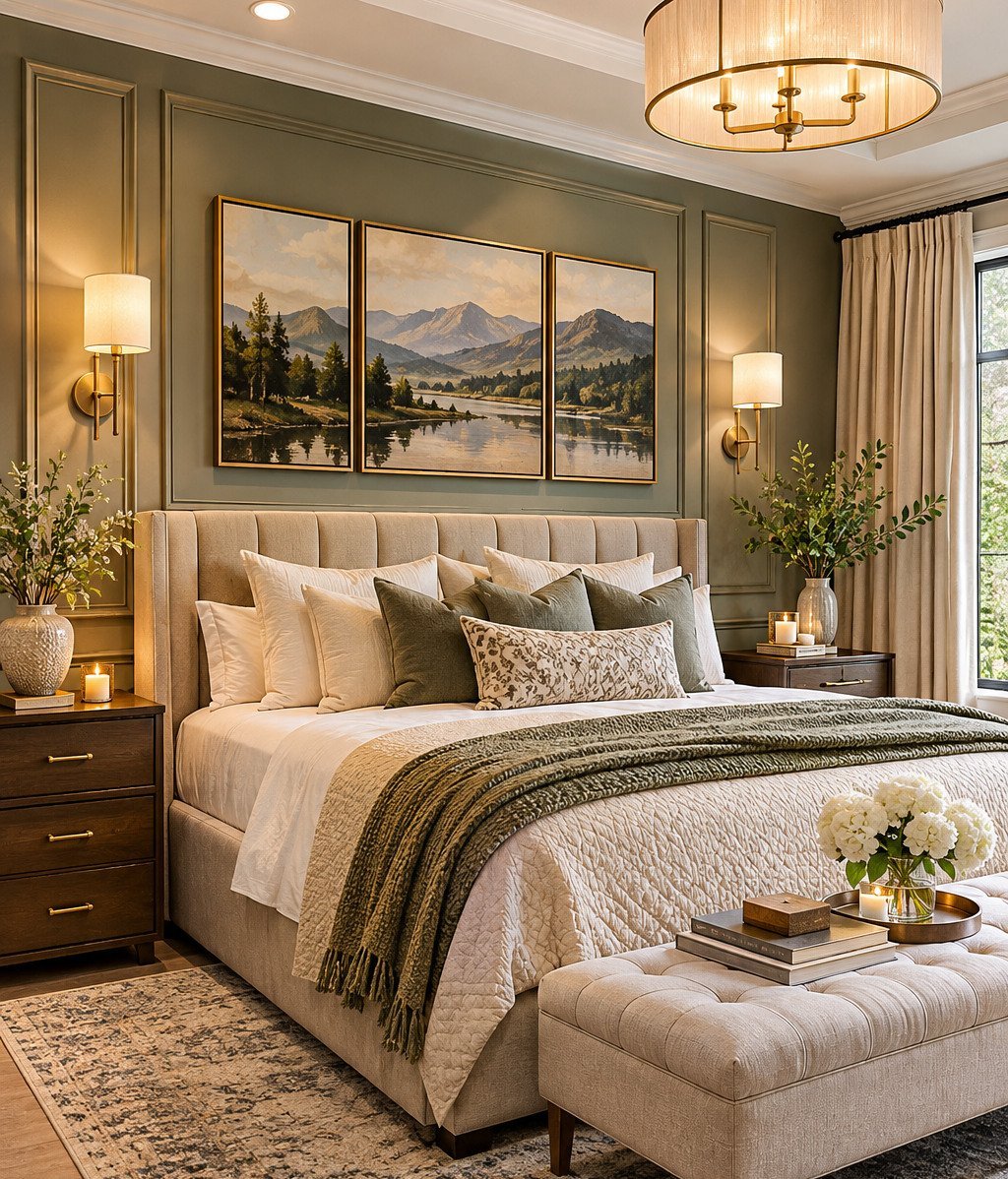
| Option A | Option B |
| A single oversized centerpiece for a clean look | A coordinated grouping for more texture |
| Matching frames and quiet matting | Mixed shapes joined by one color theme |
| Simple placement and easier dusting | More flexible display with added planning |
Three related nature prints establish a composed view above a wide bed. Keep mat borders equal and avoid hanging artwork too high.
23. Textured Green Plaster
Do
Measure from the headboard, not only from the ceiling.
Repeat one finish or tone across the display.
Use suitable fixings for every decorative piece.
Don’t
Crowd the bedside lights with artwork.
Hang heavy objects over a bed without professional-grade anchoring.
Mix too many unrelated focal points on one wall.
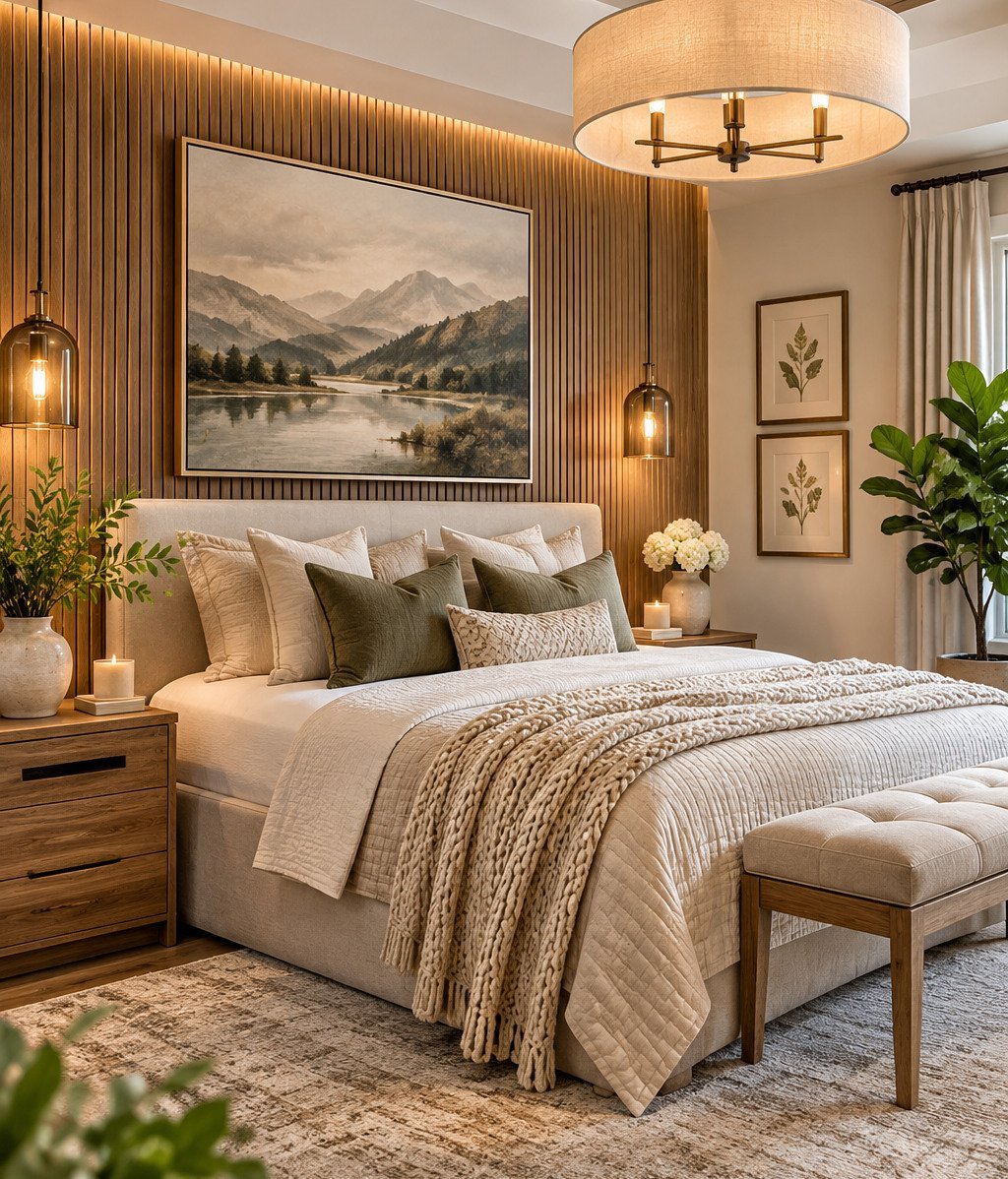
Subtle limewash or plaster texture adds dimension even before any picture is hung. Sample the color under both daylight and lamps.
24. Charcoal Accent Canvas
Best for: Bedrooms where the wall behind the bed needs a stronger focal point
Visual effect: Depth, balance, and a more intentional atmosphere
Planning level: Simple for framed decor; more involved for built-in panels
Safety check: Choose correct anchors and avoid hazards above sleepers
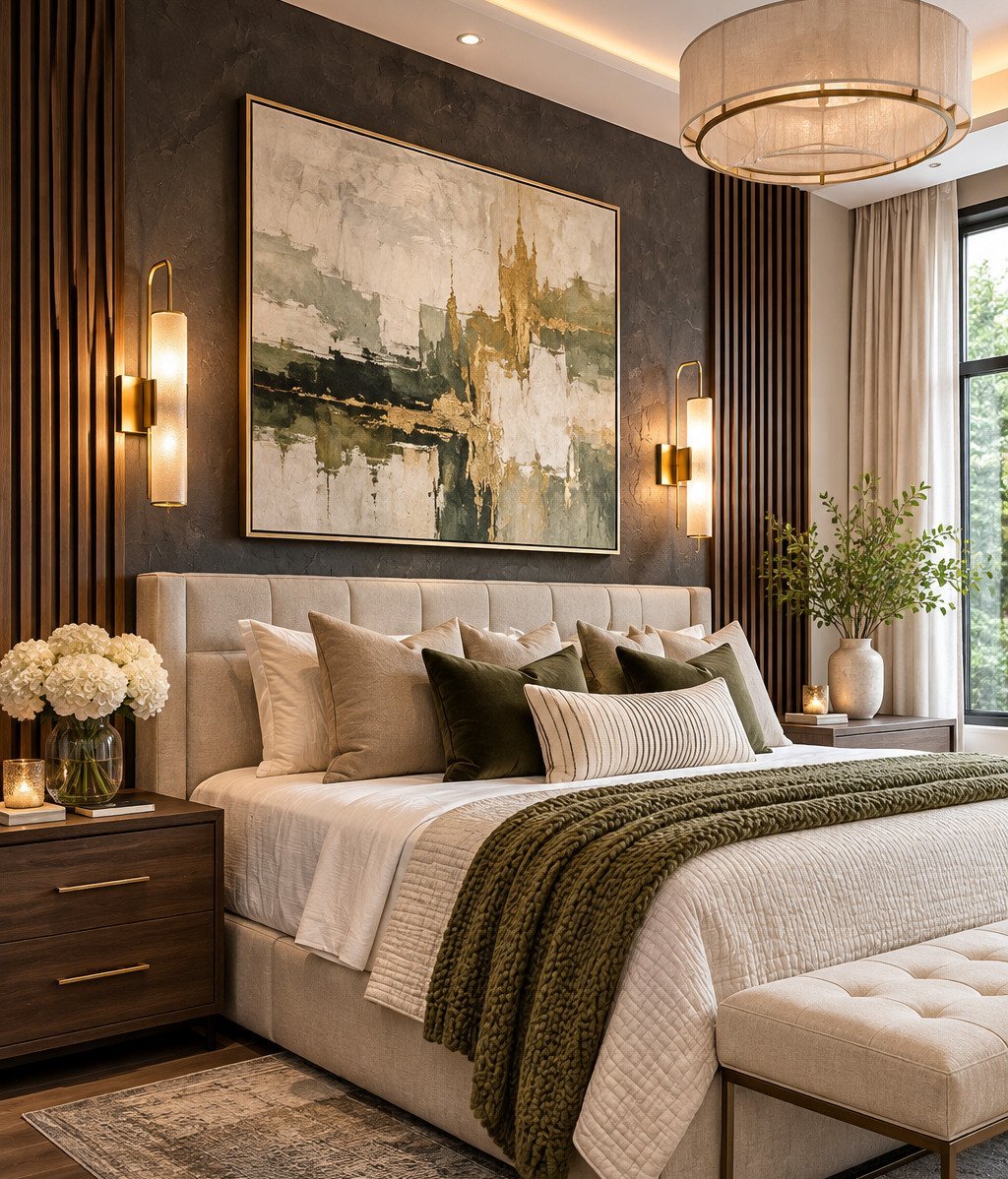
A charcoal feature wall makes light abstract art and brass lighting feel especially crisp. Balance the deep finish with warm textiles and natural wood.
25. Handcrafted Wood Art
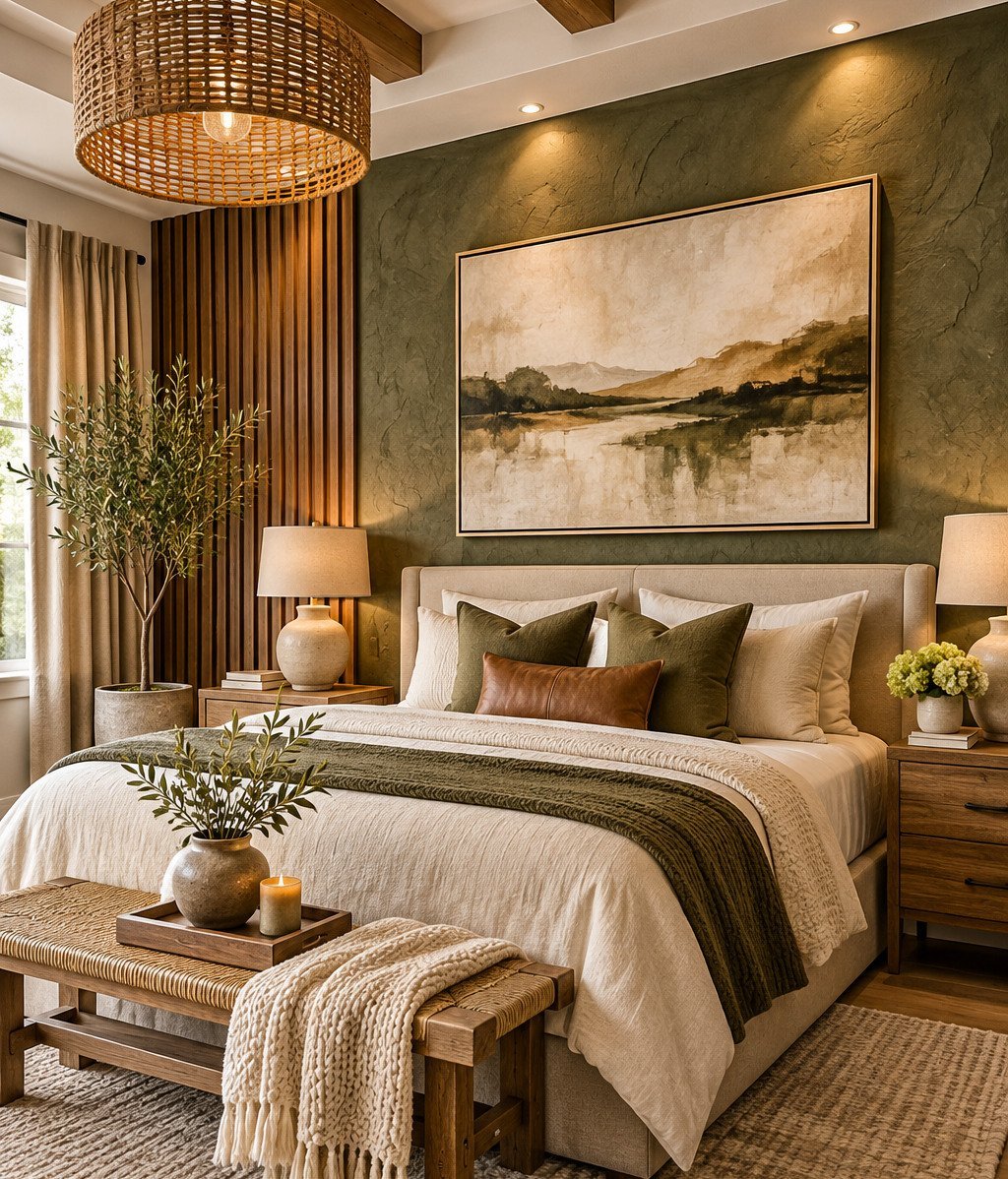
Handcrafted wood artwork brings organic texture and handmade character to a polished bedroom. The detail works best when its scale follows the bed and stays visually centered. A clear gap above the headboard gives the design room to breathe.
Use smooth, sealed boards and secure the work with appropriate hanging hardware. Stand at the doorway to judge the composition, because a wall treatment that looks balanced close up can feel crowded from across the room. Repeat just one accent color in the bedding or accessories.
26. Picture Light Gallery
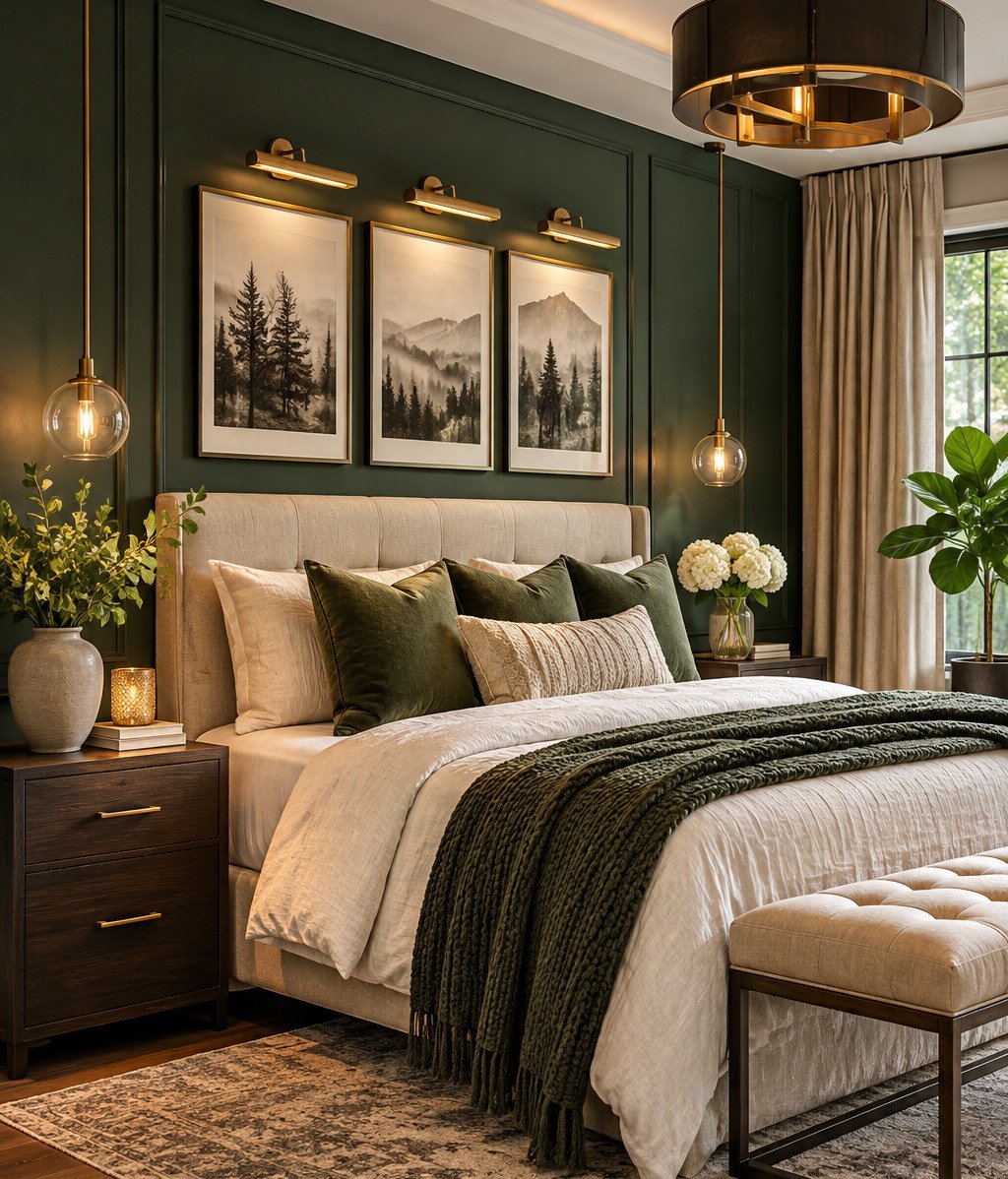
Dedicated picture lights highlight a small coordinated gallery and give it a boutique-hotel feel.
Choose low-glare lamps and use dimmers if possible.
Measure the bed and divide the usable wall width before choosing the decor size.
Test paper templates on the wall to see the arrangement in daylight.
The goal is a bedroom that feels restful from the door and comfortable from the bed. Small adjustments in spacing, height, and color often matter more than adding another decorative object.
27. Asymmetric Vintage Frames
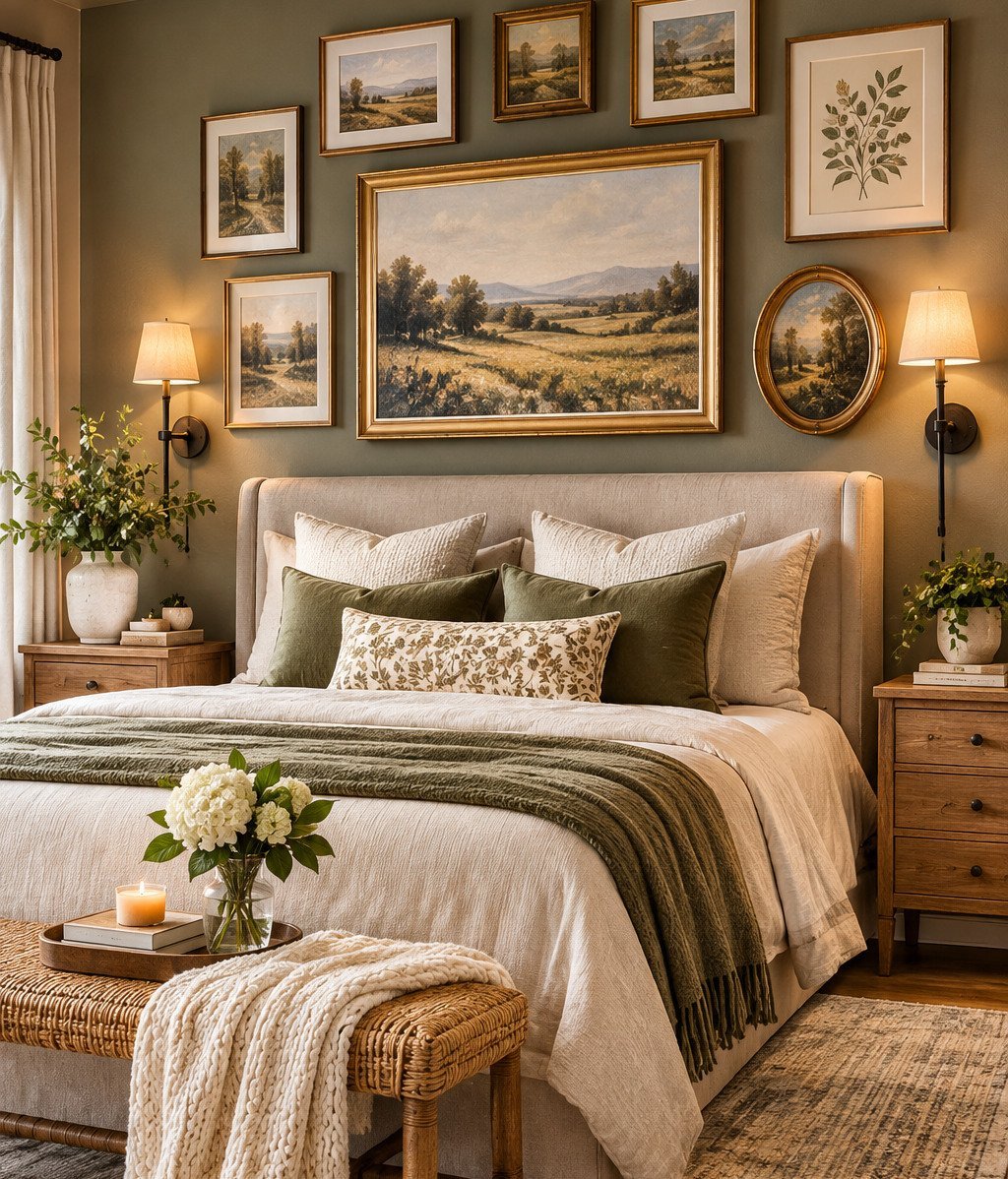
Quick Tip: Keep one common visual element, such as gilt finishes or neutral mats. Use removable paper outlines to check the size before committing to placement.
A loose arrangement of differently sized vintage frames looks personal and relaxed. Give the arrangement enough negative space around the edges, and repeat one of its colors in a throw or cushion so the decor feels connected to the room.
28. Romantic Floral Feature
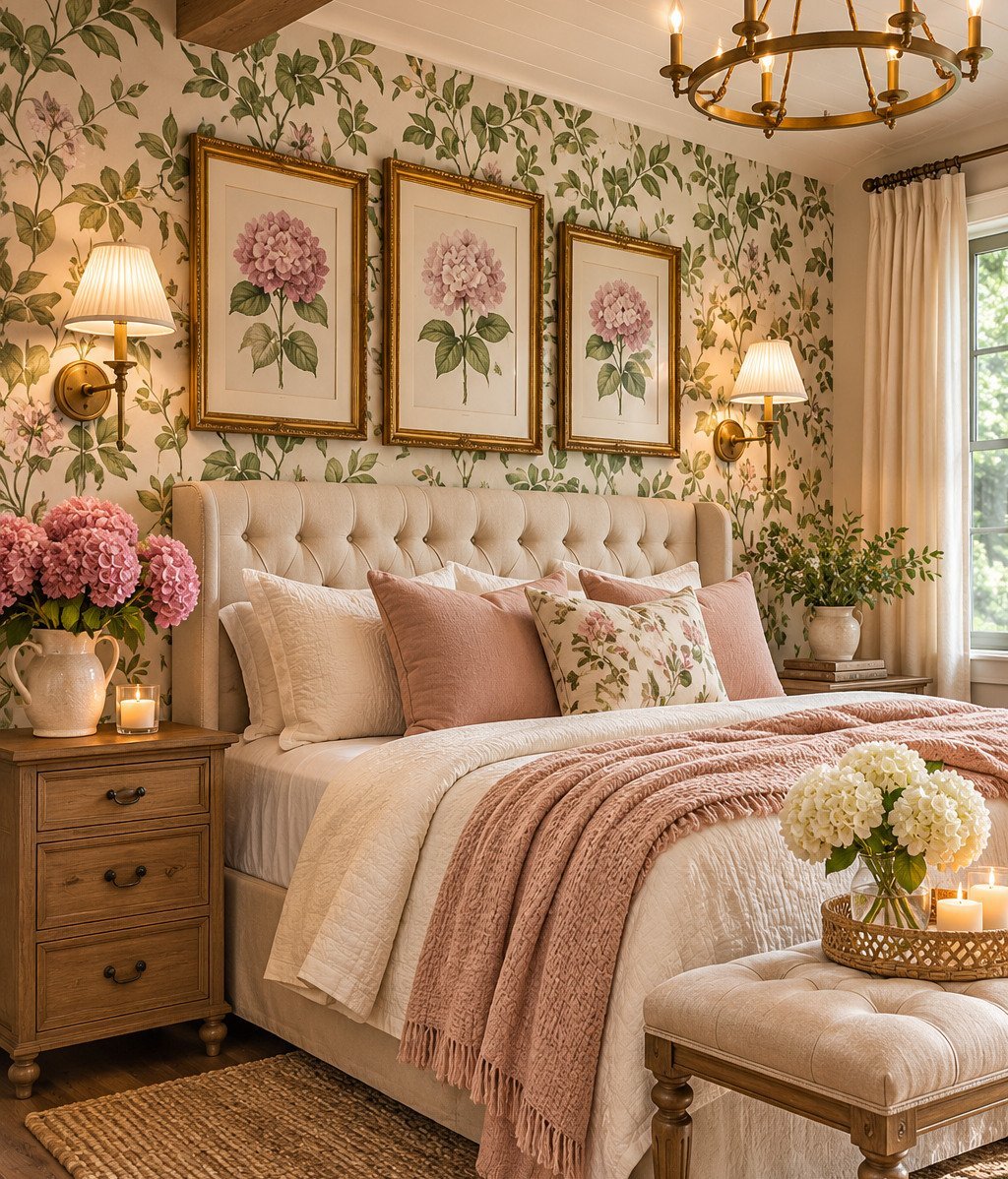
Before: The wall reads as an unrelated mix of colors or small pieces with no focal point.
After: One coordinated treatment ties the headboard, bedside lighting, and soft furnishings together.
Floral wallpaper with coordinating framed prints creates a layered cottage look when scale is controlled. Let a small repeating print sit behind larger floral paintings. A restrained color palette makes even an elaborate backdrop feel soothing rather than busy.
29. Oversized Botanical Mural
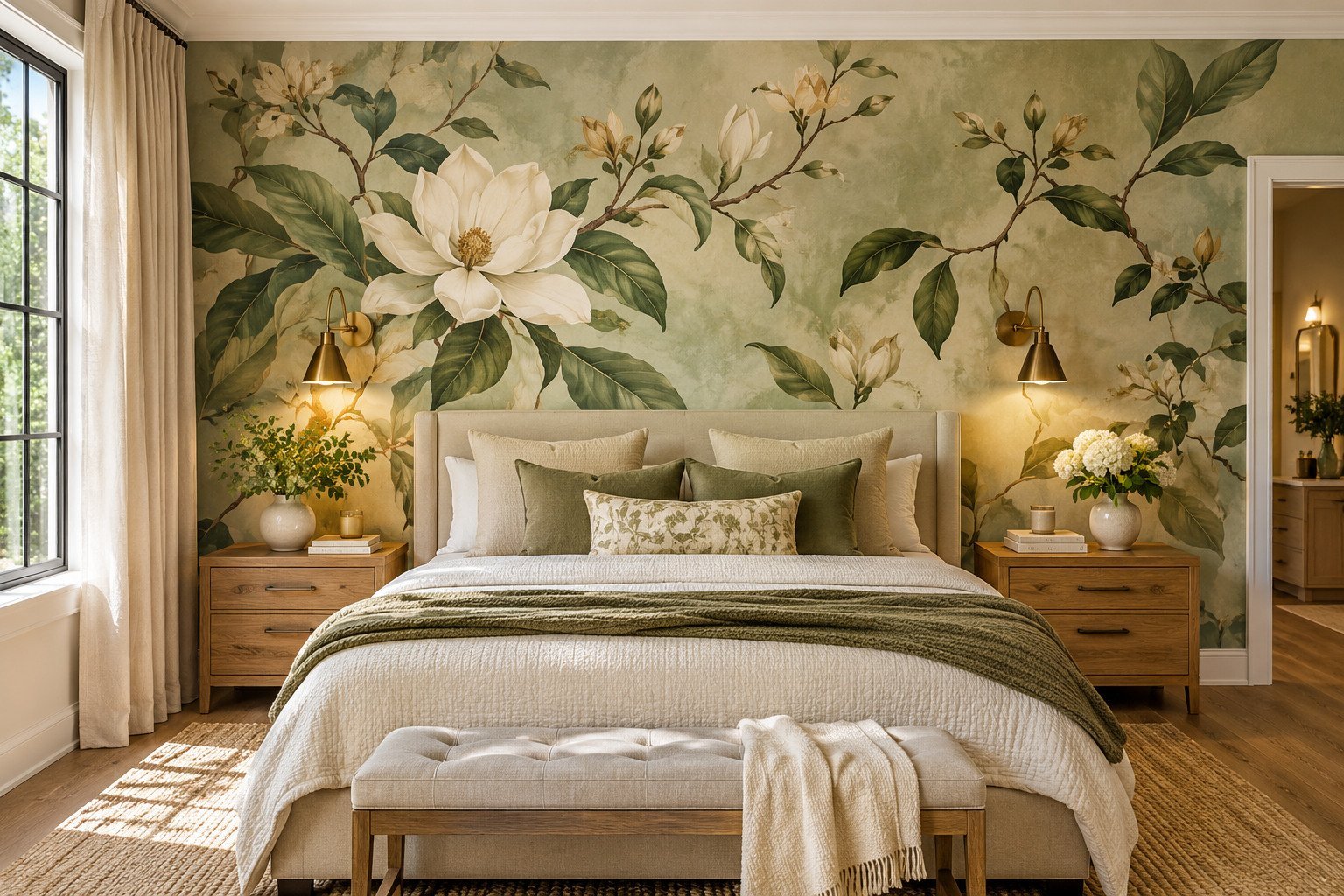
Measure the visible wall above and around your headboard.
Choose the central decorative element and mark its height with painter tape.
Arrange supporting pieces at consistent gaps, keeping lamps and switches clear.
Secure each item with the correct wall anchors and check the final composition.
A sweeping botanical mural can turn the entire headboard wall into a calm landscape. Choose muted colors and keep furniture silhouettes simple.
30. Sunburst Mirror Statement
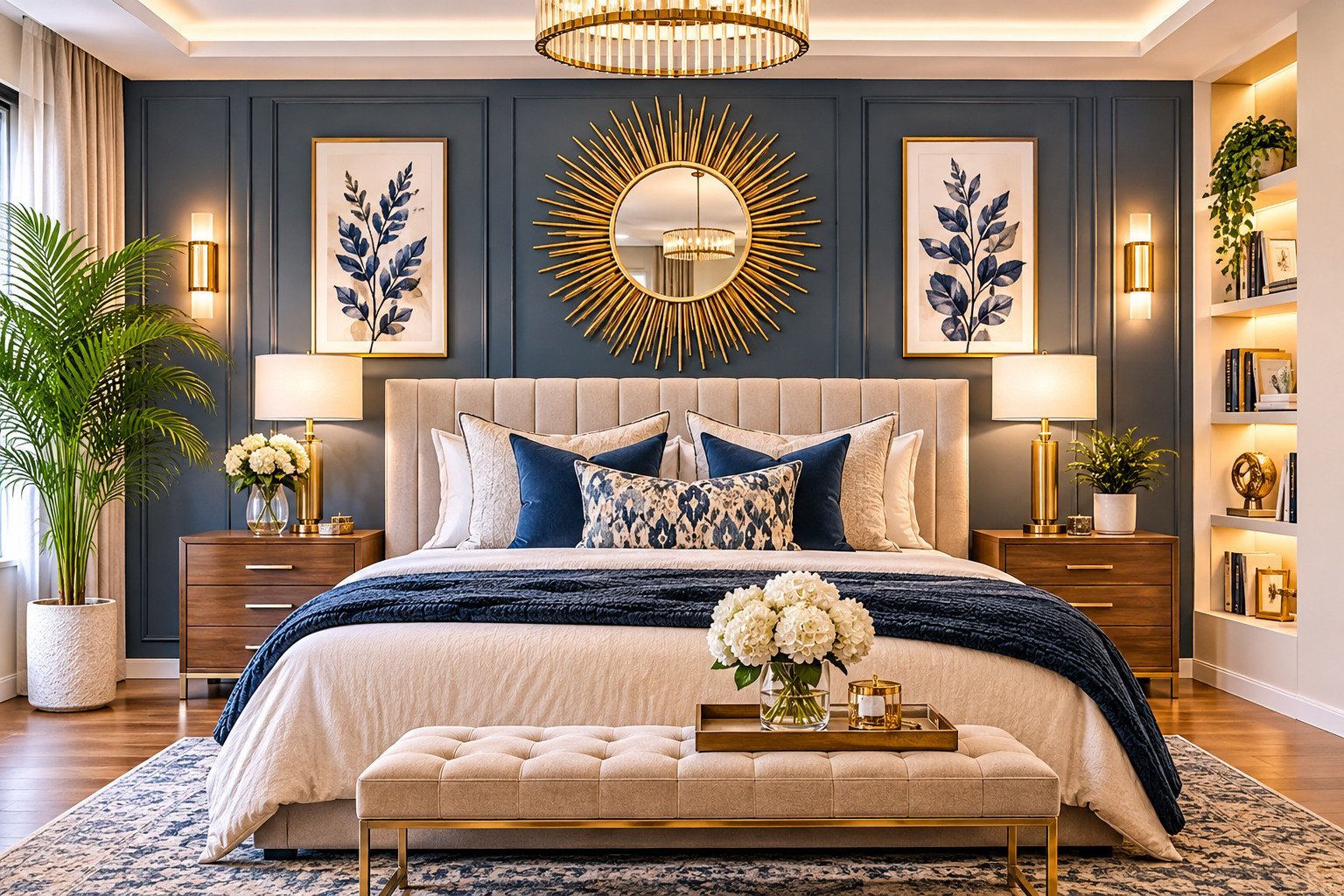
| Option A | Option B |
| A single oversized centerpiece for a clean look | A coordinated grouping for more texture |
| Matching frames and quiet matting | Mixed shapes joined by one color theme |
| Simple placement and easier dusting | More flexible display with added planning |
A gold sunburst mirror makes a bold centerpiece, especially against blue-gray paneling. Leave enough space around the mirror so its rays do not collide with neighboring art.
Conclusion
A beautifully styled bedroom wall does not need to be complicated. Choose a focal point that feels right for your furniture, then build supporting details around it. Gallery art can feel collected, mirrors bring softness, textured surfaces add depth, and sculptural pieces make a simple palette feel distinctive. I have seen small changes, especially correcting artwork height and reducing clutter, make a room look much more considered. Use these master bedroom wall decor ideas as a starting point, then adapt the color, scale, and materials to your own space. Save your favorites to Pinterest, try one approach, and share the finished look with someone who loves bedroom design.