20 Jaw Dropping DIY Murphy Bed Ideas That Will Transform Your Small Spaces
DIY Murphy bed ideas can change the way a tight room works. In a studio, guest room, office, or kid zone, the right wall bed turns one patch of floor into two useful settings. That matters when every step, drawer, and shelf has to earn its place. I have noticed that the most successful builds are rarely the fussiest ones. The strongest layouts usually solve two needs at once, such as sleep and storage, work and guests, or play and cleanup. That is exactly why these designs stand out. Some rely on simple plywood and clean lines, while others hide the bed inside bookcases, benches, or full cabinet walls. A few even make awkward spots, like the space under a staircase, feel purposeful. Below you will find twenty looks worth saving, studying, and adapting to your own room so a small footprint feels calmer, smarter, and much easier to live with.
Shiplap Frame
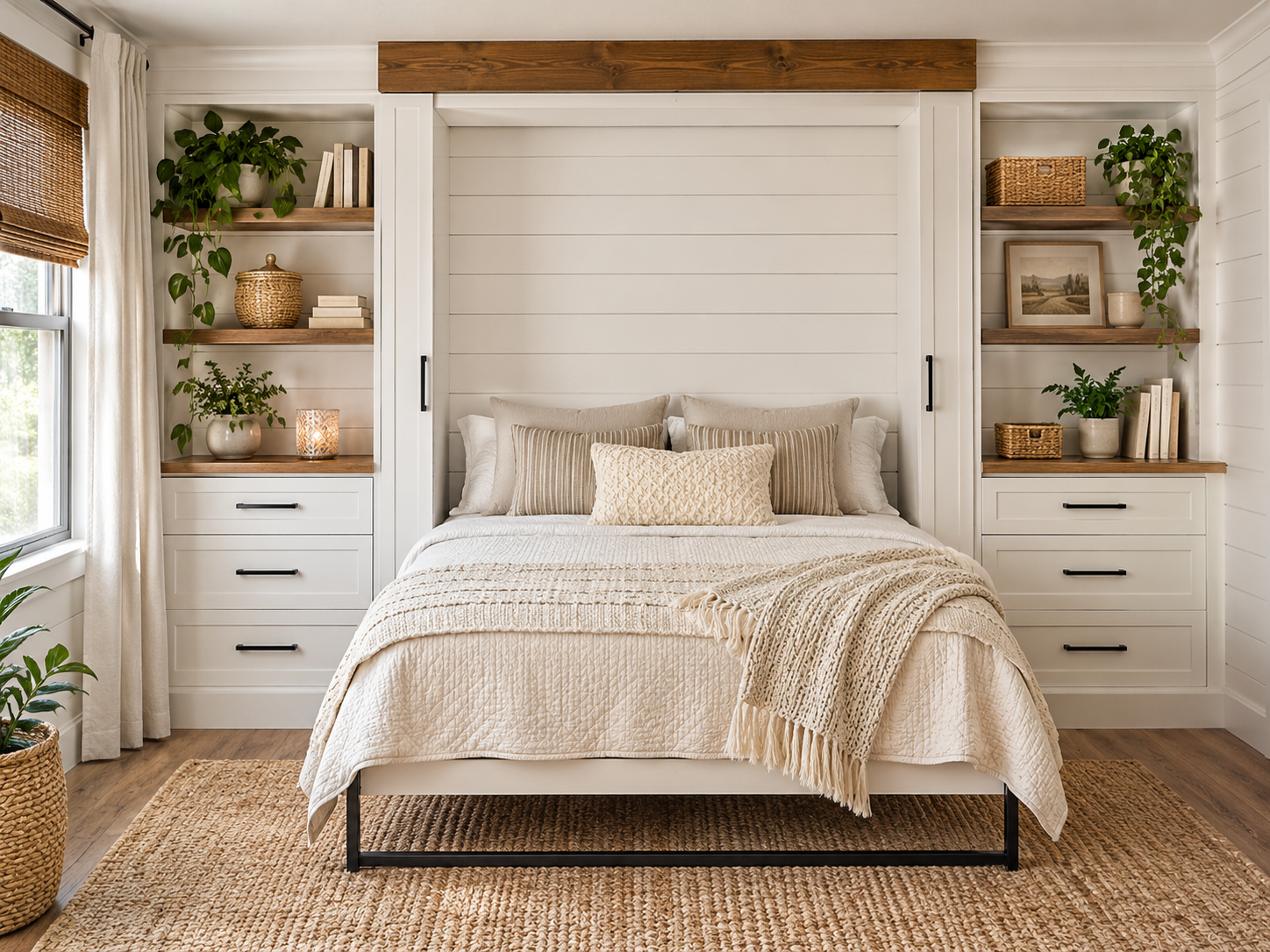
A shiplap backdrop gives a Murphy bed a built-in feel even when the project is fairly straightforward. The horizontal lines keep the wall calm, while open shelves on each side make the whole setup look planned rather than improvised. This approach works especially well in guest rooms that still need daily storage.
Keep the palette light, then add warmth with wood shelves, black pulls, and woven textures. In my experience, that mix helps a wall bed feel like cabinetry instead of a bulky mechanism. It also makes the closed bed blend better with the room during the day.
Bookcase Surround
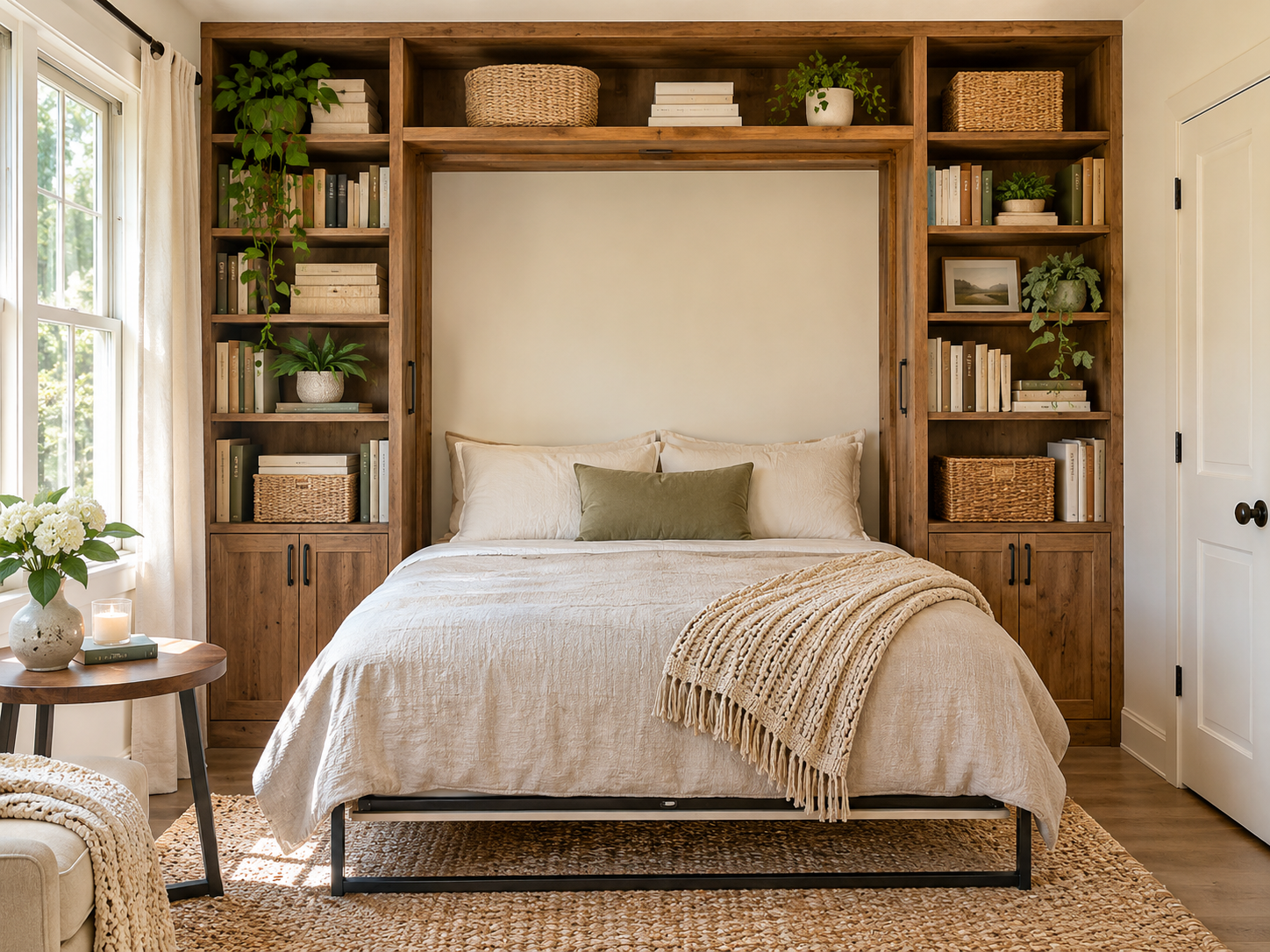
Build tall shelves on both sides so the bed sits inside a useful storage wall instead of standing alone.
Mix books with baskets to hide blankets, chargers, and off-season linens without making the space look heavy.
Use lower cabinets for heavier items so the wall stays visually balanced and safer to access.
Add one or two trailing plants if the room gets light. They soften the cabinet lines and keep the wall from feeling boxy.
A bookcase layout suits small guest rooms because it turns one wall into sleep space, display space, and hidden storage at the same time. It is one of the easiest ways to make a wall bed look permanent and polished.
Desk Fold Down
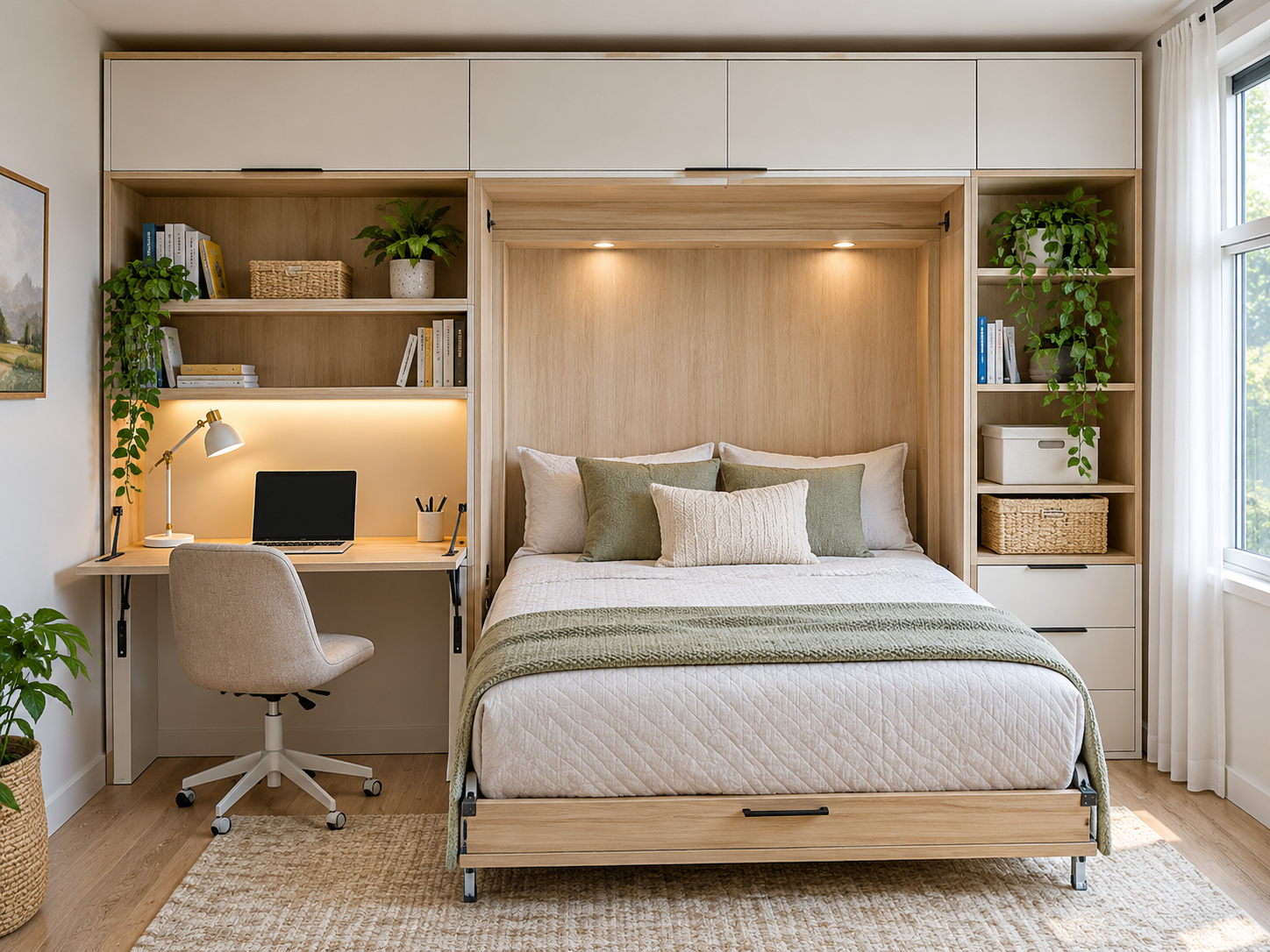
Quick Tip: Measure your chair depth before finalizing the cabinet. A desk combo works best when the chair can roll away quickly and the walkway still feels open.
A work-and-sleep setup is perfect for a spare room that doubles as an office. Keep the shelving shallow, choose warm task lighting, and leave enough surface for a laptop and notebook. The room will feel productive by day and restful by night.
Horizontal Layout
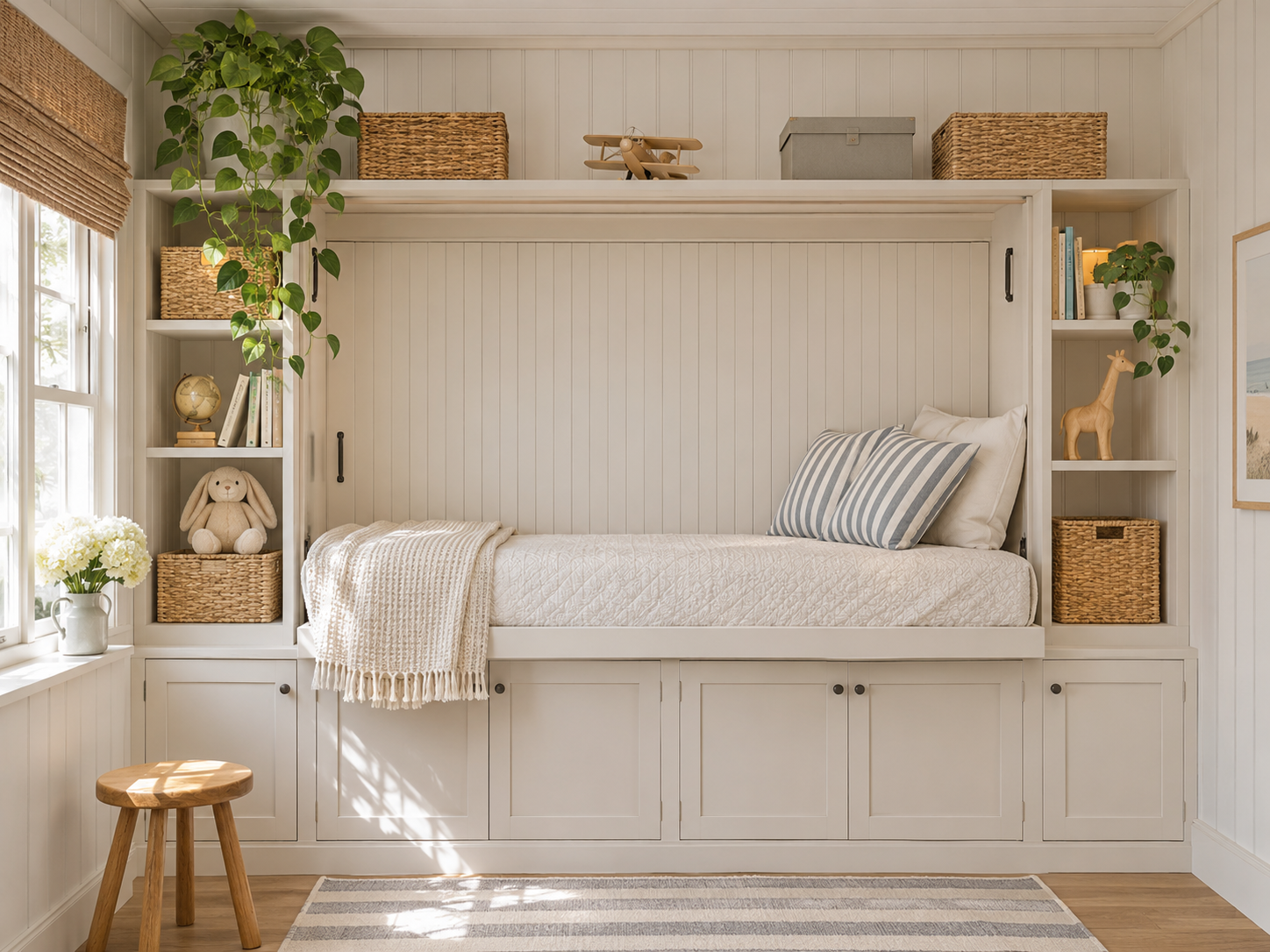
Before: A narrow room can make a traditional vertical wall bed feel too tall and awkward, especially near windows or low ceilings.
After: A horizontal build spreads the bed across the wall, giving you storage above and below while keeping the room visually lower and wider.
This option is especially smart for kids rooms, loft spaces, or long skinny guest rooms. Pair it with lower cabinets and soft bedding so the whole wall feels compact, calm, and easy to use.
Sofa Front
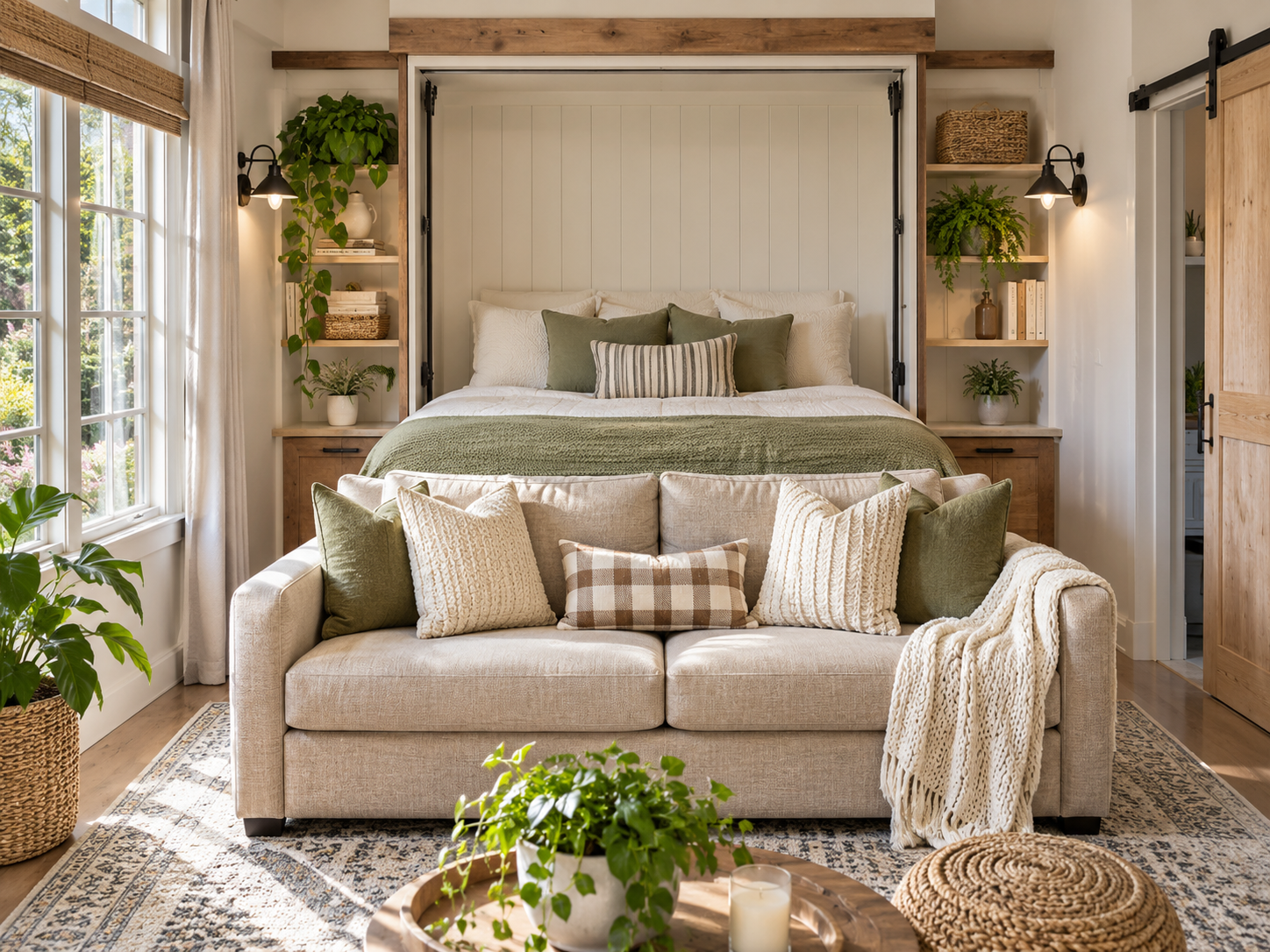
Start with a shallow sofa or sleeper-friendly loveseat that will not crowd the room when the bed is open.
Anchor the seating area with a rug so the living-room side still feels intentional when the bed is closed.
Use wall sconces instead of table lamps to free up floor and side-table space.
Keep bedding in a nearby basket or bench so switching from lounge mode to guest mode takes only a minute.
A sofa-front setup is one of the best ways to hide a guest bed in plain sight. It lets a small living room stay social every day while keeping overnight comfort close at hand.
Wardrobe Hideaway
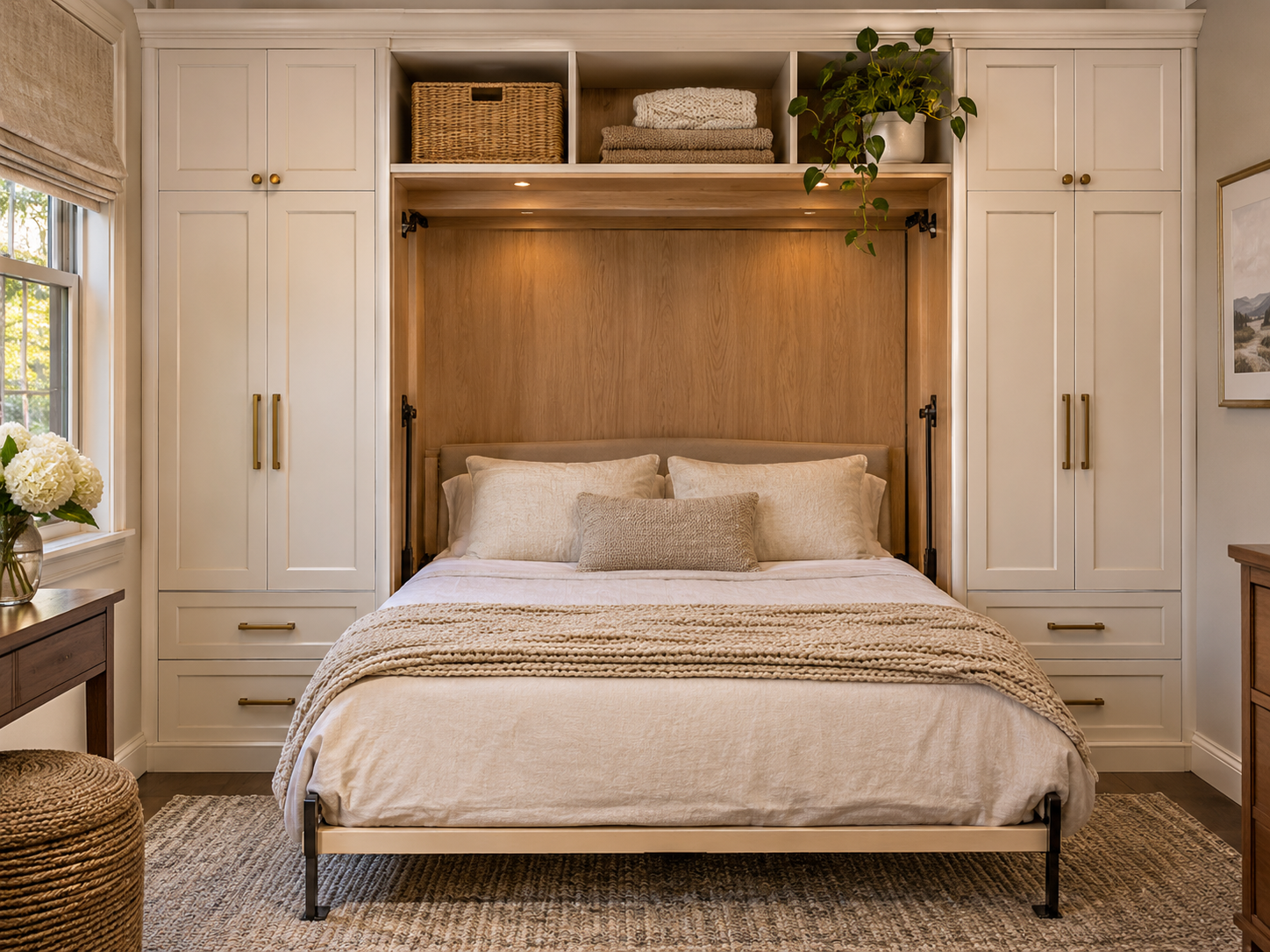
| Option A | Option B |
| Full cabinet doors create a furniture look and hide the bed neatly. | Open side cubbies keep essentials handy and break up a large wall. |
| Brass or black pulls add a finished custom feel. | Touch-latch doors create a cleaner front if you prefer minimal hardware. |
| Overhead cubbies are great for extra pillows and folded throws. | Lower drawers work better for heavier items and everyday access. |
A wardrobe-style front is ideal if you want the bed to disappear completely. It feels orderly, looks expensive, and works well in bedrooms where you do not want the wall bed mechanism to dominate the room.
Bunk Wall
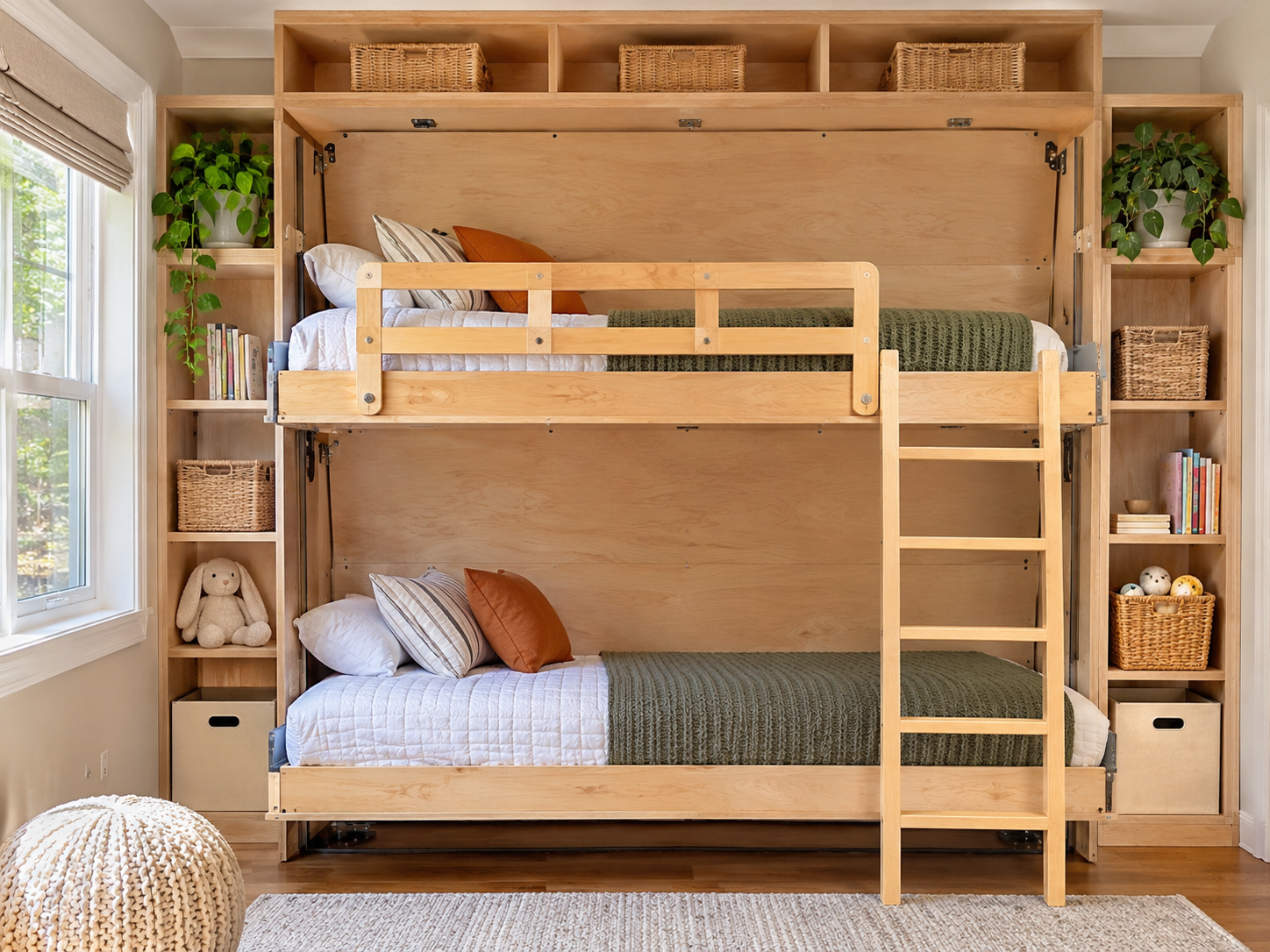
Do
Do choose strong hardware and a fixed ladder that feels stable under daily use.
Do add baskets and cubbies around the bunks so each sleeper has a place for personal items.
Do keep bedding simple and lightweight so opening and closing the setup feels manageable.
Don’t
Don’t crowd the bunks with deep shelving that makes the sleeping area feel boxed in.
Don’t ignore guardrail height on the upper bunk.
Don’t use too many tiny decor pieces that make cleaning harder in a compact family room.
A bunk-style Murphy wall is a strong pick for vacation homes, shared kids rooms, or visiting family. It packs multiple beds into one footprint while still leaving the room more usable during the day.
Craft Room Blend
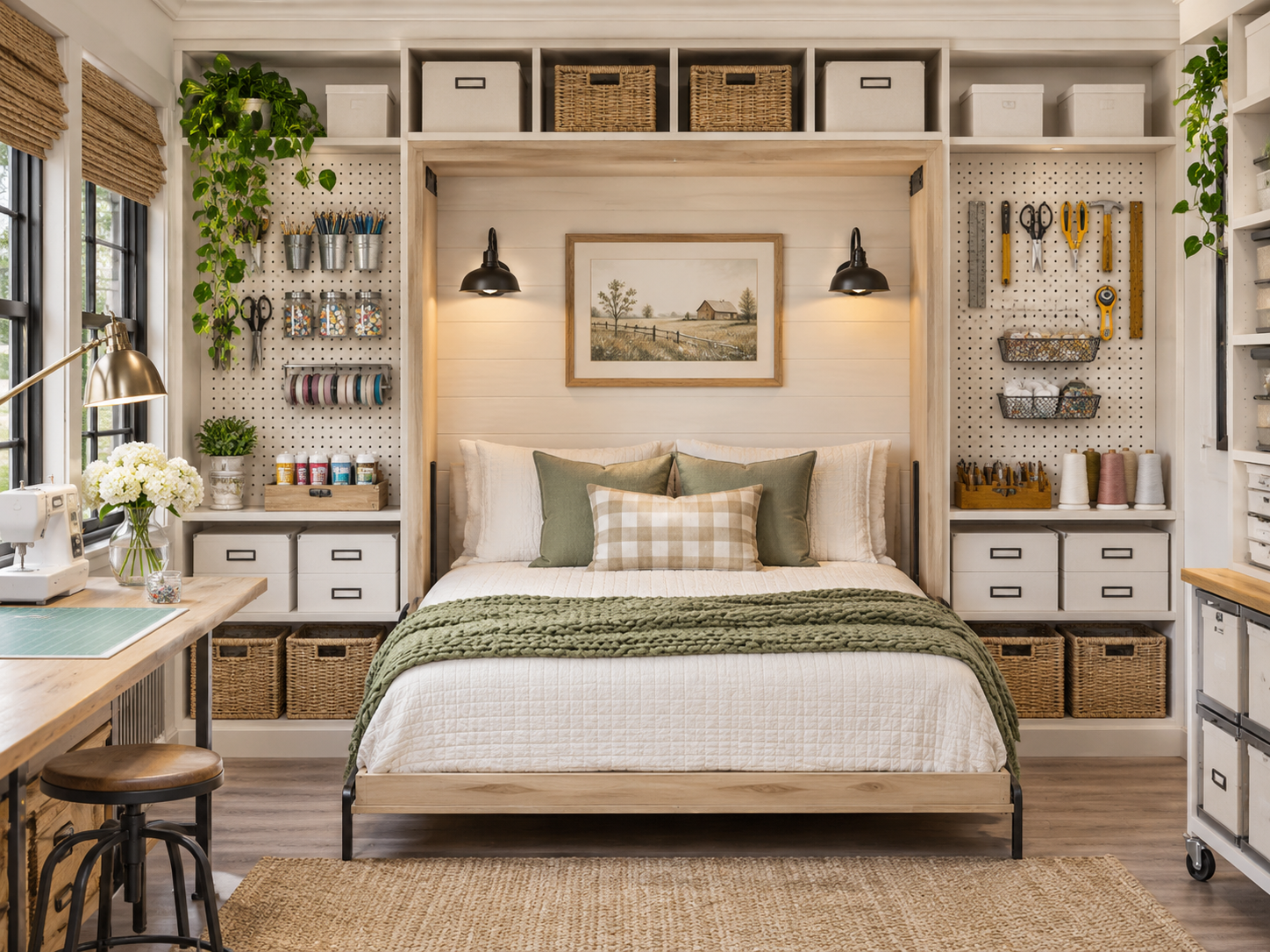
Best For: Hobby rooms, sewing rooms, and flexible guest spaces.
Storage Focus: Pegboards, drawers, bins, and labeled baskets.
Look: Light wood, white cabinetry, and workshop-style lighting.
Skill Level: Intermediate, especially if you are integrating multiple storage zones.
I have seen this type of layout work especially well for people who need a room every day, not just when guests visit. The bed folds away, while tools and supplies stay visible, organized, and easy to reach.
Under Stair Fit
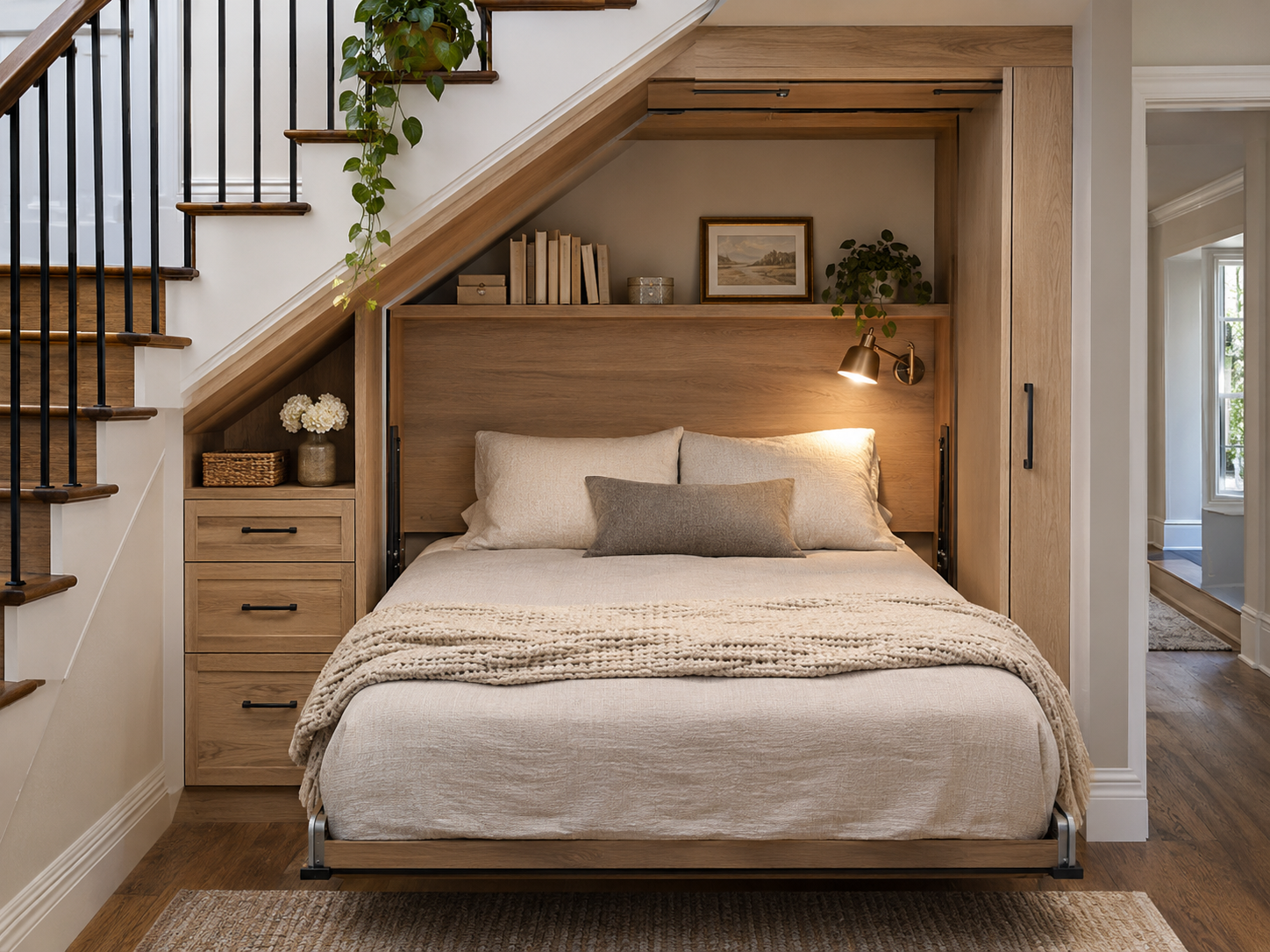
The space under a staircase often becomes wasted square footage or shallow storage that never quite works. Fitting a Murphy bed into that angled zone turns an awkward architectural leftover into a practical sleeping nook that still looks custom and thoughtful.
Use matching wood trim, a reading sconce, and one shelf above the pillows so the alcove feels finished. This is also a smart place for drawers because the low side of the stair run naturally suits closed storage.
Bare Plywood
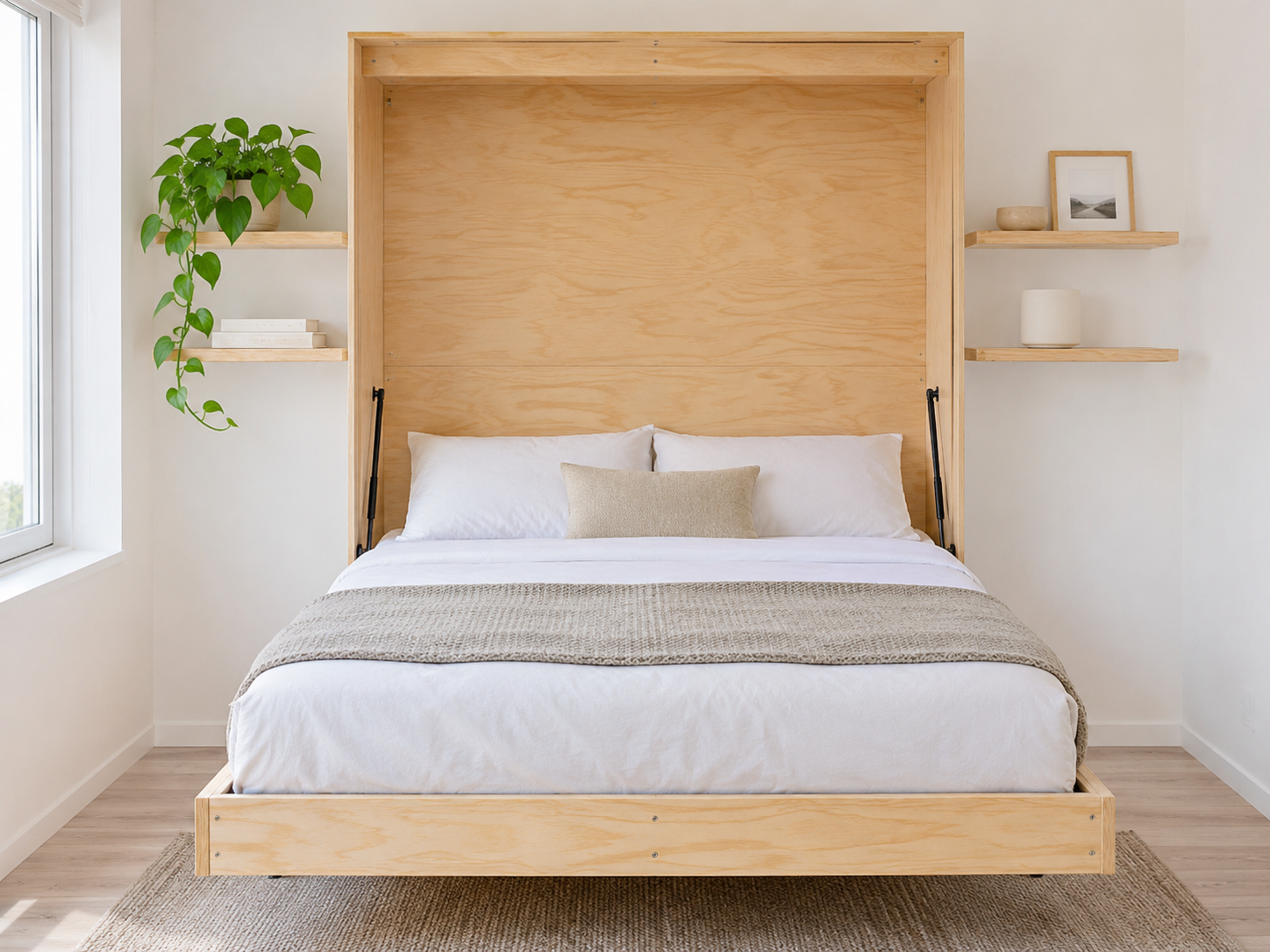
A simple plywood frame keeps material costs lower and gives the build a clean, modern edge.
Visible grain adds texture, so the room can stay fairly minimal without feeling cold.
Floating shelves on each side offer just enough balance for books, a lamp, or a plant.
This style works especially well in studios and rental-minded spaces because it looks neat without extra trim.
If you want a straightforward project, this is a good direction to study. The beauty comes from restraint: clean panels, useful shelves, and bedding that stays light and uncluttered.
Barn Door Face
Quick Tip: Use barn-door detailing on the cabinet front, not on a door that swings through your walking path. You get the farmhouse look without creating a clumsy layout.
Barn-door styling adds character fast, especially in rooms that already have warm wood or black hardware. Pair it with simple bedding and a neutral sofa so the statement stays on the cabinet face and not on visual clutter.
Shelf Framed
Before: A plain wall bed can feel like a giant panel dropped into the room with no relationship to the rest of the furniture.
After: A few open shelves, a header beam, and matching drawers on each side create a frame that makes the bed look custom built and fully integrated.
This idea works because it gives the eye smaller, useful zones to land on. Even a modest amount of side shelving can make the whole project feel warmer and much more complete.
Bench Drawer Base
Add a low bench or cabinet run beneath the side shelving so the wall unit feels anchored.
Use deep drawers for extra pillows, spare sheets, or off-season clothing.
Top the bench with a cushion if you want a place to sit while making the bed.
Keep the drawer fronts simple so the extra storage does not make the wall feel crowded.
Built-in drawers are a quiet win in any small room. They keep bulky basics nearby and reduce the need for extra furniture, which is often the real reason a compact room starts to feel cramped.
Corner Saver
| Option A | Option B |
| Fit the bed into a corner when only one clear wall is available. | Center the bed if the room needs a more symmetrical and furniture-like look. |
| Use one tall cabinet and one open shelf run to suit the corner shape. | Use matching storage on both sides when you have enough width to do it. |
| A corner build frees the middle of the room for movement. | A centered build often feels more balanced for guest use. |
Corner-friendly layouts are underrated. They can rescue a room with doors, windows, or awkward openings, and they often create a better walking path than forcing the bed onto the main visual wall.
Black Trim
Do
Do use black pulls, sconces, or a metal bed base to sharpen a light-colored cabinet wall.
Do repeat the dark tone in two or three spots so it looks intentional.
Do keep surrounding surfaces soft and warm so the contrast feels crisp, not harsh.
Don’t
Don’t pair black accents with too many unrelated wood tones.
Don’t overdo industrial details if the room is already very small.
Don’t skip warm textiles, because contrast alone can make a compact room feel stark.
A little black trim can give a Murphy bed project a cleaner finish and more definition. It is especially helpful when the cabinetry is white, cream, or pale wood and needs visual structure.
Cane Panel Front
Best Look: Soft coastal, boho, or relaxed modern farmhouse rooms.
Texture Benefit: Cane or rattan breaks up a large flat cabinet face.
Color Pairing: Cream paint, pale oak, and muted green accents work especially well.
Practical Note: Use cane on decorative sections, while keeping the main frame sturdy and easy to clean.
Textured panels are a smart way to make a closed wall bed look lighter. On a big cabinet front, woven inserts add rhythm and warmth without requiring bold color or complicated trim details.
Slim Twin Build
A slim twin Murphy bed is ideal for a study nook, child room, or occasional guest corner. Because the footprint is smaller, you can dedicate more of the wall to drawers, shelves, or even a bench without losing the sleeping function.
This is also one of the least intimidating DIY routes. The scale is easier to plan, the mattress is lighter to handle, and the finished piece can tuck neatly into spaces where a full-size build would overwhelm the room.
Guest Office Mix
Use upper cabinets for office supplies you do not need every hour, such as files, cords, or a printer stash.
Choose a desk chair that looks residential enough to blend with bedroom decor.
Keep your bedding palette close to the cabinet tones so the room shifts modes smoothly.
Mount lighting above the desk and near the bed so each function has its own dedicated light source.
A guest-office mix works best when neither role feels like an afterthought. The room should still feel comfortable for sleep, but it also needs a desk setup good enough for real work, not just quick check-ins.
Kid Storage Wall
Quick Tip: Give every child a specific basket or cubby before the build is finished. Shared wall beds stay tidier when storage is clearly assigned from day one.
For family use, the smartest Murphy bed walls make cleanup simple. Baskets, low shelves, and sturdy cubbies help corral books, toys, and pajamas so the room can switch from play mode to sleep mode without a long reset.
Rental Style Hack
Before: Small apartments can feel crowded fast when the bed is the largest visible object in the room all day and all night.
After: A pared-back wall bed with simple shelves and a light wood finish keeps the room open, bright, and easier to decorate around.
This look is especially appealing if you like a calm apartment style. It offers the utility of a larger built-in project while keeping the visual footprint relaxed and easy to personalize with a few movable accents.
Conclusion
The best small-space rooms rarely rely on one smart move alone. They combine compact sleep solutions, storage, and a layout that keeps daily life flowing. That is why DIY Murphy bed ideas continue to be worth a close look, especially if you want a room to feel useful without feeling crowded. I have seen how even a simple wall bed can make a tight layout feel calmer once extra furniture is reduced and storage is built into the same zone. Save your favorite ideas to Pinterest, test the one that fits your room best, and share the article with anyone planning a smarter small-space project.