21 magical cottage kitchens that will steal your heart
A warm kitchen can make everyday routines feel a little more special. The right details can turn even a plain room into a cozy space full of character.
These cottage kitchens bring together charming colors, natural materials, practical storage, vintage accents, and simple decorating ideas that feel welcoming rather than overly styled. Whether you’re updating a small kitchen, decorating your first home, or working with a limited budget, you’ll find plenty of ideas to adapt to your space.
From soft sage cabinets and butcher block counters to open shelving, farmhouse sinks, herbs, linen accents, and antique furniture, each idea offers something practical to try. In my experience, the most inviting kitchens rarely depend on expensive changes. Small details, chosen thoughtfully, can make the biggest visual impact.
Whitewashed Wood Cabinets
Fresh whitewashed cabinets give a small kitchen an airy foundation without making it feel cold. Choose a slightly creamy white rather than a stark shade, then pair it with natural wood details to keep the room warm. Simple shaker doors work especially well because their clean lines balance rustic finishes.
For a lived-in finish, add open shelving, woven storage baskets, and a few handmade-looking ceramics. I’ve noticed that mixing two or three wood tones can make white cabinetry feel more collected and personal. Keep the countertops visually quiet so the cabinet texture remains the main feature.
Vintage Open Shelving
- Choose sturdy wood: Reclaimed pine or oak brings natural character and warmth.
- Keep everyday dishes visible: Stack plates, bowls, and mugs where they are easy to reach.
- Mix practical and decorative pieces: Combine cookware with pottery, jars, and small plants.
- Leave breathing room: Avoid filling every inch of shelf space.
- Repeat colors: Use two or three shared shades to keep the display cohesive.
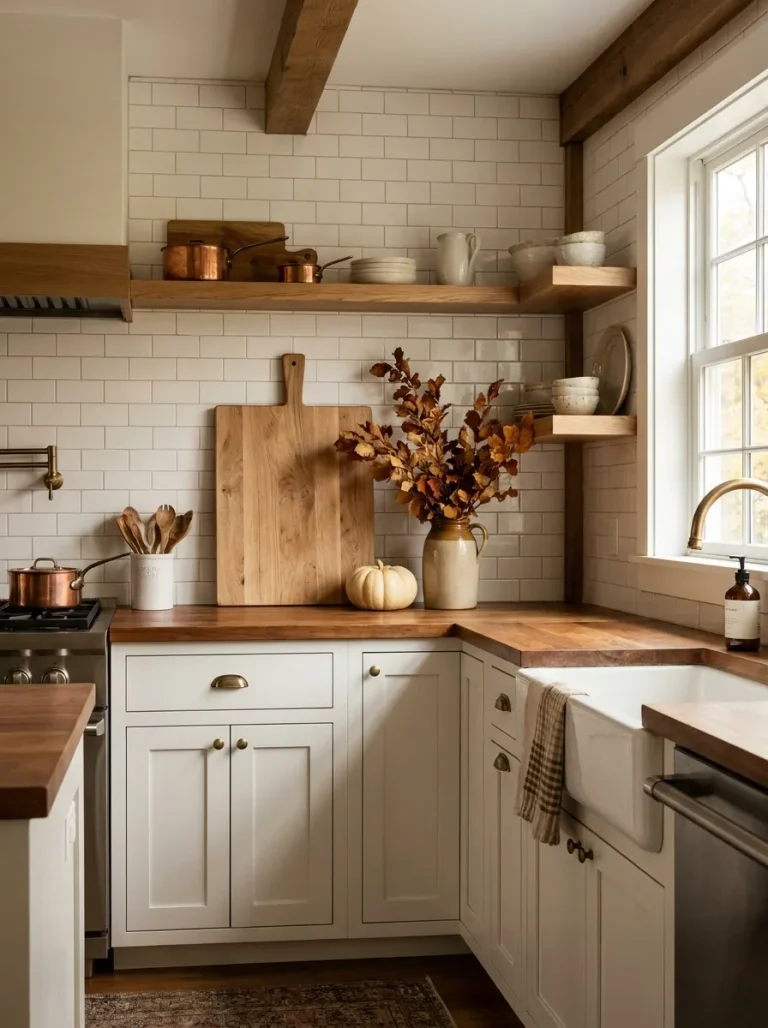
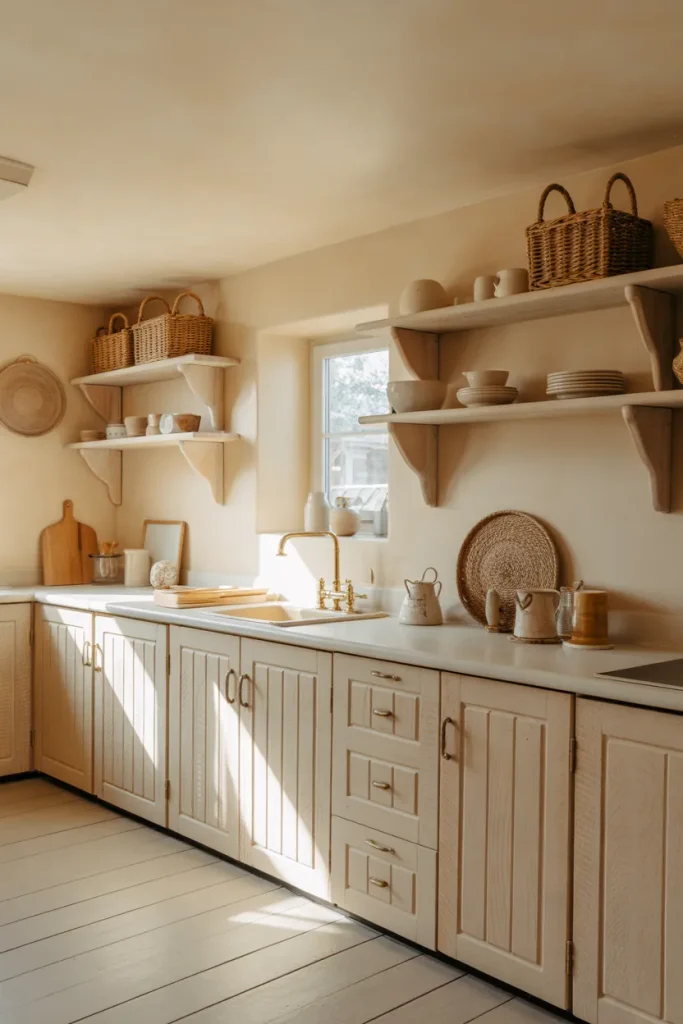
Open shelves work especially well above a sink, coffee station, or prep area. They make frequently used pieces easier to grab while adding personality to the room. For a budget-friendly update, install two long timber shelves instead of replacing upper cabinets. The result feels relaxed, useful, and distinctly cottage-inspired.
Farmhouse Sink Styling
Quick Tip:
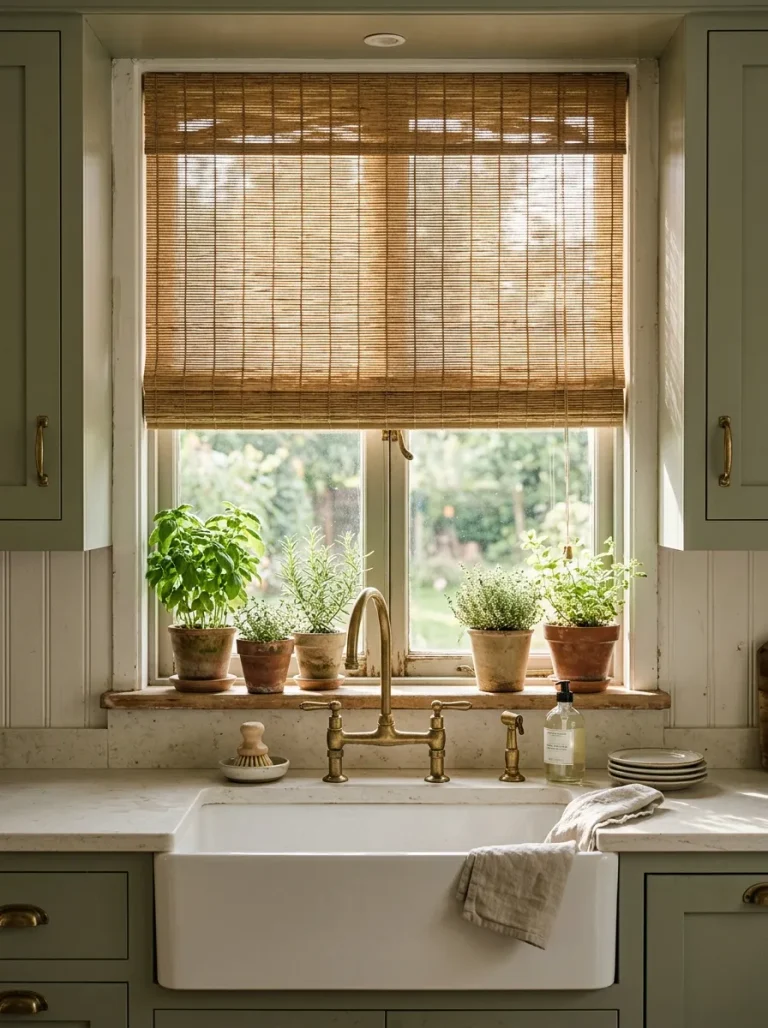
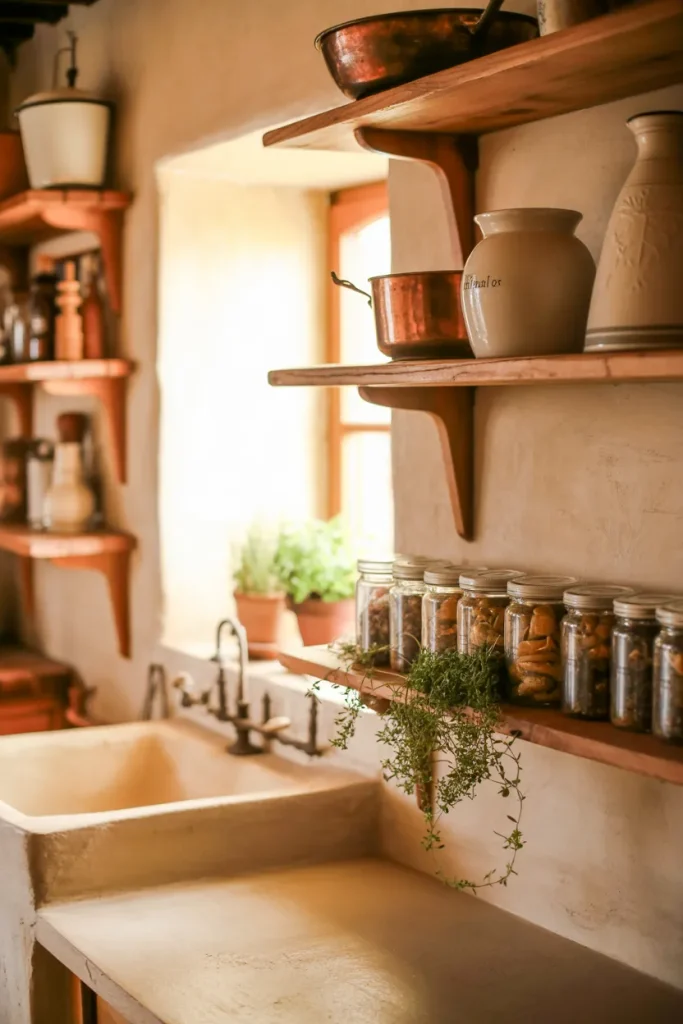
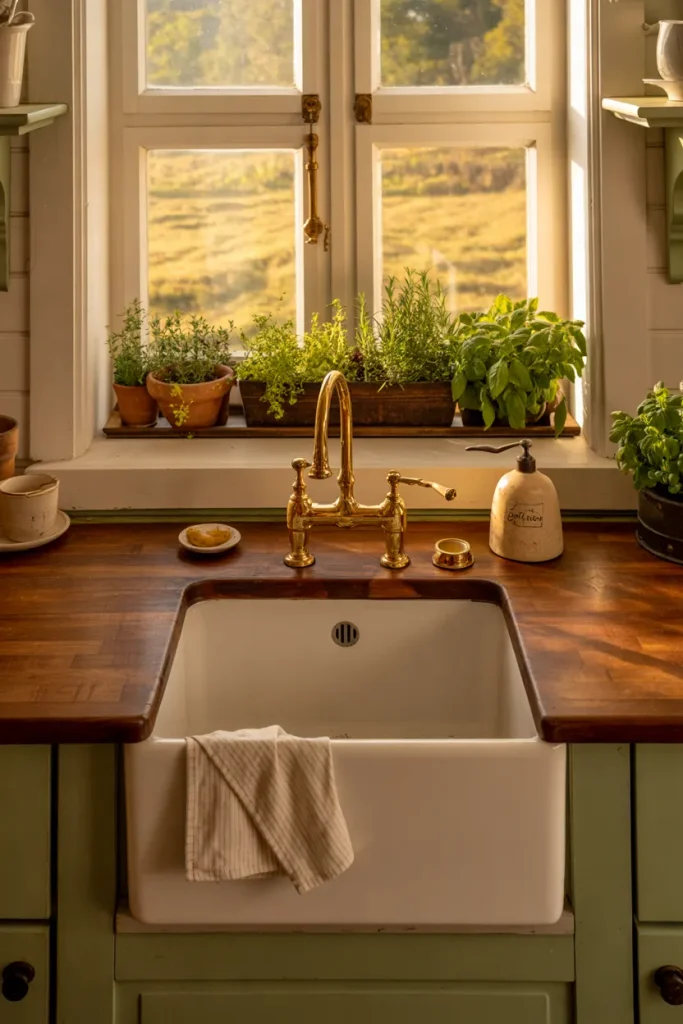
Keep the sink area visually simple. Choose one attractive soap dispenser, a folded linen towel, and a small herb pot rather than several decorative objects. This keeps the workspace practical while giving the farmhouse sink a styled, welcoming appearance.
A deep apron-front sink becomes a natural focal point when surrounded by warm materials. Pair it with butcher block or softly veined stone, then add an aged brass or brushed nickel faucet for subtle character. In a busy family kitchen, prioritize a wide basin and durable finish over delicate decorative details.
Butcher Block Countertops
- Choose the right wood: Maple and oak offer durable options with visible grain and warm character.
- Keep water controlled: Wipe standing moisture around the sink promptly to protect the surface.
- Use food-safe care: Apply an appropriate food-safe mineral oil when the wood begins looking dry.
- Balance the warmth: Pair the counter with cream, sage, or soft white cabinetry.
- Leave some grain visible: Avoid covering the entire surface with appliances and accessories.
Butcher block brings warmth that stone surfaces sometimes lack, especially in a light-filled room. It also works beautifully as an island top or a smaller prep section rather than covering every counter. I’ve noticed that combining wood with painted cabinetry creates the relaxed, collected character people often want from a cottage-style space. (HGTV)
Soft Sage Cabinets
BEFORE
Bright white or dated cabinets can make a kitchen feel flat, especially when the room lacks natural texture. The space may have useful storage but little visual warmth.
AFTER
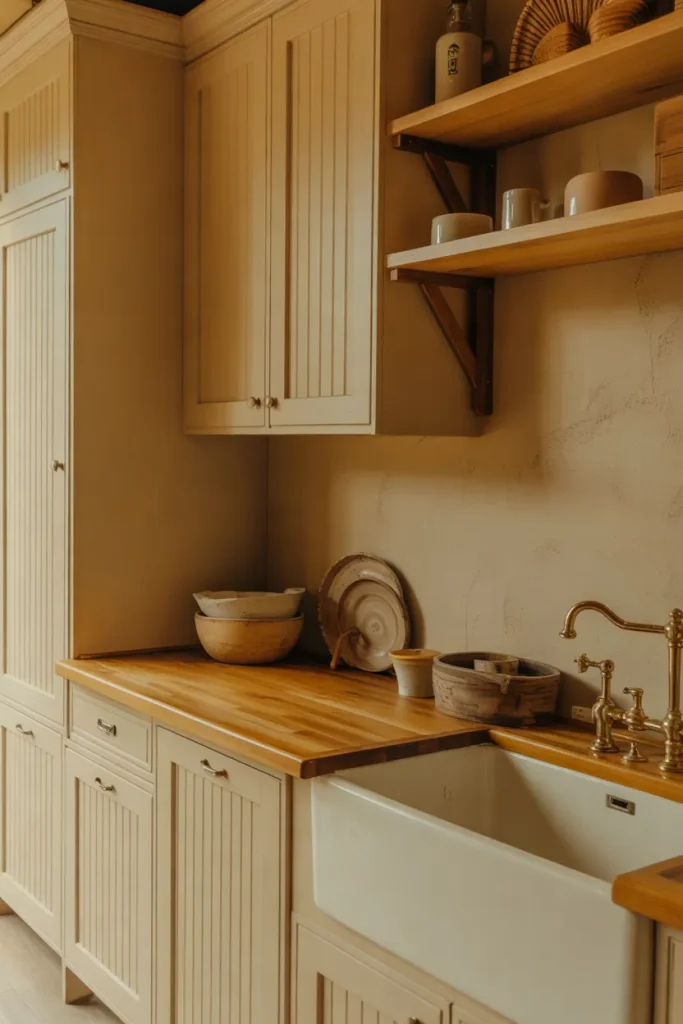
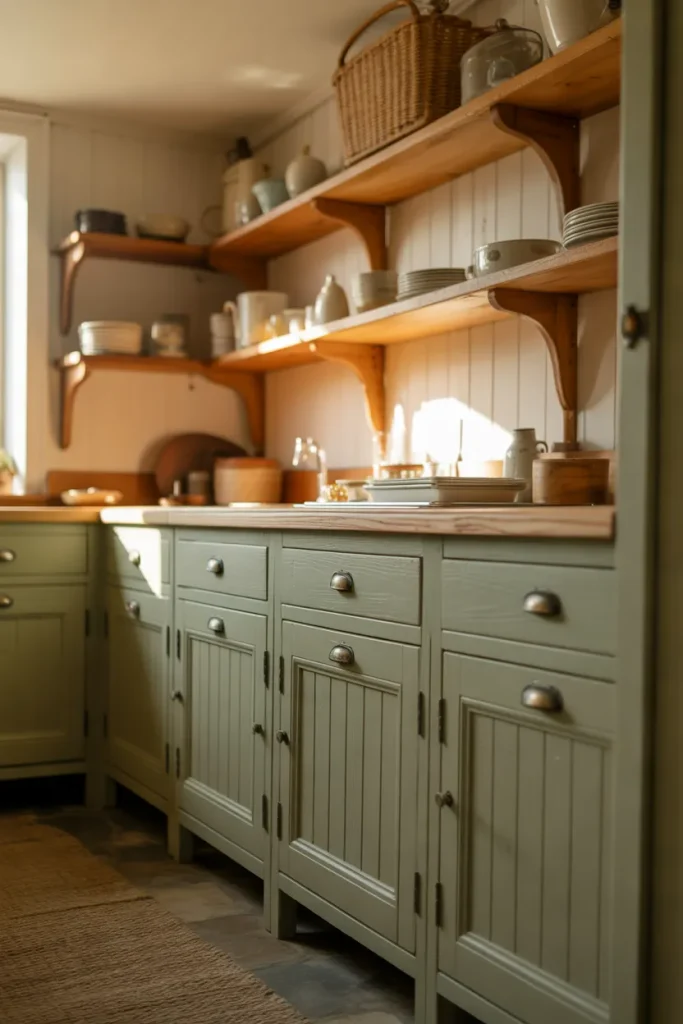
Soft sage cabinetry introduces color without making the room feel heavy. Pair it with warm wood, cream walls, and simple brass or dark hardware for a balanced finish.
A muted green works particularly well because it connects naturally with garden-inspired decor and traditional cottage materials. Keep the shade dusty rather than highly saturated. For a budget refresh, repaint existing cabinet doors instead of replacing them. Test a sample beside your flooring and countertops before committing to the full room.
Freestanding Island
- Measure first: Leave comfortable walking space around the island so doors and drawers can open freely.
- Pick the right size: A narrow cart or small table can work better than a bulky fixed island.
- Add useful storage: Use lower shelves for baskets, cookware, or everyday serving pieces.
- Create a work zone: Keep the top mostly clear for chopping, baking, or serving.
- Consider mobility: Locking casters make rearranging and cleaning easier in compact kitchens.
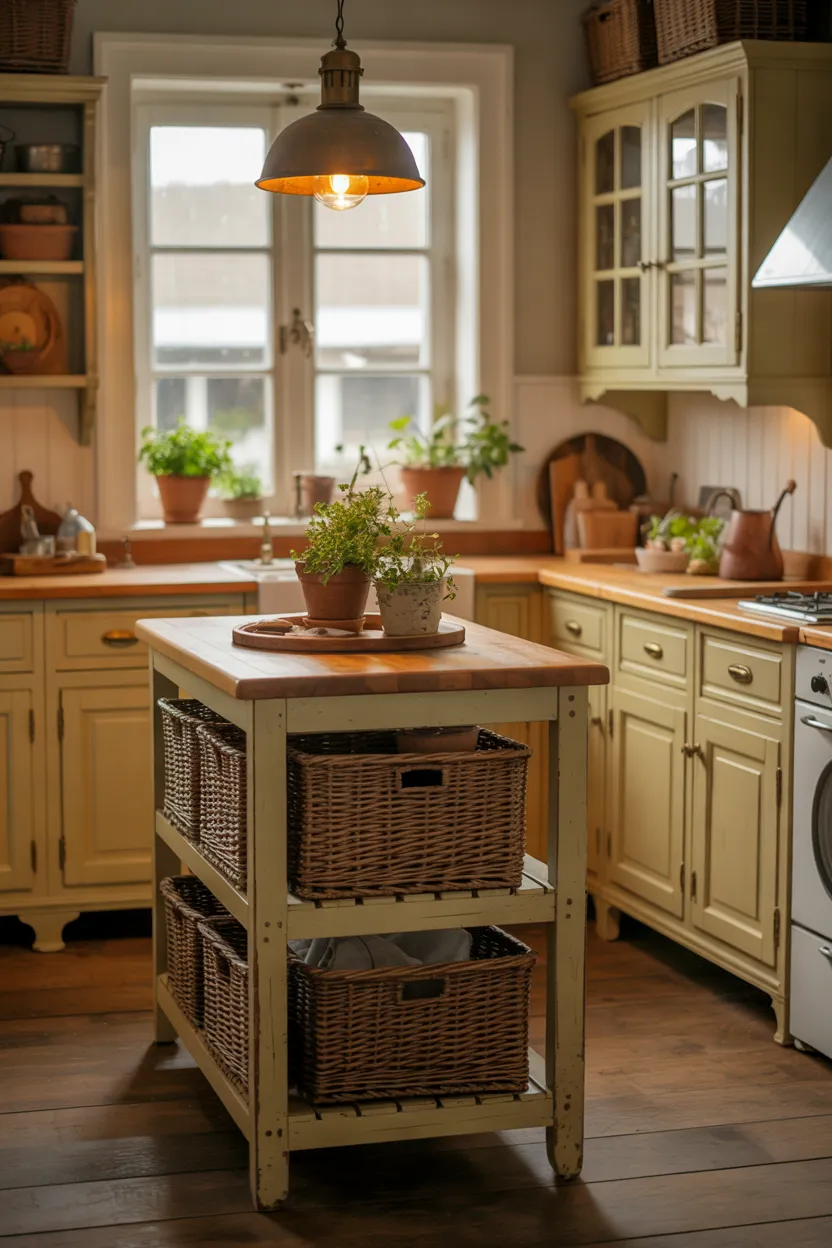
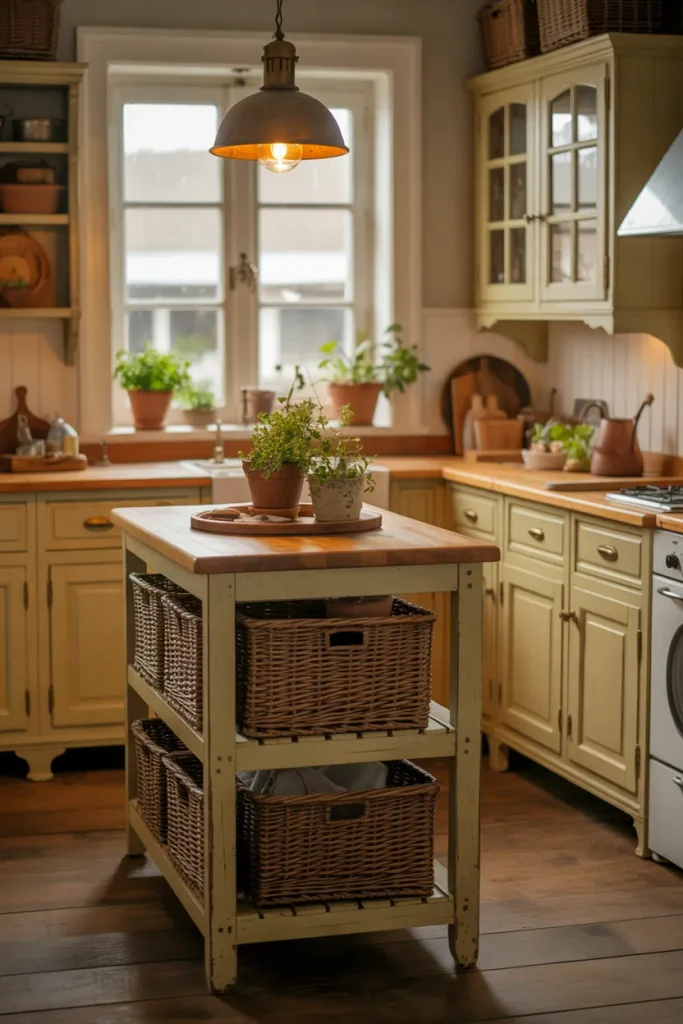
A freestanding island gives you extra prep space without requiring a major renovation. A sturdy vintage table, butcher block cart, or repurposed furniture piece can provide the same visual warmth for less money. Keep the surrounding floor area open, especially in smaller homes, so the kitchen remains comfortable during busy meal preparation.
Floral Cafe Curtains
DO
- Choose small-scale prints: Tiny florals suit compact windows without overwhelming the room.
- Keep the fabric light: Cotton or linen lets daylight filter through.
- Match one accent color: Repeat a curtain shade in towels, pottery, or artwork.
- Mount them neatly: Position the rod so the fabric hangs evenly across the window.
DON’T
- Don’t block all the glass: Preserve enough open area for natural light.
- Don’t mix several bold patterns: Let the curtains remain the main textile accent.
- Don’t choose overly stiff fabric: Heavy material can make a small kitchen feel closed in.
- Don’t ignore washing needs: Kitchen fabrics collect dust and cooking residue quickly.
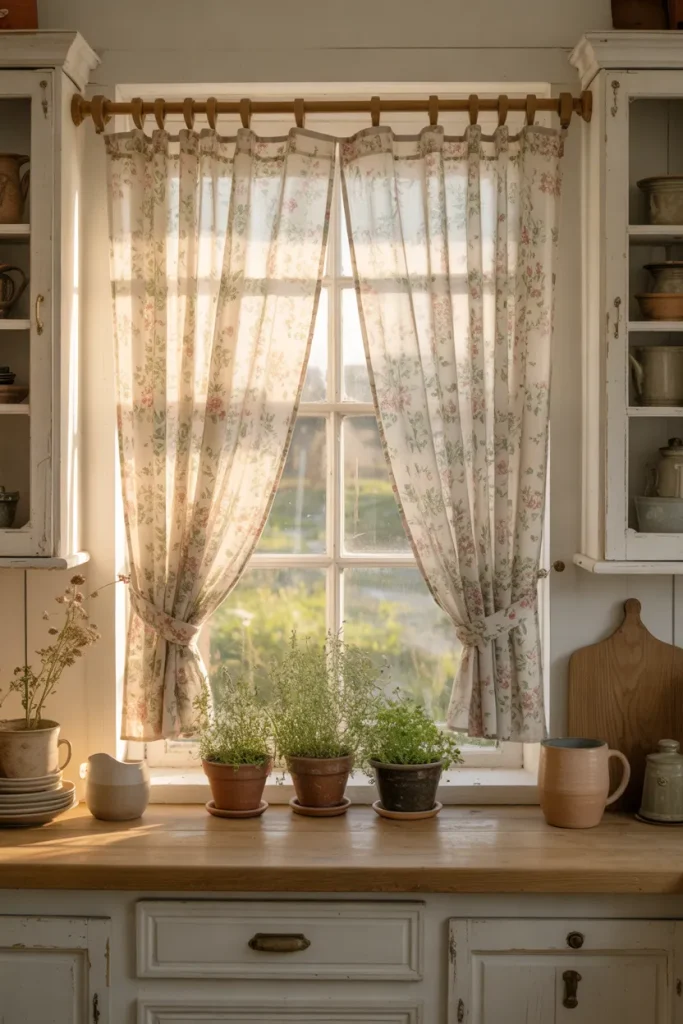
A simple cafe curtain can soften a window for very little money. Floral cotton works especially well with painted cabinetry and natural wood because it introduces pattern without dominating the room. I’ve seen small windows look much more intentional when the fabric is repeated in just one nearby accent, such as a tea towel or cushion.
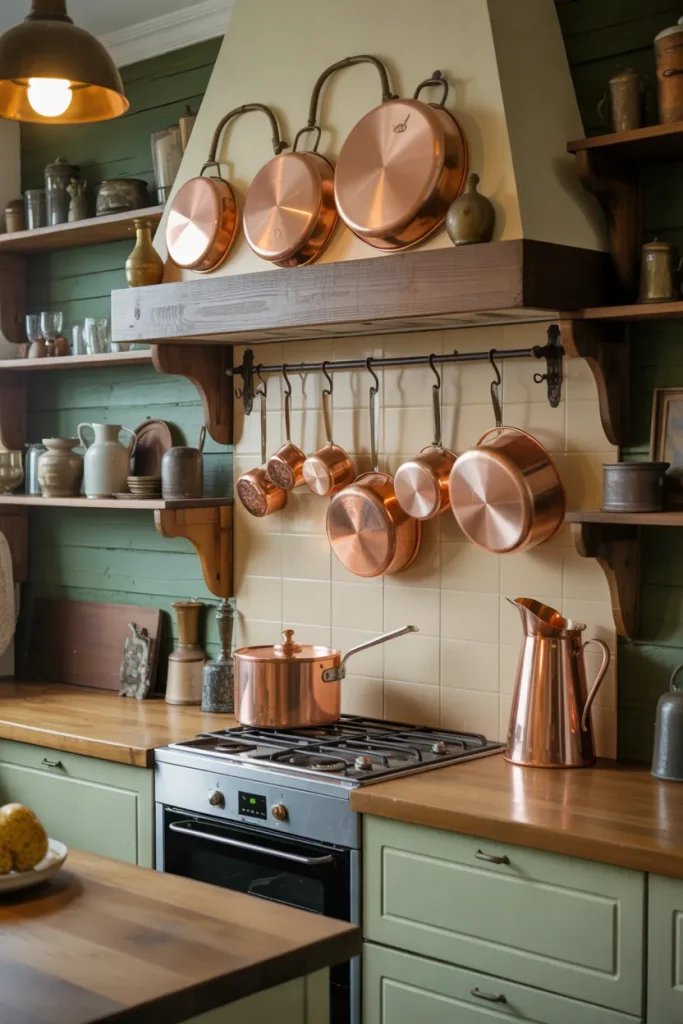
Copper Pot Display
Cost: Medium | Time: One afternoon | Skill Level: Beginner
Best For: Traditional and rustic kitchens
Works In: Open walls, ranges, and prep areas
Result: Warm focal point with practical storage
Copper cookware adds instant warmth while keeping frequently used pans within reach. Choose three to five pieces in slightly different sizes rather than covering an entire wall. Aged copper gives a relaxed vintage feel, while polished pieces create a brighter finish. Secure the rail properly, especially when hanging heavier cookware.
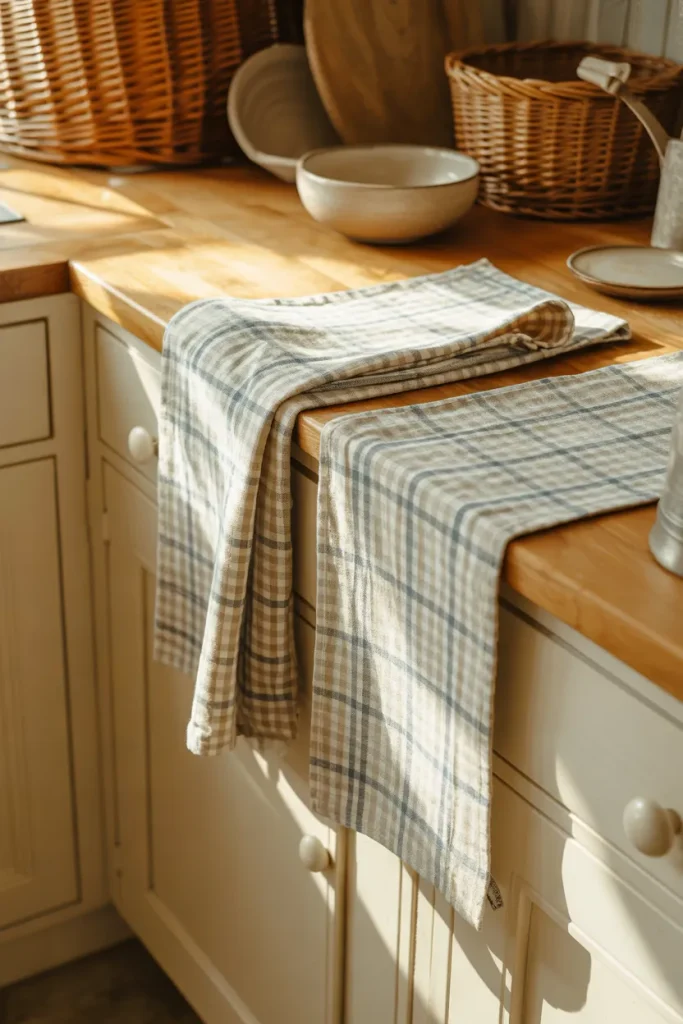
Checked Linen Accents
A small dose of checked linen can make a kitchen feel instantly more lived-in. Choose one classic pattern and repeat it across two or three practical pieces rather than covering the room in checks. Neutral gingham, muted blue, or soft olive works beautifully with wood, cream cabinetry, and vintage ceramics.
Keep the pattern close to work areas where it serves a purpose. A checked runner can soften a hard floor, while linen towels add texture around the sink. For a budget-friendly update, start with towels and a single runner before buying larger textiles. Small changes can create a surprisingly cohesive cottage look.
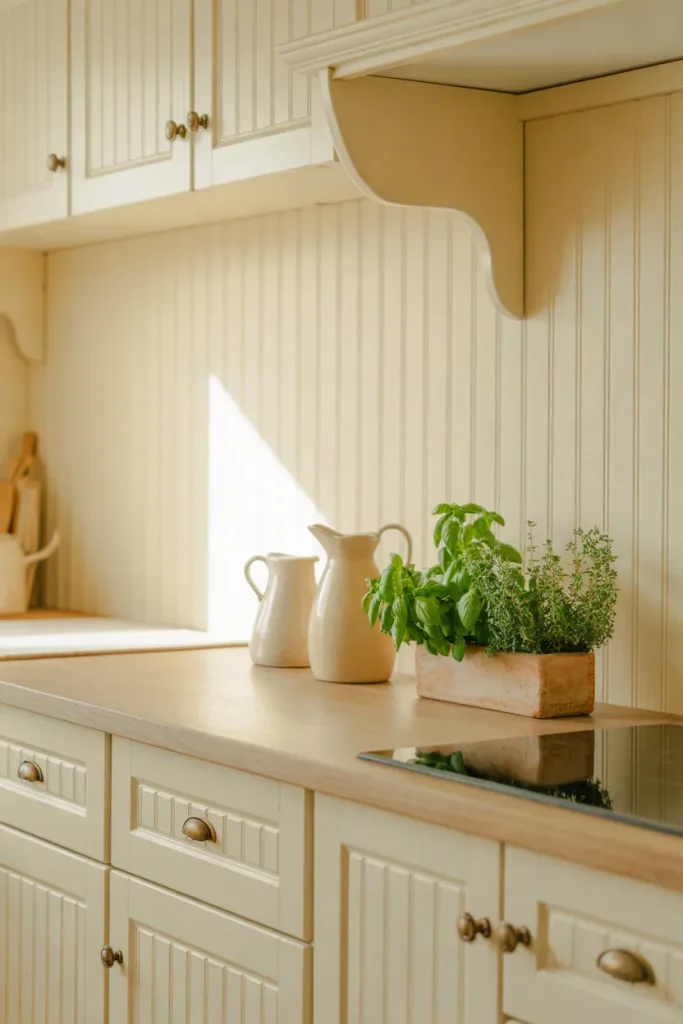
Beadboard Backsplash
- Measure the wall: Calculate the backsplash area carefully before buying panels or trim.
- Choose moisture-resistant material: Select a finish suited to areas near sinks and cooking surfaces.
- Paint before installation: A smooth, durable paint finish makes edges easier to cover.
- Add simple trim: A narrow top rail gives the panels a finished architectural detail.
Beadboard adds architectural texture without requiring an expensive tile installation. The vertical lines can also make a low ceiling feel slightly taller. Keep the surrounding finishes simple so the paneling remains noticeable without competing with shelves, artwork, or patterned textiles. For busy cooking areas, choose a washable finish that handles regular splashes.
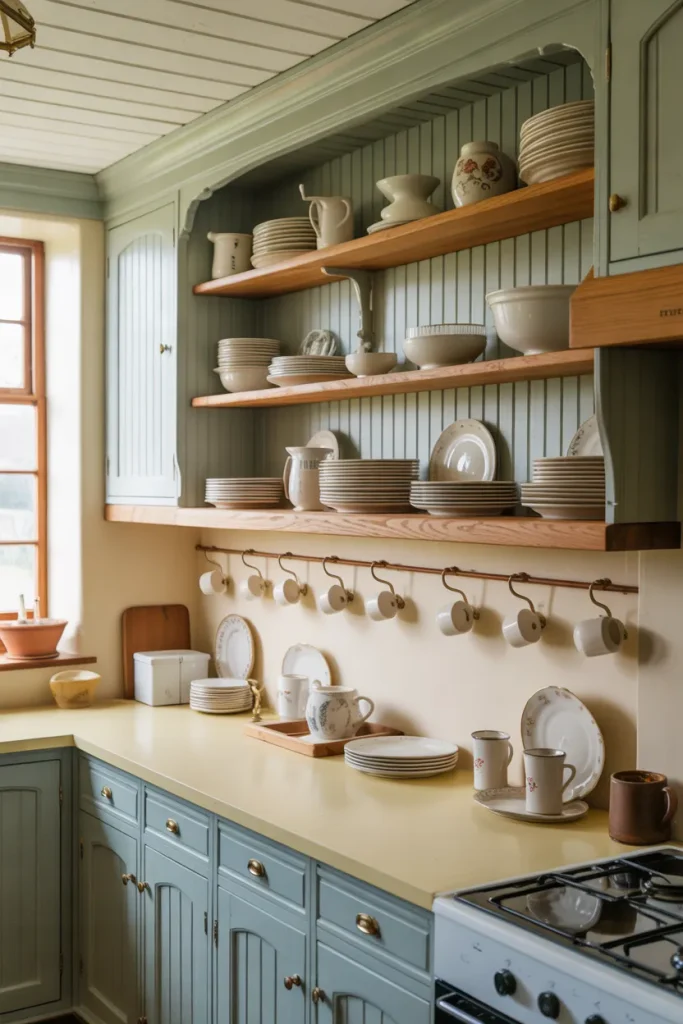
Open Plate Racks
BEFORE
Cabinet interiors can hide everyday dishes while leaving useful wall space completely unused. A small kitchen may also feel visually closed when every item is stored behind solid doors.
AFTER
An open plate rack turns practical dish storage into a decorative feature. Plates become easy to reach, while the exposed ceramics add texture and personality without taking up counter space.
For a cohesive display, stick with a restrained palette such as white, cream, blue, or soft green. Place heavier plates on the lowest section and lighter cups or bowls above them. If you have children or limited wall space, use the rack only for durable everyday pieces rather than fragile collectibles.
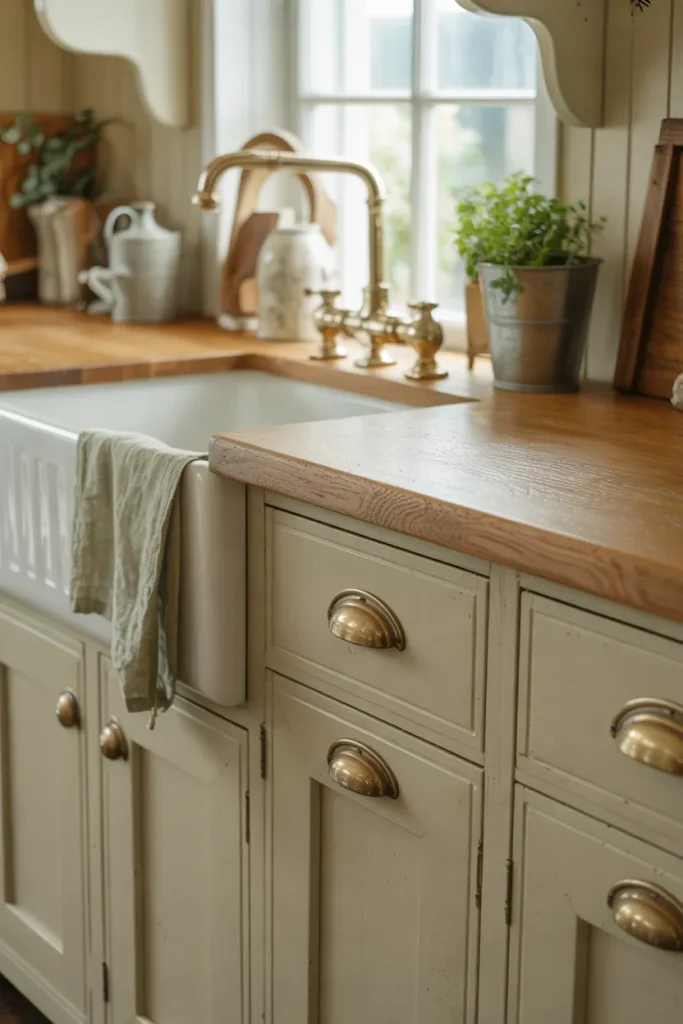
Aged Brass Hardware
| Feature | Option A: Bright Brass | Option B: Aged Brass |
|---|---|---|
| Look | Polished and crisp | Soft and vintage |
| Maintenance | Shows fingerprints easily | Patina helps hide marks |
| Style | Modern traditional | Cottage and farmhouse |
| Best Pairing | White and marble | Cream and natural wood |
Hardware may be small, but it changes how cabinetry feels every day. Aged brass works particularly well with warm painted doors and natural timber because its softer finish does not look overly shiny. Measure existing holes before purchasing replacements, and test one piece first to make sure the tone works with your lighting.
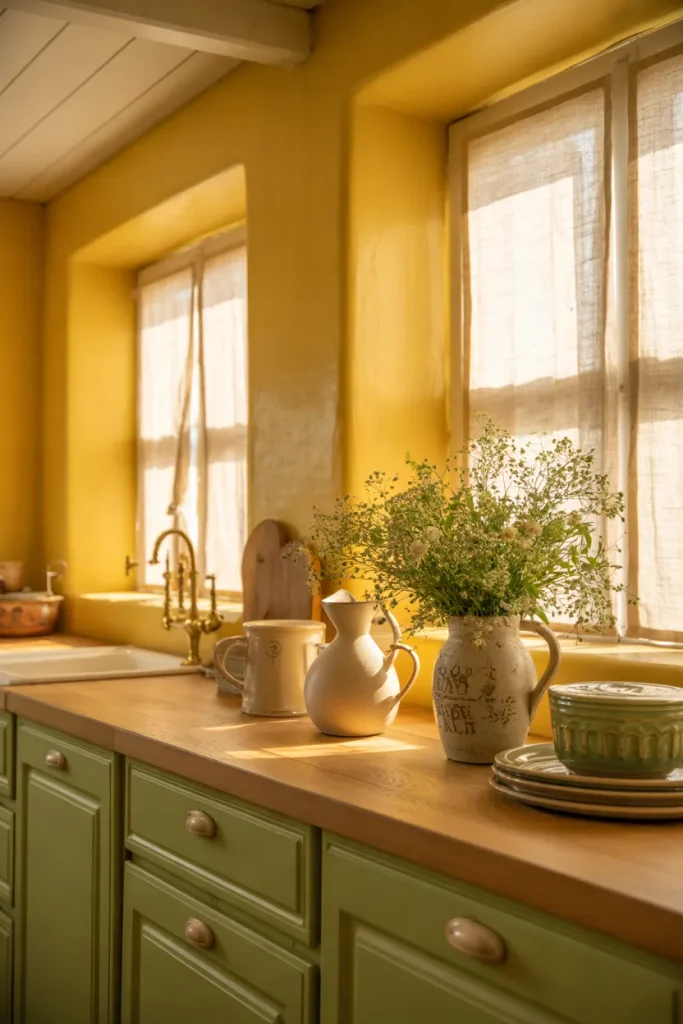
Buttery Yellow Walls
DO
- Choose a muted yellow: Soft butter or straw shades feel warmer and more timeless.
- Test the paint first: Check a sample in both daylight and evening light.
- Pair with warm neutrals: Cream, beige, and natural wood complement yellow beautifully.
- Repeat the shade lightly: Add a towel, pottery piece, or small artwork in a similar tone.
DON’T
- Don’t choose an overly bright yellow: Strong saturation can dominate a compact kitchen.
- Don’t pair it with too many colors: Keep the supporting palette restrained.
- Don’t overlook undertones: Cool whites can make warm yellow walls appear mismatched.
- Don’t paint without checking existing finishes: Countertops and flooring affect how the shade reads.
Warm yellow walls can make a kitchen feel brighter even on cloudy days. They work especially well with traditional cabinetry, aged metals, and natural wood. For renters or cautious decorators, removable wallpaper in a soft yellow pattern can create a similar effect without permanent painting. Keep the ceiling lighter to maintain an open feeling.
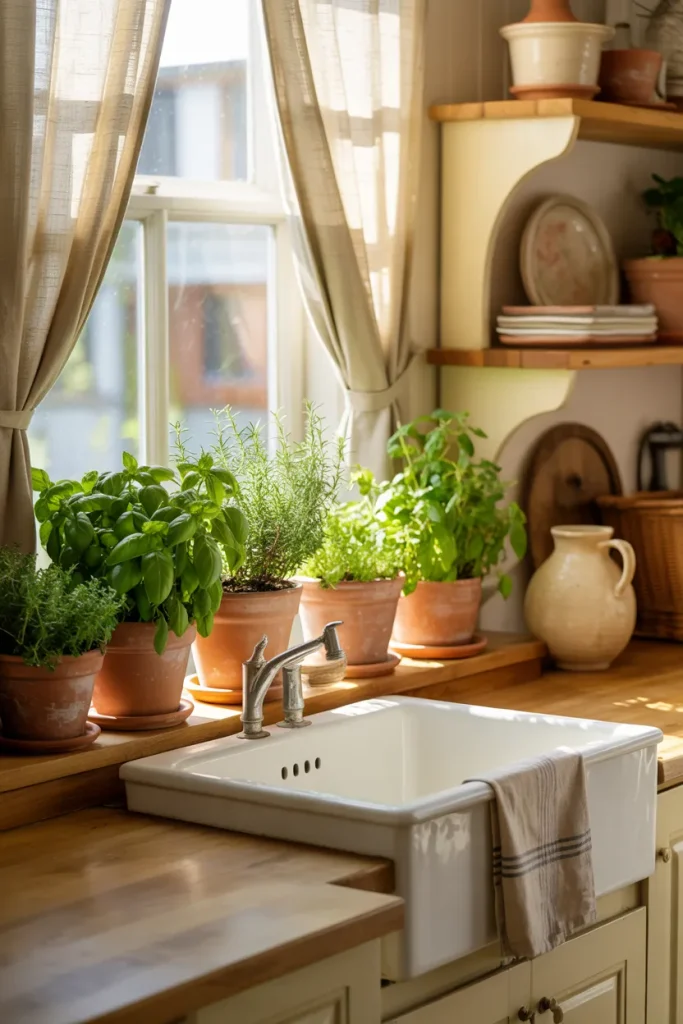
Herb Window Garden
Cost: Low | Time: One afternoon
Skill Level: Beginner | Best For: Small kitchens
Works In: Sunny windowsills and narrow ledges
Result: Fresh herbs plus natural color
Fresh herbs bring useful greenery into a cooking space without requiring a large garden. Choose compact pots with drainage holes and place sun-loving herbs where they receive several hours of bright light. Basil, thyme, rosemary, and chives are practical starting points. Rotate the containers occasionally so growth stays even.
Antique Furniture Pieces
BEFORE
A newly fitted kitchen can sometimes feel too uniform, with matching cabinets and identical finishes from wall to wall. Even attractive materials may lack the visual variation that gives older kitchens their character.
AFTER
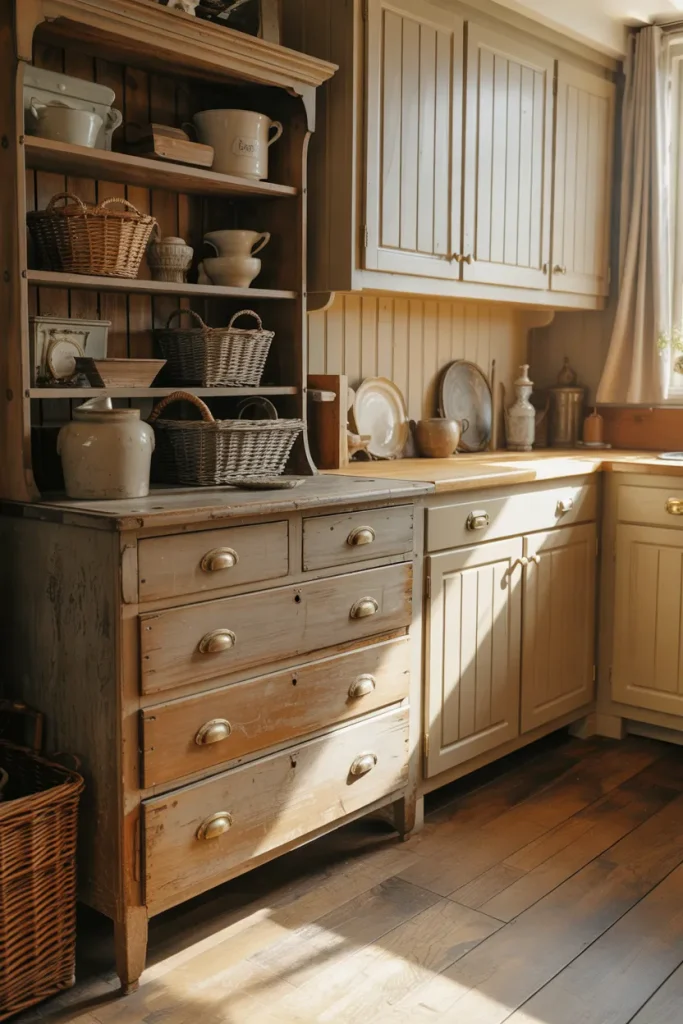
A single antique dresser, wooden cabinet, or vintage table introduces contrast through age, shape, and natural wear. The piece becomes both functional storage and a distinctive focal point.
Check that any antique furniture is structurally sound before bringing it into a busy cooking area. Replace unstable shelves, secure tall pieces to the wall, and protect wood from standing water. In my experience, one well-chosen vintage piece often adds more character than several small decorative accessories scattered around the room.
Wooden Ceiling Beams
- Check the ceiling height: Make sure beams will not visually crowd a low ceiling.
- Choose suitable timber: Reclaimed or lightly distressed wood adds authentic texture without looking overly polished.
- Keep the spacing consistent: Evenly positioned beams create a more intentional architectural finish.
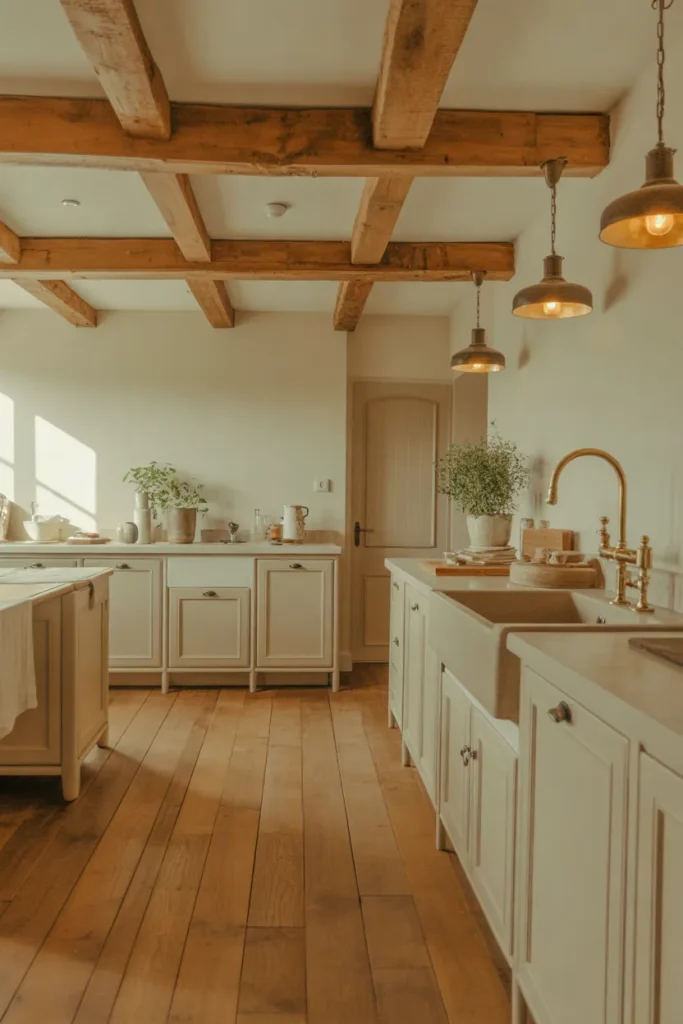
- Balance dark wood: Pair deeper beams with lighter walls and cabinetry to prevent the room feeling heavy.
Wooden beams draw the eye upward and give a kitchen stronger architectural character. They work particularly well alongside simple cabinetry because the ceiling becomes a natural focal point without competing with busy finishes. If structural beams are not practical, lightweight decorative timber can provide a similar visual effect when properly installed and secured.
Vintage Ceramic Collection
| Display Style | Option A: Matching Set | Option B: Collected Pieces |
|---|---|---|
| Appearance | Uniform and orderly | Layered and individual |
| Color | One consistent palette | Two to four related shades |
| Character | Clean and classic | Vintage and personal |
| Shopping | Easier to coordinate | Easier to source affordably |
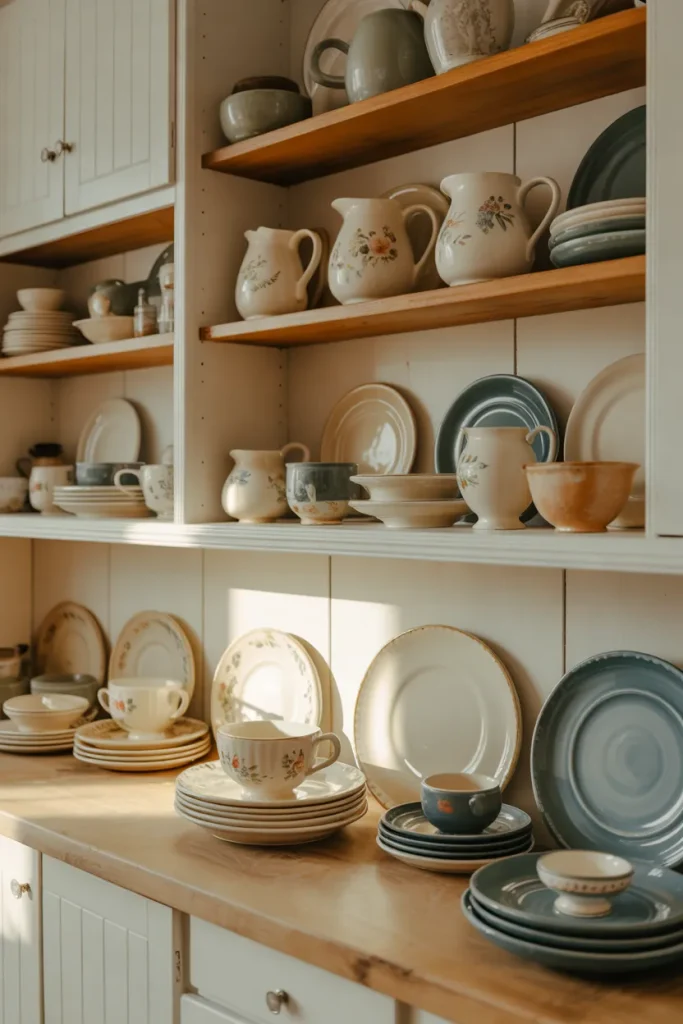
Ceramics add color and texture without taking up valuable work surfaces. A collected selection often feels more authentic than buying everything as one matching set. Look for similar undertones, shapes, or patterns to create connection between different pieces. Keep the most frequently used items within easy reach and reserve delicate ceramics for higher shelves.
Linen Skirted Cabinets
- Measure each opening: Record the width and height before cutting fabric.
- Select washable linen: Kitchen fabrics should handle regular cleaning and occasional splashes.
- Use simple patterns: Small checks, stripes, or plain natural linen complement cottage decor.
- Secure the fabric: A tension rod or properly mounted track keeps the skirt neat and practical.
- Leave floor clearance: Keep the hem above the floor so it does not drag or collect debris.
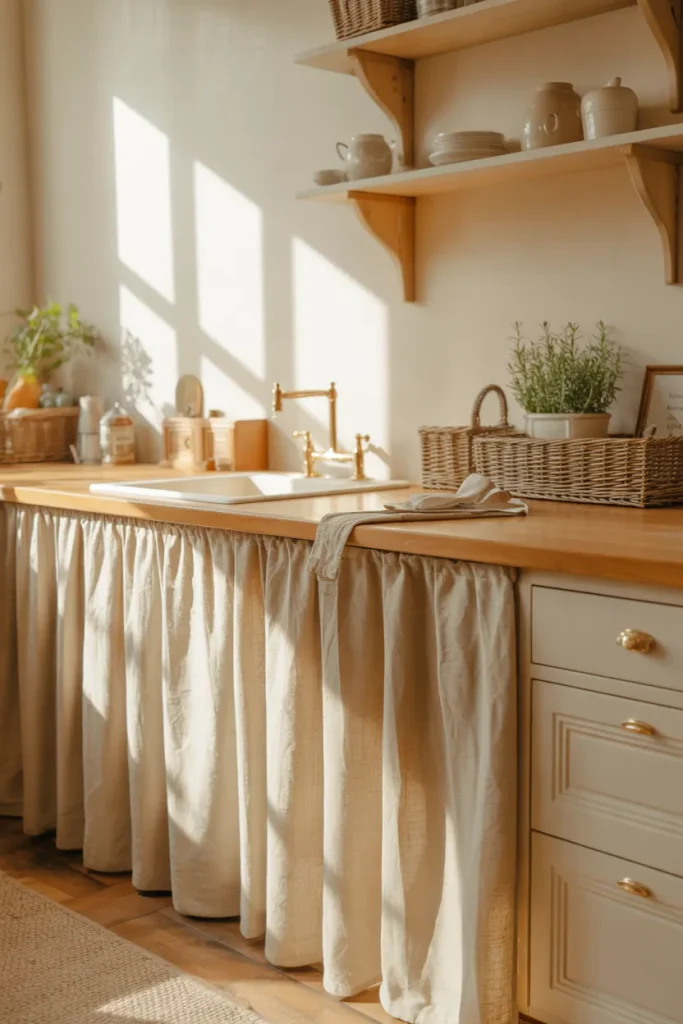
A fabric skirt can hide open storage while adding softness beneath hard countertops. It is especially useful for renters or homeowners working with exposed shelving instead of traditional cabinetry. Choose a washable neutral fabric and keep baskets behind it for organized storage. This small change can make utilitarian areas feel warmer and more finished.
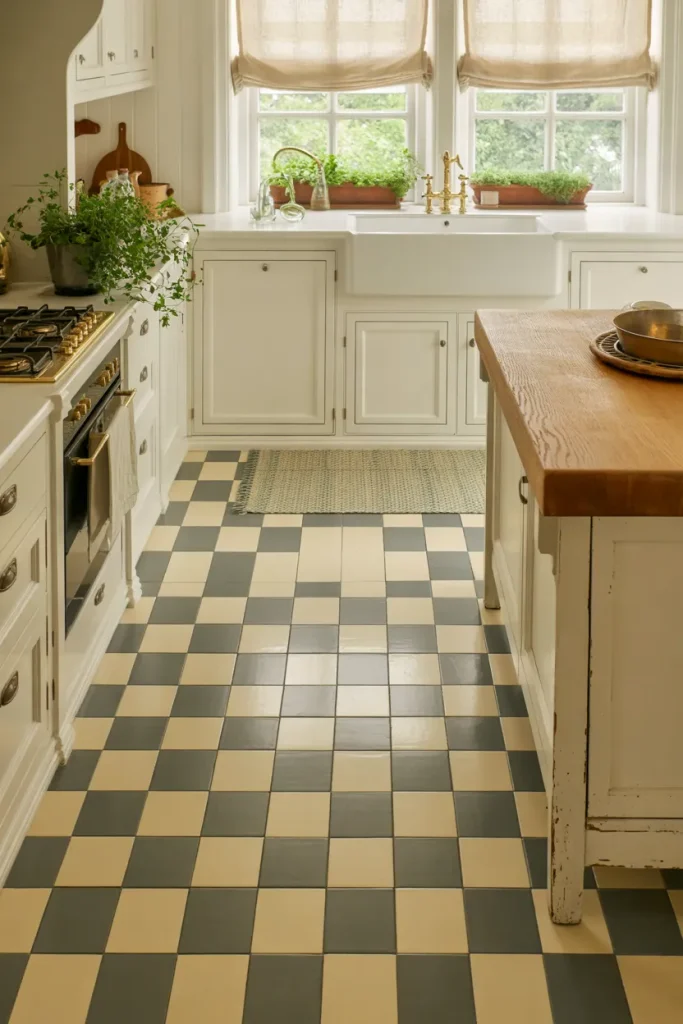
Classic Checkerboard Flooring
Quick Tip:
For a softer cottage look, choose warm ivory with muted charcoal, taupe, or dusty blue instead of stark black and white. Keep the rest of the room relatively quiet so the floor pattern provides visual interest without competing with cabinetry or textiles.
Checkerboard flooring creates a strong foundation for both vintage and modern cottage styling. Large squares can make a small kitchen feel more orderly, while smaller tiles give a traditional character. If replacing flooring is outside your budget, a washable checkerboard runner can introduce the pattern temporarily and still define the cooking zone.
Fluted Wood Details
BEFORE
Flat cabinet fronts and smooth surfaces can leave a kitchen looking visually plain. Even with attractive colors, the room may need more texture to feel layered and considered.
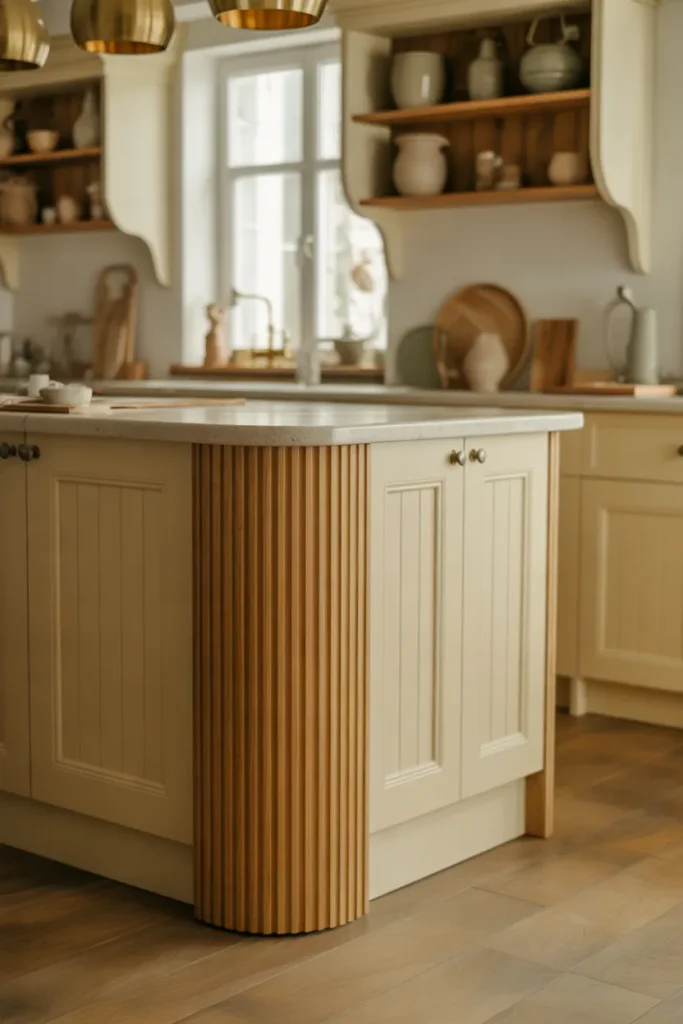
AFTER
Fluted wood introduces fine vertical lines that catch light and create depth. Used on an island or a small cabinet section, it adds texture without requiring a complete cabinetry replacement.
Keep fluting limited to one focal area so the pattern remains distinctive. Natural oak works beautifully with cream and sage finishes, while painted fluted panels create a softer appearance. For a budget project, consider adding thin wood strips to a cabinet side or island face, then sanding and finishing them carefully.
Farmhouse Lighting
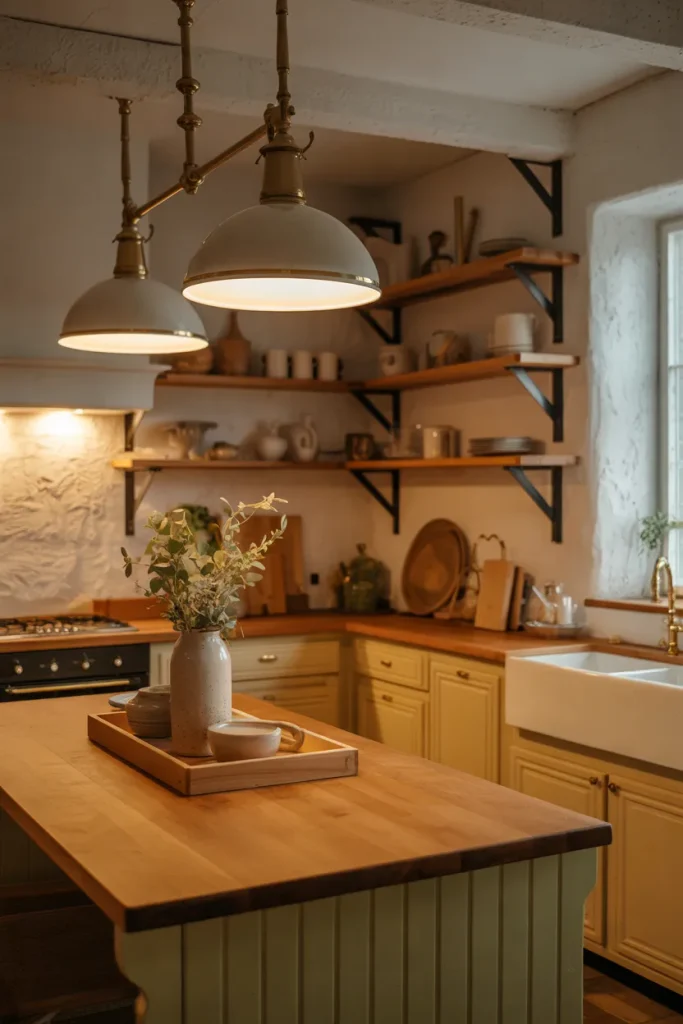
Image Description: Cozy cottage kitchen illuminated by classic farmhouse pendant lights over a wooden island, with cream cabinets, brass hardware, exposed timber shelves, ceramic dishes, and a deep sink. Warm evening lighting creates a soft glow against textured plaster walls. Ivory, honey wood, brass, and sage palette, editorial interior view.
Cost: Medium | Time: One day
Skill Level: Beginner with professional electrical help
Best For: Islands and dining areas
Works In: Traditional, rustic, and modern cottage spaces
Result: Focused light with vintage character
Good lighting makes practical areas easier to use while shaping the atmosphere after sunset. Hang pendants at a comfortable height above an island and choose shades that direct light toward the work surface. Warm bulbs generally complement wood and cream finishes nicely. For electrical changes, use a qualified professional rather than treating installation as a DIY task.
CONCLUSION
Creating a warm cottage-inspired kitchen does not require a complete renovation. A few thoughtful changes, such as painted cabinets, open shelving, vintage ceramics, natural wood, soft textiles, or fresh herbs, can add character while keeping the space practical for everyday life.
These cottage kitchens offer inspiration for every style and budget, so start with one idea that fits your home and build from there. I’ve seen how small changes like these can completely shift the way a space feels. Save this post on Pinterest for your next decorating project, try your favorite ideas, and share it with someone who loves a cozy kitchen too.